





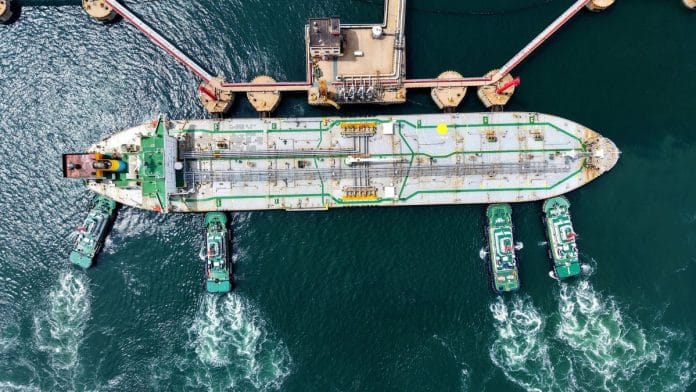


The US military began a blockade of Iran’s ports Monday, President Donald Trump said, and Tehran threatened to retaliate against its Gulf neighbours’ ports after weekend talks in Pakistan on ending the war broke down.
A US official said there was continued engagement with Iran, and forward motion on trying to get to an agreement, Reuters reported. Pakistani Prime Minister Shehbaz Sharif, which led mediation efforts over the last weekend, also said attempts were being made to resolve the conflict.
Since the US and Israel began the war on 28 February, Iran effectively shut the Strait of Hormuz to all vessels except its own, saying passage would be permitted only under Iranian control and subject to a fee.
But oil prices climbed back to $100 per barrel, with no sign of a swift reopening of the Strait of Hormuz to ease the biggest ever disruption in supplies and broader concerns over the durability of a two-week ceasefire agreement reached last week.
West Asia war | Live updates
10.30 pm: Rubio hosts Israel-Lebanon meet
US Secretary of State Marco Rubio is hosting a meeting of the ambassadors of Israel and Lebanon in Washington DC.
Meanwhile, PM Narendra Modi and US President Donald Trump had a telephonic conversation Tuesday evening during which they discussed the Strait of Hormuz.
Read this report by Keshav Padmanabhan to know more.
5.00 pm: Italy says it won’t renew defence pact with Israel
Italy’s government has decided to suspend the automatic renewal of a defence cooperation deal with Israel, Prime Minister Giorgia Meloni said Tuesday.
Meloni’s right-wing government has been one of Israel’s closest allies in Europe, but in recent weeks it has criticised Israeli attacks on Lebanon. “In light of the current situation, the government has decided to suspend the automatic renewal of the defence agreement with Israel,” Meloni was quoted as saying in Verona, northern Italy, by Italian news agencies.
Source: Reuters
3.30 pm: Global oil demand will decline this year, says IEA
Global oil demand will decline this year for the first time since the 2020 pandemic as a price surge caused by the Middle East conflict wipes out growth, the International Energy Agency said.
“The Iran war has thoroughly upended the global outlook for oil consumption. Demand destruction will spread as scarcity and higher prices persist,” the adviser to major economies said in its monthly report.
Global oil supply plunged by 10.1 million barrels a day last month, or about 9 percent, as Saudi Arabia, Iraq, the United Arab Emirates and Kuwait were forced to shutter production, the IEA said. A blockade of vessels entering or departing Iranian ports announced by US President Donald Trump came into effect on Monday.
While oil futures registered an unprecedented surge in March, they remain considerably below record levels and the price of actual cargoes, trading at just under $100 a barrel in London. This “disconnect” between futures and physical markets is becoming “increasingly acute,” according to the report.
IEA Executive Director Fatih Birol said Monday that oil futures still don’t reflect the severity of the crisis, but soon will.
Source: Bloomberg
3.15 pm: Despite US block, two ships from Iranian ports cross Hormuz
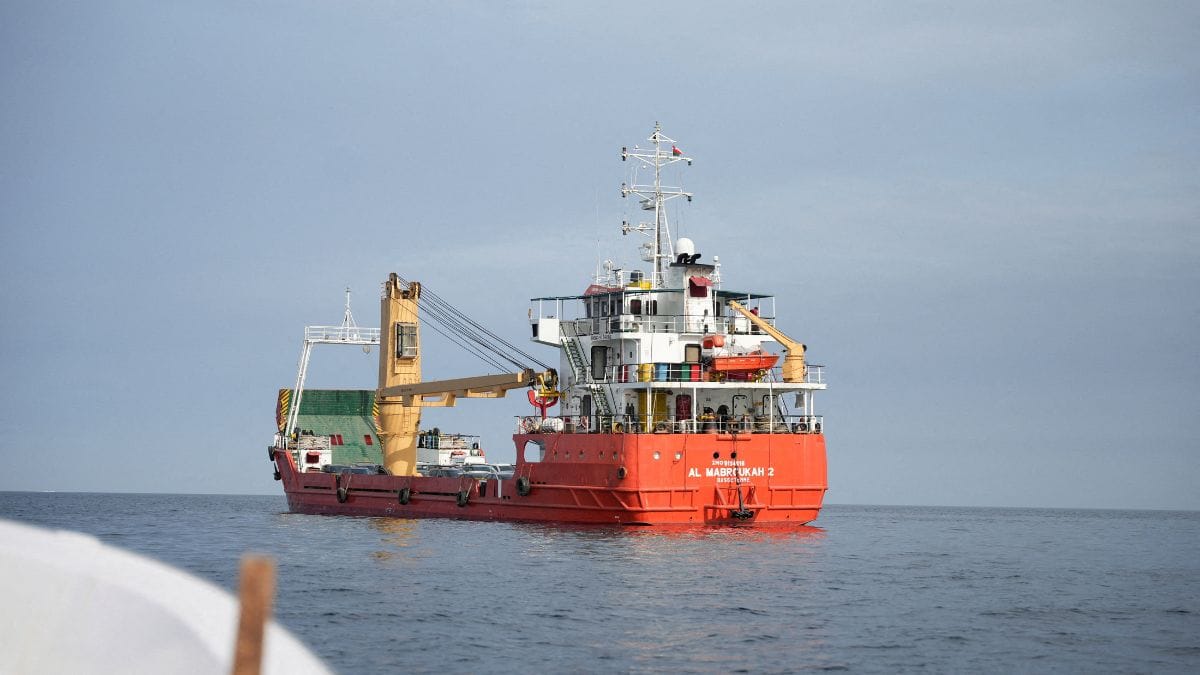
According to ship-tracking data, four Iran-linked ships have crossed the Strait of Hormuz despite the US’s naval blockade.
Two of those ships had visited Iranian ports, MarineTraffic reports.
This includes a bulk carrier, Christianna, which crossed the strait Monday after the blockade began. Christianna called at Iran’s Bandar Iman Khomeini port. Another tanker, Elpis, came from the Iranian port of Bushehr and passed the strait, BBC reported.
1.15 pm: China calls US on blockade ‘dangerous, irresponsible’
China said Tuesday it will impose “countermeasures” after Trump threatened tariffs on its goods entering the US if Beijing provided military assistance to Iran.
“If the US insists on using this as an excuse to impose additional tariffs on China, China will definitely take resolute countermeasures,” Chinese foreign ministry spokesperson Guo Jiakun said at a press conference Tuesday.
He added that reports China was providing weapons to Iran were “completely fabricated”.
US’s blockade of Iranian ports, Jiakun said, “further jeopardises safety of passage” through the Strait of Hormuz and was “dangerous and irresponsible behaviour”.
1.00 pm: US, Iran may return to Islamabad for talks, says Reuters
US and Iranian negotiation teams to return to Islamabad for peace talks later this week, four sources told Reuters news agency.
12.50 pm: ‘No country has legal right to block shipping’
UN’s International Maritime Organisation told BBC Radio 4 that no country has a legal right to block shipping.
“I do understand there is a conflict going on there, but there is still no legal basis in international law to take any actions to block any strait used for international navigation,” IMO Secretary-General Arsenio Dominguez said,
He added, “The more retaliation measures that take place, the more the concern grows for the 20,000 seafarers still trapped in the Persian Gulf and of course everyone else around the world who continues to be impacted economically… The longer this goes, the longer we all will feel this impact.”
UN Secretary General Antonio Guterres has also called on “all parties” to respect freedom of navigation in the Strait of Hormuz.
12.00 pm: China backs Gulf countries’ sovereignty
Chinese President Xi Jinping Tuesday shared a four-point proposal for peace and stability in West Asia, according to the state-run Xinhua news agency.
Xi’s proposal, shared during a meeting with Abu Dhabi Crown Prince Mohamed bin Zayed, refers to “peaceful coexistence,” “national sovereignty”, “international rule of law” and the need for security and development coordination, Xinhua said.
“The sovereignty, security and territorial integrity of the Gulf countries in the Middle East should be sincerely respected,” Xi said.
Chinese President Xi Jinping on Tuesday put forward a four-point proposal on promoting peace and stability in the Middle East, when meeting with Sheikh Khaled bin Mohamed bin Zayed Al Nahyan, Crown Prince of Abu Dhabi, United Arab Emirates, in Beijing. Read update:… pic.twitter.com/Hfa2nqLXFg
— China Xinhua News (@XHNews) April 14, 2026
11.35 am: Iran says US blockage ‘grave violation’ of its sovereignty
Iran’s ambassador to the United Nations, Amir-Saeid Iravani, said the US blockade around its ports was a “grave violation” of its sovereignty.
Iravani also demanded that other Gulf nations and US allies, including Saudi Arabia and the UAE, should pay compensation to Tehran for all “material and moral damages resulting from their international violations”, Iran’s official news agency Irna reported.
11.30 am: Iran and Oman foreign ministers talk ‘peace, stability’
News agency Mehr is reporting that Iran Foreign Minister Abbas Araghchi spoke to his Omani counterpart Badr bin Hamad Albusaidi on the “ceasefire and negotiations” between Tehran and Washington.
Mehr said Araghchi emphasised Iran’s commitment to regional peace and stability, “away from destructive US interventions”. Albusaidi, according to the news agency, expressed hope that peace and stability “would return to the region as soon as possible”.
Oman was earlier mediating talks between the two sides, with negotiations held in Geneva in February, days before US and Israel attacked Tehran. At the time, Oman had said an agreement was “within reach”.
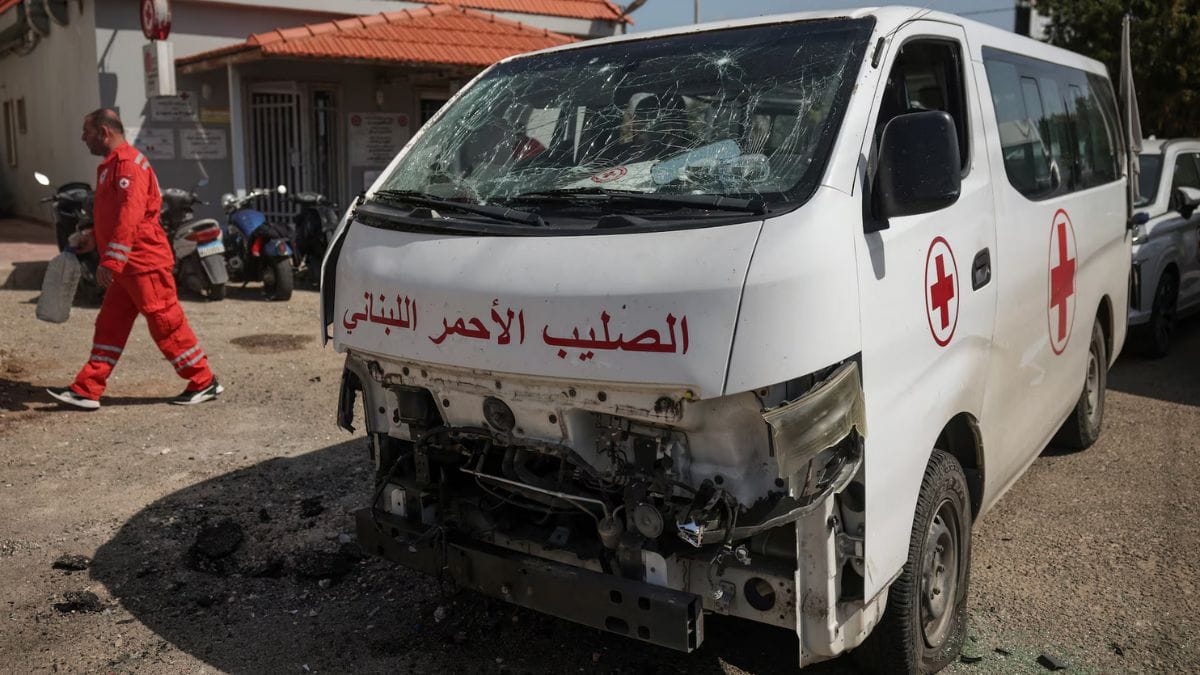
11.10 am: On day of talks, Israel continues strikes in Lebanon
Israeli air raids continued to pound southern parts of Lebanon, including civilian infrastructure, Al Jazeera reported, citing the country’s National News Agency.
Israeli and Lebanese ambassadors are expected to meet in a few hours in Washington DC, the highest-level meeting to be held between the two countries in a decade. US Secretary of State Marco Rubio is set to preside over the negotiations.
Though the two-week ceasefire was announced on 7 April, the US and Israel say it does not include Lebanon. Trump had earlier suggested that fighting in Lebanon, where Israel claims it is targeting Iran-backed Hezbollah, was a parallel war.
Tehran, though, insists that any deal with the US would need to include cessation of hostilities in Lebanon too.
10.45 am: Oil prices drop after reports of 2nd round of Iran-US talks
Oil prices dropped and stocks rose Tuesday as markets reacted to reports that the US and Iran may hold second round of negotiations before the two-week ceasefire ends. Confidence was up despite the US’s blockade of Iranian ports coming into effect Monday.
Brent crude fell 1.5 percent to $97.90 a barrel. Gold rebounded after two days of losses to trade around $4,775 an ounce, while Bitcoin climbed to about $74,400. Copper rose to the highest level in more than a month, Bloomberg reported.
10.00 am: Saudi Arabia ‘urging US to call off blockade’
Saudi Arabia, a US ally, is pushing Washington to halt the blockade, fearing it could prompt Tehran to escalate tensions and disrupt other regional shipping routes, the Wall Street Journal reported, citing Arab officials.
The officials raised concerns that Iran could close Bab al-Mandab, the waterway between Yemen and the Horn of Africa, which has been vulnerable to Iran-backed Houthis. Saudi is currently restricted to exporting oil from its Red Sea port. The closure of Bab el-Mandeb would shut that too.
9.30 am: US-sanctioned tanker passes through Hormuz
A tanker sanctioned by the US travelled through the Strait of Hormuz Tuesday, shipping data on LSEG showed, testing the US naval blockade.
The tanker Rich Starry is Chinese-owned and has Chinese crew onboard, Reuters cited the data as showing.
Bloomberg had reported earlier in the day that the tanker was blacklisted by Washington in 2023 for helping Tehran evade energy sanctions. It was not clear on this occasion whether it visited Iranian ports before its transit or was carrying cargo.
9.25 am: Pakistan ‘offers to host 2nd round’ of US-Iran talks
Associated Press reported that Pakistan has proposed hosting a second round of negotiations between the US and Iran in Islamabad in the coming days, before the ceasefire ends.
The agency cited two Pakistani officials who spoke on condition of anonymity.
9.15 am: Trump takes down AI Jesus-like image
Trump, facing backlash amid his attacks on Pope Leo XIV, posted an AI-generated image of himself as a Jesus-like figure Sunday, and deleted it Monday.
It was posted on Truth Social after Trump criticised the Pope, calling him “weak on crime” and “terrible for foreign policy”.
The US President later told reporters that he thought the image depicted him “as a doctor”.
9.00 am: Not interested in following Israel-Lebanon talks, says Hezbollah
Iran-backed Hezbollah said it will not abide by agreements from Lebanon-Israel talks, to be held in the US Tuesday, and firmly opposes the negotiations.
“As for the outcomes of this negotiation between Lebanon and the Israeli enemy, we are not interested in or concerned with them at all,” senior Hezbollah leader Wafiq Safa told news agency Associated Press.
Israel has continued to bombard Lebanon and on Monday Israeli troops launched an attack that it said was intended to seize a key south Lebanon town from Hezbollah.
Fighting waded into Lebanon after Hezbollah fired rockets into northern Israel on 2 March, days after the US and Israel attacked Iran.
At least 2,055 people have been killed in Israeli strikes in Lebanon and thousands others injured, the government says. More than a million people have been displaced.
Lebanon’s government, which says it is committed to disarming Hezbollah, had called for direct talks early on in the war. Last week, Israel announced its approval of talks. It will be the first time in decades that Lebanon and Israel, which do not have diplomatic relations, meet face-to-face in direct talks.
US Secretary of State Marco Rubio will take part in the talks that are expected to begin in Washington Tuesday.
8.50 am: ‘Iran agreed to suspend nuclear enrichment for 5 years’
The New York Times, quoting senior Iranian and US officials, said in a report that Tehran had proposed suspending uranium enrichment for up to five years, but the US rejected that offer, insisting on a 20-year halt.
NYT said the countries had traded proposals to suspend Iran’s nuclear programme, but consensus was far from reached.
8.30 am: How would the blockade work?
Trump has said Washington would block Iranian vessels and any ships that paid such tolls and that any Iranian “fast-attack” ships that went near the blockade would be eliminated.
“Warning: If any of these ships come anywhere close to our BLOCKADE, they will be immediately ELIMINATED, using the same system of kill that we use against the drug dealers on boats at Sea. It is quick and brutal,” Trump said on social media. He was apparently referring to the US strikes carried out against suspected drug boats in the Caribbean and Pacific. The strikes, which began in September, killed more than 160 people. The US military has not provided evidence that the vessels were ferrying drugs.
But the US Central Command said its blockade would be “enforced impartially against vessels of all nations” entering or leaving Iranian ports in the Gulf and Gulf of Oman. “The blockade will not impede neutral transit passage through the Strait of Hormuz to or from non-Iranian destinations,” Central Command said in a note to seafarers Monday.
Brigadier General Reza Talaei-Nik, a spokesperson for Iran’s Ministry of Defence, warned that foreign military efforts to police the strait would escalate the crisis and instability in global energy security.
An Iranian military spokesperson called any US restrictions on international shipping “piracy,” warning that if Iranian ports were threatened, no port in the Gulf or Gulf of Oman would be secure. Any military vessels approaching the strait would violate the ceasefire, Iran’s Revolutionary Guards said.
8.00 am: Overnight recap
Trump said Iran had been in touch Monday and wanted to make a deal but that he would not sanction any agreement allowing Tehran to have a nuclear weapon. “Iran will not have a nuclear weapon. We can’t let a country blackmail or extort the world,” he told reporters at the White House.
The talks between the US and Iran in Pakistan, the first direct meeting in more than a decade and the highest-level discussions since the 1979 Islamic Revolution, ended on Sunday without an agreement.
Despite that, Vice President J.D. Vance, who led the US delegation, told Fox News on Monday the US “made a lot of progress” by communicating to Tehran where the US. “could make some accommodation” and where it would remain inflexible. He said Trump was adamant that any enriched nuclear material must be removed from Iran and a mechanism must be established to verify that Iran is not developing nuclear weapons.
Tehran “moved in our direction, which is why I think we would say that we had some good signs, but they didn’t move far enough,” Vance said, without disclosing details.
Vance also accused Iran of “economic terrorism” for blocking passage through the Strait of Hormuz, but added that “two can play” that “game”.
“If the Iranians are going to try to engage in economic terrorism, we’re going to abide by the simple principle that no Iranian ships are getting out, either,” he said.
Source: Reuters
Also Read: US negotiating position is brute force. Iran’s is the power to hurt