





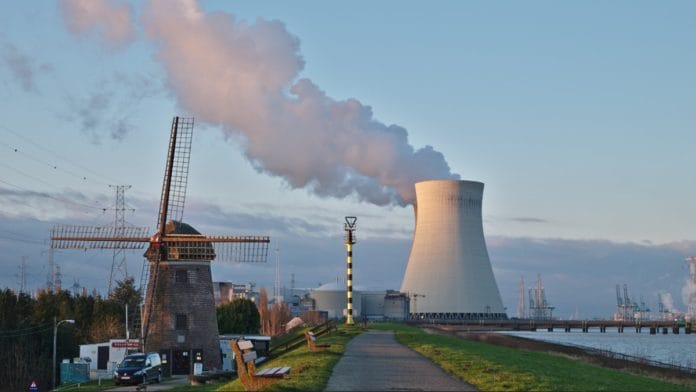


New Delhi: Belgium is set to nationalise its nuclear plants, marking a reversal of its long-standing plan to phase out nuclear power by 2025. In a statement Thursday, Belgian Prime Minister Bart De Wever said the country intends to purchase the country’s nuclear reactors from the French energy company Engie for a “full takeover” of Belgium’s nuclear fleet.
“An agreement has been reached with ENGIE to define the conditions and initiate the necessary studies for a full takeover of the Belgian nuclear park. In the meantime, all decommissioning activities are being halted with immediate effect,” he said.
Across Europe, governments are reassessing nuclear power after years of retreat.
Belgium had been among the most committed to a nuclear exit, and had passed legislation in the early 2000s that prohibited new plants and capped reactor lifetimes at 40 years. Under that framework, all reactors were to close by 2025.
Er is een akkoord bereikt met ENGIE om de voorwaarden te bepalen en de nodige studies op te starten voor een volledige overname van het Belgische nucleaire park. In afwachting daarvan worden alle ontmantelingsactiviteiten per direct stopgezet.
Deze regering kiest voor zekere,…
— Bart De Wever (@Bart_DeWever) April 30, 2026
Currently, only two of Belgium’s seven reactors remain operational—at Doel and Tihange—after the others were shut down between 2022 and 2025. Their licences have already been extended to 2035. The government now says dismantling the five closed units will be paused as it negotiates this broader takeover agreement with Engie, scheduled to be done by 1 October.
In a joint statement, the government and Engie said the initiative would also lay the groundwork for developing new nuclear capacity. “This initiative reflects the Belgian Government’s strategic decision to assume direct ownership of the country’s nuclear assets, in line with its ambition to extend the operation of existing nuclear reactors and to develop new nuclear capacity in Belgium. By doing so, the Belgian Government is taking responsibility for Belgium’s long-term energy future, with the objective of building a financially and economically viable activity that supports security of supply, climate objectives, industrial resilience and socio-economic prosperity”, the statement said.
The shift comes amid rising energy prices and geopolitical instability, including the West Asia War, that have exposed Europe’s dependence on imported fossil fuels.
Speaking on the impact of the war, European Commission President Ursula von der Leyen said Wednesday that the “EU needs to reduce its overdependency on imported fossil fuels, and focus on clean energy supply to boost our home-grown, affordable, clean energy supply. From renewables to nuclear, in full respect of technology neutrality”. Earlier at the Nuclear Energy Summit in Paris in March, she called Europe’s retreat from nuclear power a “strategic mistake,” arguing it increased the dependence on fossil fuel imports.
Belgium had already begun pivoting last year, when its Parliament repealed the 2003 nuclear phase-out law in 2025. That decision followed years of incremental adjustments: extensions granted to individual reactors, negotiations with Engie after Russia’s invasion of Ukraine in 2022, and mounting concerns about supply security.
The legislative reversal, referred to as the ‘Bihet Law’, was passed with a wide majority in parliament. The Belgian Nuclear Forum called the original phase-out an “aberration” that had weakened the country’s energy policy.
The reactors have long been a source of controversy, frequently taken offline for safety inspections and raising concerns in neighboring countries. Tensions escalated in 2015, when proposals to extend their operation beyond the original 40-year lifespan drew protests from cities across nearby borders. In 2017, the German city of Aachen went so far as to distribute iodine tablets to residents, after the Tihange reactors were shut down over cracks and water leaks.
Belgium’s move mirrors a broader shift across Europe. Governments are increasingly taking a direct role in nuclear energy, as private companies retreat from the high costs and risks associated with the sector. France’s nuclear industry is largely state-owned, and Poland’s plans for new reactors are being led by the government.
In Germany, where all nuclear plants have been shut down, leaders have begun openly questioning that decision. Chancellor Friedrich Merz in January called the phase-out a “serious strategic mistake,” citing lost capacity and rising costs and said the move would have had “long-term “strategic consequences” for the country.
(Edited by Nardeep Singh Dahiya)
Also Read: Bangladesh likely to commission first nuclear reactor soon—a slow start amid deepening energy crisis