







In Episode 1832 of Cut The Clutter, Shekhar Gupta turns to a rapidly shifting geopolitical faultline, detailing how a fragile ceasefire in a wider West Asian conflict has exposed a deeper rupture within the Gulf itself. Using the fallout between the UAE and Saudi Arabia, he explains how oil politics, strategic rivalry and ideological differences are now pulling OPEC apart. He breaks down the UAE’s decision to walk out of OPEC, the implications for global oil prices and cartel power, and how competing ambitions—from Saudi mega-projects like Neom to the UAE’s push for production autonomy—are fuelling tensions.
Here is the full transcript edited for clarity:
In the middle of an uneasy ceasefire, in the course of a very nasty war between two sides: Israel, the US, GCC Arab states on one side, and Iran on the other. Within that, a new war has broken out within the GCC states on one of the warring sides. So, this is as if the whole Gulf Cooperation Council (GCC) grouping is now unraveling.
Iran may or may not have won or lost. That is a debate that partisans will settle one way or the other, and let them have their own views. But the fact is that the war so far has led to a break between the UAE and Saudi Arabia.
Two states where the rulers have had very close personal ties. So close that, between these two, one country has a native population of just over 1.1 to 1.15 million. That is about 11 to 11.5 lakh people, maybe 12 lakh people. The other has about 3.5 crore people. So, a total of just about 3.62 crore people. Between them, they have a trade of $ 31 billion. The Riyadh to Dubai air corridor is the 7th busiest air corridor in the world.
That is how close these two countries are. They are tied together in the GCC, which is a grouping of Gulf petro-monarchies. That is, once again, we will do a count. You start from the south: Oman, the UAE, Bahrain, Saudi Arabia, Qatar, and Kuwait.
There has been a break. It is not the first time there has been a break, but right now the break looks rather severe because the UAE has decided to walk out of the Organization of the Petroleum Exporting Countries, or OPEC. It is, at this point, a grouping of 12 member countries, but with the UAE going out, it will become 11. I will give you the list of the 12, and then other lists will come in as we go along. So please keep an eye out.
Saudi Arabia, Iraq, the UAE. The first three are listed in the order of the volumes that they export every day. The oil that they pull out and export, because they all have quotas under OPEC. Saudi Arabia, number one, at about 9.3 million barrels per day. Iraq, number two, at 4.3 million barrels per day. And the UAE, and that is the tricky part. Not long ago, their quota was only 2.8 million, but everybody thought that they were undercounting and were pulling out about 3.3 million. They were exporting that much. Right now, their exports might be 3.4 million. That is if all exports were possible. All exports are not possible.
But the UAE also has a workaround because of a pipeline that opens out in the Gulf of Oman through Al Fujairah, which is one of the emirates. So, they can bypass, not fully, but for a lot of their production, they can bypass the Strait of Hormuz.
After these three, we have Kuwait, Iran in the same neighborhood, Algeria, Libya, Nigeria, Congo, Equatorial Guinea, Gabon, all in Africa, and then Venezuela far away in South America.
These are the OPEC members these days, with the UAE gone. There will be one short. More importantly, there will be about 13 percent of their surplus gone.
What that 13 percent shortfall means is that this will lessen OPEC’s ability to act as a cartel and control global oil prices. Because it is in the interest of OPEC countries, in fact, in the interest of any country, to keep the prices of what it exports to the world higher. In this case, this is a cartel. Sometimes they make adjustments according to each other’s interests. Somebody wants a higher price, somebody wants a lower price.
And on top of everybody is the big daddy, US President Donald Trump, who wants lower oil prices. In fact, Trump has been attacking oil-producing countries, particularly OPEC, for keeping oil prices too high because he wants it cheap. He also put this in his Davos speech. So, he is very exercised about this, and that is where his impatience comes in.
That is why, because the Gulf countries want to suck up to Trump all the time, they have been offering to produce more oil to keep prices down. However, there is a conflict there. Saudi Arabia is making very large investments in real estate and in building new cities, the Neom city, for example. Very ambitious, almost fantasy-like projects. For that, they need more money. Where will the money come from? That money will come from oil.
So, Saudi Arabia would prefer oil prices to be closer to 90 dollars a barrel. For the UAE, 60 to 62 is just fine. One, because it is cheaper for them to pull out their oil. Second, their economy already has other sources of income because of so much investment that has gone from outside and that tension also remains. Now, the UAE is upset that it is being limited to producing as much oil as it does, which is their quota is 2.88 million barrels a day. They might produce 3.4 million, that is the allegation.
OPEC, by the way, has now dumped both global agencies that estimate oil production. That is the EIA, the American Energy Information Administration, and the other international group, the International Energy Agency. Both of these, OPEC has now dumped as authentic sources of oil production because OPEC countries themselves are competing very severely amongst themselves.
I will just tell you a little bit more about OPEC because there is also something called OPEC Plus. And then, we will come to the action part.
The action part is why this is happening and why there is tension between the UAE and Saudi Arabia. Otherwise, they are brotherly nations. In fact, I see a story that mentions that in December, Saudi Arabia released a five-paragraph statement in which they used the word ‘shaqiq’, which is Arabic for ‘brotherly,’ four times. Four times in a five-paragraph statement on their bombing and arms shipment from the UAE. So the brotherly country, or ‘shaqiq’ in this case, was the UAE, whose arms shipment to their supported Yemeni group they had just bombed. That is the kind of tension that has been building up between the UAE and Saudi Arabia.
Before that, let me explain a little more about OPEC and also another entity called OPEC Plus. Because very few countries in the world have surplus oil.
Oil is money because if you have oil that you do not need, you can sell it. And everybody is in a bit of a hurry to sell oil because the projections are that in the next 10 years, global oil demand will start declining. That is because renewables will come in.
In India, for example, we hardly use any hydrocarbons to produce electricity. We use coal, and increasingly, we are using solar. In fact, renewables, by and large, are mostly solar. So, solar, hydel, wind, all of that already in India is 52 percent of its electricity generation. And that is how we were able to withstand 256 gigawatts of demand on one afternoon earlier this week. That is a record in India’s history. Remember, 52 percent of that came from renewables. The rest came from coal. India does not burn any hydrocarbons, such as oil and gas, to make power.
And increasingly, more countries will get into nuclear and the use of oil will decline as more countries first produce electricity from non-hydrocarbon sources, renewables, or green hydrogen going ahead. And increasingly, automobiles become electric. In China, 30 percent are already electric, and the numbers are rising. In India, it is about 3 percent, but that number is also rising. The demand for oil may start declining 10 years from now. So this is really something that is going out of fashion.
So right now, there is a rush to sell as fast as you can. That is where competition comes in. And oil is also very political. That is why, at one point, the Americans will put sanctions on the sale of Russian oil. Tomorrow, they will lift those sanctions because they want to curb any sales by the Iranians. At the same time, they do not want oil prices going too high.
So, oil is also a very political commodity. That is why these cartels come up, and the cartels do not always survive, because there is always tension amongst them.
So how did OPEC start? It started earlier on in the late 1950s, with an organization loosely called Seven Sisters. These Seven Sisters were basically seven big oil MNCs or their predecessors. These companies include ExxonMobil, Shell, Chevron, and others like that.
Then, as more sovereigns took control of their oil resources, in September 1960, the first multinational group came in. That was OPEC.
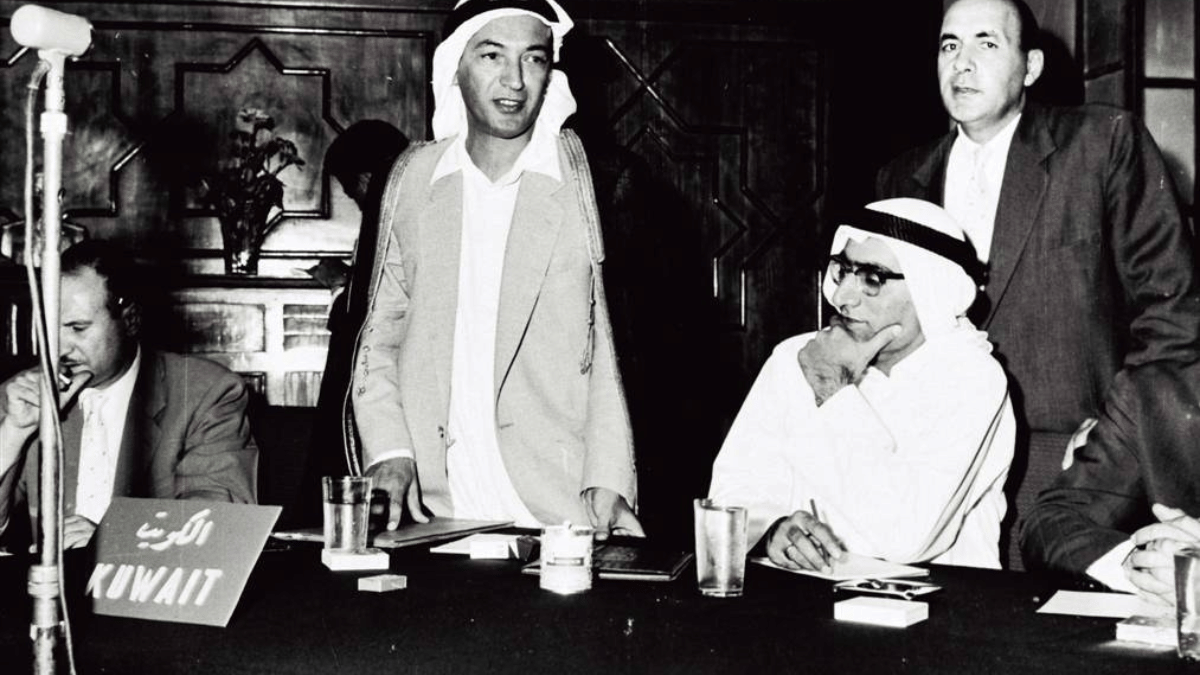
So, OPEC was founded in 1960 by Iran, Kuwait, Iraq, Saudi Arabia, and Venezuela. Five countries came together to set up the OPEC. Then this carried on like that. There wasn’t much action. And then, in October 1973, came the Yom Kippur War involving Israel against Egypt and the Arab world. This is when the Arab members of OPEC decided to put an embargo on oil supplies to America for helping Israel in the war. That shot up global oil prices.
Remember, the amount of oil they had put under embargo was only 7 percent of the global supply. But this is a very sensitive commodity. Because of that, global prices went up. In India also, prices went up. It was following on from that that India’s inflation rates, by 1974, had gone up to about 28 percent. That is when the world, for the first time, saw the power of the oil cartels.
In the course of time, more joined these five. I told you about the original five: Iran, Kuwait, Iraq, Saudi Arabia, and Venezuela. Subsequently, they were joined by Qatar, which again left in 2019. It’s very difficult to keep track because these memberships keep going in and out. It’s mostly politically inspired.
So, Qatar left in 2019. Remember, that’s when the UAE and Saudi Arabia were at odds with Qatar. They had put an embargo on Qatar. Why? Because they thought Qatar was backing the Islamists and financing them. They also thought Qatar was running Al Jazeera, which was undermining their governments while, at the same time, not bothering the Qatari ruling family at all. We had featured this in an episode of Cut The Clutter a couple of years ago. That is when peace was made between Qatar and its other brotherly countries.
That expression you will see coming back all the time as these countries fight and then make up: ‘Shaqiq‘. The UAE, by the way, had joined OPEC in 1967, before it had become independent. The UAE got its independence in 1971. By 1967, still a British colony, for all practical purposes, it became a member of OPEC. After that, Qatar left. Angola, Ecuador, and Indonesia were in and out.
That’s the reason it’s difficult to freeze a moment and say these are the members of OPEC. However, in the course of time, OPEC expanded because everybody with oil surplus, and with technology improving, more and more countries were able to take out surplus oil. They saw the value in cartelizing.
So, that led to the creation of OPEC Plus, which now had Russia, Azerbaijan, Kazakhstan, Bahrain, Brunei, Malaysia, Mexico, Oman, South Sudan, Sudan, and Brazil. All of them, however, will now suffer a setback because the UAE and Saudi Arabia are two countries which have the most surplus oil, in terms of their supplies being elastic.
They are the ones who can either increase supplies or control supplies. They are the ones with the ability to play the market. And this is where the UAE has gone out, and the UAE now says we are not bound by any rules. We will do our own thing. Once we know that we can pull out as much oil as we want and sell it in global markets, we will invest more in our pipelines. So, we will not even be so dependent on the Strait of Hormuz because, once Iran has discovered the value of the Strait of Hormuz, that this is the choke point, we don’t know what will happen tomorrow.
So, the time has come for us to invest in our freedom from this choke point. And that’s only possible if we pull out more oil and sell it. That’s why the UAE has been talking in terms of taking its own exports up to 4.8 million barrels a day. The action that the UAE has taken is not purely driven by business needs. That is one of the reasons. But essentially, this is a strategic move.
Because for a long time, the UAE and Saudi Arabia have been drifting apart. They’ve been very close, but they’ve been drifting apart. Why? One of the reasons is that Saudi Arabia has now begun to modernize. They want more professionals to come in. They want more international companies to set up their headquarters there. And they’ve been squeezing, or at least that’s what the Emiratis say, the companies that made the Emirates their home to move to Saudi Arabia instead. That is where the competition element comes in.
The second thing is that, across the Red Sea, both sides have conflicting interests. This is in Sudan. The Saudis support the Sudanese Armed Forces, which is like the original government of Sudan. Whereas the Emiratis support the Rapid Support Forces, which is a kind of militia, but very powerful. And, Sudan is sort of divided between the two, while a civil war goes on there.
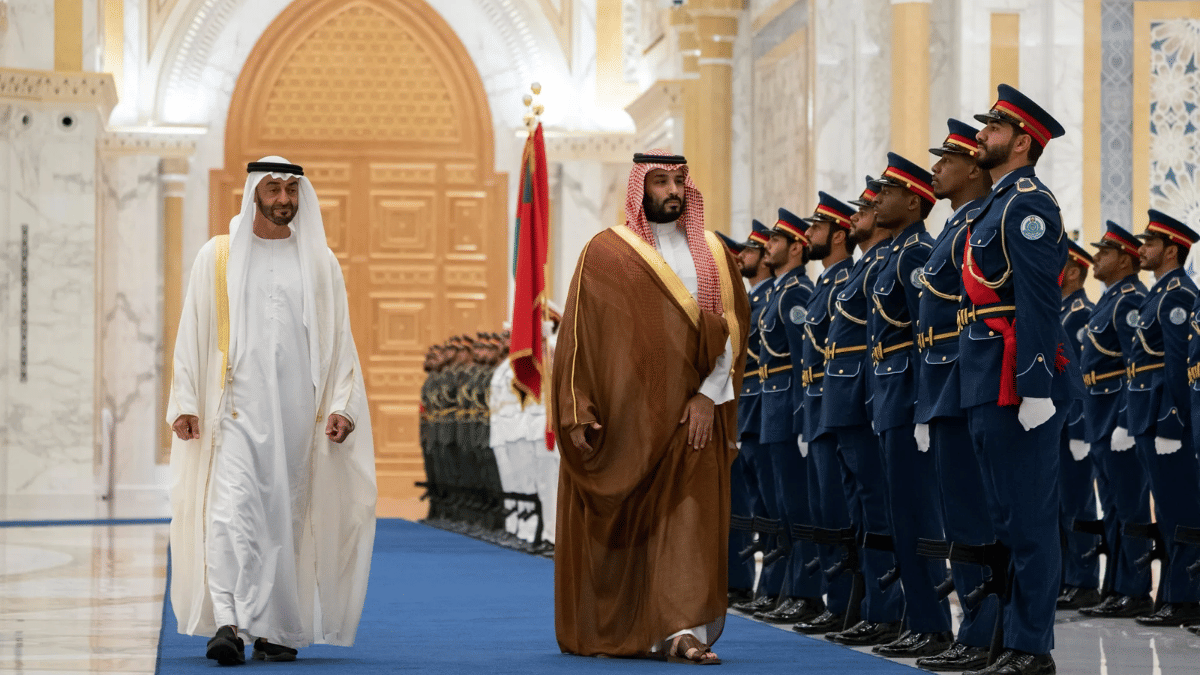
Now, why the two have conflicting interests is not very easy to say. Maybe some of it is ego. Maybe some of it is about who is more Islamic and who is less Islamic. Generally, if you read Emirati social media, it would suggest that Saudis are backing those factions in these countries that are more Islamic.
The UAE is completely done with political Islam. They are very westernized. They have now hitched their boat with the West. They have also recognized Israel. They have embassies in each other’s countries. They are also key to I2U2, where India is the other “I” besides Israel and the United States is the other “U.”
So, there is that political and ideological difference as well. Now, a simpler explanation on this I read in The Economist. It says the UAE despises political Islam. Saudi Arabia tolerates it. To which I will add that Qatar plays both sides, sometimes both sides against the third.
Or, as we might say in Haryanvi or Punjabi English, they play both of three sides. “Both of three sides” means they play the Islamists on one side, they play the liberals on the other. Not really liberals, but people like the UAE, even the Saudis in comparison.
The Saudis don’t like the Muslim Brotherhood, whereas Qatar patronizes it. That’s where they operate from. At the same time, the third, which is the Western power, Qatar also hosts three headquarters of the US Central Command. That is what justifies the juvenile-sounding flourish from me: Qatar playing both of them three. Because that’s what Qatar does. This ‘tamasha’ (spectacle) is going on within this region among all these brothers.
See, the situation right now. Until a few years ago, the UAE and Saudi Arabia had joined hands to sideline, isolate, and embargo Qatar. Now, Qatar is offering to mediate between the UAE and Saudi Arabia. And similarly, you can see what’s happening as you go a bit south in Asia.
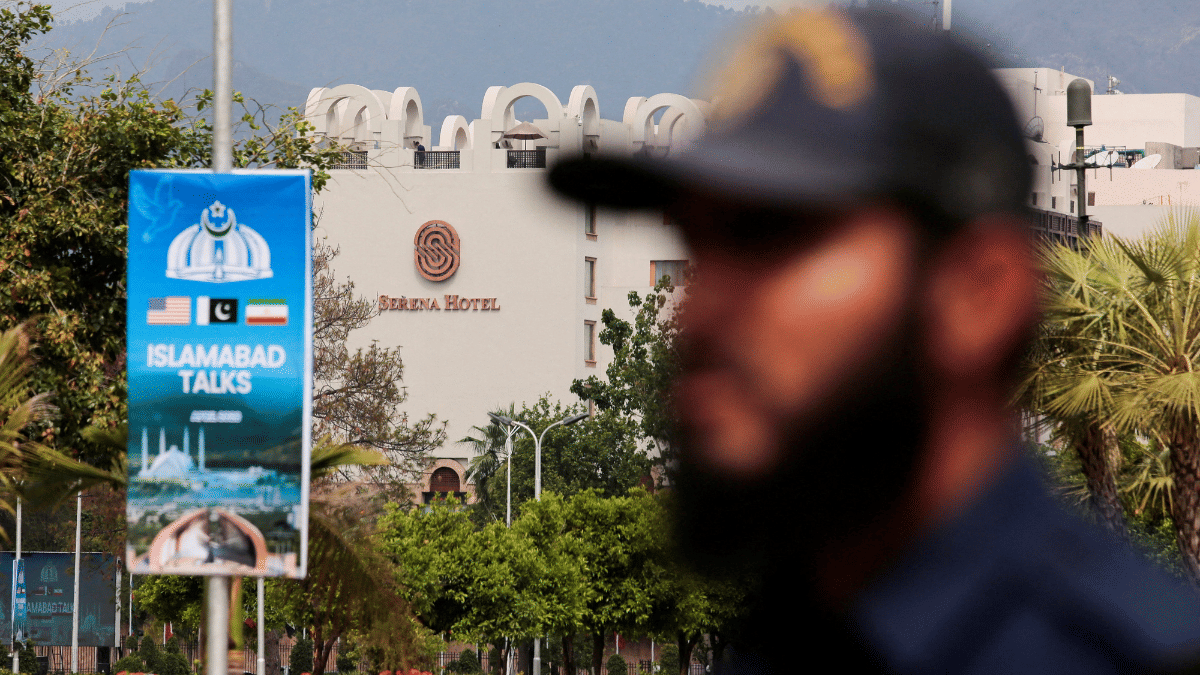
Pakistan is hoping to mediate between Iran and the Arab countries and the US. Indirectly, Israel, although they will never say that. At the same time, the Iranian foreign minister has offered to mediate between Pakistan and Afghanistan. So everybody is fighting everybody, and everybody is offering to mediate between two other belligerents. That is the free-for-all that’s going on in this entire landmass now.
And all of this is fueled by surplus oil as well. Or, to put it a little differently, the UAE would like to believe, or its social media, which has been totally unleashed on Saudi Arabia, and vice versa. That compliment is returned in full measure. In fact, it’s much nastier in many places than Indian and Pakistani SM attacking each other. The UAE thinks that Mohammed bin Salman is sold out to Islamists. The Saudis are suggesting—this is all each one’s state-sponsored social media—that the UAE is nothing but handmaidens of the Israelis.
The UAE, besides the fact that it gains economically by breaking away from OPEC, because it no longer has any quotas and can produce as much oil as it wants, also wants strategic autonomy. That’s the reason, just as Saudi Arabia has gone and embraced Pakistan more tightly and has also underwritten the UAE loan for Pakistanis so that Pakistanis don’t roll over.
The UAE has reached out to India. Now, we don’t exactly know why it happened and what happened then, but remember that a very mysterious three-hour visit that the UAE ruler, Sheikh Mohamed bin Zayed, made to New Delhi. He just came in for three hours, met Prime Minister Narendra Modi, the National Security Advisor, and the Foreign Minister, and went right back.
It was a great pleasure to host my brother, His Highness Sheikh Mohamed bin Zayed Al Nahyan, at 7, Lok Kalyan Marg. I am deeply touched by his gesture of visiting Delhi this evening. We discussed a wide range of issues aimed at further strengthening the multifaceted India-UAE… pic.twitter.com/yzXAt7Mx43
— Narendra Modi (@narendramodi) January 19, 2026
And now, on the 15th of May, as PM Modi goes on his Europe trip, the news only came in today. In fact, it was a scoop by ThePrint’s Keshav Padmanabhan, that the Prime Minister will make a stopover in Abu Dhabi for exactly three hours. So something is happening between India and the UAE. Abu Dhabi has made that choice because India is the other “I” in I2U2.
Within the Arabian Peninsula, the UAE thinks that they are much smarter and niftier. Their armed forces are smaller, but much more battle-worthy than the lazy Saudis. All of that they have. They also think that, economically, they have done so much better. They have invested, created wealth, and built a genuine global city to rival Singapore. Who are these Saudis to patronize them? The Saudis treat the UAE as a younger brother, maybe a little rebellious, but you know, in any family, how younger brothers react if they are patronized like that.
When the older brother says, “know your place, tu bacha ban ke rahe (remain the younger one).” No younger sibling likes it, particularly when the younger sibling thinks that he is much smarter than the other. That is also playing out right now in the Arabian Peninsula.
Usually, if you follow the media in the two countries, they have never attacked each other. Social media also never attacked each other. In the past, if anybody on social media in the UAE attacked Saudis, or somebody in Saudi social media attacked the UAE, they would get summons from the police. Now exactly the opposite is happening. Each side has declared open season on the other. One calls the other sold to Islamists or being scared of Islamists. The other returns the compliment by calling this one sold to the West, Zionists, Israel, etc.
And yet both are under attack from Iran. Once again, the Emirati grievance is that, while both were attacked by Iran, Tehran focused on the UAE a lot more than even Israel. That’s a fact that we featured in a whole episode of Cut the Clutter.
The Saudis, on the other hand, look like they want to make some kind of a deal with the Iranians. They don’t want to fight this war. And if at all they fight, they would rather have the Pakistanis do the small fighting for them. Now, I covered the first Gulf War, and I saw the Saudi forces are really very well-equipped. In fact, they looked better equipped than American forces. If anything, their weapons looked newer because, obviously, they had never been used.
And that’s where I remember P. J. O’Rourke, my favorite writer, an outrageous writer. He had come to write a long essay about that war, and his essays were published in Rolling Stone magazine. They later came out in collections of books. So this is in a collection called, ‘Give War a Chance’. He was an outrageous writer. You did not expect him to say “give peace a chance,” but “give war a chance.”
These were his essays from many battlegrounds. And, there he describes how beautifully kitted out a Saudi soldier is. But he says that the heaviest thing you have seen a Saudi soldier lift is his paycheck. For everything else, he has got a Pakistani.
So, Saudis are not people whose armies want to fight, however well kitted out they might be. That’s the reason they now have the Pakistanis there. And they also know the Pakistanis will not fight the Iranians, but they think Pakistanis will protect them from their own people, should an Arab Spring kind of situation arise, which the Iranians, at any point of time, will try to orchestrate in their countries.
Saudi armed forces are much larger than the UAE’s, but the UAE’s armed forces are much more efficient and much more professional than Saudi Arabia’s, and more willing to fight. The Saudi problem, and the Qatari problem, is that they have very shiny Western equipment, but their armed forces are not willing to fight.
Whereas the UAE, with a much smaller population, approximately 4 percent of Saudi Arabia’s, is more willing to fight. And just recently, we saw a big news break from Axios by Barak Ravid that said that, during the fighting, the Israelis had transferred the Iron Dome system to the UAE to protect them, and also their own soldiers and officers to operate those Iron Dome systems in the UAE. The UAE has no hesitation about any of this.
It is in the middle of this that the UAE has also taken its action on Pakistan. The UAE recalled its $3.5 billion loan from Pakistan. Until then, it was presumed by the Pakistanis, and generally by watchers of the region, that these loans would be rolled over. Arab nations who lend money to Pakistan, brotherly, you know, ‘shaqiq,’ keep on rolling over these loans. That’s what brothers do, you know when you lend money to your younger brother, What do you do? But in this case, the UAE recalled the loan.
This is the loan Pakistanis thought would never be recalled. In fact, the Pakistanis had offered the UAE a deal, and they believed that the UAE was going to let Pakistan subsume $1 billion of this loan into equity for their army’s conglomerate, their army’s business conglomerate called Fauji Foundation.
That is something that featured in the Pakistani media with great pride. All of that was now over. Why? Because the UAE was now seeing Pakistan as an ally of the Saudis, who in turn were not willing to fight the Iranians.
Think about how deep the UAE-Pakistan ties have been. See The Financial Times’ story by Hamza Jilani in Pakistan and Andrew England in London. That tells you that, after the UAE became independent in 1971, the first five chiefs of the UAE Air Force were Pakistani. They were drawn from the Pakistan Air Force.
In fact, even on my early visits to the UAE, I found Pakistanis all over the UAE. This includes the UAE armed forces and also many flying UAE aircraft, including civilian aircraft. The initial training for the airline in the UAE was also provided by Pakistan International Airlines (PIA). God forbid such a thing happens now. It would be a joke, because today the UAE has not one but two airlines which are global powerhouses: Emirates and Etihad. In fact, the two compete with each other.
Now, I told you that in Sudan the two sides are on different sides. In Libya too, they are on different sides. Once again, in Yemen, the first two battlegrounds are in Africa. Yemen is next door to Saudi Arabia.
There, initially, the UAE and the Saudis were together against the Houthis. At some point, the UAE decided that they wanted another group. So they started backing the Southern Transitional Council, which drove away the legitimate government, the original government of Yemen, and took a lot of territory in the south. The Saudis did not like that because, remember, unlike the UAE, the Saudis share a large border with Yemen, and that border was controlled by the Houthis.
And, that is a very empty desert. The entire area is just an expanse of desert, almost impossible to guard. And that is how the Saudis now came into confrontation with the UAE in Yemen. Once again, a key factor was the deepening Israel-UAE relationship. In the archipelago of Socotra, which is Yemeni territory, the UAE has set up listening posts and bases where Israeli equipment and Israeli soldiers have been present. That is something which the Saudis also did not like.
Similarly, if you come a little bit southeast, you come to Somalia. In Somalia, the UAE made an alliance with the group ruling Somaliland, and they recognized Somaliland, which is something the Israelis have also patronized. Now Saudi Arabia complained to the UAE that you are going to all these Islamic countries and making alliances with rebel groups.
The UAE’s explanation is, look, we are not stupid. These are failed states. It is much better to have alliances with people who have real power, or groups that have real power, instead of having formal ‘naam ka vaaste (nominal)’ alliances with failed states that can do nothing for you.
So, Somalia is one more area of conflict between the UAE and Saudi Arabia. And then, if you go deeper, in fact, one of these days I am going to do a full episode on the Horn of Africa. If you go deeper, then you see the tension between Eritrea and Ethiopia. The UAE is now aligned with Ethiopia. Eritrea has the support of Saudi Arabia, and the two countries are on the verge of war. So, another war is on the verge of breaking out in Africa, not very far from the current battlefield in West Asia.
(Edited by Tony Rai)