




Gurugram: Sunday, 3 am. This is the day she is determined to break the busy but seamless blur that her work week has been in Noida’s concrete jungle.
It’s a two-hour drive, but the journey itself feels like a slow shedding of stress.
Forty kilometres out of Noida, the landscape begins to change. Towering residential complexes and glassy corporate blocks along the highway thin out, giving way to narrower roads edged with stretches of green. Gunjan Maheshwari, 48, is almost at her destination. She isn’t seeking sanctuary in the distant peaks of Manali or Kashmir, but in Gurugram’s backyard—the Aravallis.
Weekend getaways are no longer about mountains and beaches and airports. Overworked residents of the polluted Delhi-NCR are now discovering well-kept secrets on the outskirts of their cities.
A growing number of runners, hikers, and outdoor enthusiasts are, on weekends at least, moving away from sterilised gym routines and repetitive park walks to the region’s scattered green pockets. Many of these escapes are tantalisingly close — just a few kilometres from the last mall and glass-fronted IT outsourcing office.
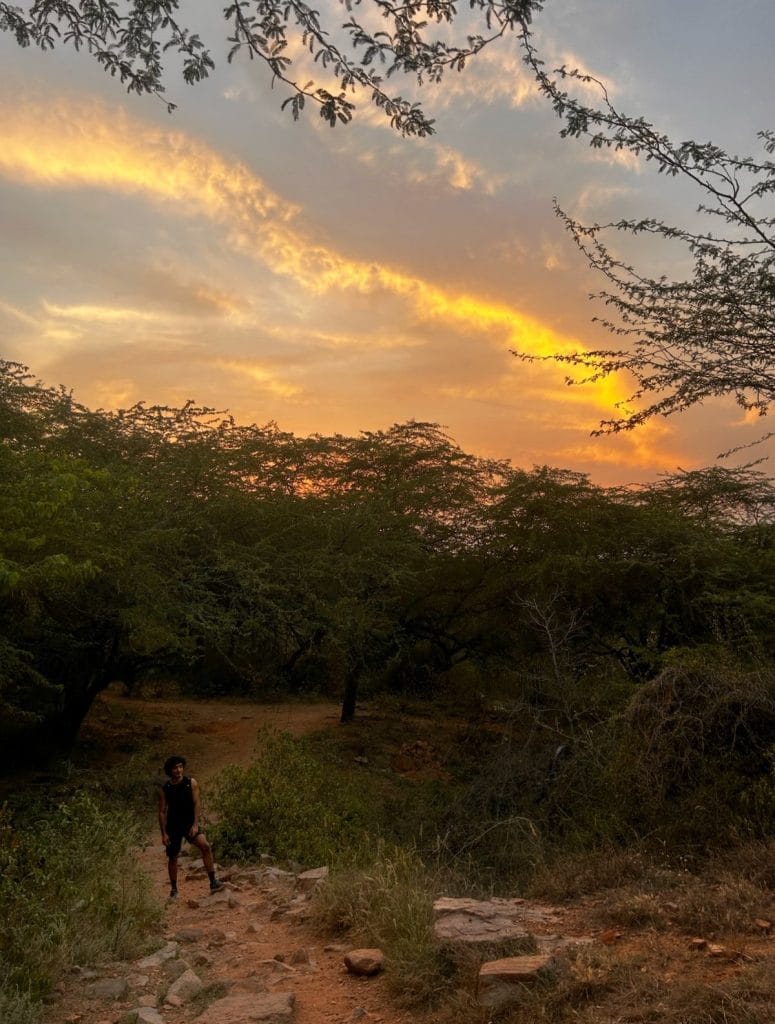
At the edge of the Aravalli scrubland, Maheshwari and other women gather as the night starts to loosen its grip. They are all members of Trail Femmes, a trail-running and hiking community for women. Setting out on narrow paths through thorny brush, this is where they find freedom from the traffic and smog of their usual morning runs.
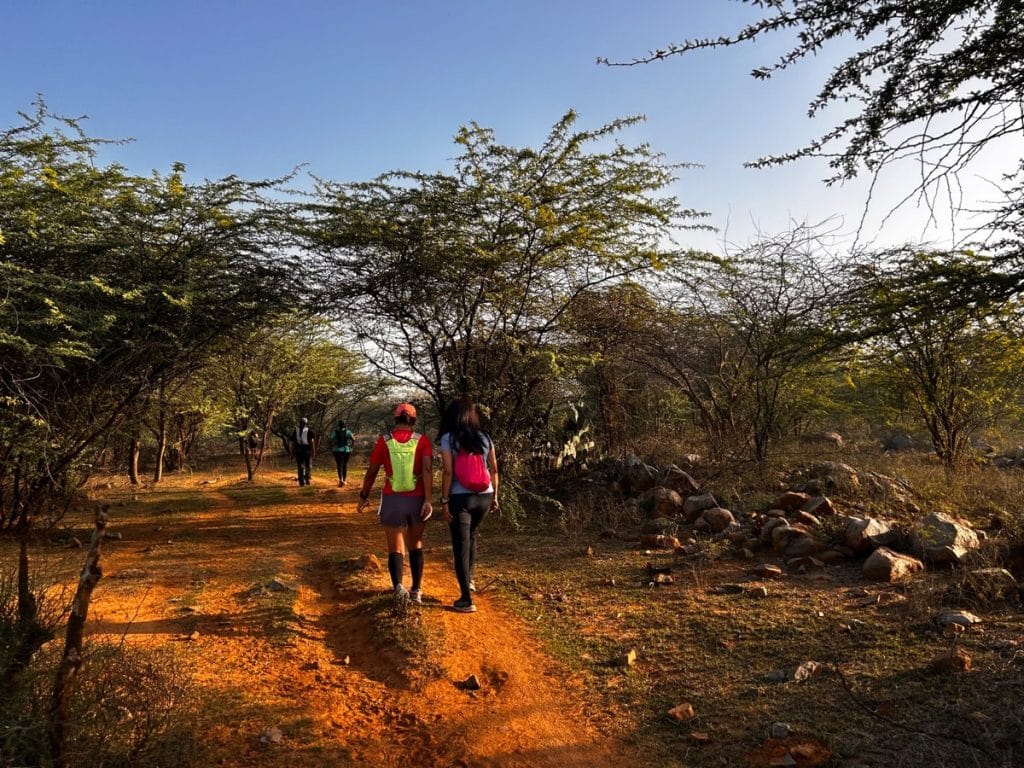
“These natural trails and green spaces around Delhi are so important. They give us a chance to step away from the urban clutter of Noida,” said Maheshwari, who has tried road-running and doesn’t enjoy it.
What began as a pandemic habit has, over four years, evolved into a trend that’s only gathering momentum. India now has about 2.5 million registered runners, up from just 10,000 in 2004. Running events have grown from 528 in 2019 to about 1,500 today. But roads can be stressful and dangerous, and some runners want something more pleasurable.
The trails snaking through Delhi-NCR’s patches of wilderness have long been the province of dedicated runners, but now groups like Trail Femmes and CapitalTrails have repackaged the experience as exploration, offering accessible, quick escape. Every month, they circulate calendars of hikes and races through social media and word-of-mouth.
“For younger people, road running is quite popular. It has a certain glamour, with big events and visibility. Trail running is much quieter and more grounded. Some come for the run, others simply want to hike, sit by a lake, or take in the scenery. It is less performative and more about slowing down,” said Juby George, founder of Trail Femmes and a trail runner for over a decade. “There is a steady increase in people seeking out these natural spaces.”
Also Read: A dog’s day out — how a labrador, indie, and retriever spent their Manali vacation
A sound engineer, a pharma exec, and an expat
The Sunday trail race was an antidote to the exhaustion of 9-to-5 jobs, but everyone knew the 28-km adventure from Damdama Lake to Panikot Lake wasn’t going to be a walk in the park.
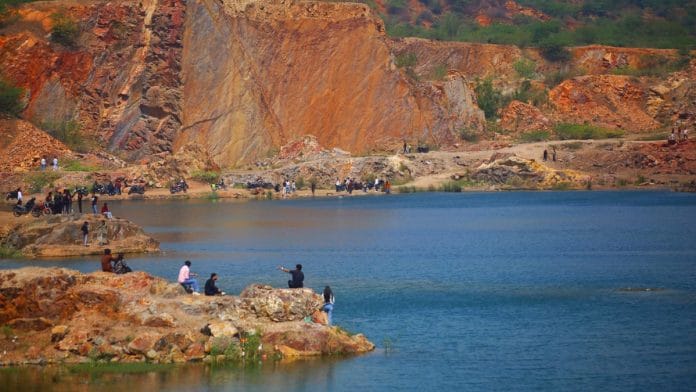
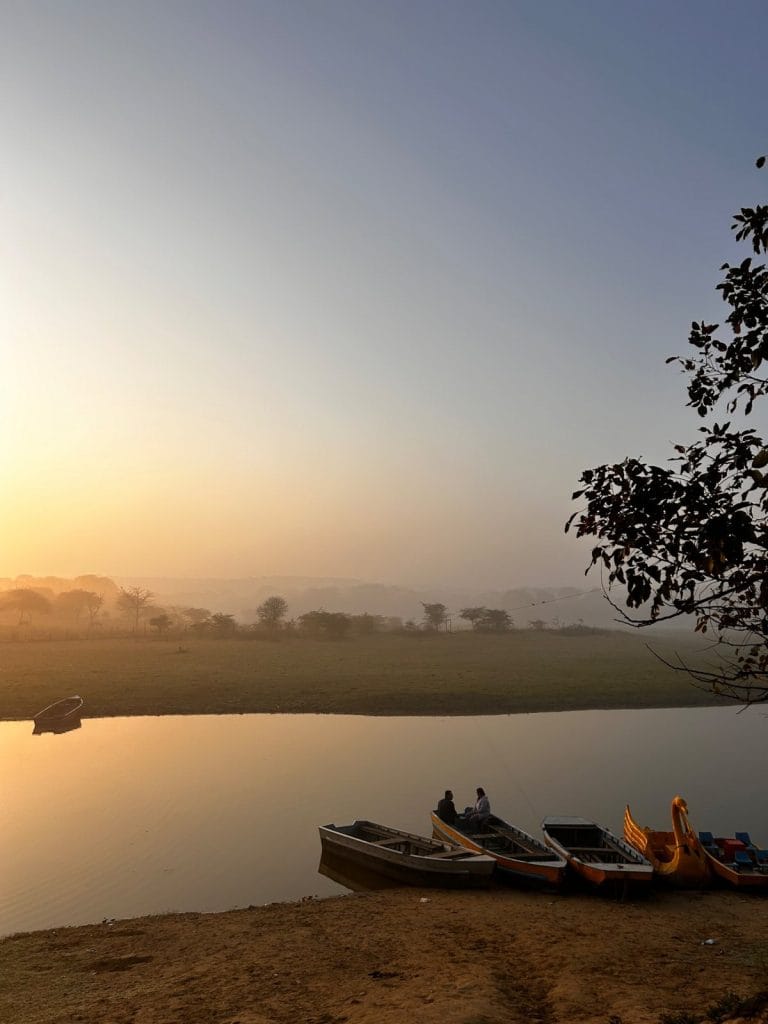
When a group of some 20 people, ranging in age from around 8 to their late 50s, reached Damdama at sunrise, the reaction was a collective gasp of “wow” as they took in the expanse of placid water just 24 kilometres from Gurugram. Photos were hurriedly clicked, but there was no time to stand and stare. It was get-set-go time for the race, organised by the trail-running platform CapitalTrails.
Among the runners was Siddharth Mehra, visiting home in Delhi from his job as a sound engineer in the UK. He had joined looking for the kind of “green experience” he could not find in DDA parks or society walking paths.
“In the UK, you have spaces to run in nature. In Delhi, I didn’t want to run on the road,” Mehra said. He wanted “gorgeous views” and this race promised them. Headphones on, song of choice playing, Mehra set off.
The route to Panikot Lake cuts through a small Haryana village, allowing city runners and hikers to get a glimpse of a different pace of life: Haryanvi men smoking hookah, women cleaning the courtyard, kids running in the winter sun. Along the way, they discover ponds, narrow forest paths, and perhaps the flash of a jackal’s tail or Nilgai droppings.
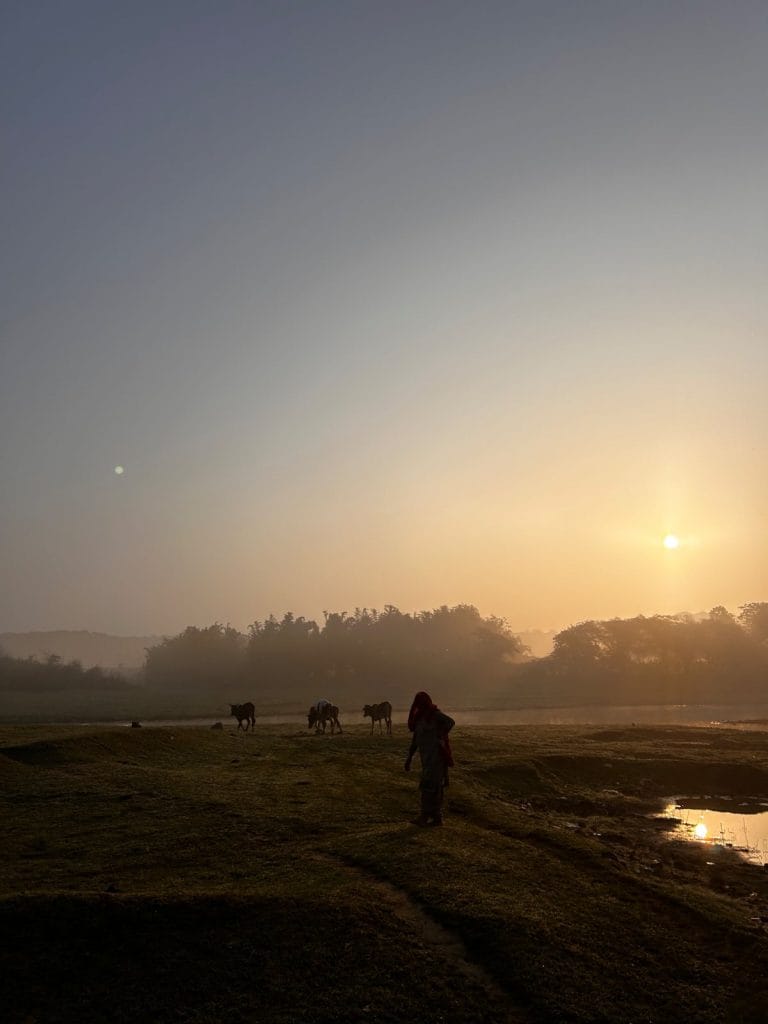
For Micah, a Spanish expat who has been working in Delhi for around three years, trail-running is a way to connect with the country itself. This time, he’d brought his 8-year-old son with him. Micah’s discovery of the day was a hut he saw along the trail.
“I saw them using a long pipe and a machine,” he said excitedly, showing pictures on his phone of a hookah to other participants. Micah added he’d never seen this much greenery in NCR before, though he has chanced upon wild animals on other outings.
“My favourite part of trail running in Delhi is encountering wildlife such as jackals, snakes, wild boars, monkeys and peacocks,” he said.
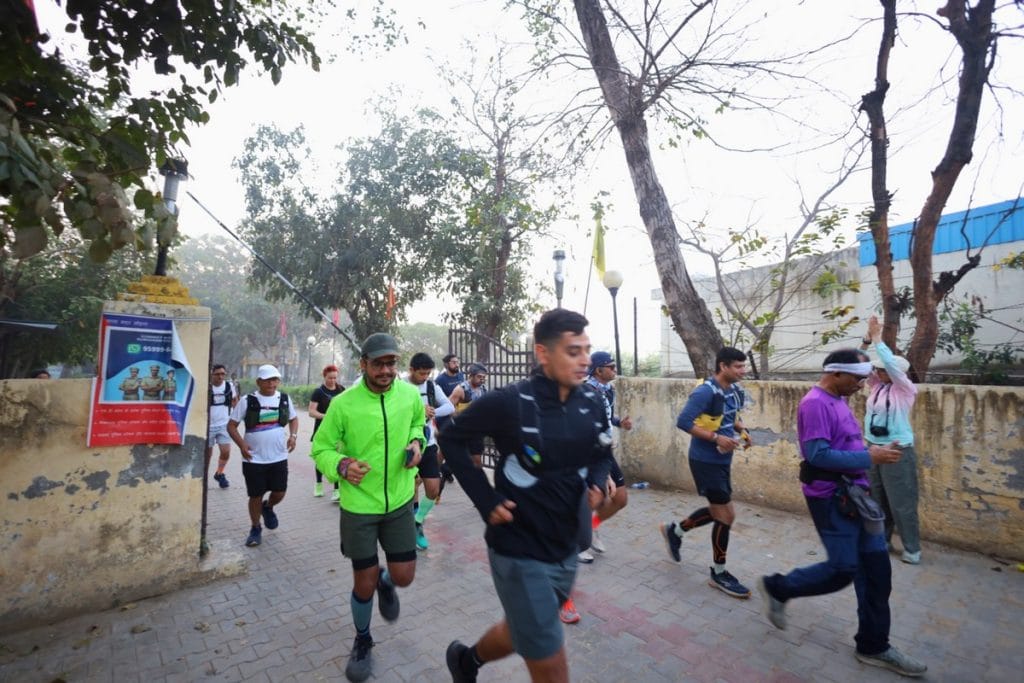
CapitalTrails, which most of the group members learned of through Instagram, runs hikes and races in many of Delhi-NCR’s trail routes: Jahanpanah City Forest, Sanjay Van, Asola Bhatti, Aravalli Biodiversity Park. Ticket prices start at Rs 500. Co-founders Nakul Butta and Kshitish Purohit are constantly scouting for new paths, poring over Google Maps and testing routes on the ground. In three years, that search has grown into a 95-kilometre loop.
“It is a lot of work, but it grows from a shared need to explore,” said Butta. “Along with exploration, we also focus on education—people are taught how to navigate using GPS and how to move safely in forest environments. Many participants go on to apply these skills in bigger mountain terrains later.”
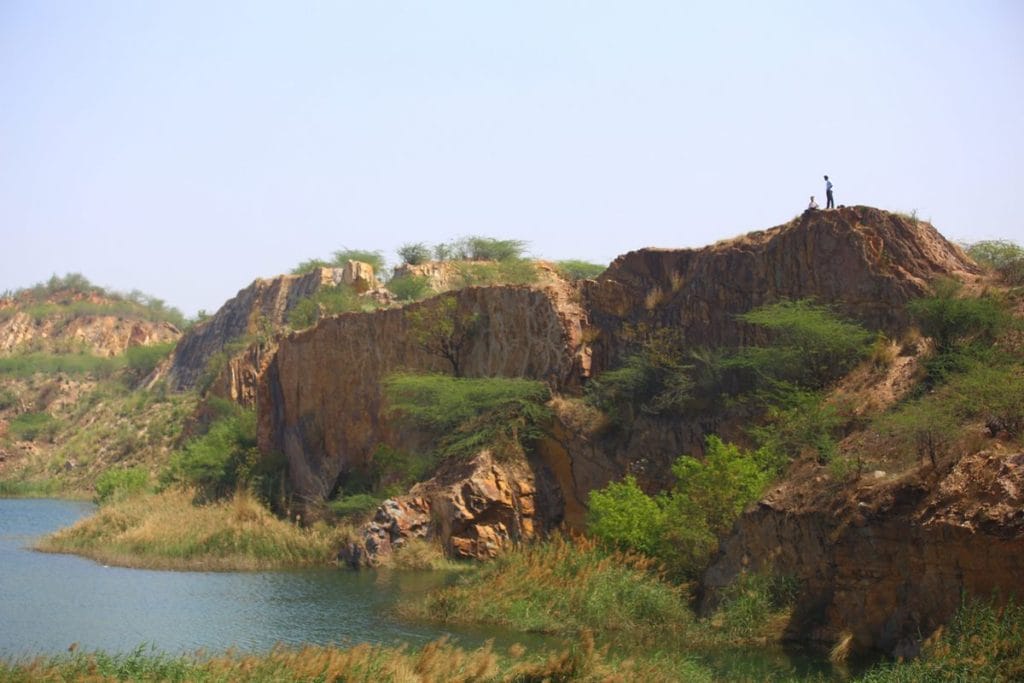
Sometimes, the environment tests those skills. Novice runner Jitendra Sattigeri, a pharma executive in Gurugram, had to rely entirely on a pre-downloaded map as there was no signal.
“I got lost a few times trying to find my way back, but that is part of the fun. It keeps you alert,” Sattigeri said. It was his second such run and he is excited about exploring more of the Aravallis.
Between 11 am and 1 pm, participants trickled into the end point at Panikot, known somewhat optimistically as the Pangong Tso of Haryana. Some were worse for wear.
One runner arrived with a gash on his leg and was quickly given first aid by a volunteer. But when Micah and his son made it back unscathed, the exhaustion was momentarily forgotten.
“Woohoo, yay, you guys did it!” the group cheered.
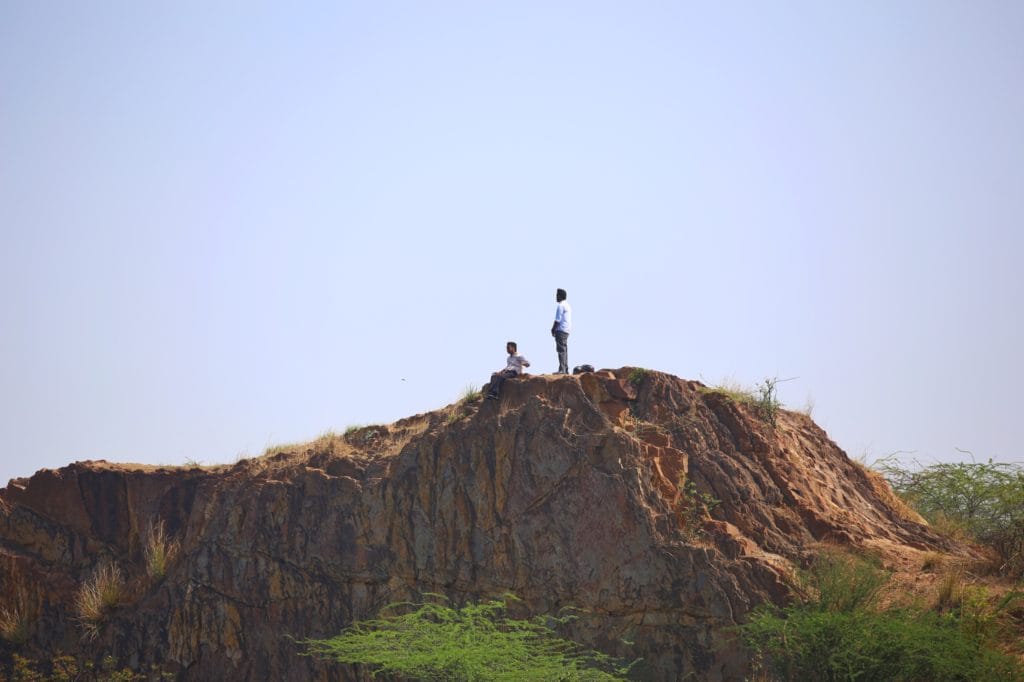
A lone ranger
Warnings abound about not traversing trails alone, in case of injury or unfriendly encounters with wildlife or humans. But Vibhu Grover is not one for groups.
The 25-year-old independent filmmaker, who is training for a race in Himachal, has no use for treadmills, and Delhi’s manicured parks offer him nothing. He wants the adrenaline of stone shifting underfoot and uneven ground. And he gets it in Sanjay Van, a 1,550-acre expanse of forest in South Delhi, where he has been training since 2022.
“I prefer running here over roads any day. Trails feel more real, less overwhelming than Delhi’s traffic and noise,” he said.
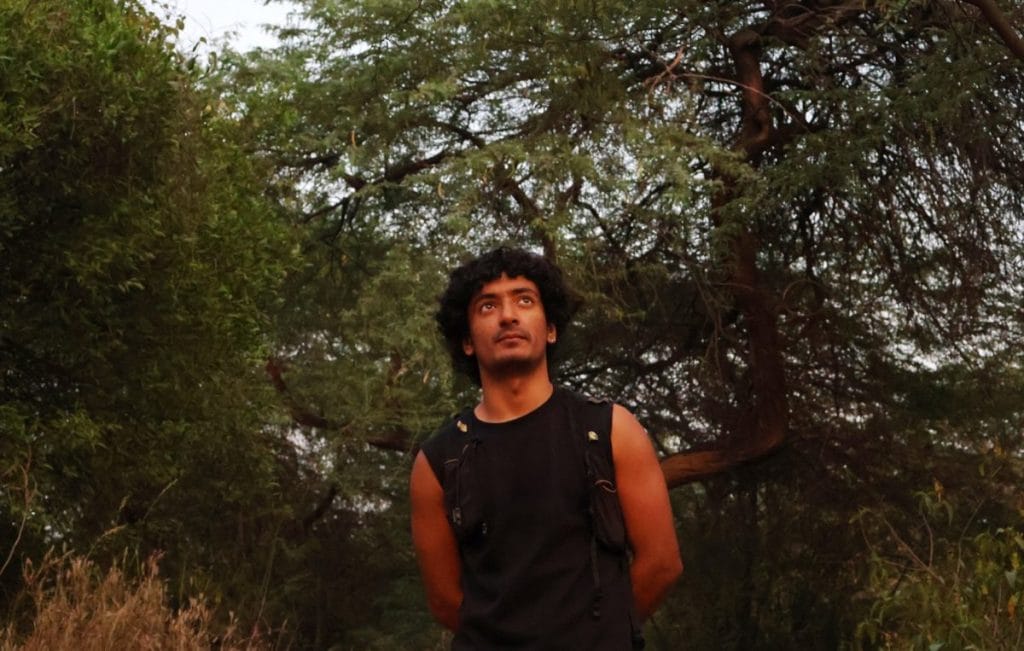
Sanjay Van is a familiar haven for him. A Delhi boy, Grover has been chasing trails in and around the city since childhood. He first came to Sanjay Van as a kid on a cycle, watching for the snakes that crossed his path during the monsoon. The place has been his ground ever since, the place where he learned to hike.
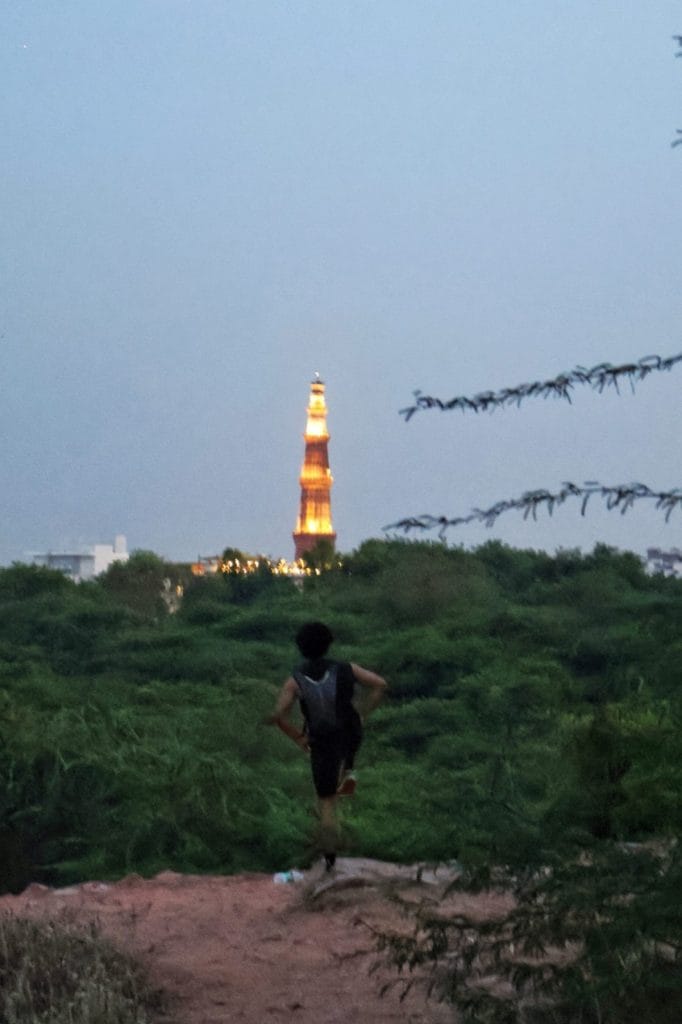
He climbs the ruins of Lal Kot Fort inside Sanjay Van faster than a monkey, every holding point burned into his muscle memory. At the top, the view opens up. Qutub Minar in the distance, a canopy of trees, and a rare moment when the rest of the city disappears. He starts walking again and finishes the run in an hour.
“It is not exactly a wild forest, but it is probably the wildest Delhi gets,” said Grover.
‘Me-time’, city tethers
At a cricket ground surrounded by high-rises, Gunjan Maheshwari joins a band of women at 6 am, her baby-pink running shoes still spotless against the dirt. Among them are a doctor, an artist, corporate employees, and stay-at-home mothers, but the only identity that matters now is “runner” or “hiker”.
Trail Femmes founder Juby George goes over the logistics. The runners will do 13 kilometres, the hikers eight. The route map and a list of essentials had gone out by email the day before.
Maheshwari, here with two of her friends, is one of the hikers. The aim is to see the first ray of light falling on rocky outcrops and scrub forests. Some have travelled from Gurugram, some from Noida, and a few from Delhi. Everyone is here to walk away from the city and for some ‘me-time’.
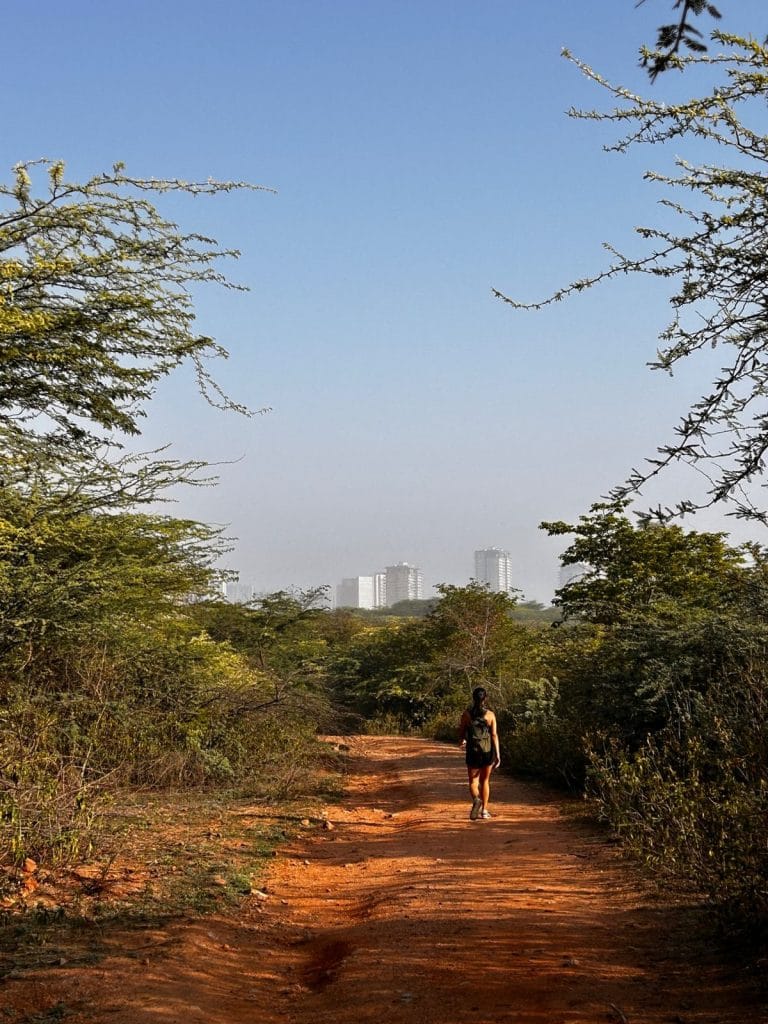
As the hikers set off, the skyline behind them slips out of view—the Hilton at Baani City Centre, the Genpact tower, the lavish towers of Golf Course Road, Airia Mall. The sky widens, the scrub stretches ahead, and the air takes on a rusty, earthy smell.
But the city does not let go entirely. Even out here, the phones and the signal are invisible tethers to the relentless, soul-sucking anxieties of urban life. Maheshwari called home at least four times during the walk to check on her children.
She has moved several cities with her husband, who works at an IT company. Pune, then Gurugram, now Noida. Her routine has been the children, the family, the occasional stroll in the society park. Last year, inspired by her husband, she decided to try a marathon.
“I practised for 20 days, running on the road, but never quite enjoyed it. Running on the road can be dangerous and tiring,” said Maheshwari, who was on her first hike with the group.
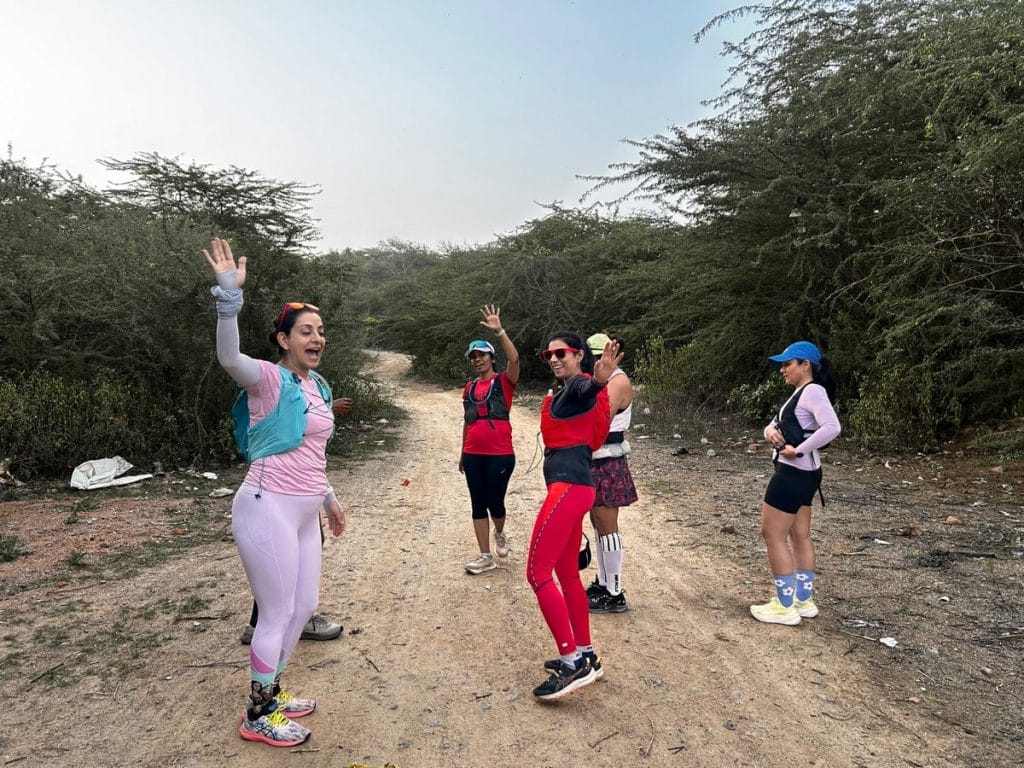
When Trail Femmes started in 2024, it only offered running excursions. But gradually, George learnt there is a demand for walking, hiking, and slow exploration. Every month, there’s a new location, new discoveries.
“Not everyone wants to run,” she said.
The hikers move in pairs, taking careful steps over the rocks. Three kilometres into the loop, a small lake appears behind the bunds. Phones come out again. “Oh look, buffaloes are taking a bath.” The group stops for ten minutes to soak it all in. At another point, they stumble upon a small gaushala.
Dam, the head of the hike, whistles. “Wrong turn, wrong turn!”
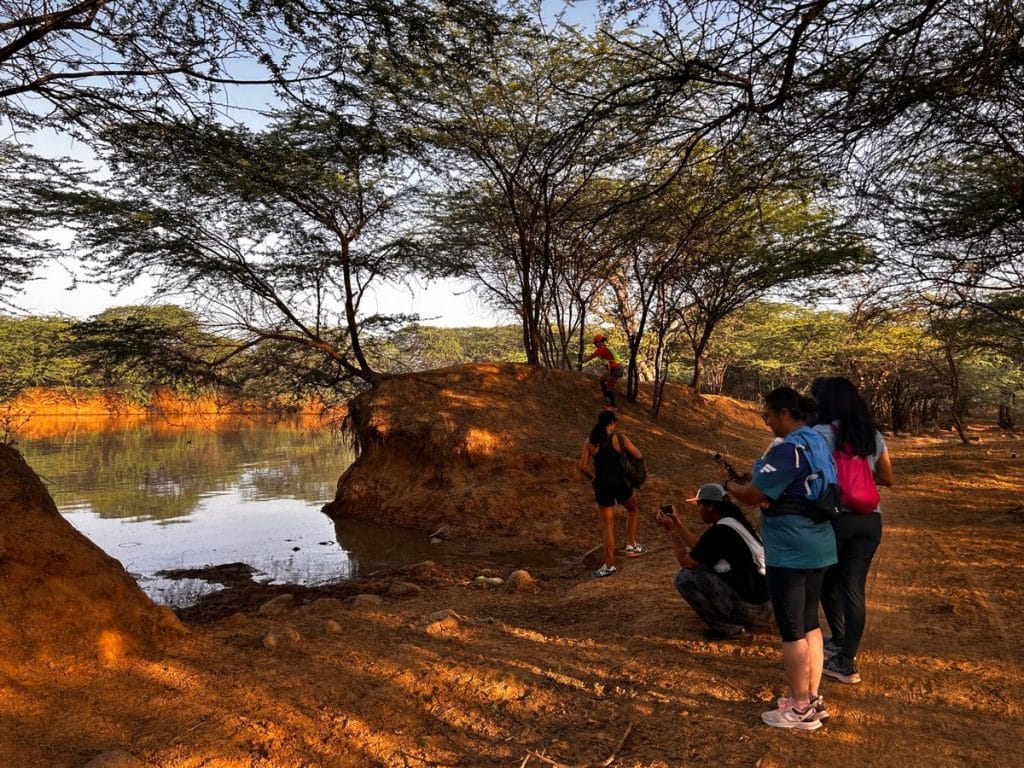
The bucolic idyll is at times interrupted rudely by signs of the city. They shake their heads at the sight of concrete waste, dumped between the scrub and the kaccha track.
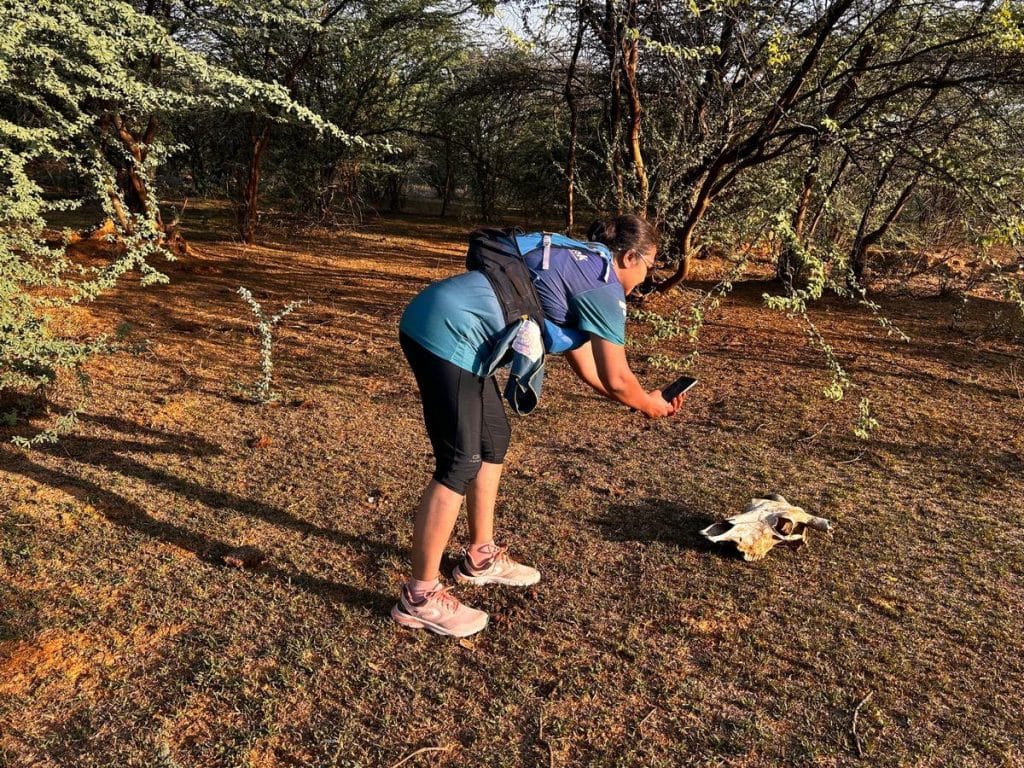
“Ye sab kachra yahan fek dia” (Look, how they’ve dumped waste here), said one hiker. Nature’s detritus, however, is met as exotic novelty. Spotting the carcass of a bovine, a fascinated Maheshwari stopped to click photos.
The women, having recovered from their wrong turn, walk back towards the cricket ground. The high-rises come into view again. It’s 8 am and many other hikers, cyclists, and runners are just starting their day. Some are kitted out in full hiking gear, a few even carrying trekking poles for what is at most an eight-kilometre walk.
“More people are taking to outdoor activities, which is great, but it also brings challenges,” said George.
The price of discovery
As these ‘hidden’ pockets are discovered by residents desperate for outdoor spaces, the very thing that makes them an escape — their isolation — is disappearing. Loud ring tones drown out bird song and chip packets flutter among the branches.
George worries about losing the Aravallis — her shelter from the corporate grind — to mining and policies that reduce protection for the range.
“I hope we can preserve some of these trails in their natural state, without turning them into fully commercialised spaces,” she said. “When you urbanise these natural spaces, you inevitably bring in vendors, plastic, and waste.”
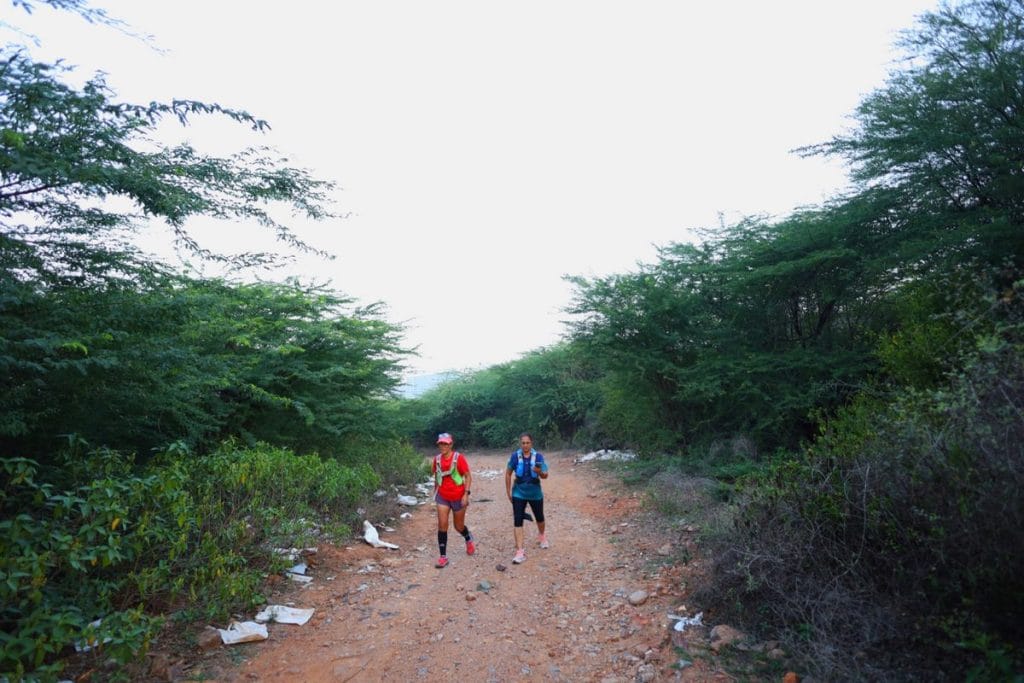
Runners on the Damdama-to-Panikot route saw the same thing: plastic waste littering the forest and village paths.
Grover has witnessed Sanjay Van change too. The trails he walked as a child are no longer as still and quiet. Sometimes, loud groups come. The stream that runs through Sanjay Van has changed colour over the years. Grover calls it the “beautiful naala”. The air near it carries a strong, unpleasant smell.
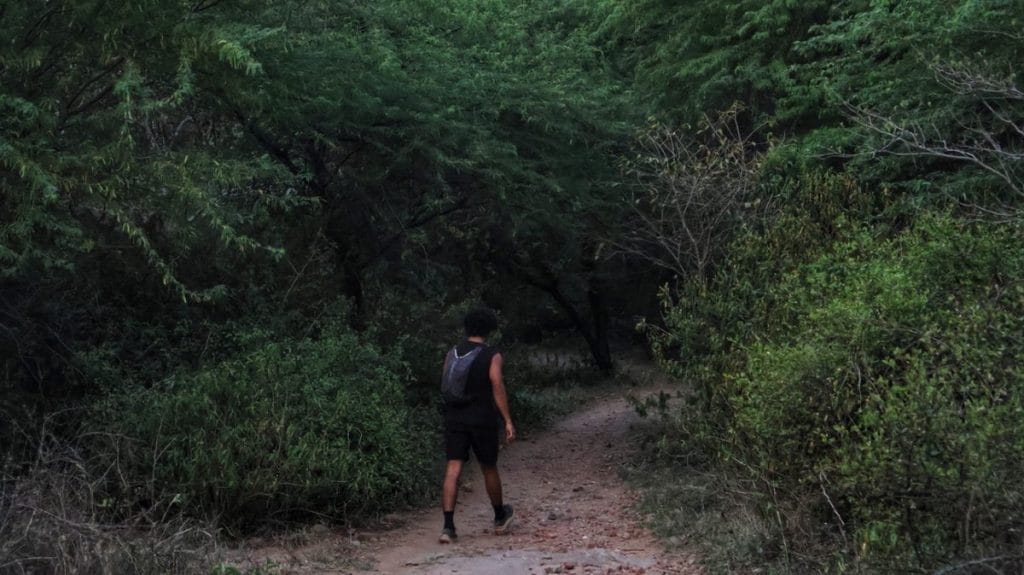
And so, Grover keeps walking. He admires the pink bougainvillea that still blooms on either side of the road and pauses to look at a yellow flower he has never seen before.
Also Read: Delhi’s Project Otenga pairs Northeast fine dining with mental health. ‘Not a restaurant’
Respite in Delhi’s pollution
On most days, Delhi’s air is unbearable, but green pockets such as Sanjay Van and the Aravallis provide a margin of relief. In these places, it’s cooler, fresher.
Neem leaves filter the harsh sun. Dhok leaves shelter runners like Grover.
“In peak summers, when temperatures hit 46-47 degrees, Sanjay Van is the only place in Delhi where I can even imagine running,” Grover said.
But when the winter smog reaches its toxic peak, even the trees fail. Grover usually retreats to a gym or leaves the city, but those bound by full-time jobs don’t always have that luxury. They return to the trails because they are the only lungs the city has left.
“If the entire city is choking on pollution, it is slightly better inside the forest, there is definitely more oxygen to breathe,” said George, who leads a few runs and hikes through these months.
Some participants, she added, cover their faces with masks and still come to explore, never mind the advisories about the apocalyptic AQI.
“These areas are better. We can still see smog, but the impact is less,” said expat Micah, who has been on several trails in Delhi-NCR, including Asola Bhatti.
(Edited by Asavari Singh)