




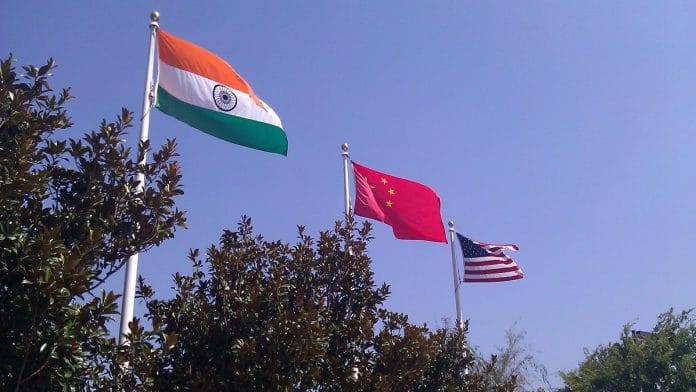

After contending with tariffs, India’s manufacturing sector may now need to navigate competing legal regimes. The United States has long relied on export controls to shape the global flow of technology, components, and equipment. China is now pushing back—most recently through State Council Orders 834 and 835—which empower authorities to investigate and sanction any foreign company or individual deemed to be moving supply chains out of China. As a result, Indian firms manufacturing in India for global brands, while sourcing from Chinese suppliers, could find themselves in the crosshairs.
The two recent Chinese orders represent Beijing’s most sophisticated attempt yet to build a counter-architecture to US export controls. Decree 834, issued on 7 April, protects China’s industrial and supply-chain security. It allows authorities to review actions by foreign entities or individuals and retaliate with measures such as trade and investment restrictions or limits on market access. Decree 835, released a week later, sets out a system to identify and punish foreign actors that comply with Western sanctions or other restrictive measures targeting China. Notably, enforcement can extend beyond companies to their executives, who may face personal legal consequences, including exit restrictions.
The two orders are the newest in a string of regulations China has tested over the past few years. They are more systematic and wide-ranging than Beijing’s earlier, ad hoc responses, such as WTO complaints or probes of individual firms. Recent steps include export controls announced in April 2025 on medium and heavy rare earths, followed by controls in October 2025 covering lithium batteries, graphite, and rare-earth technologies. For the first time, the October rules required foreign companies to secure Chinese export licences even for transfers of controlled items between two countries outside China. While formally applicable to all foreign firms, the measures were structured to maximise legal exposure for US companies and others in their supply chains.
Also read: US will try to derail India’s rise. New Delhi must put behind innocence in ties
Negotiation tool
This is the latest phase in the US-China technology competition, which now spans supply chain law, export controls, labour compliance, and semiconductor access. Armed with measures that mirror US export control orders, China has been wielding these instruments as negotiating tools. It suspended the October 2025 rare-earth controls at the Busan summit between President Trump and Chairman Xi later that same month. In exchange, they secured a postponement of the US’s BIS Affiliates Rule, which would have extended Entity List restrictions to hundreds of Chinese-affiliated firms, and lower tariffs on Chinese goods. The two latest orders, 834 and 835, were issued weeks before President Trump’s scheduled visit to Beijing in the middle of May.
Indian original equipment manufacturers (OEMs) that produce for US firms are already required to comply with US obligations. The Uyghur Forced Labor Prevention Act (UFLPA) requires them to trace components through China-linked supply chains, maintain documentation, audit suppliers, and demonstrate that no prohibited materials are used. The BIS Entity List bars imports containing copper, lithium, molybdenum, or tungsten sourced from listed entities. These requirements shape supply chains across electronics, automotive, aerospace, solar, and telecom, and have already led to Indian shipments being detained over suspected forced-labour links. With Orders 834 and 835 now in force, Indian OEMs could face Chinese penalties for complying with US requirements, without a state-backed framework to navigate the conflict.
Other countries have built instruments to manage this problem. The EU Blocking Statute gives European companies legal standing to resist foreign extraterritorial demands on EU soil and recover damages from parties enforcing those demands against them. The bloc has negotiated carve-outs with Washington on UFLPA and established dedicated working groups to address jurisdictional conflicts. Japan has structured its semiconductor export controls in alignment with the US, providing Japanese companies with regulatory clarity. In contrast, India’s Ministry of External Affairs, Department for Promotion of Industry and Internal Trade (DPIIT), the Ministry of Electronics and Information Technology, and the Ministry of Commerce are yet to comment on orders 834 and 835.
Also read: How India should prepare for a future war with Pakistan and China
India’s vulnerabilities
For now, the reliance of Indian companies on China’s supply chain may save them. The orders are aimed at companies looking to replace China, not those that maintain partial engagement with it.
DPIIT’s recent amendment to Press Note 3—allowing non-controlling Chinese (and other bordering countries) beneficial ownership up to 10 per cent under the automatic route and the 60-day fast-track approval for manufacturing joint ventures in electronic components, polysilicon, and capital goods—signals that India intends to encourage carefully structured China-linked technology partnerships. For the moment, China-plus-one is the least legally exposed position available to Indian manufacturers.
India needs three things before facts on the ground are altered irreversibly. First, it needs to begin work on a protective instrument for Indian-domiciled companies when conflicting extraterritorial demands land on Indian soil. Second, it must explore bilateral mechanisms with both Washington and Beijing that reflect India’s distinct position as a neutral major manufacturing hub. We should not be collateral in someone else’s negotiation. Third, the government must provide public guidance on both Chinese and American compliance mechanisms for firms and executives exposed to China.
Even if the Trump-Xi meeting leads to a temporary truce, compliance mechanisms will continue to be weaponised. Unless India moves to guard itself, it may find its manufacturing ambition permanently dependent and exposed.
Deep Pal is Director, Geopolitics and Policy at Koan Advisory Group, a Delhi-based consultancy firm.
This article is part of ThePrint-Koan Advisory series that analyses emerging policies, laws and regulations in India’s technology sector. Read all the articles here.
(Edited by Theres Sudeep)