





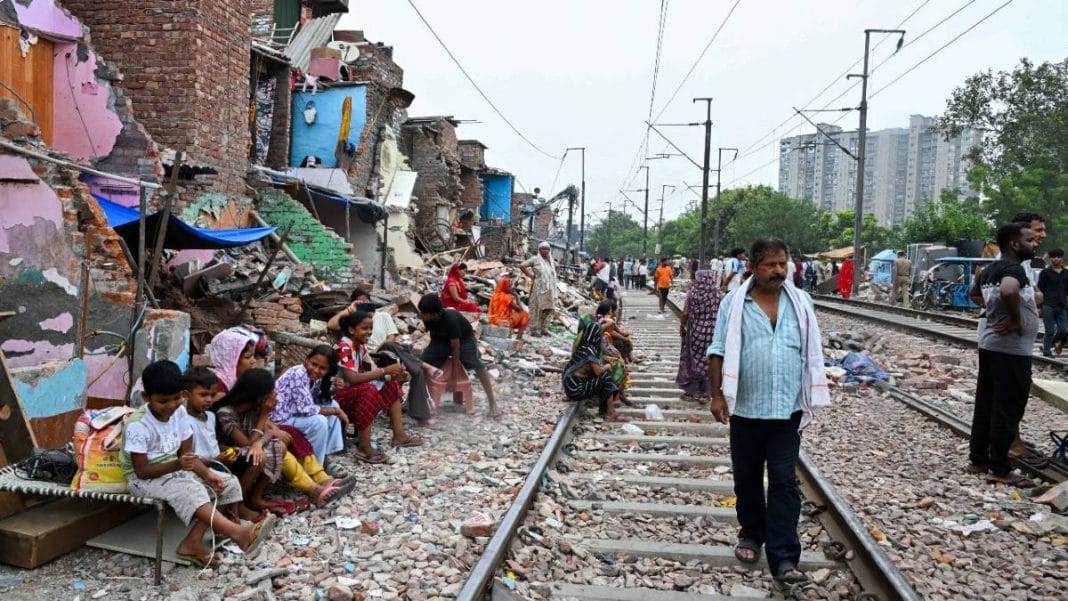


Walk through any jhuggi (slum) cluster in Delhi and you will notice something strange. A few streets away, residents cook with piped natural gas or PNG. The infrastructure is close enough to see. But for the jhuggi household, it might as well not exist. This is not by accident. It is the result of a system that was never actually designed to include them.
India has been on an ambitious mission to expand city gas distribution networks. The network of IGL (primary supplier of PNG across Delhi) has been growing rapidly. The government wants every urban household on PNG. It is cleaner, cheaper and better for air quality.
The policy vision may sound inclusive but in reality, it isn’t.
To get a PNG connection in Delhi, you need a few things. A registered address. Property documents. A room that meets minimum ventilation standards, at least 2 percent of internal floor area. A security deposit of Rs 6,000-7,000. And the willingness to wait for IGL to survey and approve your premises.
Jhuggi households fail almost EVERY ONE of these requirements. The settlements are often built on land they do not legally own, which means no registered address and no property documentation. The homes are small and often with a single room shared by an entire family, with bad ventilation. The security deposit alone is significant for a household living on informal wages. And because jhuggis are classified as “unauthorised structures”, they are simply not on IGL’s coverage map in the first place!
The result is that the same communities most likely to be cooking on biomass or kerosene, with all the health consequences these entail, are the ones most excluded from the infrastructure that could make a difference.
What makes this particularly frustrating is that nobody designed it to be discriminatory. The safety standards exist for genuine reasons. Gas is dangerous in poorly ventilated spaces. The documentation requirements exist to prevent fraud. The tenure requirements exist because extending services to unauthorised structures is legally complicated. Each and EVERY rule has a logic. But the additive effect of rules written entirely for formal, planned settlements is the exclusion of everyone who lives outside them.
That is not safety. That is the infrastructure equivalent of “avoidant coping mechanisms”, a system that protects itself from discomfort rather than actually solving a problem.
India recently began mandating PNG transitions in covered areas, with LPG (Liquefied Petroleum Gas) supply to be phased out for households that do not apply for a PNG connection within a certain window.
For households in planned colonies, this is a nudge toward a cleaner future. For jhuggi households who cannot get a connection no matter how hard they try, it is more of the same, no change except for the well-off civilians.
There are solutions. Community metering, where a single meter serves a bunch of households through a shared distribution point, sidestepping the individual documentation and ventilation requirements is one. Some cities have piloted similar models for water and electricity in informal settlements. It is not simple, but it is not impossible either.
What it requires is someone to actually design infrastructure with jhuggi households in mind rather than hoping they will somehow fit into a system built without them. The gap between the pipeline and the jhuggi household was not a technical accident. It was a planning choice. And planning choices can be unmade.
Ayana Vardhan is a student of Delhi Public School, Vasant Kunj. Views are personal.
Also Read: From novels to reels: How storytelling is changing for our generation