





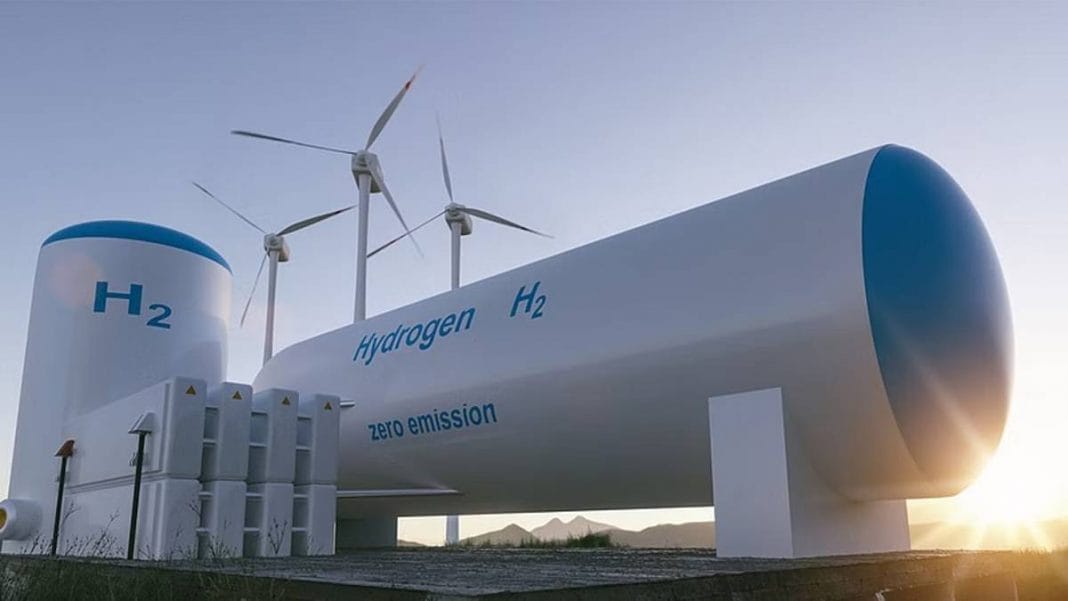


India’s National Green Hydrogen Mission (NGHM), launched in January 2023, is a government initiative that aims to make the country a global hub for the production, utilization, and export of green hydrogen by targeting an annual production of 5 million metric tons by 2030. To achieve this goal, India has begun deploying AI systems extensively, with companies like the Indian Oil Corporation implementing them for automating plants, predicting maintenance, and optimizing supply chains.
AI use in hydrogen production is largely because of its practicality as seen globally. By integrating AI, the efficiency of hydrogen production can be raised from 60-80% up to 90%+, energy consumption can be 10% less, operating costs can be 15% lower and hydrogen production can be 20% higher. The success of this endeavour, however, depends on the quality of its training data and is reliant on the absence of algorithmic bias, an aspiration that has not yet been made a reality.
Algorithmic bias: The result of inequitable training data
The primary manifestation of algorithmic bias is because of the insufficient data availability and quality. Power generation in India largely originates from technologically advanced states like Rajasthan, Maharashtra and Gujarat with well-developed energy sectors and low production costs. The training data, thus, disproportionately represents these regions. Models that learn from this data become optimised towards their specific conditions. Therefore, for states like Jharkhand and Odisha with underdeveloped energy sectors, AI underestimates production costs, raw material availability, power stability, etc. This ends up increasing the actual operational costs in those states making it harder for smaller producers to compete with the large corporations which can bear these costs.
Another issue faced by AI is the water allocation bias. Producing one kilogram of hydrogen requires around nine litres of freshwater. Since water scarcity is not a factor it considers, AI sees arid regions like Rajasthan and Gujarat as productive investments for hydrogen production because of their cheap electricity. Proposed fixes like desalination results in brine discharge, ultimately harming the marine and soil ecosystem. Thus, exponential costs are borne by local fishermen and farmers.
Algorithmic bias also proves to be an impediment in AI use for fault detection and maintenance. SVMs and random forests (which are machine-learning models used to detect early faults in PEM electrolyzers) are trained on data from developed economies. They expect stable power, consistent water, and strict maintenance. In India, this becomes impractical as normal variations like variable water quality, high temperatures, and irregular power supply are flagged as anomalies that require immediate maintenance.
Lastly, algorithmic bias results in unequitable job allocation. The NGHM expects to create around 6 lakh jobs by 2030 with state level targets ranging from 12,000 to 1.8 lakh. Algorithms that recommend workforce allocation direct opportunities towards well-developed states with existing educational infrastructures. Meanwhile, coal-belt workers who have directly transferable skills in terms of mechanical and electrical skill sets are systematically overlooked. Although in part this can be attributed to direct job experience, AI should be programmed to allow job opportunities to arise in states with less developed energy sectors to help expand it. Instead, AI allows jobs to become concentrated in places like Tamil Nadu and workers in Jharkhand and Odisha are left at a disadvantage.
Conclusion
Creating bias-aware machine learning frameworks therefore becomes essential to aid the growth of India’s hydrogen production infrastructure. A dataset of open-access materials and operations should be established in order to address algorithmic bias in hydrogen production and to not undermine the National Green Hydrogen Mission.
Jahnavi Sharma is a Grade XII student of Shikshantar School, Gurugram. Views are personal.
Also read: AI isn’t the problem. It’s how we use it