



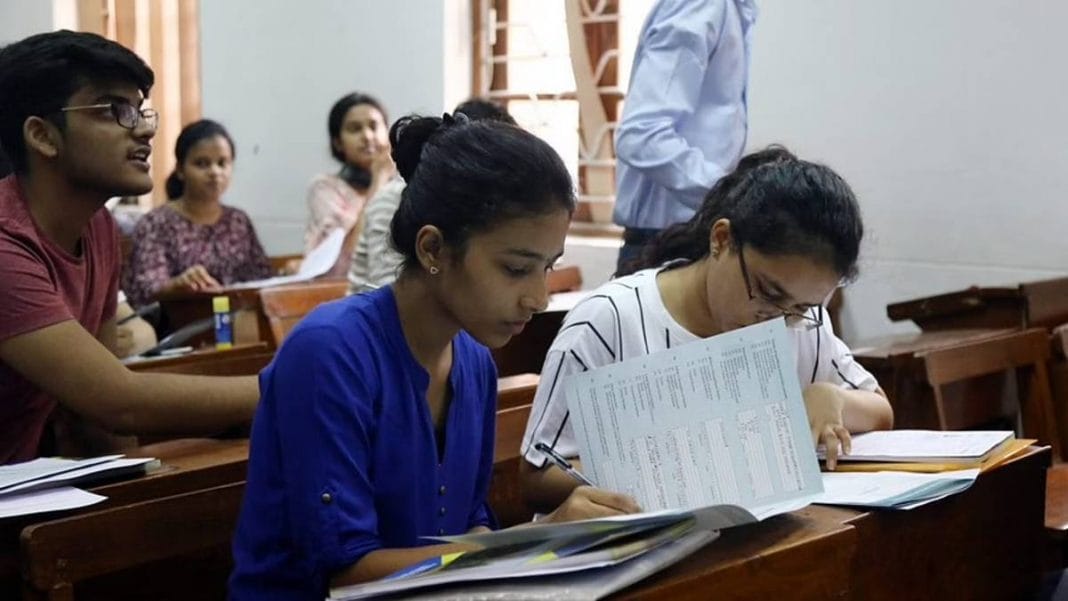


As a high schooler, what I think is that our education system is exactly like it was five decades ago. It promotes memorisation over innovation, marks over skills and examination over human nature. It is time for a change especially when we are stepping into the era of Artificial Intelligence (AI).
The torture of Board examinations begins right from Class 8. This is where the whole world around a student changes: constantly reminded by parents, teachers and school not to waste precious time on hobbies, sports or other extra curricular activities.
The teenage years are the formative years for anyone but in our country, the teenagers are only taught to cram for exams. In school, practical knowledge is overlooked along with the development of skills like communication, financial planning or leadership.
The skill of mugging up comes up and then tested. Science labs are only visited a handful of times in a year while the rest of the time is spent memorising theories!
I personally was a victim to this change. Till Class 8, my school used to have its own examination pattern. These examinations had questions based on real life applications as well which helped us think out of the box. But the whole pattern changed in Class 9.
The new pattern was according to the board exams and the questions were mostly theoretical. Even for practicals, you only needed to mug up a few derivations unless it was Physics! Apart from a few application based questions in Physics, there was not a single question in other subjects that would test intelligence.
Most developed countries focus on practical knowledge first and then theoretical knowledge. There students are given enough freedom to experiment, discuss, innovate and solve problems, which is different from our education system.
Here, the only aim of students is apparently to clear the Board exams and other competitive exams like JEE/NEET; the stress begins way before. The JEE and NEET race for admissions in premier institutes like IITs and NITs begins right from Class 8 or 9. The recent NEET paper leak controversy and the subsequent protests are proof enough of the flaws in our education system.
The education minister resigned, but I think now is the perfect time to actually rethink our whole education system. The student suicide rate is very high and has almost doubled in the last decade. As reported by The Times of India, “The number of suicides among students has increased by almost 80 percent over the decade”.
There are various reasons but we can’t deny the role of stress from academics. The marks that we secure in the exams should not be more important than our own lives
Even the future job market is changing with AI taking over many traditional jobs. Employers will no longer look for people with degrees but with skills like communication, creativity, teamwork, leadership etc. You need to learn to adapt and develop these skills which can’t be taught in schools or colleges
A possible solution may be for IITs and government universities to slowly shift towards a profile- based admission criteria rather than solely relying on JEE/NEET. But this also seems like a problem for students from economically backward backgrounds, as they may not have the resources to get a good profile as compared to those from higher income families
This can only be dealt with if the government takes concrete steps to boost public education. Currently, India only spends around 4.1 percent of its GDP on education as compared to the targeted 6 percent according to the National Education Policy.
This amount needs to increase so that government educational institutions can provide quality education to students with a focus on developing practical and life skills to adapt in this changing world, rather than the rote system currently followed.
Education is the building block of any country. Until our people are educated, how can we expect our country to rid itself of poverty, casteism, communalism, nepotism or any other ‘isms’?
India can’t sustain a 21st century economy with a 20th century education system. We need curiosity in the classroom, innovation over conformity, skills over marks, learning over memorizing.Students of today, make the country of tomorrow.
Padhega tabhi to badhega India!
Shivangi Saroj is a student of City Montessori School, Lucknow. Views are personal.
Also Read: India’s academic freedom lowest since 1900—worse than during the Emergency