



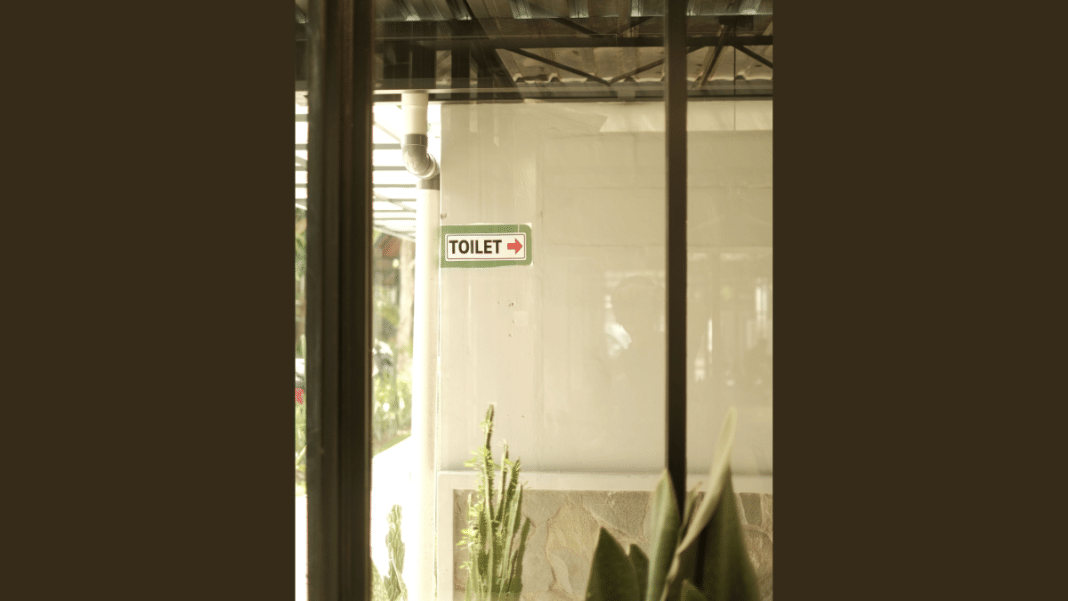


One of the more disheartening aspects of competing as a sportsperson in India—whether at the local, state, or national level—is the condition of the restrooms at competition venues.
The presence of a toilet ought to imply its usability. In practice, however, toilets in India often exist merely to satisfy a checklist. Where they are present, they tend to be unclean, poorly maintained, and without running water. In other cases, water is available but used so indiscriminately that the entire bathroom floor remains perpetually wet. Poor plumbing and damaged fixtures mean taps are frequently difficult to operate, and when they do work, they release water uncontrollably. Broken doors and faulty latches are commonplace, and overflowing dustbins mean that even those willing to dispose of waste properly end up leaving it “near” the bin rather than in it.
At one prominent stadium—a venue that had hosted the 2008 Commonwealth Games—where I once competed, the restrooms beside the swimming pool were entirely non-functional. Stepping into the changing room revealed no working lights. On my last visit there, my mother accompanied me inside simply to provide some light in the otherwise pitch-dark space. She nearly retched from the smell. I told her my trick was to breathe through my mouth—the only method that had ever helped me endure such conditions.
Mind you, any serious athlete will admit that, amid the nervous anticipation before a competition, the state of the restrooms is the last thing on their mind. This makes the neglect all the more troubling: Those most affected are often least equipped, in the moment, to advocate for themselves.
User accountability, too, is largely absent. We may take pride in our achievements in sport and academics, but restroom etiquette is evidently not something we are taught. Even where facilities are reasonably functional, users often leave them in poor condition. At a state-level competition in a smaller city, one participant defecated in the middle of a changing room, rendering it unusable for everyone else. The next scheduled cleaning was not until the following morning, forcing the remaining participants to crowd into the one other available changing room. Would that same individual have behaved this way in their own home? Would they have wanted to walk into a similarly fouled space had someone else been responsible?
“Swachh Shauchalaya – Humari Zimmedari” needs better dissemination among users.
Why do we tolerate such substandard conditions? There is a broader cultural pattern in how we treat public restrooms, an assumption that their upkeep is always someone else’s responsibility. Cleanliness requires effort on both sides—from those tasked with maintaining these spaces, and from those who use them.
At a national-level competition, the bins both inside and outside the facilities overflowed with garbage. Even so, this Delhi venue was a marked improvement over the one used the previous year for the Nationals in Gujarat, where the toilets were altogether unusable and the odour from outside was enough to deter anyone from entering.
Despite these shortcomings, one consistent strength ran through all of these competitions: the events themselves were organized with competence and fairness. Coordinating a large sporting event while keeping delays to a minimum is no small feat, and on that front, the organizers do an excellent job. The choice of venues (after all, not every location has access to an Olympic-sized facility), ensuring accessibility, and providing amenities such as nutritious food, water, and medical support for participants were all taken care of. But somewhere, the restrooms are a forgotten agenda.
Because most of these competitions involve students, and parents rarely have occasion to visit the restrooms themselves, this issue rarely gets raised collectively. It is time we began treating basic hygiene in these spaces as a priority rather than an afterthought. Clean, functional restrooms should be the standard, not a fortunate exception. No one is asking for a five-star luxury toilet. It is simply a request for facilities that work: functioning lights, doors that close, running water, and soap.
Elina Shrivastav is a student of Oberoi International School, Mumbai. Views are personal.
Also read: Why sanitary pads should be as ordinary as soap