







During PM Modi’s recent visit to the Netherlands, the Leiden University Library restituted the 11th-century Chola Copper Plates to the Government of India, a historic moment of repatriating stolen artefacts from the colonial era. And while this is a moment to celebrate, I cannot help but think…Now that we have them, can we keep them safe?
What many of us don’t know is that we continue to lose our history today through the illicit trade of artefacts and the private market for antiquities. One of the lucrative trafficking rackets is that of international trafficking of ancient antiquities from the Global South to the West. It remains an expansive problem in India, a country with such a vast and rich history, that our institutions are yet to wield the manpower to protect and safeguard it. Trafficking rackets have taken advantage of this and exploited India’s history by selling its antiquities in foreign auction houses with false documents and storing them in private collections, making it impossible for Indian scholars to study their own past.
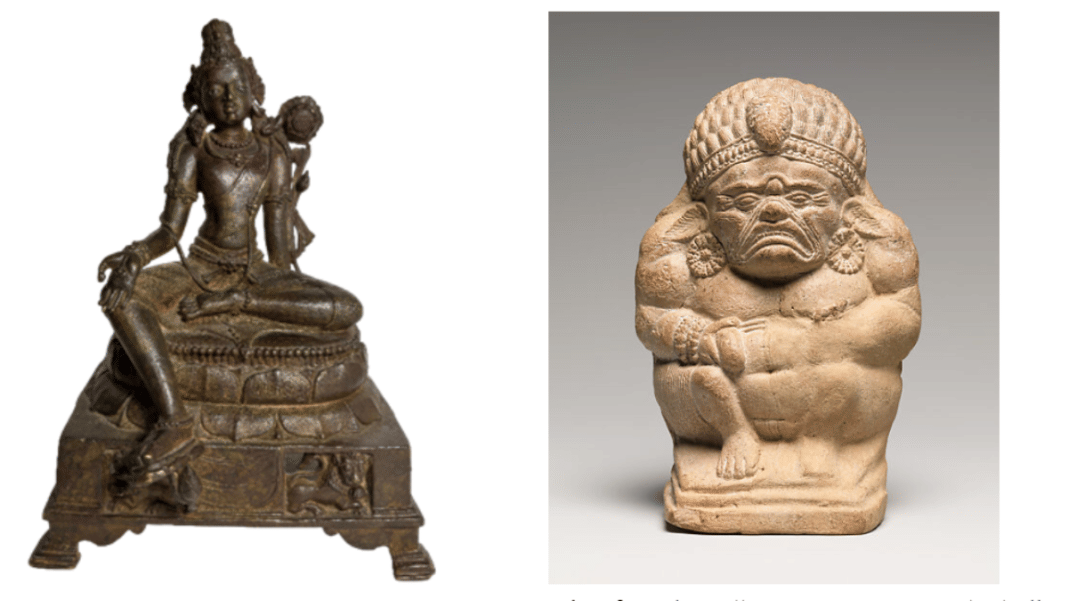
Most recently, in April 2026, the Manhattan District Attorney Alvin L. Bragg, Jr. announced the return of 657 antiquities to India that were collectively valued at nearly 14 million dollars. These were not objects stolen during colonial times; no, these were trafficked out of India. Many have been missing for decades, like the bronze figure of Avalokiteshvara, with an inscription that identifies the craftsman as Dronaditya of Sipur, located in modern-day Chhattisgarh. It is worth 2 million dollars and was placed in the Raipur Museum in 1952, from where it was then stolen, and has only resurfaced now. Imagine how many trafficked artefacts are yet to be rediscovered? They may be part of private collections unavailable to the public eye. How much history have we lost because of this illicit trade?
The trafficking of Indian antiquities is a sophisticated racket, with players having key roles in covering up the paper trail of theft. The Indian trafficker, Vaman Ghiya, who was arrested in 2000, was in close touch with famous foreign auction houses like Christie’s and Sotheby’s, and their experts would visit Ghiya in Jaipur to acquire more pieces from him. These auction houses were clearly aware of the illegal means by which these objects were retrieved, but overlooked the ethical considerations in favour of profit. Ghiya had three shell companies in Geneva, where he would ship off the artefacts and acid-wash them to remove any signs of trafficking. In the 1980s, he was a major source for auction pieces abroad. When his safe houses were raided by the police, at least 900 stolen artefacts were found.
The most recent idol thief has been Subhash Kapoor, an Indian-born US citizen who used to own the Art of Past gallery in Manhattan until he was uncovered in a $100 million smuggling racket. The crackdown on his racket has revealed his close ties to museums and other institutions, including the Metropolitan Museum of Art, which has been found to house at least 1,109 trafficked pieces in their catalogue after investigations, including a first-century BCE Indian work, Rattle in the Form of a Crouching Grotesque Yaksha. The Met has become known for its dirty business with smugglers and traffickers of art, and its director from 1967 to 1977, Thomas Hoving, has even admitted that he had approved the purchase of a large batch of Indian antiquities that he suspected had been smuggled.
It is not just museums and institutes that are involved in facilitating this theft, but also well-renowned scholars. Western historians and experts on Indian art, despite their love for Indian heritage, have taken part in encouraging the trafficking racket. Many are hired by institutes or private collections to create false scholarly blurbs and ownership histories on the items acquired, to create false provenances on the origins of these artefacts. They thus help provide legitimacy to the theft and cover up its tracks.
Famously, the scholar Mary Slusser, an expert of Himalyan art, justified her theft of Nepalese paintings from a temple by saying they would be neglected by their own people and now they could be protected in Western museums. While she is not wrong in her discretion that India and the rest of South Asia lack the manpower and work to preserve their own history, it still doesn’t justify robbing the countries of their history.
But what this does highlight is that we, as Indians, instead of just calling out loot, need to actively participate in learning our history and raising awareness to preserve it. Most artefacts and archaeological sites lie in rural areas, and many are discovered by farmers and construction workers, who hand them to middlemen that comes its way to a trafficker. The ASI lacks the funds and manpower to ensure this doesn’t happen. So, we need to provide heritage education to ensure locals can protect their history from traffickers and can stop the looting of more artefacts. While this doesn’t seem like a pressing matter, eventually there will be more Indian heritage abroad than in the country. If we don’t protect our history, nobody will.
Aditya Narain Mathur is a student at Prometheus School, Noida. View are personal.
Also read: Colliding futures: The impact of algorithmic bias in India’s hydrogen production