


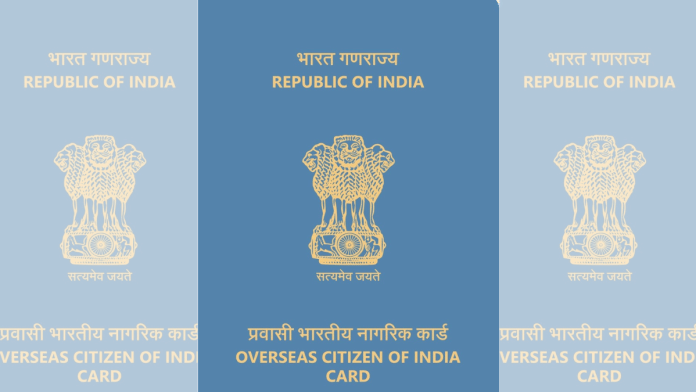
New Delhi: A protest, a “Leave India” notice and an apology. The Overseas Citizen of India card is back in the headlines. This time, in a high-stakes courtroom drama.
Bollywood actor Imran Khan, an OCI cardholder, received a “leave India” notice on 14 October after protesting against the Chief Election Commissioner Gyanesh Kumar. The Bombay High Court has since put the notice in abeyance until 7 December. But the hearing drew a sharp line between Indian citizens and OCI cardholders.
“You (Khan) had no right to participate in a protest of such a nature … The right to protest is not available to an OCI cardholder,” the court said.
But Khan’s case is one episode in a larger, increasingly contentious debate.
Fears are mounting that Section 7D of the Citizenship Act, 1955 – the statutory Brahmastra allowing the Centre to revoke OCI cards – has become a weapon to silence non-resident Indian critics. Between 2014 and 2023, 122 OCI registrations were cancelled. In 2024 alone, another 57 went, nearly half the previous decade’s tally.
A curious fate for a card born in 2005 with a very different promise. OCI was India’s grand invitation to its far-flung Pravasi Bharatiya (Overseas Indian) family: to come home, invest, innovate, and serve as informal cultural ambassadors. It was also New Delhi’s answer to a long-standing demand for dual citizenship.
But the invitation came after decades of distance – a distance that had not always existed and has only grown in recent years.
Before freedom, overseas Indians were revolutionaries in exile. From MK Gandhi’s Satyagraha in South Africa to Dadabhai Naoroji’s Drain of Wealth theory, the overseas Indians – built networks, raised money and plotted revolutions. London had Shyamji Krishna Varma’s India House, built in 1901. Paris had Madam Bhikaji Cama’s Paris Indian Society, founded in 1905. The Ghadr Party made San Francisco its headquarters in 1913.
Different cities. Different methods. One goal – Swaraj.
Then came August 1947 – and with it a sudden retreat.
“We are obviously intent on protecting the interests of Indians abroad… we cannot protect any vested interests which injure the cause of the country they are in,” Prime Minister Jawaharlal Nehru told the Constituent Assembly on 4 December 1947.
Decades later, in 2003, another Prime Minister would stand at Delhi’s Pragati Maidan, amid an electrifying musical jugalbandi, and greet those same overseas daughters and sons with two simple words: “Welcome home.”
So, what happened in between? Why did a country that had once looked beyond its borders to mobilise its people harden those very borders after Independence?
The answer lay partly in the complexities of nation-building. And partly, in anxieties of a newly decolonising world.
Nehru’s India
After the 1940s, across Asia and Africa, a wave of newly independent nations, after years of colonial loot and exploitation, were fiercely guarding their sovereignty and resisting any outside interference. Nehru’s India, on the other hand, was positioning itself as the moral anchor of a larger Afro-Asian solidarity, championing the principles of sovereignty and non-interference.
“The diaspora was increasingly viewed as an external element,” said Dr Smita Tiwary, assistant professor of International Relations at the South Asian University. Any involvement risked being seen as interference in another sovereign country’s domestic affairs.
And so, for Nehru, the answer was to urge Indians abroad to assimilate and remain loyal to their countries of settlement. The political umbilical cord had to be cut – or, at least, loosened.
Addressing the Constituent Assembly, on 8 March 1948, he asked:
“Now, these Indians abroad – what are they? Are they Indian citizens? … If they are not, then our interest in them becomes cultural and humanitarian, not political.”
Years later, while discussing Indians in Sri Lanka in the Lok Sabha, Nehru reiterated his stance,
“Strictly, legally and constitutionally, it is none of our problem. They are not our nationals. We are interested in their welfare, and we are interested in finding a solution,” he said on 2 September 1957,
So, a choice was made: non-interference over political engagement. But somewhere in that bargain, the diaspora got sidelined.
But was Nehru’s wall of non-interference unbreakable?
Not really.
The Ceylon exception
In newly independent Sri Lanka, freedom came with a harsh catch. Two citizenship laws – 1948 and 1949 – had left nearly a million people of Indian Tamil origin stateless.
This time, Nehru could not simply look away. And soon high-stakes negotiations culminated in the Nehru-Kotelawala Pact, 1954. The New York Times, reporting the next day, called it “a new step in the protracted attempts to settle the status of nearly 1,000,000 economically aggressive island residents of Indian origin”.
That October, when the two prime ministers met in New Delhi, Nehru made a rare, emphatic promise. If Indian Tamils wished to return to India, he said: “It is our duty and responsibility to take them. We will take them, and it does not matter what the difficulties are.”
A stirring promise, indeed. But Sri Lanka proved to be an exception, not a pivot. For millions of Indians elsewhere, Nehru’s prescription remained largely familiar – Assimilate. Blend in. Look inward.
That was exactly Nehru’s response when Myanmar’s nationalisation policies threatened Indian-origin businessmen in 1962.
Writing to Commonwealth Secretary YD Gundevia in February 27, Nehru said, “I am reluctant to ask the Burma Government not to nationalise their import or export policies because Indians may suffer from them.”
The same memo travelled to East Africa. As Kenya braced for independence, Nehru advised the diaspora in a 2 November 1962 interview with Kenya Broadcasting Service that Indians should “work in fullest cooperation with the people of the country they had made their home”.
Days later, the advice was more explicit: “to adopt the nationality of the country they live in.”
The doctrine of distance, however, outlived its architect. When Indira Gandhi assumed power, she ignored much of her father’s political playbook. Yet for the diaspora, the ghost of Nehruvian caution lingered.
Under her, said Tiwary, India became “a little more diplomatically aware and cautious” in its engagement with overseas Indians. That caution, however, was about to face its first trial.
Also Read: Arab royal hunters, oil crisis to power lines—Great Indian Bustard’s long fight for survival
A cautious opening
Indira did not have to wait until she became prime minister to discover the diaspora. She had been meeting overseas Indians for years, often accompanying Nehru on foreign visits, and even on her own.
At Kenya’s independence celebrations in December 1963, a glimpse of her evolving doctrine was visible. Recalling her visit, Lord Brockway noted in the House of Lords that Indira had “made a great appeal to the Indians to become Kenyan citizens.”
But once in South Block, however, her doctrine matured into a more visible diplomatic attention, albeit with unmistakable hints of Nehruvian continuity. Her first diplomatic test came soon after assuming office.
From 1967, a wave of Africanisation swept Kenya. Indian-origin residents faced trade restrictions and tighter work-permit rules, while Britain’s restrictions on East African Asians holding British passports added to the uncertainty — and the exodus.
India did not stay silent. But neither did it demand that Kenya abandon Africanisation – a classic Nehruvian balancing act.
So, on 14 March 1968, External Affairs Minister BR Bhagat flew to Nairobi. Days later, on 25 March, he informed the Rajya Sabha that Kenya had agreed to temporarily extend work permits for non-citizens, including British passport-holding Indians, by one to two years.
Across the Arabian Sea, however, another ultimatum was brewing. On 22 August 1972, The New York Times carried a headline: “Stunned Uganda Asians: From Prosperity to Despair.”
Ugandan President Idi Amin had given nearly 80,000 Asians, many of Indian origin, a 90-day countdown to pack and leave. Amin accused them of being “economic saboteurs” who, as TIME reported on 21 August, “only milked the cow; they did not feed it”.
But again, this time, New Delhi’s response sounded like a classic case of déjà vu. In Rajya Sabha on 11 August, Deputy External Affairs Minister Surendra Singh Pal said that India respected “the aspirations of African countries to regulate their internal affairs” – adding that those holding British passports were strictly the UK’s concern.
Was this indifference? Tiwary said India recognised the mistreatment, but “it was simply not in a position to compensate, protect, or create institutional engagement”.
Though an Overseas Indian Cell was quietly set up in 1977, India’s strategy would remain selective, personal, and agenda-driven.
“Rather than outreach, it was more personal interactions. It was not institutionalised,” Sam Pitroda, telecommunications engineer and advisor to Rajiv Gandhi, told ThePrint.
Nehru had turned to Homi Bhabha for scientific expertise, his daughter, too, looked to Indians abroad for talent. In the late 1970s, as India prepared to build its Semiconductor Complex, she sent a discreet mission to Silicon Valley to bring Indian talent home.
With Rajiv Gandhi came a younger, tech-obsessed India, eager to modernise. And its outreach to overseas Indians would move beyond handpicked encounters to a far more vocal and visible political embrace.
From disassociation to assertion
India’s telecom revolution began with a failed phone call.
By the 1980s, the diaspora had become a reservoir of scientific expertise, technology, investment and influence that a modernising India could no longer ignore. Rajiv Gandhi knew it. And so, began the hunt to bring some of the brightest minds back home.
The first major expatriate son to return was tech entrepreneur Sam Pitroda.
“I was in India with my parents when I tried to call my wife. But I couldn’t make a telephone connection. With a little bit of arrogance and a lot of ignorance,” he decided to fix the problem.
But ambition alone could not rewire a country. Political backing mattered. And Rajiv became Pitroda’s principal supporter. But the Rajiv-Pitroda axis was no isolated partnership.
New Delhi was eyeing to build a wider network of overseas scientific expertise.
When Rajiv visited Washington DC, he met top Indian-origin scientists in October 1985 – a meet that went beyond a ceremonial handshake. It was a 1980s public-private-partnership drive – recruiting scientists as project consultants and urging NRI-owned firms to launch high-tech ventures on Indian soil.
As India looked abroad for talent, it was also finding its voice on behalf of its diaspora.
And one such instance was Fiji.
On 14 May 1987, Colonel Sitiveni Rabuka staged a coup, toppling the elected government of Timoci Bavadra, backed by Indo-Fijian-dominated National Federation Party. This time, New Delhi did not retreat behind the familiar shield of non-interference; instead, it launched a diplomatic offensive.
At the Commonwealth Summit in Vancouver that October, Rajiv pressed for action against the military regime. India recalled its High Commissioner, suspended trade ties and successfully pushed to terminate Fiji’s Commonwealth membership.
The new assertiveness, however, had its limits – and its costs. Rajiv’s ill-fated intervention in Sri Lanka’s civil war would ultimately cost him his life.
But the direction had changed.
And as India reinvented itself, its diaspora was changing too.
Also Read: Darjeeling’s Gorkhaland loop—four decades of protests, settlements and no solution
The changing face of the Indian diaspora
By the 1980s, the Indian diaspora had fundamentally metamorphosed.
For over a century, Indians were scattered as indentured labourers – under what Itty Abraham in How India Became Territorial (2014) calls a “new system of slavery” – or as traders and exiled revolutionaries. Now, a new wave of middle-class professionals was making its mark in global commerce, technology and politics and revamping India’s image abroad.
At the first Pravasi Bharatiya Divas in 2003, Atal Bihari Vajpayee recalled how, after the 1998 nuclear tests and the “effort to isolate India”, the diaspora had “come forward to stand by India”. Years later, they lobbied Capitol Hill for the landmark Indo-US Civil Nuclear Deal.
In Building Bridges (2015), Swadesh Chatterjee, a grassroots campaign leader, wrote, “it was really the Indian-American community that took the lead in the campaign for civil nuclear agreement”.
Emails, letters and signature drives at temples and gurdwaras helped rally support.
Yet, this loyalty was never blind. When core democratic values at home were threatened, the diaspora made itself heard.
During Indira Gandhi’s Emergency, overseas Indians formed Indians for Democracy (IFD). In The Conscience Network, Sugata Srinivasaraju (2025) described IFD as an “enlightened section of civil society who fought the good fight” across academic and professional backgrounds. Operating under intense pressure – confiscated passports, career intimidation, and smear campaigns – they became the uncensored voice of Indian abroad.
But beneath the glossy new NRI success story lay a less glamorous reality: the emerging plight of abandoned “NRI brides.”
The nowhere brides
“Holiday brides”, “NRI brides” or “honeymoon brides” – they went by many names. The fate awaiting them, however, was often the same.
On 12 October 1998, India Today exposed the plight of Punjab’s “nowhere brides”, where a disturbing pattern had taken root. After years of militancy and violence, foreign shores promised a safer, more prosperous escape. For the bride’s family, an NRI groom – well-dressed, perhaps arriving in a car, armed with an overseas tag – looked like a “passport to prosperity”.
Families sold land, borrowed money and plunged into debt to fund grand weddings and arrange lavish dowries. Yet, barely a fortnight after the festivities, the groom would fly out for London, Toronto, or Frankfurt – promising immigration papers that never arrived.
Then came the silence. Phone lines went dead. Some brides discovered existing families abroad. Others were abandoned to in-law abuse, crushing debt, and social stigma. Neither fully married nor legally divorced, they remained trapped in a silent limbo.
A problem decades in the making, it finally forced government intervention in 2007, when a Parliamentary Committee on Empowerment of Women examined the plight of women deserted by NRI husbands. Special legal cells, compulsory marriage registrations, and dedicated NRI complaint desks followed. Punjab, too, created an NRI commissioner and grievance-redressal mechanism.
But complaints continued. Between 2015 and October 2019, the government received 6,094 complaints involving NRI marriages.
Yet through every storm, whether standing for India or holding it accountable, an invisible umbilical cord of culture, heritage, and identity repeatedly tied the diaspora back to the land of their ancestors.
Also Read: Rajendra Prasad to Tukaram Mundhe—milk & milawat at the heart of India’s food safety story
From distance to homecoming
At the dawn of the 1990s, India’s forex coffers were running dangerously dry. A liberalising India looked beyond its borders – not just for capital, but for its own people.
Through the State Bank of India, the government floated India Development Bonds in 1991, Resurgent India Bonds in 1998 and India Millennium Deposits in 2000, drawing billions of dollars from overseas Indians.
But money was only one part of the bargain.
In 1999, the government introduced the Persons of Indian Origin (PIO) Card Scheme, offering eligible foreign nationals of Indian origin – visa-free travel and property rights.
As the new millennium dawned, a larger question emerged: What should this rekindled relationship look like? The answer was the High-Level Committee on the Indian Diaspora in 2000, chaired by LM Singhvi – recommending dual citizenship, country-specific engagement, and an annual gathering of the Pravasi Bharatiya.
So, on 9 January 2003, 88 years after MK Gandhi returned from South Africa, India held its first-ever Pravasi Bharatiya Divas. After decades of distance, it was time for a grand homecoming.
Welcome Home
Inside New Delhi’s sprawling Pragati Maidan, anticipation filled the air.
A rare jugalbandi brought two maestros, Ustad Bismillah Khan and Pandit Ravi Shankar, together on stage, their Raag Bhairavi captivating an audience of over 1,000 Pravasi Bharatiya. Silicon Valley tycoons, global entrepreneurs and even a former prime minister had gathered – a remarkable mix bound by a common ancestry.
Then Vajpayee took the podium. Master orator that he was, his opening was remarkably simple: “Welcome home”.
It was a fresh narrative of recasting expatriate Indians as India’s informal ambassadors – people who could “project the truth about India to the world in a credible and effective manner”.
And India wanted more than just their money.
“We do not want only your investment. We also want your idea”, said Vajpayee.
“Atal Ji did a great job by announcing a Pravasi Bharatiya Divas, celebrating it every year,” said Vijay Chauthaiwale, in-charge of the BJP’s Department of Foreign Affairs.
“It had actually re-energised the diaspora, reconnecting them with India again from anywhere around the world,” Chauthaiwale added.
Amid the pomp came practical promises: compulsory insurance for Gulf migrants, welfare funds and educational concessions. But the biggest pledge was one the diaspora had long sought – dual citizenship.
The Singhvi Committee had argued that many expatriates acquired foreign passports for “functional reasons”, not a renunciation of emotional ties to India. Dual citizenship, it said, could encourage investment, trade and philanthropy.
For Pitroda, the demand was deeply personal.
“I think we need to have dual citizenship,” he said. Having given up his US nationality to work with Rajiv Gandhi, he remained attached to both countries.
“India gave me roots, but America gave me wings.”
But could citizenship really be shared?
“The idea of dual citizenship lies in a grey area,” said Rohit Chopra, an academic and critic of some of the Modi government’s policies, pointing to complicated questions of sovereign control, political power, and legal jurisdiction if a dual national faced arrest on domestic soil.
So, in a tug-of-war between sovereignty and kinship, full dual citizenship hit a wall. Out of that compromise emerged the Citizenship (Amendment) Bill of 2003.
The Road to OCI
Vajpayee’s grand promise at Pravasi Bharatiya Divas was now headed to Parliament.
Deputy Prime Minister LK Advani, on 22 December 2003, introduced the Bill.
“For years, the Indian diaspora has demanded the inclusion of a provision for dual citizenship in the Constitution of India; this Bill fulfils that demand,” Advani said.
The proposed bill, however, was not full dual citizenship, but a new OCI category for eligible foreign nationals of Indian origin across 16 specified nations, excluding Pakistan and Bangladesh. The 2005 Amendment Act gave the promise concrete shape – lifelong, multiple-entry visas and exemption from police registration. Political rights – voting, running for office, or holding constitutional posts, however, remained strictly off-limits.
By 2004, the government established a Ministry of Non-Resident Indians’ Affairs, renamed the Ministry of Overseas Indian Affairs later that year.
Yet, not everyone in the Parliament seemed equally enthusiastic.
BJD MP Tathagata Satpathy, on 16 August 2005 in Rajya Sabha, questioned why those who had left India for better economic opportunities received special privileges now that the country was prospering.
“Like monogamy for wife; we must have monogamy for the nation also,” he argued.
If their attachment to India was so deep, he asked, “would they have deserted their country the way they did?”
Was this the dual citizenship the diaspora had sought? Not quite.
Tiwary said OCI was an attempt to “de-territorialise the concept of nationhood” by creating a global Indian family. But what kept India from taking the final leap?
“I think security is the main concern. In India, a passport is something very sacred. For now, OCI card is the right approach,” said Chauthaiwale.
The approach paid off. Registrations surged from 87,000 in 2006 to over five million OCI cardholders.
Then, in 2014, the political winds themselves shifted. And with it, Diaspora outreach was about to acquire a new scale – and a new face. Thousands of miles away, under the glare of stadium lights, a crowd began to chant: “Modi! Modi! Modi!”
Also Read: The Alps swallowed Homi Bhabha’s plane. Melting glaciers bring up India’s 60 yr old secrets
From stadiums to scrutiny
On 28 September 2014, the iconic Madison Square Garden in New York transformed into a roaring sea of saffron, white, and green. Nearly 19,000 Indian-Americans packed the arena, waving tricolours, wearing Modi T-shirts and chanting his name. Narendra Modi took the stage and promised to repay their affection by “creating an India of your dreams”.
This was no isolated event, but a spectacle that would travel – to Sydney, Toronto, Dubai, Wembley and Houston.
“Prime Minister Modi has always been very keen to facilitate the entry and stay access to India as hassle-free as possible for OCI cardholders,” said Chauthaiwale. The first step was the merger of the PIO and OCI schemes in January 2015, ending confusion between the two cards.
In March 2016, the Ministry of Overseas Indian Affairs was folded into the Ministry of External Affairs to bring “better synergy”.
Paired with this state diplomacy was his External Affairs Minister Sushma Swaraj, who brought a compassionate touch to the bureaucratic machinery.
By turning Twitter into a 24/7 consular help desk, Swaraj was literally a “tweet” away – resolving SOS calls in almost real time.
In August 2015, after a man tweeted that his sister was being held captive by traffickers in the UAE, Swaraj contacted the Indian ambassador. That evening, she replied, “We have rescued your sister with help of local Police.”
A year later, when a woman said her US-based son could not reach India for his father’s cremation because the embassy was shut, Swaraj ordered it opened and arranged his visa. The Washington Post called her “Supermom of State”. (LINK)
Standing at 25 million strong, the diaspora was no longer viewed with suspicion as deserters. They were co-opted as active partners in Sabka Saath, Sabka Vikas (Together with all, development for all) – donating, investing, and serving as New Delhi’s informal ambassadors.
“They can be India’s voice even while being loyal citizens in those countries. It is like the way the Jewish community looks out for Israel’s interests in the United States,” Ram Madhav, BJP General Secretary, BJP, told the Washington Post in February 2015.
But as Modi’s second term began, the energetic outreach gave way to tighter rules, new restrictions and more complicated processes for OCI cardholders.
The Rise of Diaspora Dissent
The Citizenship (Amendment) Act, 2019 broadened statutory powers to revoke OCI cards, while a 2021 notification mandated prior government permits for basic activities like research, journalism, missionary work, and visiting border-sensitive areas.
Despite official promises of “less government, more governance,” red tape persisted.
“We really need to simplify the processes; it’s too complicated. We have a 19th-century mindset, 20th-century processes, and 21st-century needs,” said Pitroda.
“It starts with the idea that I’m a criminal. Give me three copies of these, four copies of that. It takes me a lot of time to go somewhere in America and get it notarised and posted.”
But as rules tightened at home, dissent was gathering abroad. The very diaspora once hailed as India’s informal ambassadors began organising against the ruling ideology.
In September 2021, academic departments across 50 universities in the US, including Harvard, Stanford, and Princeton, co-sponsored a three-day virtual conference titled “Dismantling Global Hindutva”. It was an attempt to examine Hindu nationalism as a political movement, not an attack on Hinduism.
But the backlash was immediate. Over a million protest emails flooded university inboxes; Hindu groups in India and overseas branded it “Hinduphobic”, while organisers faced intense online harassment, threats, and abuse.
As academics and activists abroad challenged the rise of Hindu nationalism in India, another question emerged: was the instrument designed to unite the global Indian family becoming a means of policing dissent?
A card to police dissent?
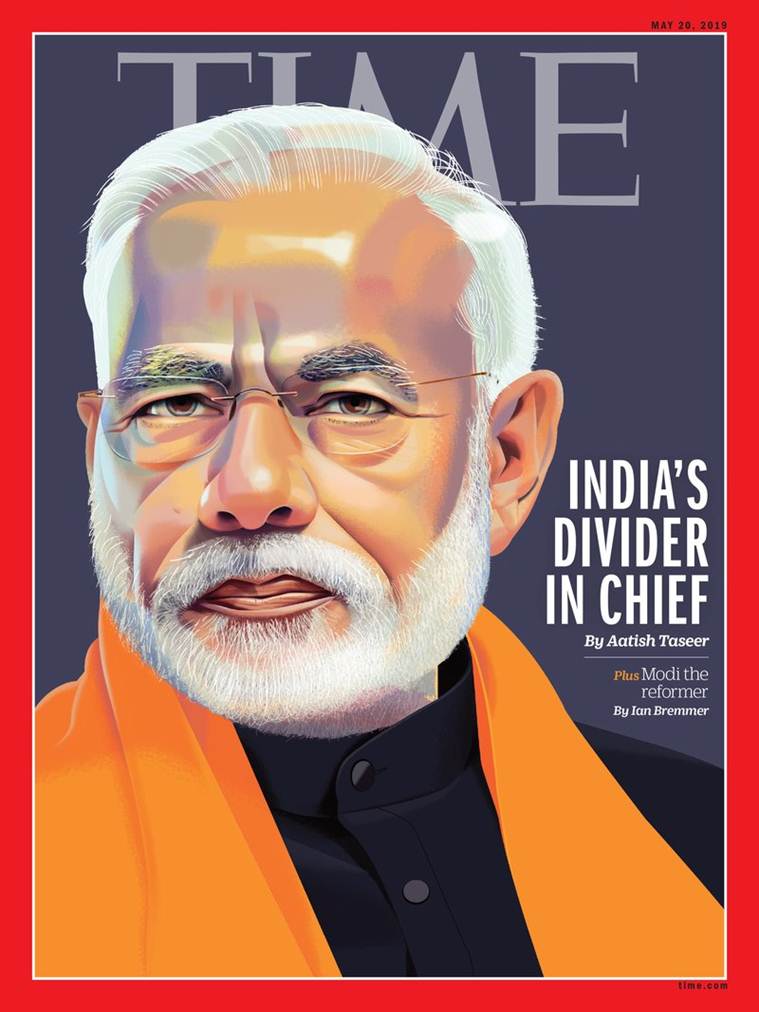
The question acquired a sharper edge in November 2019, when journalist Aatish Taseer’s OCI registration was cancelled. The government cited his alleged failure to disclose his late father’s Pakistani origin. The decision came weeks after Taseer’s TIME cover story described Modi as “India’s Divider-in-Chief”.
Other prominent names followed: Professor Ashok Swain, academic Nitasha Kaul and Reuters journalist Raphael Satter – all vocal critics of the government.
And now, actor Imran Khan has entered the debate. Foreign nationals cannot claim the same political rights as Indian citizens, said Chauthaiwale.
“OCI card is a privilege, not a right. If Imran Khan wants to do some demonstrations in India, he’s welcome to take Indian citizenship and do it.”
The Bombay High Court, too, made a similar distinction in its verdict, that “you (Khan) as an OCI cardholder aren’t at par with Indian citizens.”
But where does the line fall between safeguarding national interests and silencing dissent? Indians overseas have long spoken up about their homeland – in its defence, and against its government. Should that freedom now come with the risk of losing their connection to India?
“I think the OCI card has become a tool to keep political dissent in line,” said Chopra.
The official justification, he acknowledges, is “integrity and sovereignty of India”.
“But I think it all goes back to the question of political control,” the academic added.
Also Read: Indira Gandhi, Zail Singh and a fire in Mohali—the story of India’s chip dream that almost was
The unfinished bond
The recent legal face-off over Imran Khan’s OCI status is a reminder that the ties still remain complicated – and, at times, clearly uncomfortable and unfulfilled. What lies ahead in India’s evolving relationship with its own?
For starters – bureaucratic overhaul. The launch of the digital e-OCI card on 30 June 2026, a step towards smoother access. Yet, genuine kinship requires stripping away decades of institutional red tape.
The next generation is already looking. Born far from their ancestral soil, their blood may be Indian, but their emotional ties are still evolving. Yet, according to Chauthaiwale, cultural ties will endure.
“With technology and connectivity, the next generation, even though they become good citizens of those countries, will remain culturally connected with India,” he argued.
But connection cannot come with strings attached. Student exchanges, academic collaborations and cultural programmes can keep the bridge open. So can the freedom to ask difficult questions.
“If a student of Indian origin wants to come to India and study minority rights or Dalit rights or deforestation, right, don’t automatically assume that those are anti-Indian interests,” Chopra said.
(Edited by Insha Jalil Waziri)
I love how a foreign passport holder thinks he can casually meddle in domestic electoral politics and then run to the High Court apologizing when he gets a show-cause notice.
Stripping away ThePrint’s melodrama leaves a very basic truth: if you don’t hold Indian citizenship, you don’t get to parade around as a domestic political activist.
Why doesn’t Manya get this common sense point?