







Kurukshetra: Aditya Kasnia, 17, grew up watching his father toil in the fields of Sirsa. He studied in a government school and dreamt of making it to an IIT one day. But the cost of competitive exam coaching kept that dream increasingly out of reach. Until Haryana’s Super 100 programme offered him a chance.
Two years later, he has cleared JEE Advanced and hopes to study at IIT Indore.
“I had to clear two levels of the exam to enroll in the programme. But it was a huge help for me and my family. Everything is free, teachers are amazing and the environment is supportive,” said Kasnia who secured an EWS category rank of 245.
He is one among 100 students from Haryana’s Super 100 programme who cleared JEE Advanced this year. Over the past eight years, the initiative has helped more than 300 students secure admission into IITs and government medical colleges.
Run jointly by the Haryana government and the Vikalp Foundation, Super 100 is a two-year residential coaching programme for meritorious government school students preparing for JEE and NEET. Similar initiatives exist in a few other states, including Uttar Pradesh, while Bihar, Telangana and West Bengal support competitive exam coaching through different, largely non-residential models.
Vikalp Foundation director Naveen Mishra says Haryana’s programme has emerged as one of the country’s most successful efforts to help government-school students reach top engineering and medical institutions, although comparable nationwide data is not publicly available.
“Haryana is the only state sending 100 government-school students to IITs. Our students are also reaching AIIMS and government medical colleges. Every year the number has increased. This year the Chief Minister announced 500 seats for the programme,” said Mishra, who also teaches physics at the campus.
Getting into Super 100 is not easy.
Every year, around 40,000 government-school students from across Haryana appear for the first-level entrance examination conducted at the block level. Around 2,000 are shortlisted for the second stage and invited to the Super 100 campus, where they spend three days undergoing academic assessment. During this period, teachers conduct classes, test the students’ aptitude in subjects such as mathematics and eventually select 400 students for the residential programme.
Students join the programme after Class 10 and undergo two years of intensive residential coaching, while completing Classes 11 and 12. Those who fail to clear JEE or NEET in their first attempt may be granted a one-year extension, provided the faculty finds their academic performance satisfactory.
The programme’s results have improved steadily since its inception eight years ago.
Officials say more than 300 students have secured admission to IITs and government medical colleges through Super 100. The first batch’s results, declared in 2020, saw 21 students make it to IITs. By 2026, that figure had risen to 100 students in a single year, prompting the Haryana government to expand the intake further.
Super 100 began in Rewari in 2018. Encouraged by the results of the first batch, the Haryana government expanded the initiative to centers in Hisar, Panchkula and Karnal.
“After the first result in 2020, when 21 students got selected, the Chief Minister was very happy and announced three more centers,” said Mishra.
However, a review conducted in 2022 found that the newer centres were not performing as expected. Students from those centres were consolidated at Rewari.
But Rewari didn’t have the available infrastructure. It was originally designed for around 100 students and now it suddenly had to accommodate 400.
“I asked the government for better infrastructure,” Mishra said.
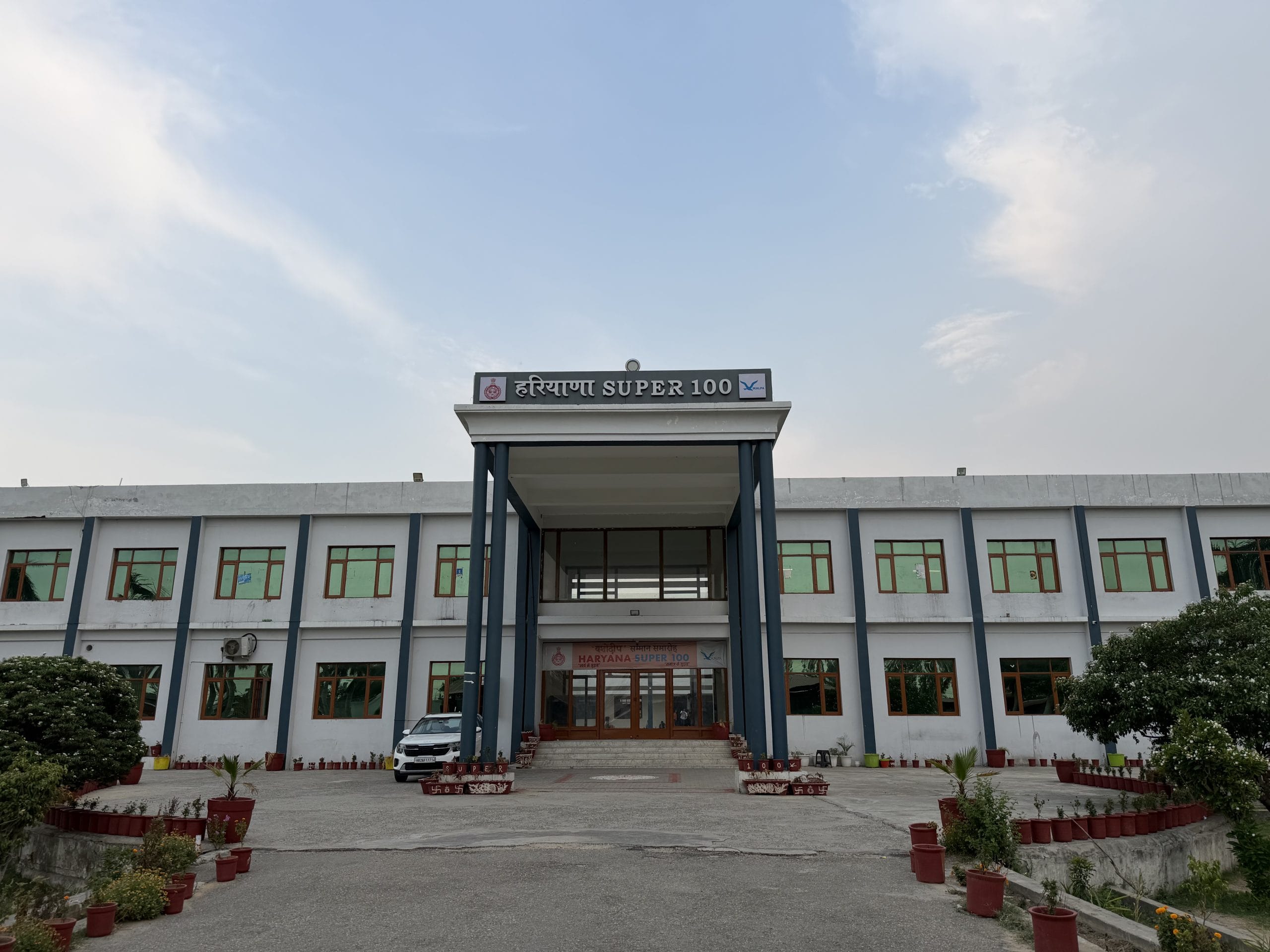
In 2023, the programme shifted to its current campus in Kurukshetra, a former polytechnic college with the capacity to accommodate around 800 students. Today, Super 100 operates from this single campus.
Also read: Life after JEE All India Rank 1 and IIT. Where are the 2000-2019 toppers?
The campus and its life
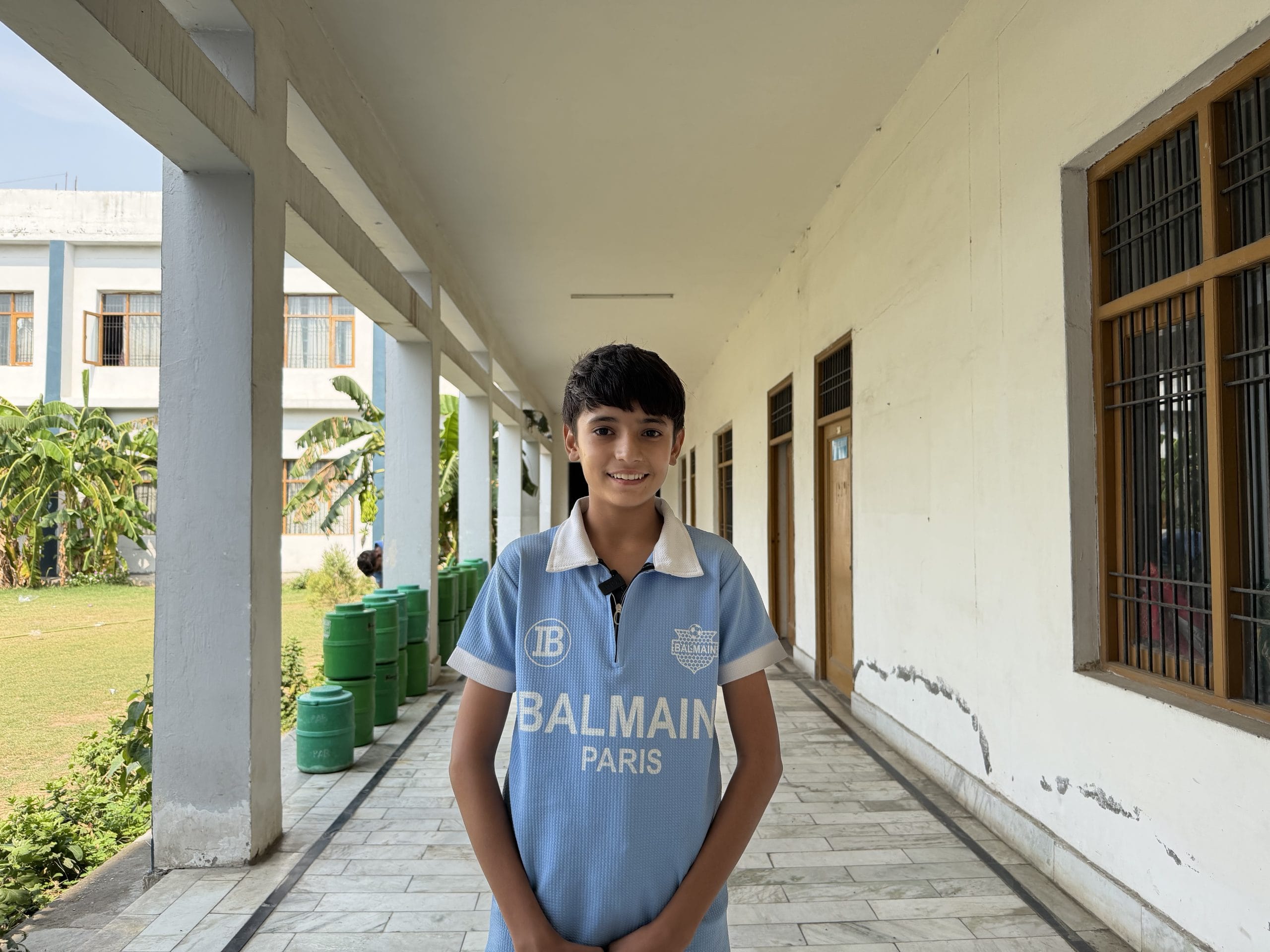
For 14-year-old Gaurav, the initial days were difficult.
It was his first time away from home, surrounded by unfamiliar teachers and the pressure of preparing for JEE, one of the country’s toughest entrance examinations. But having a few friends from his village on campus helped make the transition easier.
Now that 15 days have passed, he has adapted to the timetable, the discipline and the new life Super 100 has offered him.
“In the beginning I was really homesick, but the teachers and seniors here really helped and I have my friends here. Whenever I miss home, I remind myself of the IIT dream my family wants to come true,” he said.
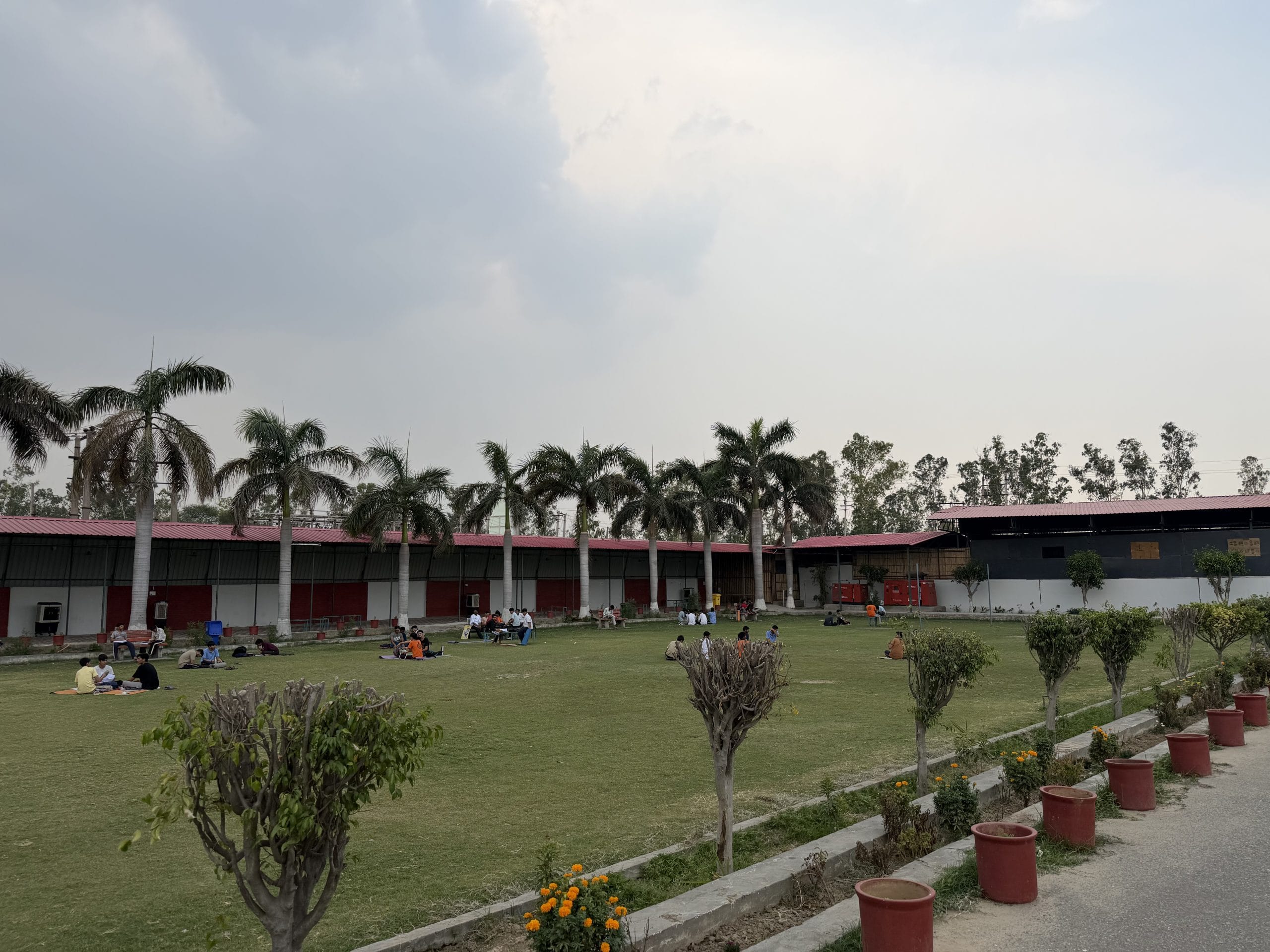
Life at Super 100 is regimented. Students wake up at 5 am for yoga and exercise. Breakfast is served at 7 am. And they are in their first class by 9 am. The classes go on until 5 pm with short breaks in between. In the evening, students can either attend the music class or play on the ground in the campus, which is covered with palm trees.
“I love to play badminton in the evening with my friends, but the weather is windy today and I have some doubts to clear, so I will just study,” Gaurav said while working through a mathematics problem.
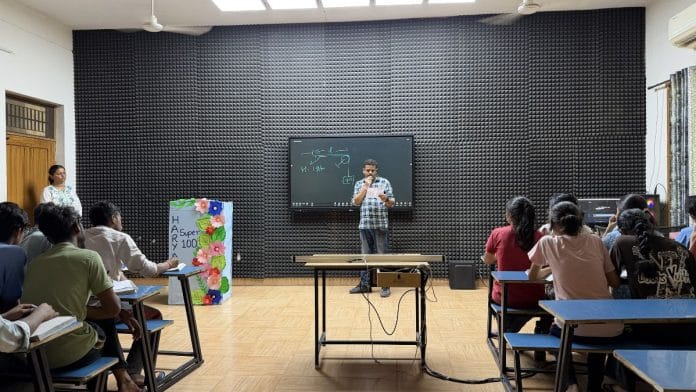
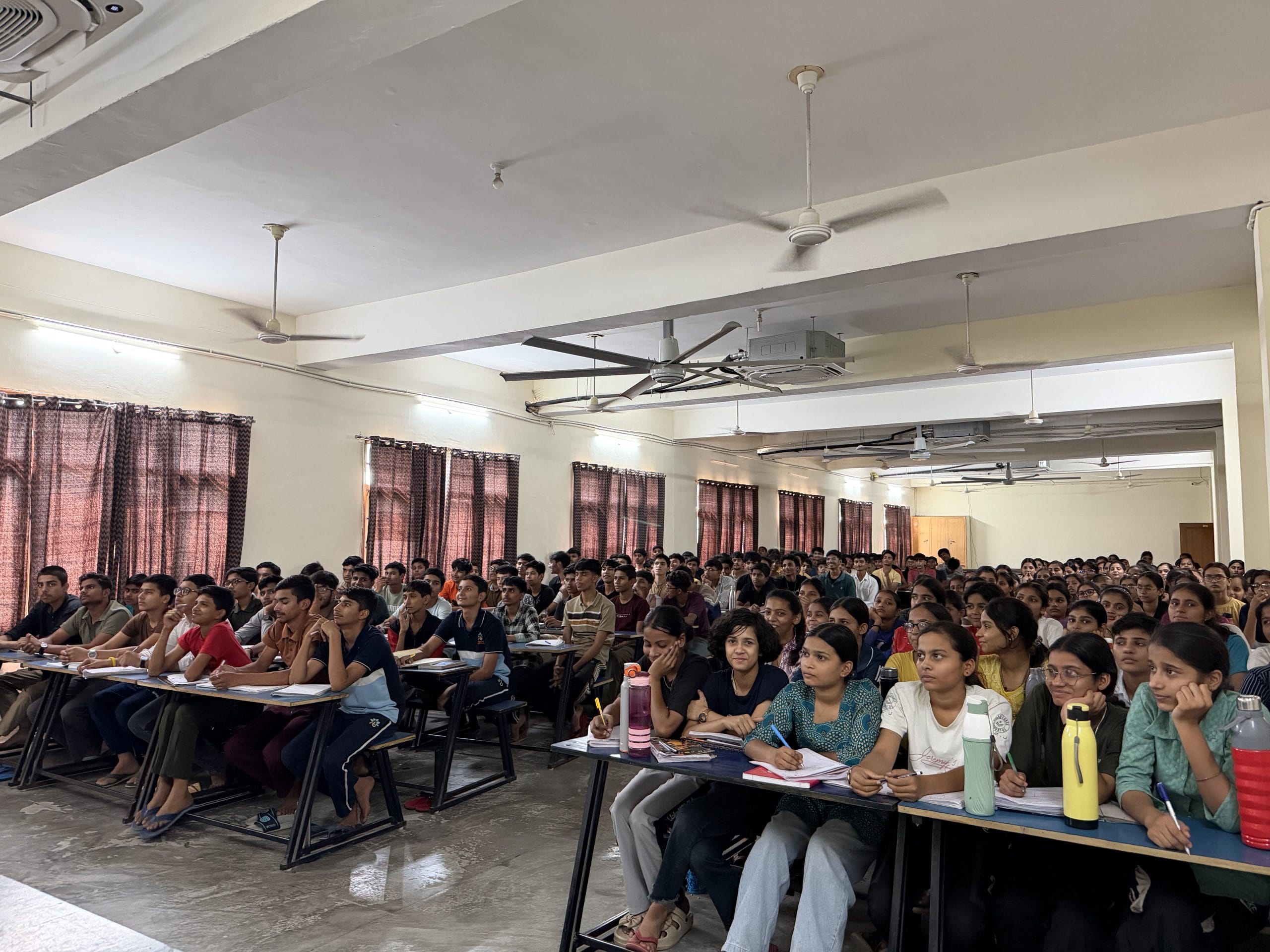
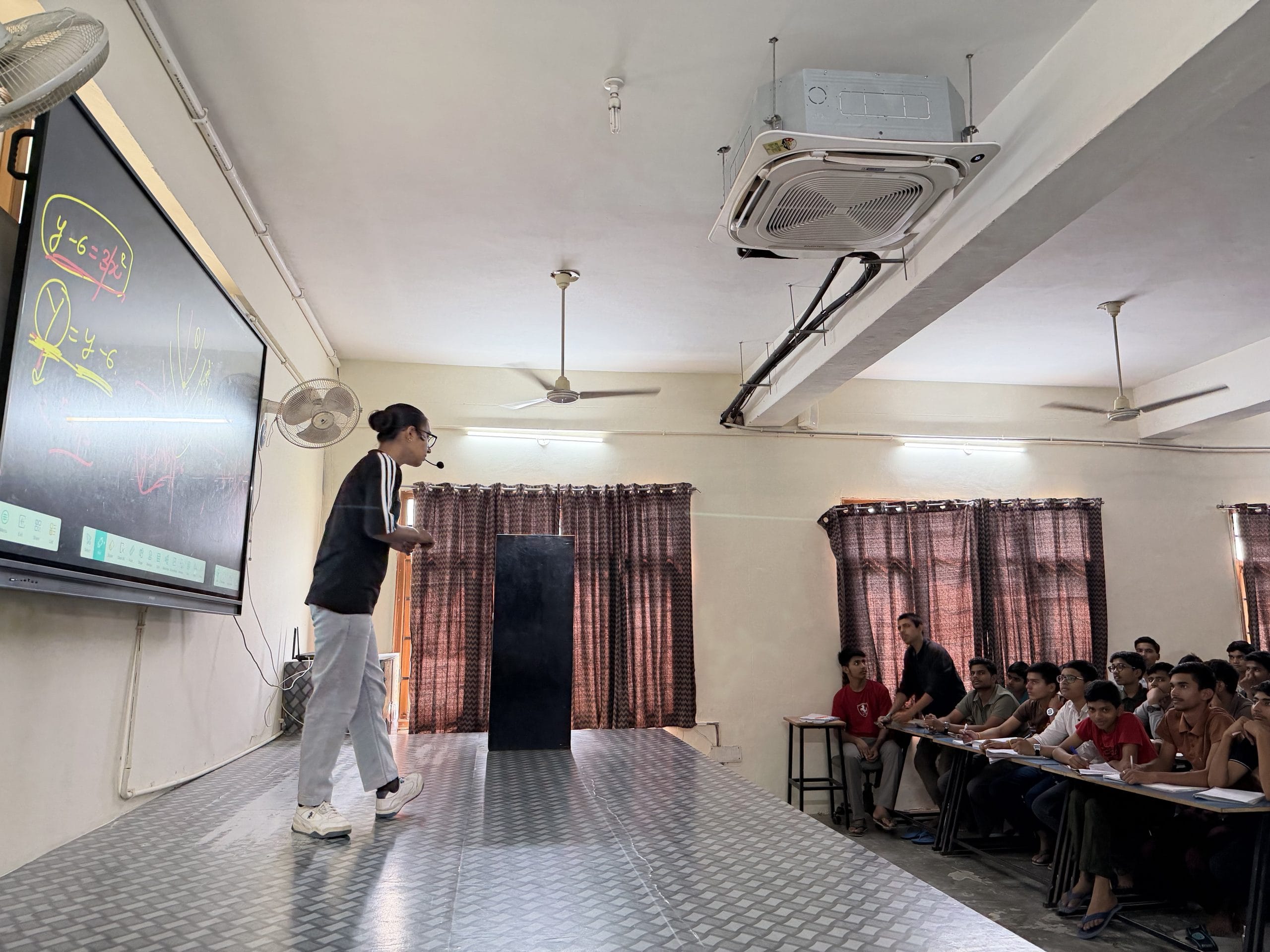
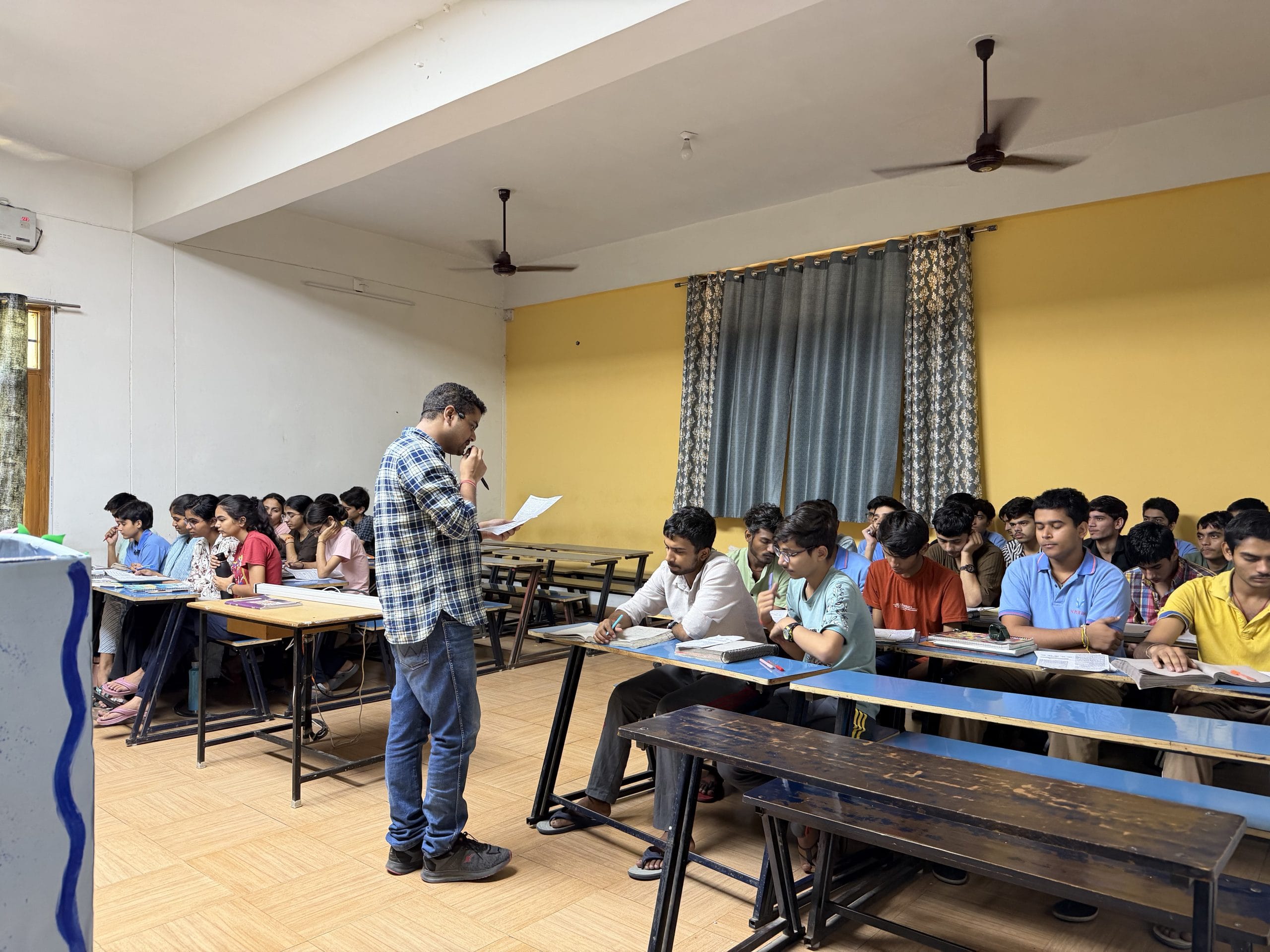
The six-acre campus has two hostels and smart classrooms where teachers deliver lectures using a mic. The wooden benches and clean floor give it the feel of a private coaching institute, but the difference is visible. Super 100 classes are far bigger than those at any institute in Delhi or Kota. The campus has a playground, large halls and corridors, and space for yoga.
The academic programme is run by seven faculty members, all graduates of institutions such as IIT Delhi, IIT Dhanbad, IIT Indore, and IIT Kharagpur.
Sixteen-year-old Gunjan, from Jhajjar district, has spent one year on campus.
Most of her day revolves around classes, self-study and time with friends. What happens outside the campus rarely reaches her. Mobile phones are not allowed.
“This is the best thing about this campus. You don’t know anything about the outside world, so you don’t get distracted. We don’t know what trend is going on, what film is out or what new song has come. We only get to know family and friend updates on Sundays,” she said, while studying in the campus garden.
The schedule runs from early morning until 8 pm. Discipline is central to campus life. If students have to go somewhere on campus, they walk in a straight line. The corridors remain quiet and there are no complaints about going home.
“When I first came here, I cried for three days. But they didn’t let me talk to my family. Instead, they pushed me to interact with other students and follow the schedule. Now, discipline is the thing I love the most about this place,” said Lakshay, who joined the programme after hearing about Super 100 through Mission Buniyad.
The Haryana government runs Mission Buniyad for students in Classes 9 and 10. The mission aims to strengthen foundational learning and competitive mindset through academic supervision, counseling and preparation in subjects such as science, mathematics, social science, and languages.
Mission Buniyad also informs these students about Super 100 so that meritorious government school students can advance to higher-level national entrance exam preparation after completing Classes 9 and 10.
The initiative, launched in 2022 in collaboration with the Vikalp Foundation, now operates across 23 districts of Haryana through more than 103 satellite centers and serves over 5,000 students.
“Through the education department’s ‘Mission Buniyaad’ and ‘Super-100’ initiatives, the government is making efforts to realise the dreams of the students of Haryana. Government school students have set a new record by achieving an 89 per cent success rate in the [2026] JEE Main examination,” said Haryana Education Minister Mahipal Dhanda.
Dhanda claimed that no other state programme, public or private, had achieved a comparable success rate.
Mishra claims that while there are a few students who return home because of homesickness, there hasn’t been a single complaint of academic pressure.
“The atmosphere here is so relaxed. We don’t feel pressure and whenever we face any problem, we take it to Naveen sir. He understands us the best,” said Kayra, a second-year student, while making notes in the garden.
Students are allowed to speak to their parents at designated times once a week, while family visits are restricted to Sundays.
“My daughter studied in Super 100 in 2022 and cleared NEET. She is now studying at Kalpana Chawla Medical College in Karnal. That’s when I decided my son would also go there. Luckily, he cleared both levels and joined the programme,” said Suba Singh, father of Gurucharan, who is currently preparing for NEET.
Across Haryana, families who have seen one child crack JEE or NEET through Super 100 are increasingly sending younger siblings to the programme, turning it into a word-of-mouth success story.
Also read: NEET paper leak came from a hole that wasn’t plugged in 2024. NTA is ignoring its problems
The man behind the programme
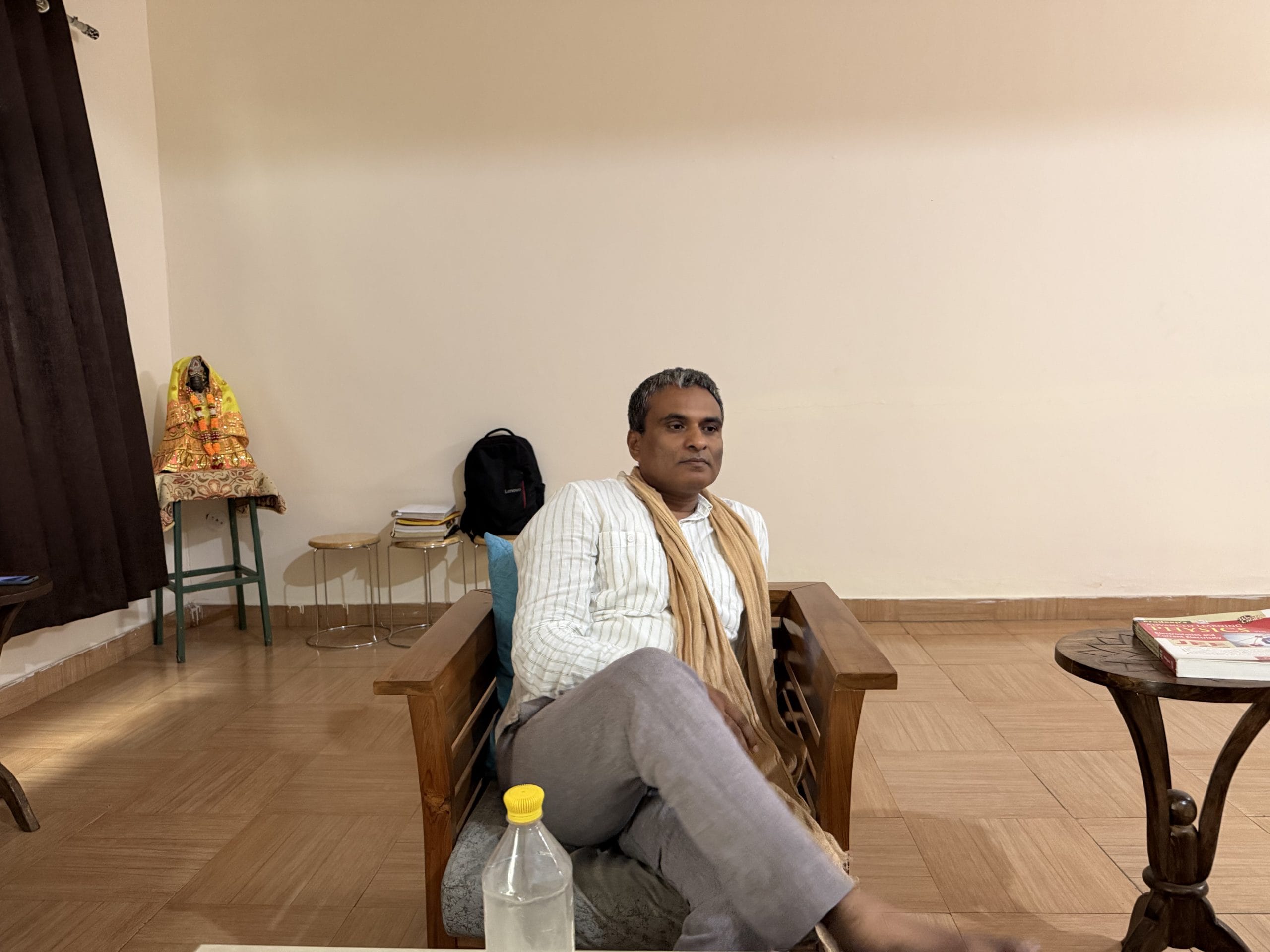
At the Super 100 campus, Naveen Mishra is more than an administrator. He is a teacher, counsellor and mentor rolled into one.
Born in Bihar’s Madhubani district, he has been in the teaching profession for more than two decades and this programme is the result of an idea he carried for years.
“I studied in a small school in Bihar and saw that out of 40 students, around 10 were really talented. If [they were] given the opportunity and guidance, they could do better in life. I carried this thought with me,” said Mishra, an IIT Delhi alumnus.
After graduating, he and two fellow IIT Delhi graduates—Anil Maheshwari and Rajan Gundal—founded the Vikalp Foundation in 2013. While the others eventually moved into corporate jobs, Mishra continued working full-time with the organisation.
The foundation initially focused on helping students from modest backgrounds prepare for competitive examinations. As its students began securing admissions to IITs, AIIMS and other professional institutions, local newspapers started carrying stories about its work. The attention drew support from district officials in Haryana.
“Fifty of our students got into IIT, AIIMS and other medical colleges. IAS Dharmveer Singh noticed our work and called me to Chandigarh. I discussed my plan of teaching government school children,” said Mishra.
Singh later introduced him to IAS officer Raj Narayan, who would eventually help him realise his dream.
The first meetings didn’t lead to much progress. But when Narayan became Director of Elementary Education Haryana in 2018, Mishra got another opportunity. The officer asked him to submit a proposal.
“The director’s team really liked it. That’s how Super 100 came into existence,” Mishra said.
The proposal estimated that a residential programme for 100 students would require around Rs 1.35 crore for a pilot project.
“The officer asked me if I could arrange Rs 35 lakh before starting the programme. I used my savings, asked friends to donate and gathered the funds,” said Mishra.
The director then moved the proposal ahead and the first batch of Haryana Super 100 came into existence in August 2018 with 100 students selected through a two-stage examination process.
Multiple IAS officers played an important role in Haryana’s Super 100 programme over the years. Raj Narayan Kaushik, now Director General of Agriculture, took the initiative to launch the scheme. Rajeev Ratan, who was Director of Secondary Education when the programme began in 2018, signed the MoU that formally set it in motion. Rakesh Gupta helped resolve major hurdles faced by Super 100 students in 2019, while Mahavir Singh, then Additional Chief Secretary of School Education, restructured and strengthened the programme in 2020.
The partnership operates through a memorandum of understanding between the Haryana government and the Vikalp Foundation. Under this model, the government provides hostels, food, uniforms, books and medical support, while the foundation manages academics, faculty recruitment, entrance examinations, classrooms, digital infrastructure and extracurricular activities.
Also read: In India’s NEET and CBSE exam crisis, the only adults in the room have been children
A dream passed forward
The Haryana Super 100 programme has helped transform many lives, mostly of those from disadvantaged backgrounds, and its alumni are true examples of its success story.
Anju and Ritu were part of the first batch. Anju went on to study at IIT Kharagpur, while Ritu graduated from IIT Indore in 2024.
Today, both are back at the programme—as teachers.
For Anju, the career path was difficult to imagine while growing up. Before learning about Super 100, her plan was simple: Complete Class 12 and pursue a BCom degree, just like her elder sister.
“No one in my family thought anyone could get into an IIT among us. After I did it, many other children from our [extended] family got motivated and prepared for Super 100,” said Anju, who was approached by the programme to teach physics before she entered the private job market.
Other alumni have taken very different paths.
Kajal, a student from Fatehabad, got into IIT Bombay after receiving support through Super 100. In 2024, she received a salary package of Rs 35 lakh from Microsoft and currently works with the company.
Stories such as hers have become advertisements for the programme in villages across Haryana. Teachers say many students arrive on campus having heard about Super 100 through older siblings, cousins or neighbours who studied there before them.
“Many students have gone to IITs and changed the fate of their families. Most come from poor or working-class backgrounds. Before joining, their aspirations were often limited to completing Class 12,” said Anju.
That generational effect is visible in families such as that of Gurcharan. His elder sister is the 14-year-old’s role model. She showed him the Super 100 path to NEET to fulfil his dream of becoming a doctor.
His father, Suba Singh, a farmer who also runs a flour mill, says private coaching was never financially possible for his family.
According to programme officials, a family could save Rs 6 lakh over two years by enrolling a child in Super 100 instead of a private coaching institute.
“I could never imagine that my two children would get coaching from such brilliant teachers,” Singh said.
For many students, the programme does more than prepare them for an entrance examination. It expands the boundaries of what they believe to be possible.
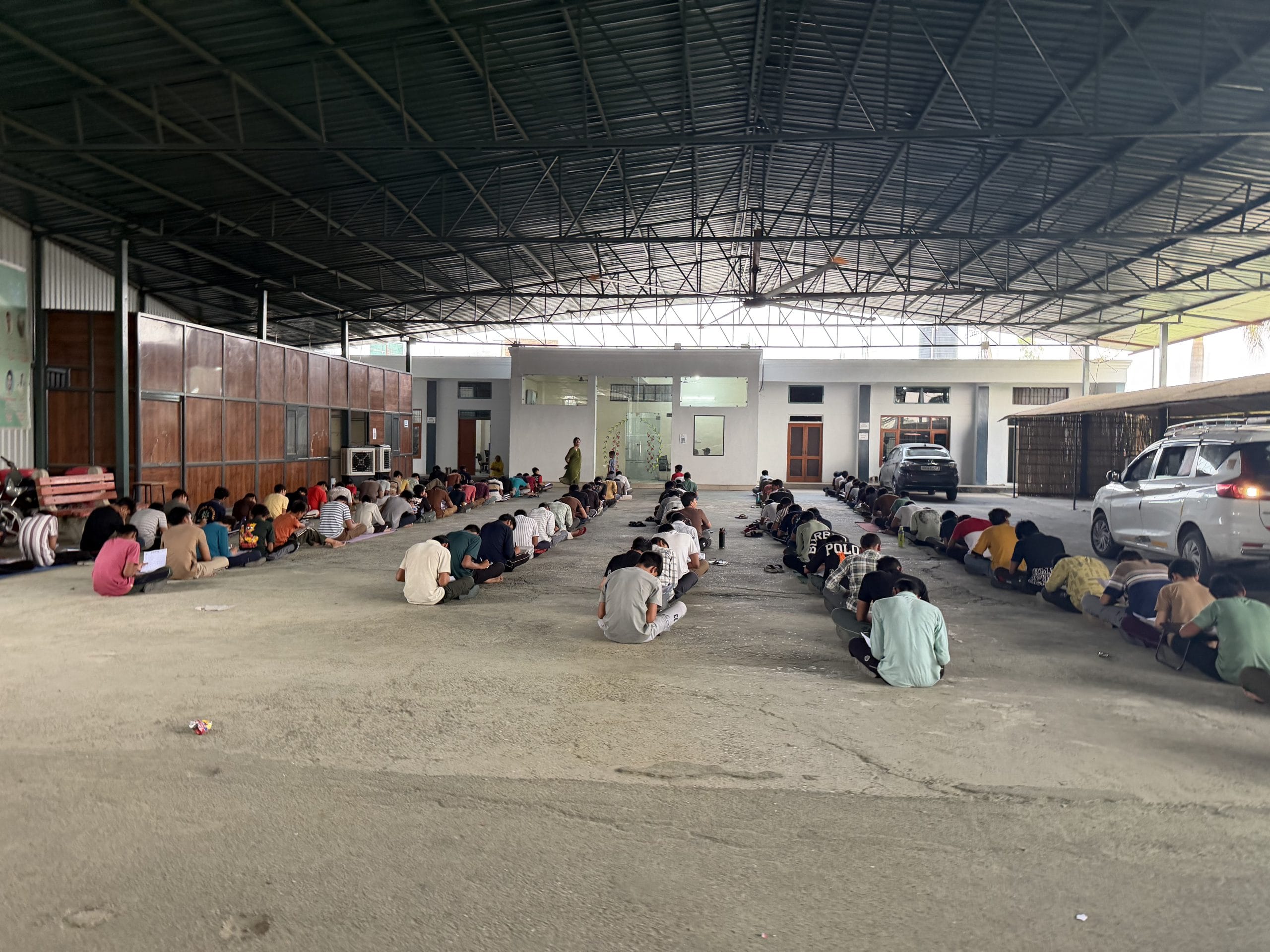
Before arriving here, many expected to finish school, find work close to home or follow the occupation of their parents. IITs and medical colleges belonged to a different world.
As the evening self-study session came to an end, students formed neat lines outside the doubt-clearing classes, waiting for their turn with teachers.
Among them stood Gaurav, clutching a notebook filled with physics problems.
“I am living here, but the dream of going to IIT is not mine alone,” he said. “It belongs to all 10 members of my family back in the village. On days when I feel weak, I remember my grandmother’s face and study harder.”
The line moved forward and Gaurav stepped into the classroom.
(Edited by Theres Sudeep)
Hi i am a student of class 9th
Also post videos of such classes for online learning