





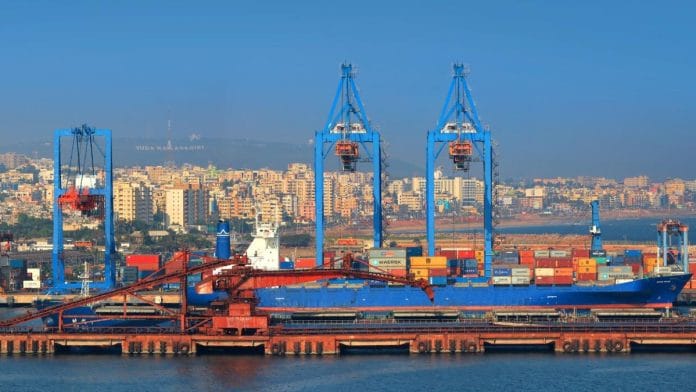


Visakhapatnam: Andhra Pradesh’s 92-year-old seaport at Visakhapatnam, inaugurated by Viceroy Lord Willingdon in 1933, earned the distinction of handling nearly 50 percent of India’s seafood shipments for two consecutive years (FY 2025 and FY2026), data placed on the floor of Parliament during the Monsoon Session has revealed.
The Vizag Port emerged as a major gateway for the export of India’s marine products, as more nations expressed a preference for Indian shrimp, frozen fish, cuttlefish, squid, and crab. The value of these products shipped from Andhra Pradesh rose from $2.19 billion in FY24 to $4.25 billion in FY26, even as the West Asia war and the tariffs levied by the Trump administration put tremendous pressure on seafood exporters.
Tens of thousands of ponds dedicated to shrimp farming that line the coast in Bhimavaram, Kakinada, and Visakhapatnam ensure Andhra earns the coveted position of being India’s largest domestic fish producer and seafood exporter. It accounts for over 60 percent of the country’s total aquaculture and cultured shrimp production.
Highlighting Andhra Pradesh’s rapidly growing export strength, the Centre informed Parliament that the share of marine product exports through Vizag Port jumped from 29.67 percent in March 2024 to 50.87 percent in March 2025, an increase of more than 21 percentage points in just one year. The government further informed the Lower House that the port continued to maintain a dominant 48.89 percent share in March 2026, reporting a sustained export performance. The figures were shared in response to a question raised by Lok Sabha Telugu Desam MP Prabhakar Reddy Vemireddy on 21 July.
“Shrimp and fish farmers faced a devastating double blow of crashing prices, skyrocketing operational losses, and closed export markets, and yet, remarkably, we continue to dominate India’s value-added seafood exports,” Gunturu Pawan Kumar, national president of the Seafood Exporters Association of India (SEAI), told ThePrint.
At the peak of the India-US trade war, Indian exporters were slapped with cumulative tariffs of up to 50 percent to 58 percent on Indian seafood. These heavy duties made Indian shrimp exports far more expensive than competitors like Ecuador, which faced much lower tariff rates, Pavan Gunturu added. But India acted quickly, and seafood associations pivoted to divert the country’s exports to several key alternative markets and trading partners across Europe, Asia, and other regions, officials from Marine Products Export Development Authority (MPEDA) told ThePrint.
What makes this achievement dear to Andhra Pradesh’s fish farmers is the intense economic pressure they faced, given the global headwinds. “Major export orders were cancelled, processing units faced temporary shutdowns, and at least half the local shrimp hatcheries closed because farmers could not afford to buy fish feed,” an MPEDA official said.
In light of these constraints, the port authorities at Vizag took various measures to ensure seafood exports do not face logistical hurdles. The Visakhapatnam Port Chairman and the Customs Commissioner both told ThePrint that several trade-friendly initiatives were adopted to boost exports. “We allowed DPD (Direct Port Delivery) and DPE (Direct Port Entry) for all seafood exports, and today, more than 70 percent of such exports go through the green channel without checking if one is an authorised economic operator,” said N. Balram Naik, the Additional Commissioner of CGST and Customs (CBIC) in Visakhapatnam.
DPD (Direct Port Delivery) and DPE (Direct Port Entry are customs facilitation schemes used in maritime logistics to speed up cargo movement, cut down dwell times, and lower logistics costs by bypassing traditional Container Freight Stations (CFSs), where cargo is stored by the exporter before it is brought to the port.
The port, on its part, also adopted a number of business-friendly measures including slashing the cost of the consignment and demurrage charges, the Vizag Port Chairman shared, speaking broadly of the initiatives. “Two factors led to our port and Andhra achieving this milestone. One is the presence of strong shrimp aquaculture and food processing facilities in and around Vizag, and second, the strong logistics chain. This was backed by port-led infrastructure by providing additional reefer containers to the seafood exporters,” Jasmeet Singh Bindra, Chairman, Visakhapatnam Port Authority, told ThePrint.
The reefers or refrigerated containers, fitted with special temperature-monitoring software, orchestrate a seamless supply chain across two seas and the Indian Ocean, where marine products can make the 60-day or 90-day trip around the world, docking efficiently at the world’s most dynamic ports. While China buys a lot of seafood from India, in terms of value, the USA still ranks first, according to J.S. Bindra.
Incidentally, the Visakhapatnam Port Authority recorded its highest-ever cargo output of 91.17 million metric tonnes (MMTs) in FY2025–26, registering a 10.34 percent increase compared to the previous year.
Even as plenty of trade measures helped the port boast of this milestone, at the heart of Andhra Pradesh’s ballooning marine exports is the generous grant from the Pradhan Mantri Matsya Sampada Yojana (PMMSY) scheme, of which the state is one of the highest recipients. In its press statement dated 11 February, the Department of Fisheries (DoF), Ministry of Fisheries, Animal Husbandry and Dairying (MoFAH&D), said that the government, under the PMMSY Scheme, had envisaged an investment of Rs 2,405 crore with a central allocation of Rs 850 crore to Andhra Pradesh. The DoF approved the proposal of the AP government with a central share of Rs 569.86 crore, and Rs 482.55 crore was released for the implementation of various pisciculture activities in the state.
Using these funds, allied infrastructure including hatcheries, biofloc ponds, seed stocking, ice plants, feed mills, and diagnostic labs were set up in key seafood clusters.
Alluding to central assistance, it also stated in its reply to Parliament that Visakhapatnam Port serves as a key export gateway under the One District One Product (ODOP) initiative.
To strengthen exports, the Centre said it is supporting producers through domestic and international exhibitions, the GeM (Government e-Marketplace) ODOP Bazaar, buyer-seller meets, and engagement with Indian Missions abroad, expanding market access for Andhra Pradesh’s products. The parliamentary reply further highlighted that Andhra Pradesh has identified 99 ODOP products across its 26 districts, reflecting the state’s focus on promoting local industries and expanding export opportunities through value-added products.
Started in 2021, the PMMSY is a flagship scheme aimed at promoting sustainable fisheries development.
(Edited by Archishman Ganguly)
Also Read: How reels and posts helped researchers document India’s rare sharks and rays