



New Delhi: When the JEE results come out each year, the All India Rank 1 holder becomes the centre of attention. News organisations and coaching institutes rush to claim them. Their photographs dominate hoardings and billboards, and they secure admission to the country’s best IITs.
But where do they go after completing their degrees?
How many pursue higher education abroad? How many choose to return to India and contribute here? What kind of careers do they ultimately opt for?
ThePrint tracked 20 IIT-JEE AIR 1 toppers from 2000 to 2019. All were men; not a single woman topped the exam during these 20 years.
The data reveals a clear shift in where India’s brightest students go — and what they choose to become.
Nitin Gupta, who secured AIR 1 in IIT-JEE 2000, chose research as a career. Nearly two decades later, Pranav Goyal, the 2018 topper, chose quantitative trading at a global firm.
Between these two trajectories lies a larger story.
From academia to finance. From India to global technology hubs. From research labs to trading floors. The rank may be the same, but the outcomes are not. These toppers have taken very different paths.
Out of the 20 toppers tracked, 12 are currently working outside India. The US dominates, though Europe and Asia also feature prominently. Only eight remain in India, and even among them, several are linked to global institutions or companies.
In the early 2000s, many toppers chose academia. They pursued PhDs and entered research. Some returned to India to teach or help build institutions. Nitin Gupta at IIT Kanpur, Piyush Srivastava at TIFR, and Raghu Mahajan at ICTS reflect this trajectory.
But this pattern began to shift after the mid-2000s.
After 2007, almost every topper chose IIT Bombay and opted for Computer Science Engineering. Earlier toppers had also chosen IIT Delhi and IIT Kanpur.
Fewer toppers now pursue higher education immediately after graduation. More enter the workforce directly. The destinations have also changed. Instead of universities, many now head to companies. Technology remains a major route, while others move into startups, finance, or industry. One topper took an entirely different path and entered the civil services.
Also read: Where are the UPSC toppers of the last 20 years in their careers today?
IIT-JEE toppers from 2000 to 2019
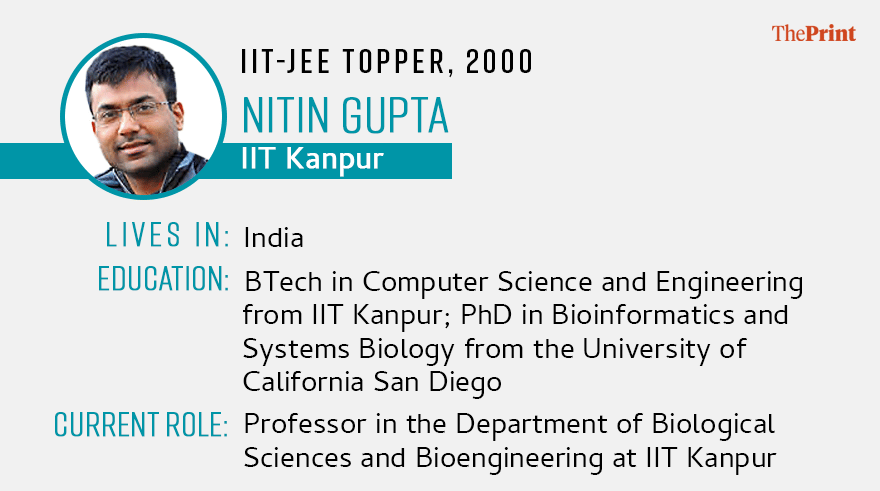
Unlike many toppers who later moved into industry or finance, Nitin Gupta took an unconventional route. After studying Computer Science at IIT Kanpur, he decided during his fourth year to pursue research. He moved into bioinformatics, neuroscience, and behavioural science.
He spent nearly a decade in the US at institutions such as the University of California San Diego and the National Institutes of Health before returning to India to teach and help build a research ecosystem at IIT Kanpur.
“I had two options. One was industry and the other was research. Industry was more market-oriented, while research gave me freedom. I wanted to contribute to my country. The money is less, but the satisfaction from research is much greater. I stayed abroad for years, but I always knew I had to return. Movies like Swades inspired me,” Gupta told ThePrint.
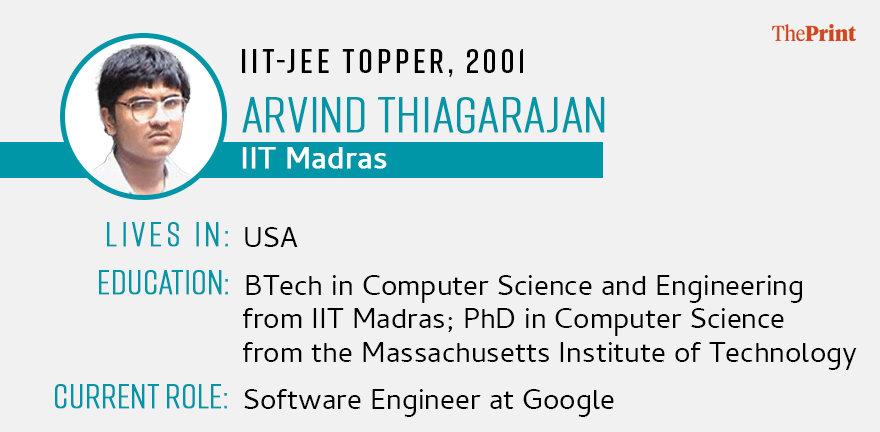
Arvind Thiagarajan’s trajectory shows a transition from pure academia to high-impact industry research. After IIT Madras and a PhD from MIT, he moved into applied research roles at global technology firms.
His work has been associated with companies such as Amazon and Google. His career represents a bridge generation: researchers trained in deep computer science theory but operating within large technology ecosystems where research directly feeds into products and platforms.
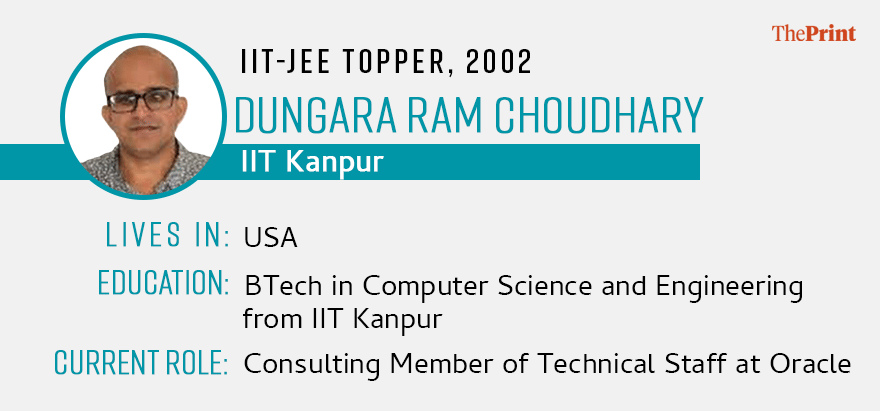
After IIT Kanpur, Dungara Ram Choudhary moved directly into the global technology industry rather than pursuing academia.
Over a long career at Oracle, he rose into senior engineering management and core technical leadership roles. Coming from rural Rajasthan, his journey reflects influence built within large technology companies rather than through public visibility.
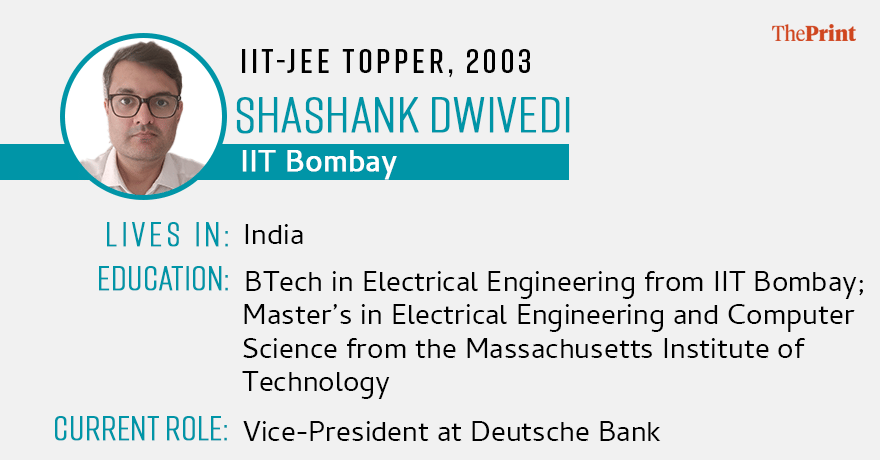
Shashank Dwivedi shifted from academia to industry. After IIT Bombay, he completed his Master’s in Electrical Engineering from the Massachusetts Institute of Technology before moving into the corporate sector.
His shift to Deutsche Bank reflects a broader trend in which toppers begin with deep academic research but later move into finance and industry, where analytical and problem-solving skills are highly valued.
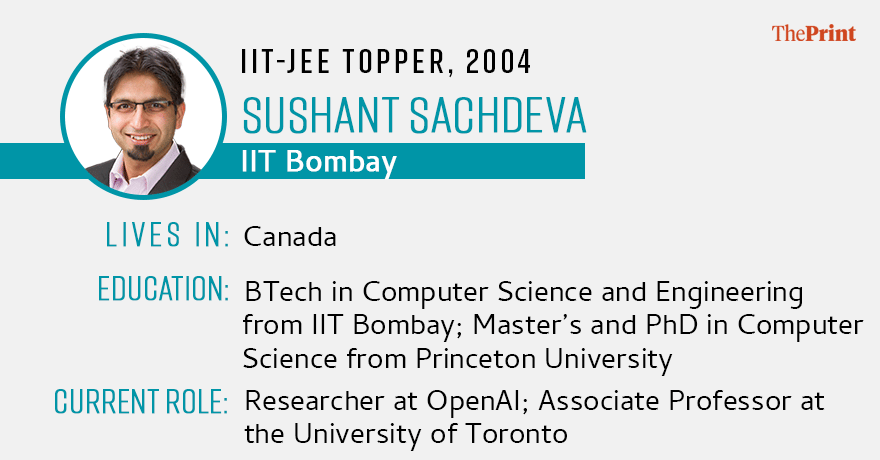
Sushant Sachdeva built his career around deep theoretical research. After IIT Bombay, he moved to Princeton University for doctoral work in algorithms and theoretical computer science.
Unlike many toppers who later shifted to industry or finance, Sachdeva remained focused on academia and advanced research. He currently teaches in the Department of Mathematical and Computational Sciences at the University of Toronto Mississauga while also being associated with OpenAI.
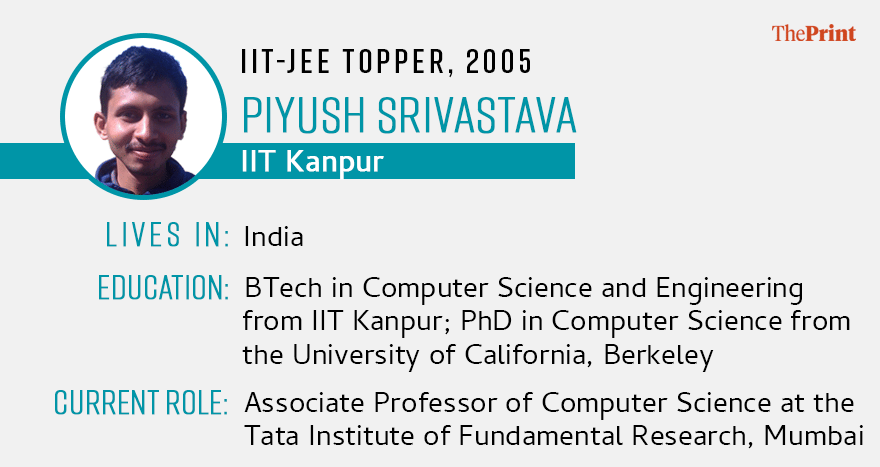
Piyush Srivastava’s journey reflects a long-term commitment to theoretical computer science. After IIT Kanpur, he pursued a PhD at the University of California, Berkeley.
He later returned to India to build a research career at Tata Institute of Fundamental Research, Mumbai. Unlike many toppers who remained abroad, Srivastava chose to contribute to India’s core research ecosystem.
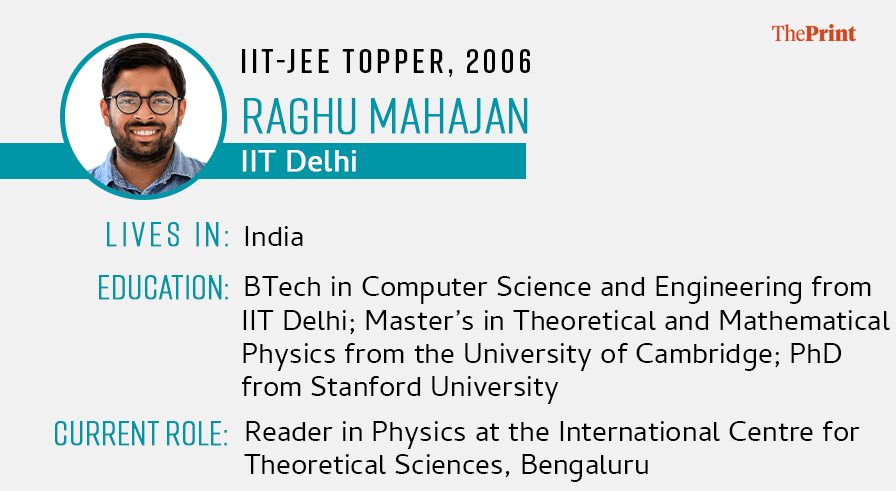
Raghu Mahajan’s trajectory stands out for its intellectual consistency rather than career pivots. After spending two years at IIT Delhi, he moved to the Massachusetts Institute of Technology to pursue undergraduate studies and later entered elite global research ecosystems at Cambridge and Stanford.
Unlike many toppers who moved into finance or industry, Mahajan remained committed to theoretical physics. He eventually returned to India to work at the International Centre for Theoretical Sciences of the Tata Institute of Fundamental Research (ICTS-TIFR), Bengaluru.
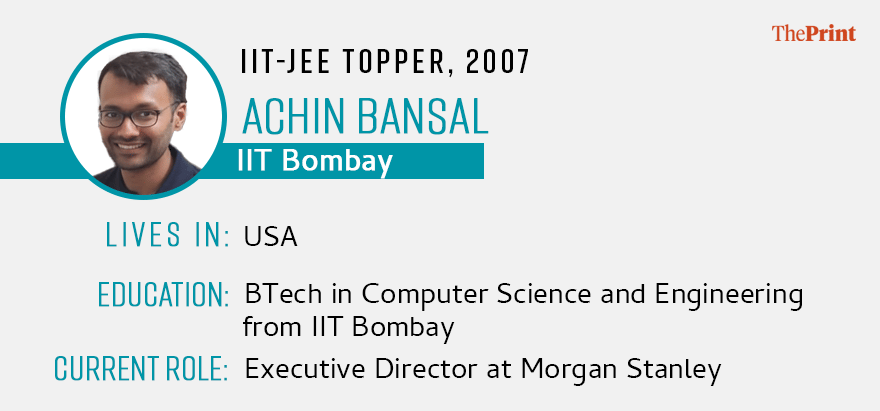
Achin Bansal’s career path later became a dominant trend among IIT-JEE toppers: a move into global finance.
Armed with strong quantitative and analytical skills from IIT Bombay’s Computer Science ecosystem, he entered high-end finance roles where mathematical rigour and problem-solving ability are valued as much as traditional engineering expertise.
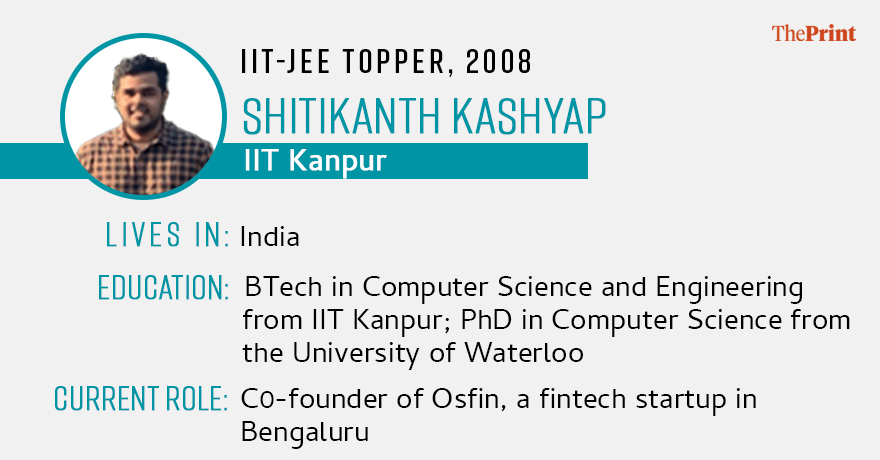
Shitikanth Kashyap chose entrepreneurship over academia or finance. After pursuing advanced research at the University of Waterloo in Canada, he returned to India instead of joining a large technology company.
He chose to build in the fintech space. His journey reflects a growing trend in which highly trained technical talent is moving toward startups and product-building.
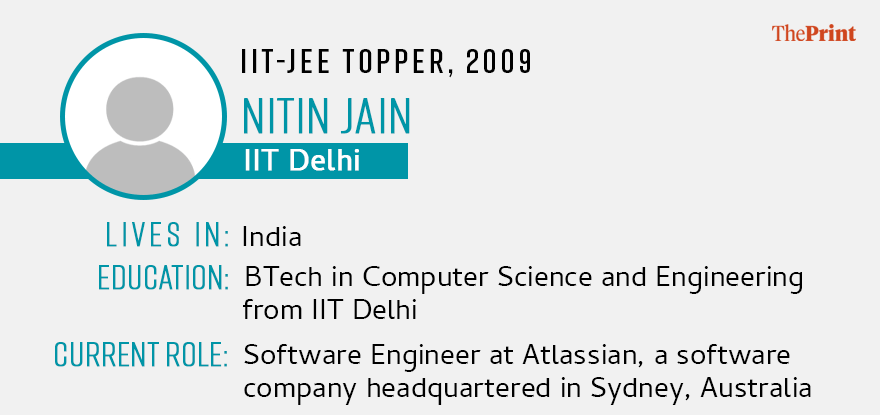
After topping IIT-JEE in 2009 and studying Computer Science at IIT Delhi, Nitin Jain moved into core engineering roles at major global technology firms.
Unlike many earlier toppers, he did not pursue higher education abroad. Instead, he focused on building long-term expertise within product engineering.
His journey illustrates how the IIT Computer Science pipeline increasingly feeds directly into top-tier technology companies.
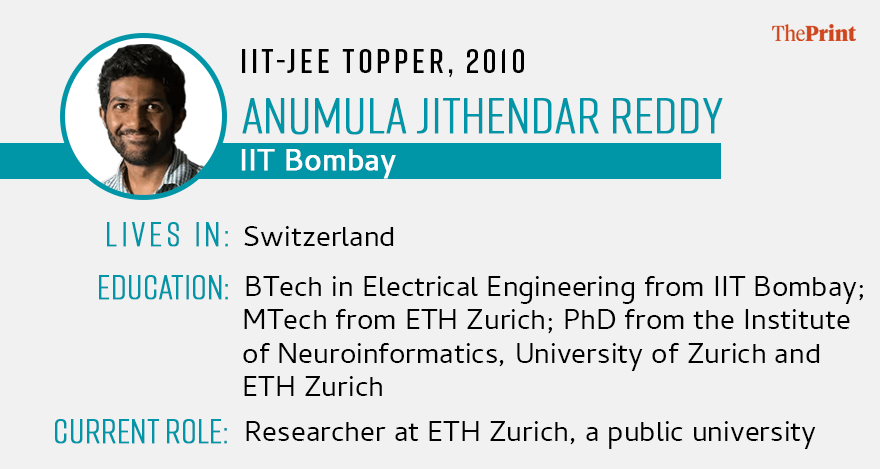 Anumula Jithendar Reddy’s trajectory resembles that of earlier toppers who moved from strong academic foundations into advanced interdisciplinary research.
After IIT Bombay, Reddy entered neuroinformatics, combining neuroscience and artificial intelligence at ETH Zurich. His career reflects continued engagement with global research ecosystems rather than a shift to finance or corporate technology.
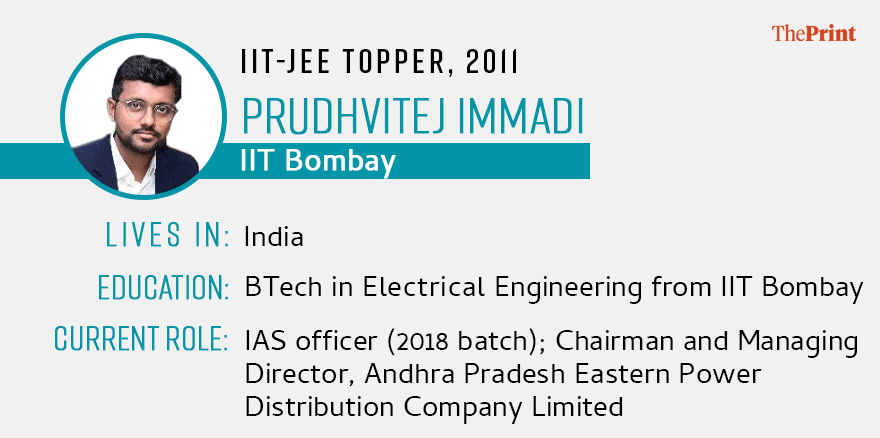
Prudhvitej Immadi is among the rare IIT-JEE AIR 1 toppers who chose the civil services over corporate careers.
After graduating from IIT Bombay in 2015, he reportedly received a high-paying offer from Samsung and worked there briefly before preparing for the UPSC examination. He cleared the exam in 2017 with AIR 24 and joined the Indian Administrative Service.
His trajectory stands apart from the dominant pattern of toppers moving into finance, software, or research.
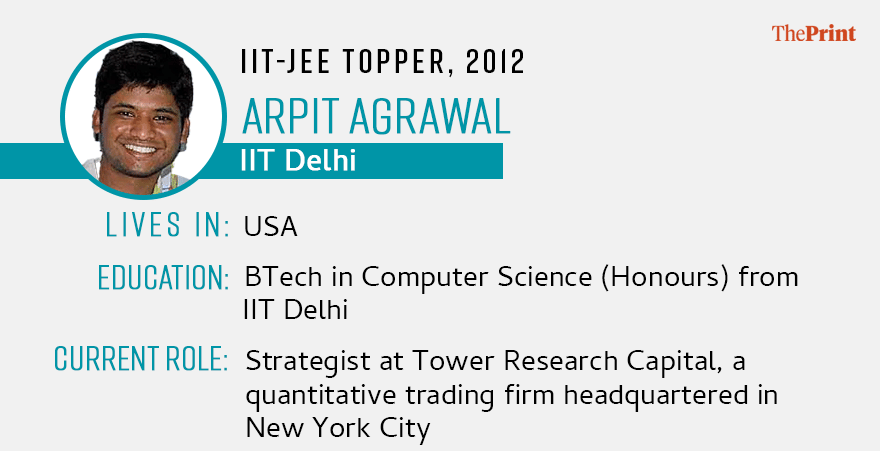
Arpit Agrawal’s career reflects a common post-2010 trend among elite JEE rankers: moving into quantitative finance rather than conventional software jobs or academia.
His role at Tower Research Capital illustrates the growing demand for IIT-trained mathematical talent within algorithmic trading firms.
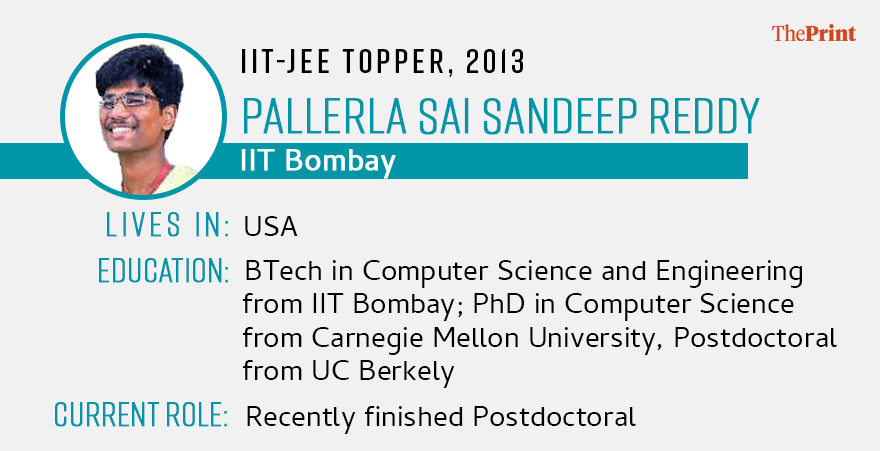
Pallerla Sai Sandeep Reddy’s journey reflects a hybrid path that became increasingly common after 2010 — a mix of elite academic research and global technology roles.
After IIT Bombay, he pursued a PhD in Computer Science from Carnegie Mellon University and followed it up with postdoctoral work at the University of California, Berkeley.
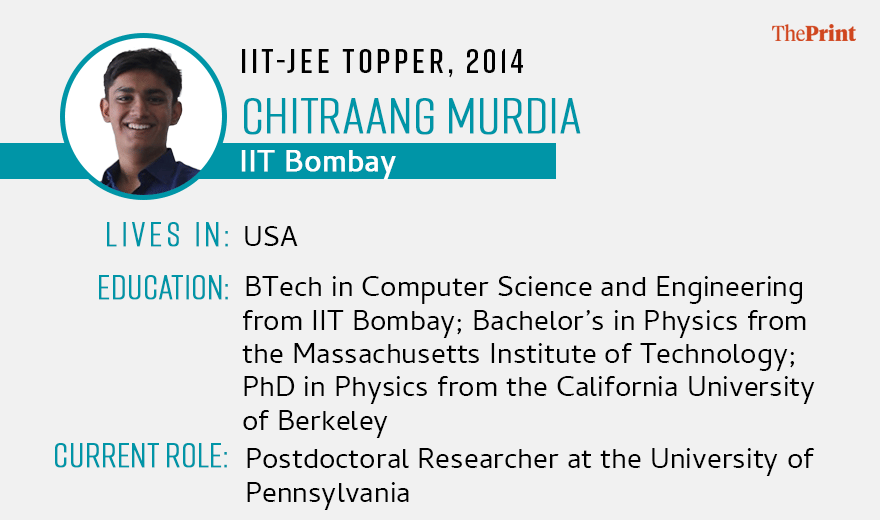
Chitraang Murdia’s journey is among the most unconventional in this list.
After securing AIR 1 in 2014 and joining IIT Bombay, he made the rare decision to leave IIT within a year and pursue physics at the Massachusetts Institute of Technology, prioritising long-term research over the conventional IIT Computer Science path.
His trajectory — from IIT to MIT to doctoral research at Berkeley and postdoctoral work — reflects a strong commitment to theoretical science and fundamental research.
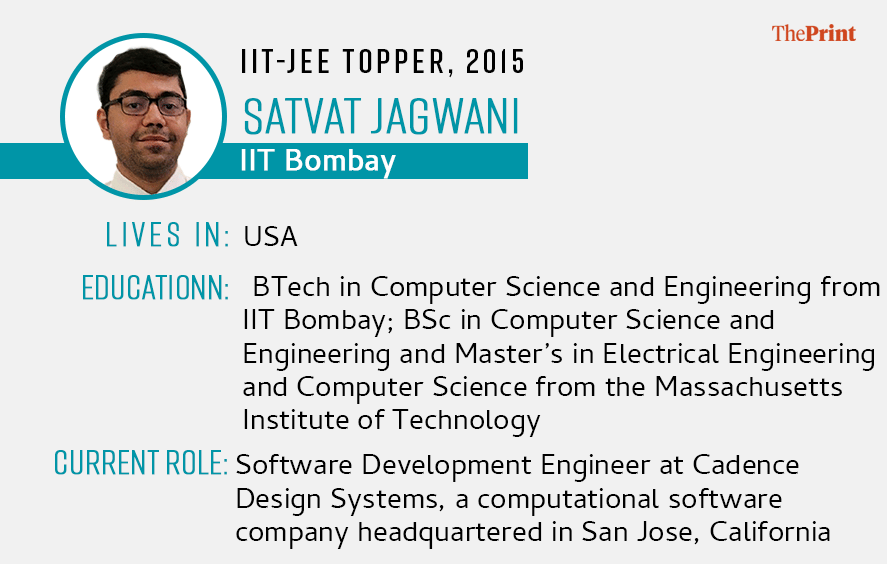
Satvat Jagwani’s trajectory reflects a growing trend among mid-2010s toppers: prioritising global education over the IIT system itself.
After topping JEE in 2015, he chose to leave IIT Bombay and move to MIT, signalling a growing preference among top rankers for international research ecosystems.
His later move into Silicon Valley engineering roles also reflects the increasing pull of global technology firms.
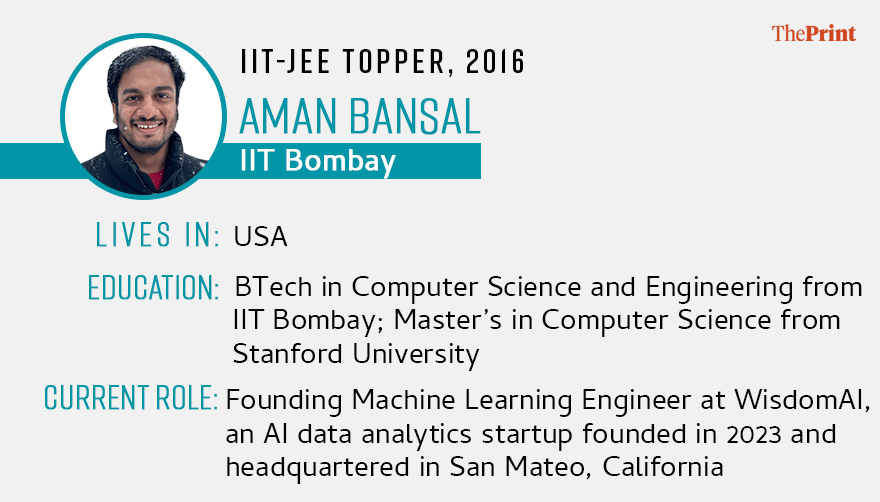
Aman Bansal’s trajectory reflects an emerging post-2015 pattern: IIT Bombay Computer Science to Stanford to the Silicon Valley AI startup ecosystem.
Unlike earlier toppers who leaned toward academia or finance, his path reflects the rise of AI and machine learning entrepreneurship as a major aspirational track.
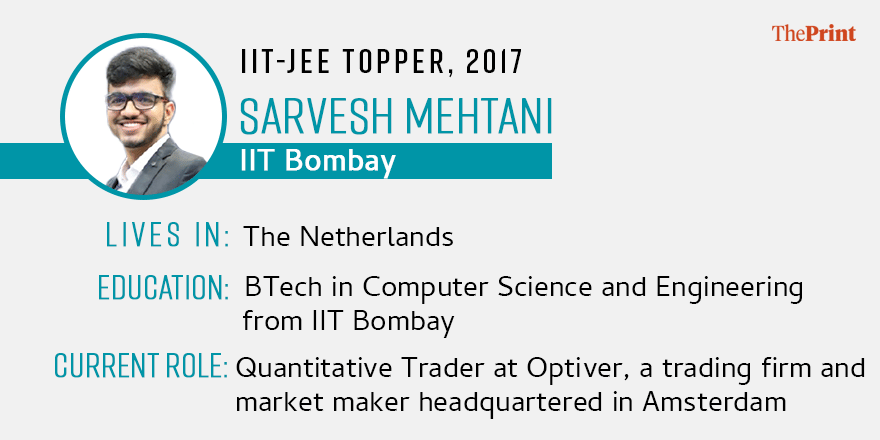
Sarvesh Mehtani’s trajectory clearly reflects the growing shift among recent toppers toward quantitative trading.
Instead of academia or traditional software roles, he moved directly into mathematically intensive finance roles at one of the world’s leading proprietary trading firms.
His path demonstrates how algorithmic thinking honed through competitive examinations increasingly translates into high-frequency trading and global finance.
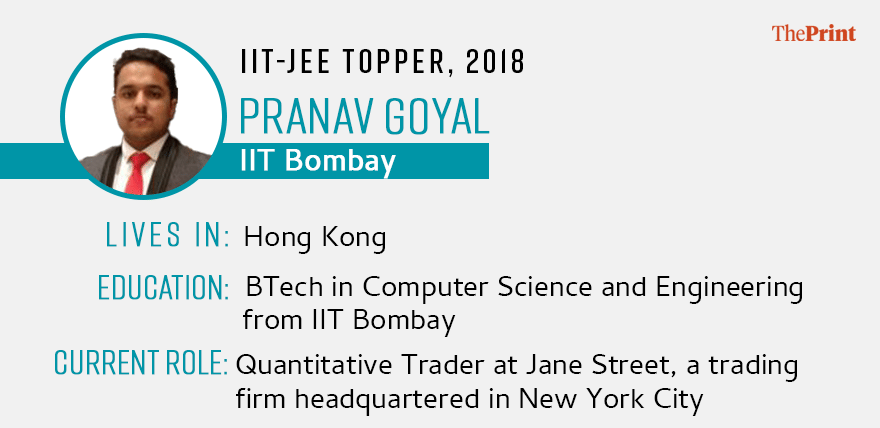
Pranav Goyal’s career is one of the clearest examples of the post-2015 shift in topper trajectories.
Instead of academia or conventional software engineering, he moved into quantitative trading — one of the world’s most mathematically demanding and high-paying career tracks.
His path from IIT Bombay Computer Science to Jane Street reflects the growing attraction of elite finance firms for India’s highest-performing engineering talent.
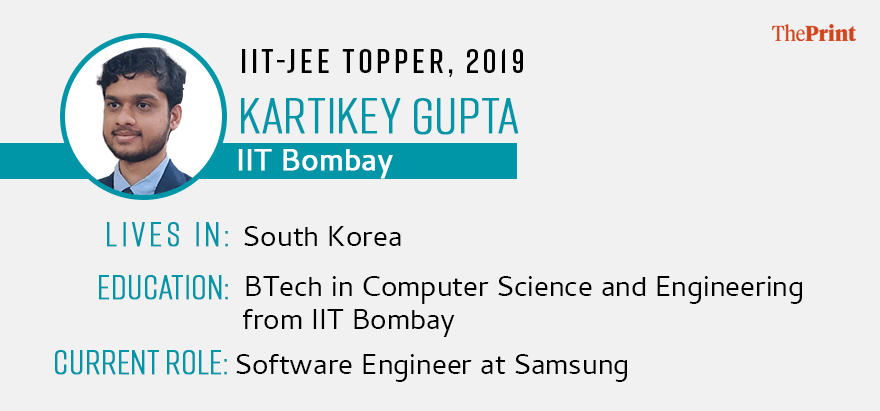
Unlike toppers who later diverged into academia or finance, Kartikey Gupta’s path reflects the dominance of top-tier product engineering roles among recent IIT-JEE rankers.
His trajectory also illustrates how the IIT ecosystem now feeds seamlessly into global technology hiring pipelines.
Broader pattern
Taken together, these trajectories reveal how the aspirations of India’s highest-ranked engineering students have changed over two decades.
In the early 2000s, academia and research held considerable appeal. Many toppers pursued PhDs and remained closely tied to universities and research institutions.
By the late 2000s and especially after 2015, finance, AI, startups, and global technology companies increasingly became the preferred destinations.
The IIT-JEE exam remains the same. But what India’s brightest students choose to do after topping it has changed dramatically.
(Edited by Prashant Dixit)
When the government spends a lot on infrastructure and training of these gems why not they be given compulsory 4-5 years of government service on stipend. Else can utilize their bright ideas and hardwork for our own people well-being rather than enslaving to foreigners
We researched and presented.
Interesting piece, but the methodology undercuts the stated goal. Tracking only AIR 1 gives you one data point per year —– 20 students over 20 years is far too thin a sample to identify genuine patterns. The AIR 1 holder is, by definition, an extreme outlier whose choices may reflect individual circumstance more than any systemic trend.
Tracking the top 5 or 10 each year would have given you 100–200 data points — enough to actually distinguish signal from noise. Is the drift toward quant finance a real trend, or just three or four individuals making similar choices? At n=20, you can’t tell. The article builds a compelling narrative, but on a foundation too sparse to support confident conclusions.