



Mumbai: Every monsoon, Mumbai closely watches its lakes. The city’s drinking water security depends on how much rain falls over seven lakes spread across Thane, Palghar and Nashik. A good monsoon season generally fills the reservoirs with enough water to last a whole year, whereas a weak or delayed one revives the threat of water cuts.
Mumbai currently receives about 4,100 million litres of drinking water a day from dams built on these lakes – Bhatsa, Upper Vaitarna, Middle Vaitarna, Modak Sagar, Tansa, Vihar and Tulsi. This still leaves Mumbai facing a daily shortfall of 500–600 million litres (MLD), against the city’s daily drinking water requirement of 4,664 MLD, according to the Brihanmumbai Municipal Corporation (BMC).
This water shortage is expected to deepen as redevelopment replaces older low-rise buildings and housing colonies with towers, that contain more houses on the same plot of land. The increase in residential density and commercial activity raises water demand in a city, whose population continues to grow naturally as well as due to migration influx.
The risks became stark again this summer. On 11 May, the total usable water stock in Mumbai’s seven reservoirs fell to 23.5 per cent of the city’s annual requirement, which led to the BMC imposing a 10 per cent city-wide water cut from 15 May.
By 16 June, usable water fell further to 10.35 per cent of their combined capacity. With the monsoon delayed, the BMC resorted to imposing an additional 20 per cent cut on industrial, commercial and sports establishments, while suspending supply to construction projects and swimming pools completely.
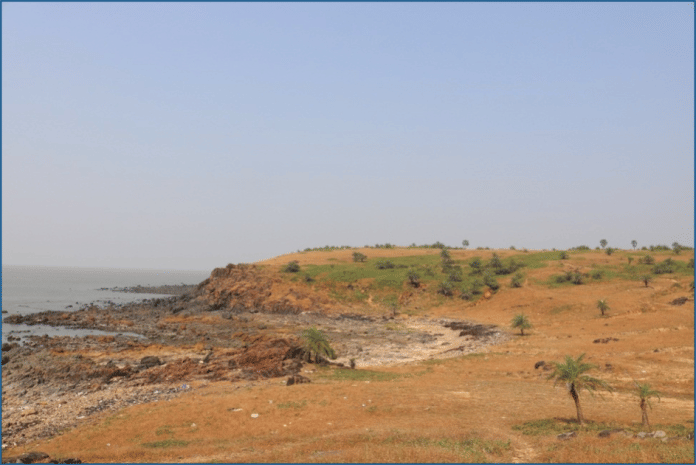
The civic body is now looking beyond the rain-fed reservoirs to address Mumbai’s drinking water shortage. A desalination plant — the first-ever in Mumbai as well as in Maharashtra — is set to be established at Manori, a seaside village located at the northern end of suburban Mumbai. The plant aims to turn saline water from the Arabian Sea into 400 MLD of drinking water, a scale the city has never attempted before.
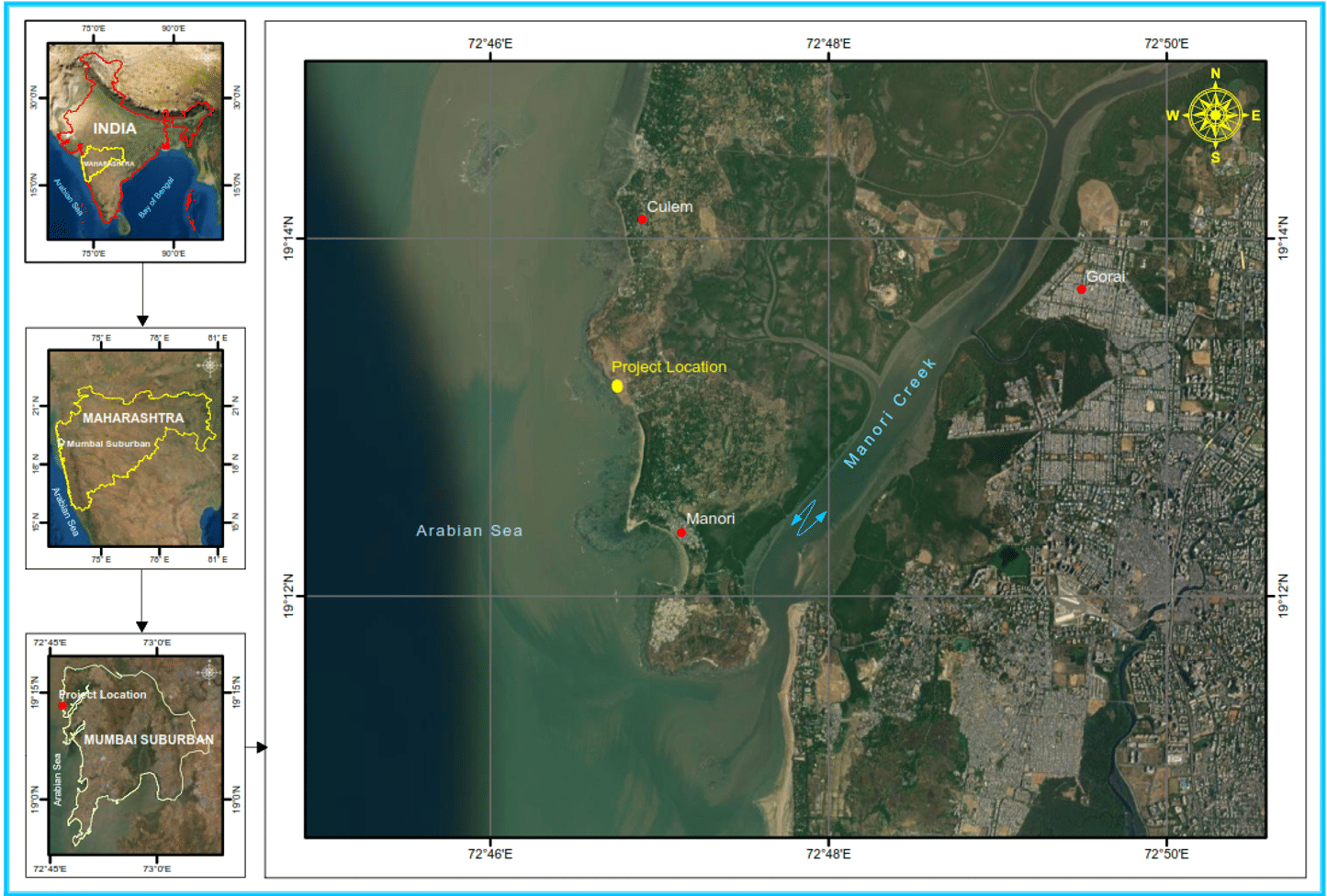
The desalination plant
“The first phase is estimated to cost around Rs 3,900 crore. It will produce 200 MLD by 2029,” Abhijit Bangar, Additional Municipal Commissioner (Projects) at the BMC, told ThePrint. He added that if a work order for the additional 200 MLD is allotted in the next six months, the entire project can be completed either by the end of 2029, or by mid-2030. The project is spread across 12 acres and inspired by desalination plants in Israel.
Israel’s IDE Technologies has been brought on board to provide the reverse-osmosis (RO) technology, construct the desalination systems and operate the plant for 20 years. Meanwhile, its civil infrastructure would be built by Hyderabad-based GVPR Engineers.
Although Israel is not the only country to use desalination — the technology is central to water supply in Saudi Arabia, the UAE, Australia and Singapore — it stands for predominantly using desalinated seawater in its municipal drinking-water system.
The project received the approval of Maharashtra Coastal Zone Management Authority (MCZMA) on 7 April, subject to safeguards for mangroves, tidal flows, fishing livelihoods and the disposal of concentrated brine.
The Union environment ministry granted the final Coastal Regulation Zone (CRZ) clearance on 28 April. It directed BMC to monitor the long-term impact of brine discharge on marine ecology, use tunnelling for offshore pipelines, protect Manori creek and meet part of the plant’s energy requirement through renewable sources.
“All necessary permissions have been received. The full-fledged work on ground will start post-monsoon,” said Bangar.
Manori is one of three projects through which the BMC hopes to expand Mumbai’s drinking water supply. The second one is the 440 MLD-capacity Gargai dam, which is at a pre-construction stage and pending environmental clearances. The third is a 200 MLD- capacity desalination plant at Versova but it is still in an early planning stage.
Together, the three projects are expected to add 1,040 MLD and reduce the city’s dependence on the monsoon-fed lakes.
Also Read: Mumbai monsoon has brought a new killer—city’s falling trees
Why Mumbai is looking beyond reservoirs
For most Indian cities, expanding water supply has traditionally meant building another dam.
Mumbai too followed the same model for decades, gradually spreading its water network further into neighbouring districts to meet increasing demand. The dam on Gargai river, approximately 120 kilometres north of the city, is part of that approach.
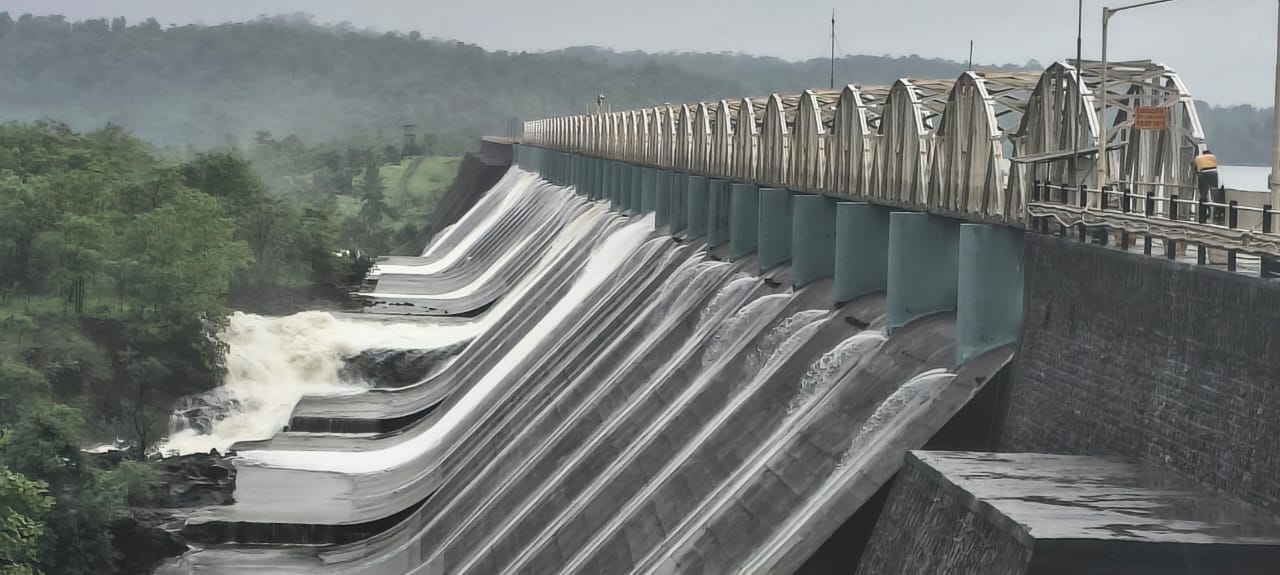
But dams come with constraints. Suitable sites are becoming harder to find, they involve long-distance pipelines for transmission, and ultimately, they remain dependent on rainfall. For Mumbai, that uncertainty has prompted planners to think beyond reservoirs.
“The city has been predominantly dependent on reservoirs for water. The sub-urban population increases by nearly 50 per cent every decade. So, Mumbai needs additional water reserves. We can draw a significant amount of water from both the Gargai dam as well as the Manori desalination plant,” Bangar said.
Nayan Shah, Sales Director at IDE Technologies India, argued that desalination is no longer simply an engineering choice but part of a broader climate-resilience strategy.
“The first 200-MLD phase will account for only around 5 per cent of Mumbai’s current daily water requirement,” Shah told ThePrint. Even after the plant doubles to 400 MLD, it will contribute less than a tenth of the city’s overall demand. “But that is precisely the point. The project is intended to diversify Mumbai’s water sources rather than replace existing reservoirs,” he said.
As the city’s requirement continues to rise, Shah believes future water security will depend on multiple sources working together like – reservoirs, desalination and large-scale recycling of treated wastewater, commonly referred to as Sewage Treatment Plants (STPs).
Under the Mumbai Sewage Disposal Project (MSDP)–Stage II, BMC is building seven large sewage treatment plants at Worli, Bandra, Dharavi, Versova, Malad, Bhandup and Ghatkopar, with a combined capacity of 2,464 MLD. With work orders issued in 2022, the plants are under construction and are expected to be completed in phases between 2026 and 2028.
While STPs do not produce potable water, in Mumbai, treated sewage is primarily intended for non-potable uses such as industry, construction and gardening, reducing demand for freshwater. Using treated sewage water for drinking purposes would require additional advanced treatment, multiple disinfection barriers, continuous monitoring and a separate regulatory framework.
“For now, the STPs will provide water that can be used for non-potable purposes. But eventually, we do have plans to treat that water and make it potable. The functional Colaba STP is proposed to be upgraded with advanced treatment to provide drinking water. So is the new 500 MLD Worli STP, which is under construction,” Bangar said.
Also Read: Rats at K Rustom, fungus at Parsi Dairy—why many are cheering FDA shutdown of Mumbai icons
Indian builder with Israeli technology
The Manori project brings together two companies with distinct responsibilities.
The project’s infrastructure will be built by Hyderabad-based GVPR Engineers, an infrastructure company founded in 1997 and specialising in water supply, irrigation, sewage treatment, power and construction. It is currently working on constructing the 337 MLD Ghatkopar sewage-treatment plant in Mumbai. The firm is also building irrigation and drinking water supply systems in Gujarat, Telangana and Karnataka.
Three tunnel-bored conduits will be constructed beneath the seabed along the coastline in Manori — two to draw seawater into the treatment facility and one to discharge the treated concentrated brine back into the sea. Unlike conventional marine pipelines, which are laid directly across the seabed, these tunnels will run underneath it to prevent disturbance to fishing routes and coastal ecosystems.
“Brine is the seawater but with double the concentration of salt,” said Shah. He added, “It will be discharged deep into the ocean through precisely engineered diffusers in areas with strong movement. This turbulence helps the brine disperse rapidly, diluting the salt concentration and preventing any localized increase in salinity.”
According to IDE, the design took shape after almost two years of extensive marine investigations that included bathymetric mapping, sonar surveys, tidal studies and geological assessments over a large offshore area.
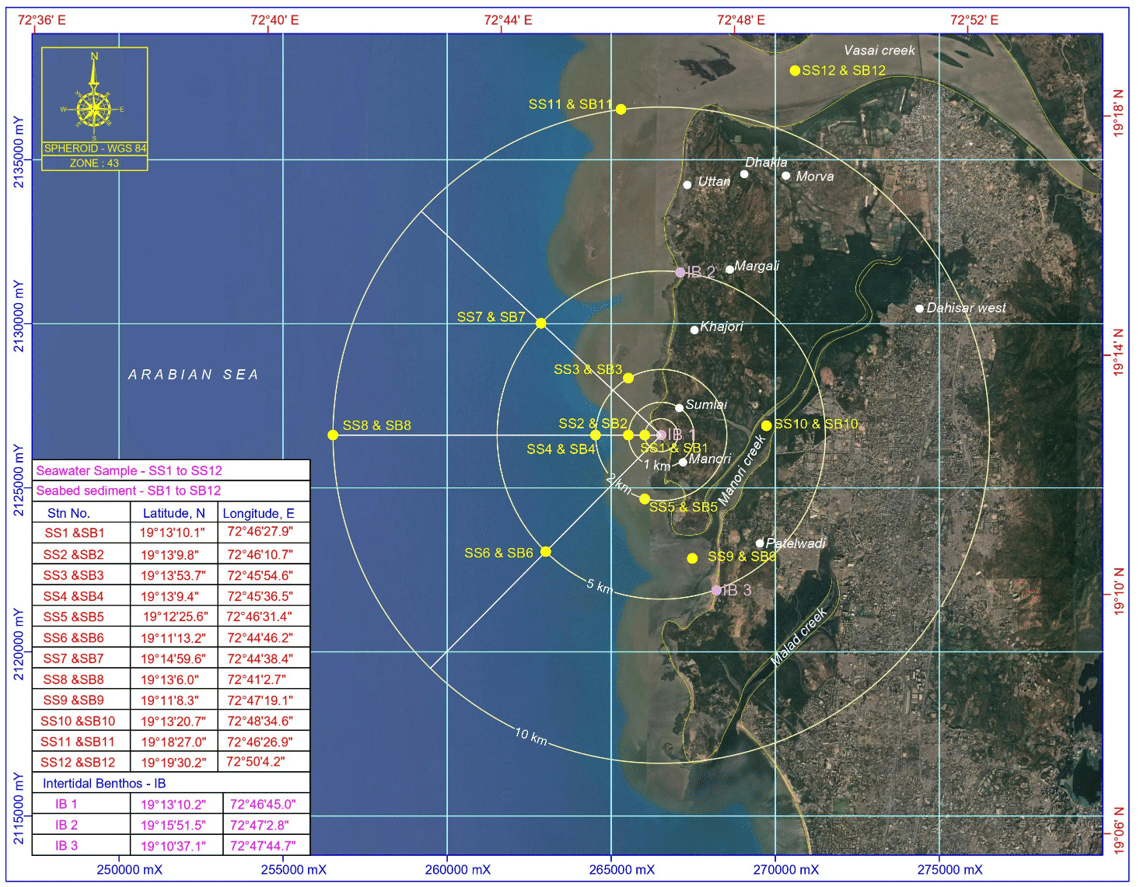
Shah explained that rather than excavating the seabed through open-cut construction, tunnel boring machines will work beneath it. “The intention is that everyday activity at sea for fishing communities should remain largely unaffected. Fishing boats can navigate and cast nets without colliding with or snagging on surface pipes or barges,” he said.
The combined tunnel length would extend to roughly seven kilometres. Each tunnel would measure roughly 2.8 metres in diameter.
IDE’s expertise comes in once seawater reaches the plant. It will use the reverse osmosis (RO) technology — wherein seawater will be forced through specialised membranes under extremely high pressure to filter out dissolved salts and impurities — to produce clean drinking water which can enter Mumbai’s municipal distribution network.
“For IDE, Manori is not simply a construction contract. The company will also be responsible for operating and maintaining the facility for two decades, making its long-term performance as important as its initial construction,” Shah claimed.
Also Read: Jewar Airport runs on Swiss science and a cement that took 20 years to make
Lessons from Israel
Mumbai’s reliance on an Israeli company is not accidental. Few countries have had to rethink water security as fundamentally as Israel.
With limited freshwater resources and an arid climate, the country transformed desalination from an expensive alternative into the backbone of its urban water supply.
Speaking to ThePrint, Israel’s water attaché to India, Noa Amsalem said, “About 20 years ago, Israel was dependent mostly on natural water sources. We had one water source, a freshwater lake, which used to provide water for the entire country.”
The Israeli government at the time, she said, realised that the country was along the shore of the Mediterranean Sea. “They came up with a plan, a mega master plan, to build water desalination plants. And now since we have been doing this for 20 years, we now know the benefits and challenges of the desalination process,” she said.
More than 70 per cent of Israel’s urban water is supplied by large coastal desalination plants. It is fed into a national network alongside water from the Sea of Galilee and underground aquifers, before reaching homes and businesses. Israel also reuses more than 87 per cent of its treated wastewater largely for agriculture, reducing the pressure on freshwater meant for drinking.
IDE Technologies has played a pivotal role in this transformation. Founded in 1965, the company has developed some of Israel’s best-known desalination plants, including Ashkelon, Hadera and Sorek. Several of those projects set international benchmarks, whether through reduced land footprint, lower energy consumption and lower carbon emissions for every 1,000 litres of water produced.
The company is not new to India either. Over the past three decades, IDE has supplied desalination systems to industrial and municipal projects across India, including Reliance Industries and Nayara Energy’s refineries in Jamnagar, Gujarat; the Kudankulam Nuclear Power Project, Chennai’s fully-operational 110 MLD Nemmeli desalination plant, and an ongoing project for SIPCOT in Tamil Nadu.
But, Manori’s desalination plant stands out. Unlike the Jamnagar plant, which supplies water to an industrial refinery, Manori will produce drinking water for Mumbai’s municipal network, while being situated in the city’s limits. The Manori project also marks Mumbai’s first attempt to reduce its heavy dependence on monsoon-fed lakes.
Shah said that in Manori, the challenge goes beyond building a desalination plant. “The city is now facing erratic monsoons, harsher summers and continued dependence on distant, rain-fed reservoirs. This means cities can no longer depend on a single water source. Water security will increasingly depend on building resilience through diversified water sources,,” he said.
Manori would meet only about 4 to 5 per cent of Mumbai’s current demand at 200 MLD capacity, rising to 8 to 10 per cent when the capacity is expanded to 400 MLD. Shah said the city would still need recycled wastewater, tighter demand management and more realistic pricing. Recycled water, he added, must be treated to a “potable-ready” standard to prevent health risks during shortages or accidental misuse. “The real question is not the cost of water, but the cost of not having water. Reliable water infrastructure requires sustained investment.”
Also Read: Ladakh’s yak churpi cheese has reached the world. A gold medal in Brazil is just the start
Can desalination become green?
Desalination has always carried one major criticism – it consumes enormous amounts of electricity.
Running pumps powerful enough to force seawater through reverse-osmosis membranes makes energy one of the largest operating costs for any desalination plant and one of its biggest environmental concerns.
The BMC, however, believes it has found a way to reduce that burden. The Manori plant will draw electricity through the power grid, but that electricity will originate from renewable sources.
“Solar-based electricity will be used. The contractor will establish dedicated solar-generation capacity, inject that electricity into the grid and offset the plant’s consumption with an equivalent amount of green power,” Bangar said. IDE intends to push that model even further.
Rather than depending solely on solar energy, the company plans to combine solar generation with wind power and battery storage to meet the plant’s round-the-clock electricity requirement.
According to Nayan Shah, “Solar generation alone cannot keep a desalination plant operating through the night or during prolonged cloudy weather.”
Even combining solar and wind leaves periods where renewable generation falls short. Battery storage, therefore, becomes the third pillar of the system, allowing renewable electricity to supply the plant continuously.
“If implemented as planned,” Shah said, “The Manori plant would be India’s first desalination plant powered entirely by renewable energy.”
(Edited by Aakriti Handa)