






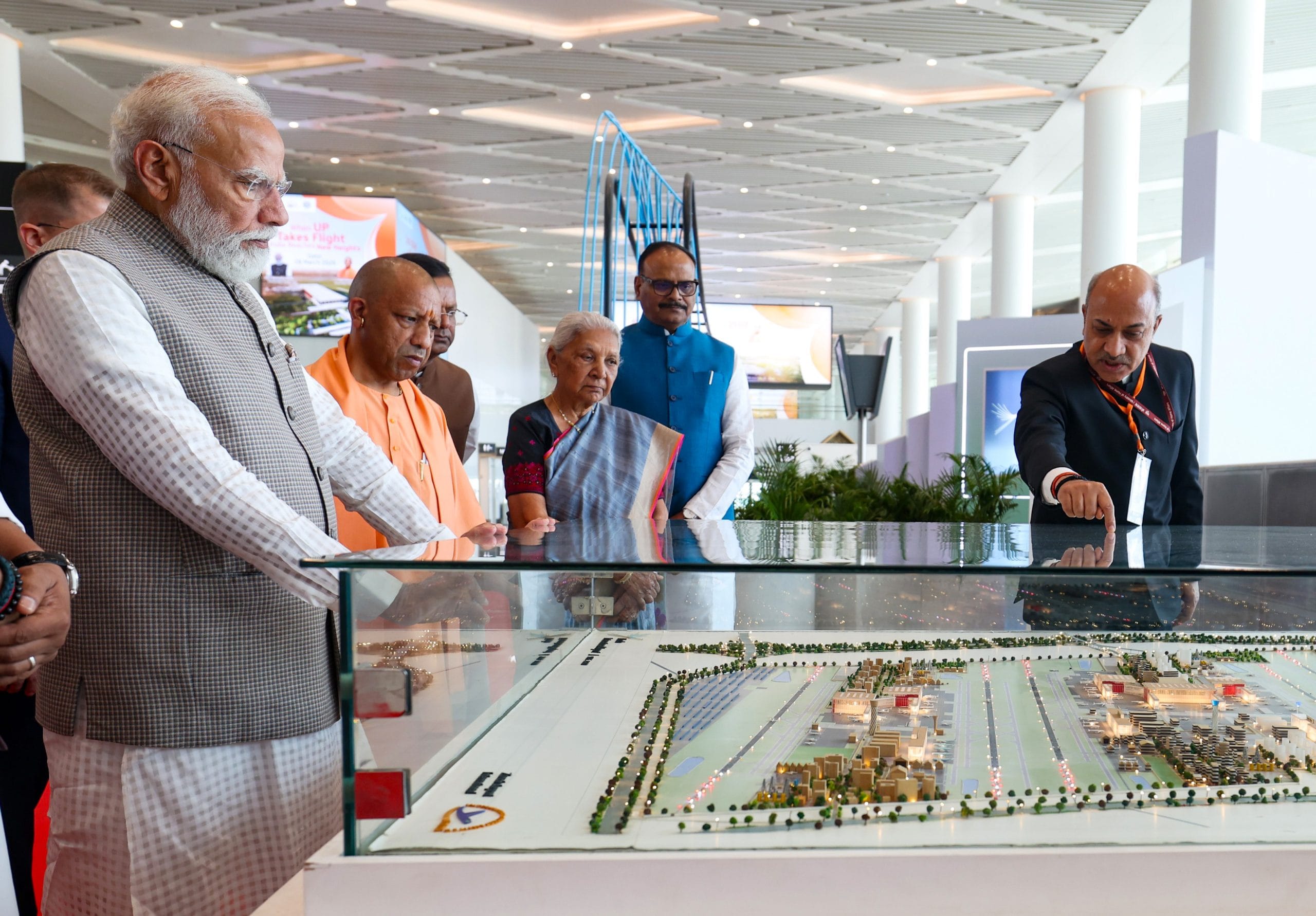
Lausanne: In March this year, Prime Minister Narendra Modi inaugurated the Noida International Airport, also known as the Jewar Airport, in Uttar Pradesh. The new airport was projected as an infrastructural marvel—futuristic technologies, efficient operations and environmentally-friendly designs. But this Indian airport in the far reaches of Greater Noida has a Swiss connection.
The airport is the physical manifestation of years of hard work by 67-year-old material chemist Karen Scrivener. Scrivener, a professor at Switzerland’s École Polytechnique Fédérale de Lausanne (EPFL) in Lausanne, is one of the scientists who came up with Limestone Calcined Clay Cement or LC3, a sustainable, low-carbon cement used for the first time in the Jewar Airport.
“It (Jewar airport) was the first full-scale use of LC3. It was a great achievement. It shows India’s commitment to low-carbon alternatives,” Scrivener said in a conversation with ThePrint in her lab at EPFL.
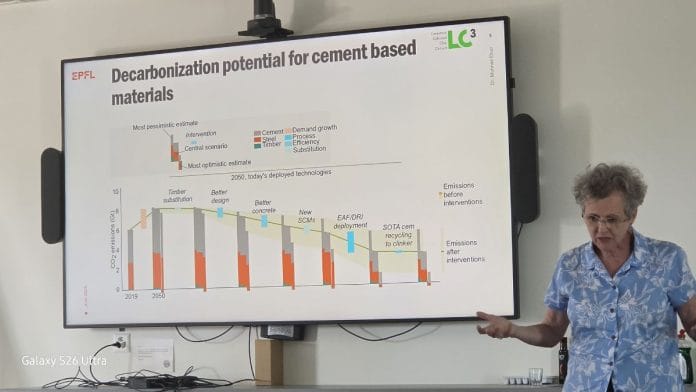
LC3 belongs to the family of composite cements containing portland clinker—a nodular, hydraulic material produced by heating limestone and clay to approximately 1450 degrees Celsius in a rotary kiln—calcined clay and limestone. Studies have indicated that this new type of cement can help countries achieve their sustainability goals by reducing CO2 emissions by up to 40 per cent compared to ordinary Portland cement.
What makes this even more attractive is the fact that it is cost-effective and easy to produce.
Also read: UN climate chief likens India’s clean energy growth to Tendulkar and Sooryavanshi
The sustainability dream
In the busy corridors of EPFL labs, Professor Scrivener juggles lab work, guides students in their projects and prepares for her classes and scientific discussions with colleagues.
Her schedule is packed. But she’s always happy to take the time to talk about LC3 and its growing acceptance around the world.
“It is definitely an achievement I am proud of,” Scrivener said.
LC3 is often called the greatest experiment in the cement industry in recent years. Her students and colleagues say that Scrivener could have easily patented it and made tons of money in the process. She chose not to.
“She is extremely passionate about this. She could have earned a lot from her work, but she wanted the world to have a low-carbon cement option that was easily and affordably accessible,” said Mehnaz Dhar, a student of Scrivener at EPFL.
The spark started around 2004, when Scrivener and professor Fernando Martirena from UCLV, Cuba, were discussing the use of calcined clays for pozzolans—aluminous materials that chemically react with calcium hydroxide in the presence of moisture to form strong bonding compounds.
It took a year for the duo to formally begin the research project to create what is today known as LC3. The project began with the support of the Swiss National Science Foundation (SNSF) and the Swiss Agency of Development and Cooperation (SDC) and the first phase of the research took place from 2005 to 2008.
In 2014, India’s premier institutes IIT-Delhi and IIT-Madras also joined the research project.
What set this new category of cement apart from its earlier counterparts was that it was nearly 25 per cent cheaper to produce, used comparatively lower energy to manufacture and uses low-grade and fairly easily available limestone and clays.
In 2020, the technology was finally done with testing and ready to be used on a commercial scale. It took nearly 16 years for it to get here from a conversation between colleagues.
Scrivener and her team said the result was well worth the wait.
From Swiss labs to UP’s runways
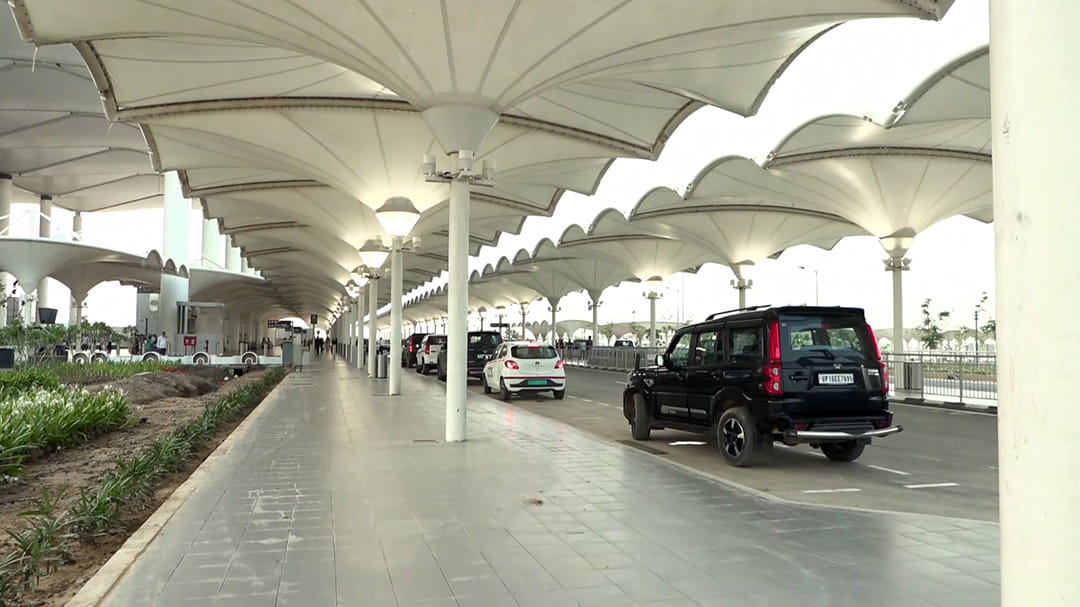
LC3 cement was used for the construction of Jewar Airport’s runway and one building complex.
Nicolas Schenk, the chief development officer of the Noida International Airport, said that this was the first time the low-carbon LC3 was used in India beyond the experimental scale.
“We are the first large-scale project in India to use LC3 cement. The NIA has become an example that many big infrastructure projects can follow going forward,” Schenk said.
The NIA, which connects the greater Delhi area and western UP with other major cities, is touted as a “world-class airport”, and claims to operate with the ambitions of net-zero emissions.
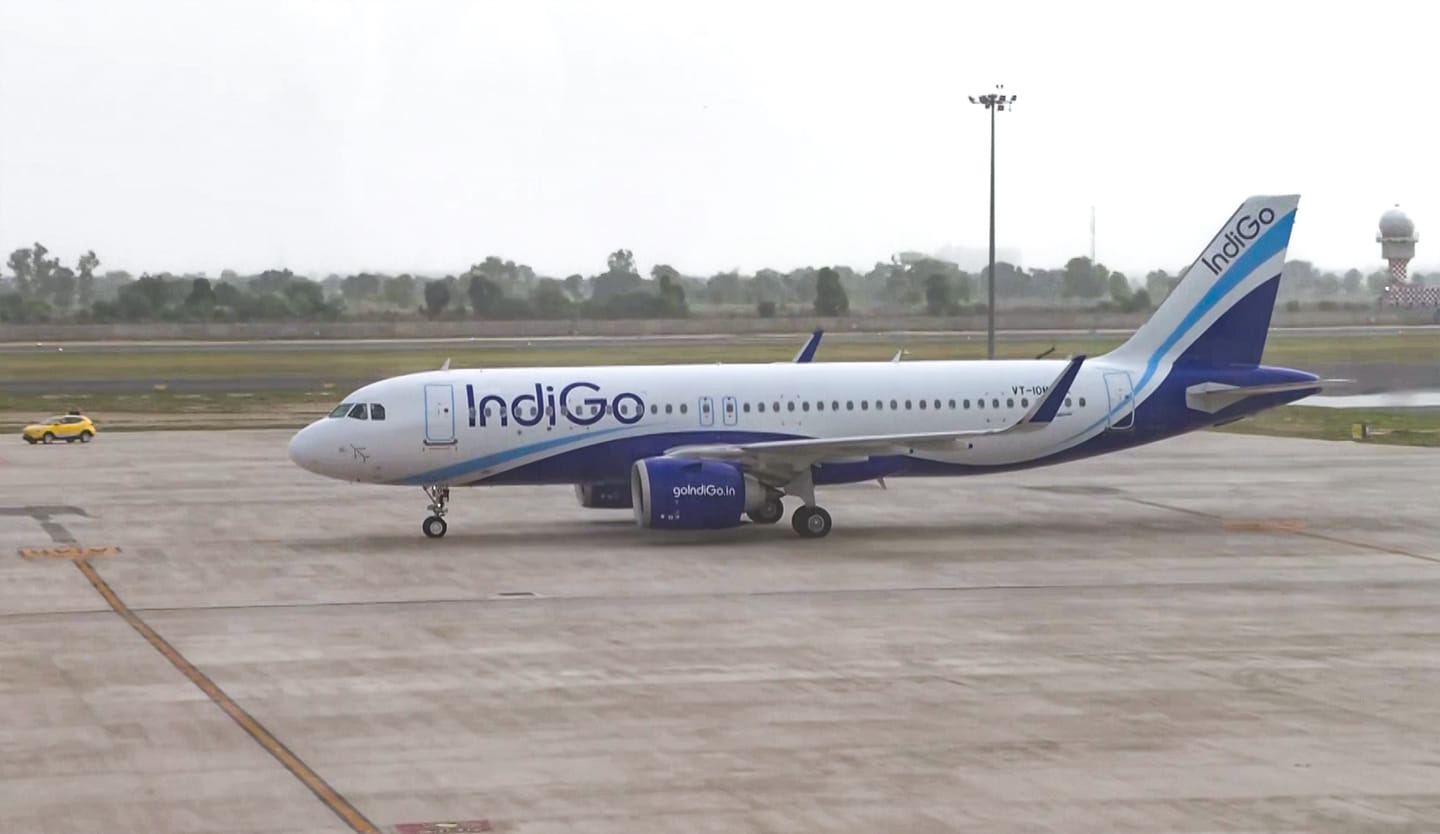
Yamuna International Airport Private Limited (YIAPL)—a subsidiary of Zurich International Airport—was established to oversee the development, construction, and operation of this project.
According to NIA, the concession period commenced in October 2021 and will go on for 40 years.
“In recent years, a lot of research and development has taken place to develop low-carbon cement alternatives like LC3, geopolymer binders, belite-rich cement and other novel cements,” a CMA document read.
The document added, “The industry is increasingly moving toward more sustainable and environmentally viable options, and LC3 is an option that many cement manufacturers are exploring.”
Notable brands like JK Lakshmi, JK Cement, and Ultratech have mentioned the launch of LC3 variants on their websites.
Experts welcome this transition.
Vaibhav Rathi, senior technical advisor at the Deutsche Gesellschaft für Internationale Zusammenarbeit (GIZ), focusing on climate change and circular economy, said that cement is the second most common material on Earth after water. This means that it is not only essential to development but also for the achievement of overall sustainable development goals (SDGs).
He said the world cannot completely shy away from cement, even though it contributes to GHG (greenhouse gas) emissions.
“So, what do we do if we have to build infrastructure but also curb the harmful environmental effects of cement? We manufacture this material in a way that it emits less carbon and utilises less resources than what it is using now,” said Rathi.
This is where innovations like LC3 come in.
Also read: How do you decarbonise urban India? Start with how you plan
Future potential
Scrivener sees India as a major market for the LC3 cement. The country is developing its infrastructure and has an abundance of low-grade limestone and clay—the major raw materials required for its production.
“India is an ideal location to test the potential of this technology. I am really looking forward to how the industry adopts this there,” she said, beaming with excitement.
She is also certain that the LC3 will stand the test of duration and strength better than its predecessor variants. Innumerable lab tests and safety assessments have been carried out before the variant was deemed fit for industry use.
“I cannot wait to see how the industry there grows,” she said.
Her lab, thousands of kilometres away, has helped advance India’s sustainable development ambitions.
(Edited by Theres Sudeep)