





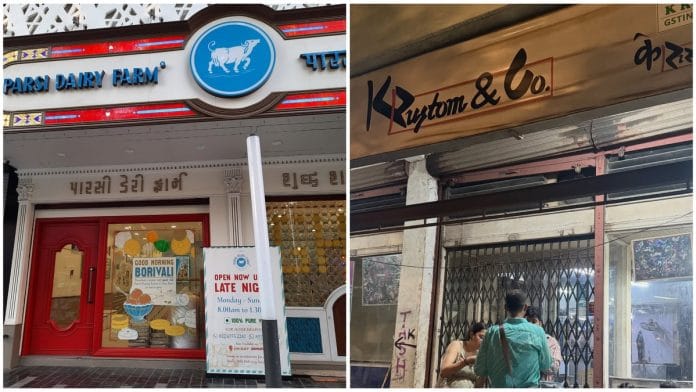


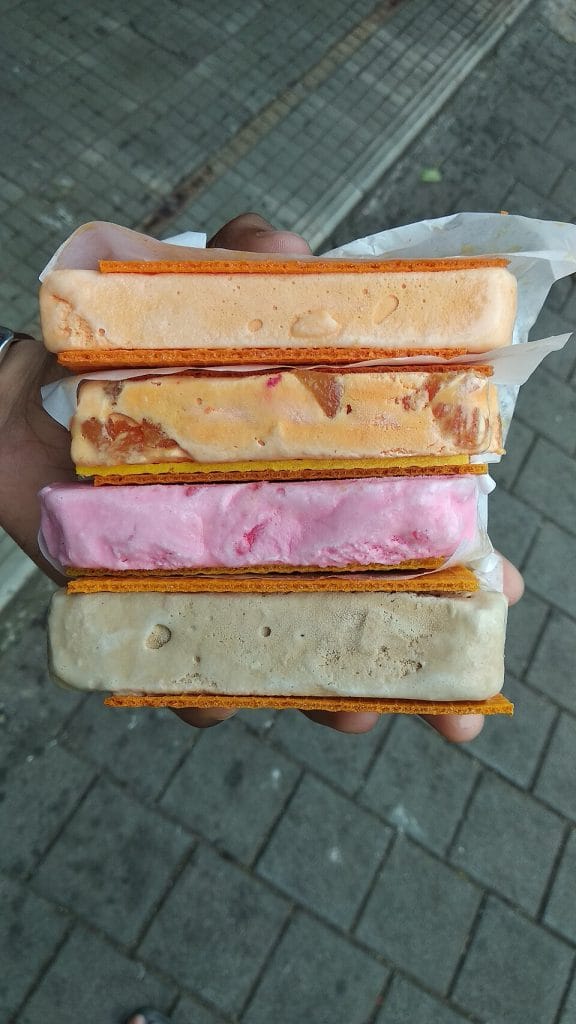
Mumbai: At K Rustom & Co near Churchgate, ice cream was served as a thick rectangle—mango, walnut crunch, raspberry, coffee, or rum-and-raisin—sandwiched between two brittle wafers and handed over in a square of paper. Customers usually ate it on the pavement outside before walking to Marine Drive or hurrying back to the station.
At Parsi Dairy Farm on Princess Street, the indulgence took the form of delicate coils of sutarfeni, boxes of mawa peda and kaju katli, slabs of white butter, bottles of milk, and dense malai kulfi. Together, the two establishments anchored South Mumbai’s food map, as much for their treats as for their sheer longevity and familiarity built over generations. Now, both are behind shutters.
The closures are part of a statewide crackdown by the Maharashtra Food and Drug Administration (FDA), which has suspended at least 56 food business licences over hygiene and food-safety violations since 25 May. This time, even food establishments labelled “iconic” are no longer being treated differently from everyone else.
The closures have evoked predictable nostalgia, but they have also started a conversation about why even the city’s most beloved old institutions should not be exempt from modern food-safety standards.
The FDA first acted against K Rustom on 7-8 July. Citing live rats, houseflies, expired ingredients, cold chain disruptions, and missing record-keeping, the regulator suspended its licence under Section 32(3) of the Food Safety and Standards Act, 2006. The outlet was directed to stay closed until test results of collected food samples arrived, according to an FDA statement. The Instagram account of the Food Safety and Standards Authority of India (FSSAI) also shared a video of the inspection, complete with suspenseful music and scuttling rodents.
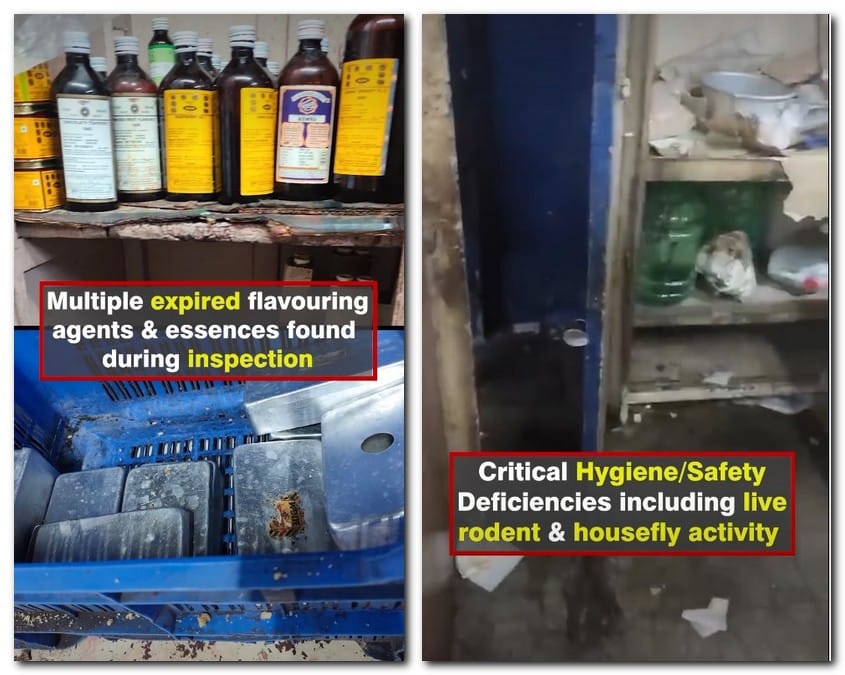
A week later, on 14 July, FDA officers inspected Parsi Dairy Farm’s Princess Street unit. They reported fungal growth in storage and production areas, raw materials kept directly on floors beside fungus-affected walls, a damaged and unprotected milk reception dock, severe fly infestation, broken drains, and products without mandatory “Best Before”, “Use By” or expiry-date information. An immediate suspension order was issued on 15 July, barring manufacturing, sales, or distribution due to public health risks from potential microbiological contamination.
Both veteran institutions have remained largely silent since the closures and did not respond to phone calls and messages from ThePrint.
A Parsi Dairy Farm spokesperson did, however, tell The Times of India last week that the company was in the “process of complying with certain procedural technical observations”.K Rustom has not publicly responded to the FDA’s findings, but a staff member told Mumbai Mirror that the matter was with the establishment’s advocate. The report said the eatery had also not appealed its licence suspension despite the statutory deadline approaching.
Also Read: Mumbai monsoon has brought a new killer—city’s falling trees
Becoming the city’s icons
Parsi Dairy Farm began in 1916, when 18-year-old Nariman Ardeshir started selling milk in south Mumbai with a single can. It grew into a family-run dairy known for doorstep milk deliveries and products such as white butter, ghee, paneer, yoghurt, kulfi, milk toffees and traditional sweets.
Its milk delivery workers, dressed in cobalt-blue uniforms, came to be known as the “blue brigade”, and its mithais, kulfi, sutarfeni became a fixture during festivals, not only for Parsis but for households across the city. The business is now managed by the fourth generation of the family.
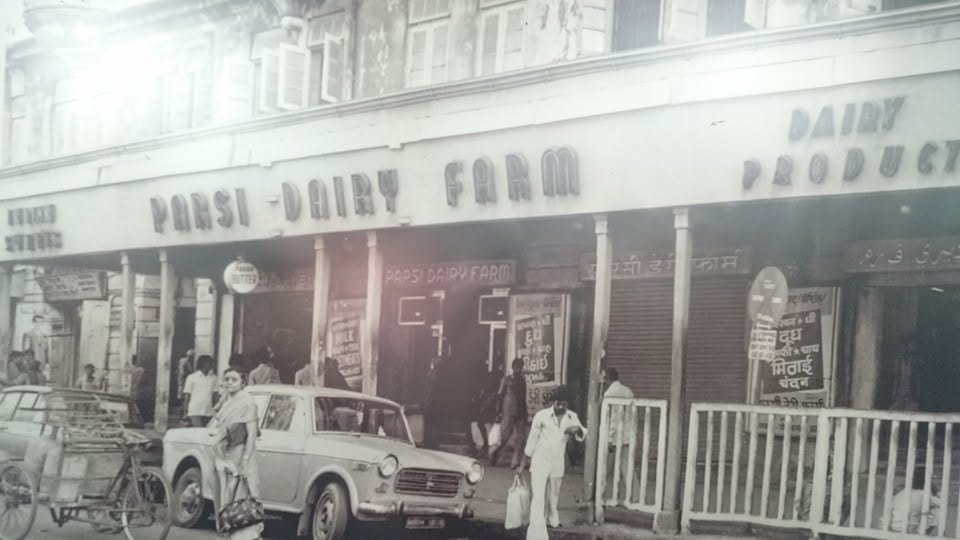
In 2023, Parsi Dairy Farm redesigned its Princess Street store to attract younger customers, adding a small seating area, a toffee vending machine and displays of old advertisements, milk coupons, packaging and family photographs. But the USP was still its century-old recipes and production practices.
Another venerable Parsi institution, K Rustom, was founded in 1953 by Khodabux Rustom Irani. The Churchgate premises formerly operated as a department store selling items such as cotton, wool and medicines. With the sea and Marine Drive drawing people to the neighbourhood, the family began making and selling ice cream.
It initially served ice cream on porcelain plates, but shifted to placing rectangular slabs between two thin wafers after customers broke or carried away the plates. That quick fix became K Rustom’s signature.
For generations of students, office-goers, tourists and families, stopping at the small shop was a South Mumbai ritual. Neither K Rustom nor Parsi Dairy Farm needed elaborate branding to secure its place in the city. Their appeal rested on age, familiarity and products that customers associated with childhood, social outings and an older idea of ‘Bombay’.
Many customers lamented the closed shutters as the end of an era in Mumbai. There were also conspiracy theories about vested interests and disbelief that the old stalwarts had lapsed so badly.
“The FIRST thought that came to mind was ‘Hmm. Wonder who wants the place or the building’. That’s where we are at. I cannot believe that there was a violation,” posted @Makarand_S on X.
I hear about Rustoms, THE ice-cream place in South Mumbai for decades, is being suspended by FDA and the FIRST thought that came to mind was "Hmm. Wonder who wants the place or the building".
That's where we are at. I cannot believe that there was a violation.
— Makarand (मकरंद) (مکرند) (@Makarand_S) July 9, 2026
But the nostalgia was not universal, with many lauding the FDA and its commissioner, IAS officer Tukaram Mundhe.
“K Rustom not living up to hygiene standards and taking their loyal customers for a ride should be a lesson for other iconic eateries to mend their ways,” posted @Moulinparikh on X.
K Rustom not living up to hygiene standards and taking their loyal customers for a ride should be a lesson for other iconic eateries to mend their ways. It must also be probed why the owners refused digital payment modes and accepted only cash. Well done, FDA.
— Moulin (@Moulinparikh) July 9, 2026
On Instagram, influencer Zervaan Bunshah posted that he’d miss the “nostalgic feeling” but little else.
“Used to be a fan when I was a kid. Grew up realising how the standards dropped every year,” he wrote.
Also Read: No dosa, no idli, no sambar—Chef Bala’s Nadoo wants Delhi to rethink south Indian food
What next for K Rustom and Parsi Dairy?
During the raid on K Rustom, food inspectors destroyed expired artificial flavours and essences, including pistachio, pineapple, sweet orange, cherry, almond, strawberry, blackcurrant and rum Jamaica. The regulator also cited an earlier laboratory report that found 7.94 per cent milk fat in an ice-cream sample, below the prescribed minimum of 10 per cent. Fresh samples were sent for further testing.
The FDA later returned after learning that work was continuing despite the suspension. Ice cream and raw material worth about Rs 9 lakh were seized. Before seeking permission to reopen, the outlet has been directed to install mesh screens and rat traps, repaint parts of the premises and improve staff facilities. A notice outside K Rustom said it was shut for “renovation” from 8 July 2026.
At Parsi Dairy Farm, the regulator’s inspection also extended to its Palghar unit, where products worth about Rs 32.11 lakh were seized on suspicion of being misbranded or substandard. Across the statewide drive on 14 and 15 July, officials seized 2,317 litres of milk, 30 litres of refined oil and more than 6,849 kg of dairy products worth Rs 45.78 lakh.
Yet even among those who welcomed the crackdown, some said they hoped the institutions would recover and earn back trust.
“At the end of the day, nostalgia may bring people once, but hygiene and good behaviour bring them back. Hope the brand takes this seriously and comes back stronger,” food blogger Kashif commented on the FSSAI reel.
(Edited by Asavari Singh)
Good riddance of such an era of serving substandard food and resting on past laurels. In fact after having tried Rustoms ice cream sandwich a few years back which was so underwhelming , I am glad that at last the sleepy FDA has woken up. This disease of unhygienic food preparation is a cancer in India which nobody talks about.