





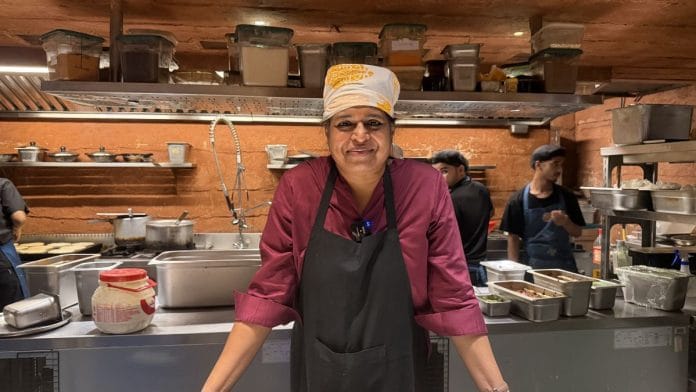


New Delhi: Don’t walk into Nadoo, Delhi’s new south Indian restaurant in GK III, asking for dosa, sambhar, or idli. Chef Shri Bala will politely turn you down. These dishes, long stereotyped as the face of south Indian food in the north Indian cities, simply don’t appear on Nadoo’s menu. That was the first thing she did when she came to Delhi and designed the menu. She banished them. For the better.
“South Indian food is beyond idli, sambhar and dosa. There are six or seven regions, and each one has its own abundance of flavours and dishes. I am on a mission to showcase it. I picked 400 dishes, of which I have put 60 on the menu,” Chef Bala told ThePrint at her buzzy, new GK III south Indian cuisine restaurant called Nadoo. Born and raised in Chennai, Shree Bala isn’t just a chef, she is a food anthropologist. With Nadoo’s Delhi and Gurugram restaurants, she wants to reconfigure the NCR palate and help residents re-imagine their notion of what south Indian food is all about.
She had just come in after finishing the lunch service at Nadoo’s sister branch, in Gurugram’s Sikanderpur, which opened in June. Her break lasts till she finishes her masala chai. After that, she’s back on her feet, hovering over the preparations before the dinner service starts at 7pm. Non-vegetarian preparations are one thing she closely inspects.
“People who are not well versed with southern food or are exposed to only badly done Bollywood representation of our states are still shocked to spot so many non-vegetarian curries or should I say ‘Nat Geo Dead’ on the menu card,” she said, with a laugh.
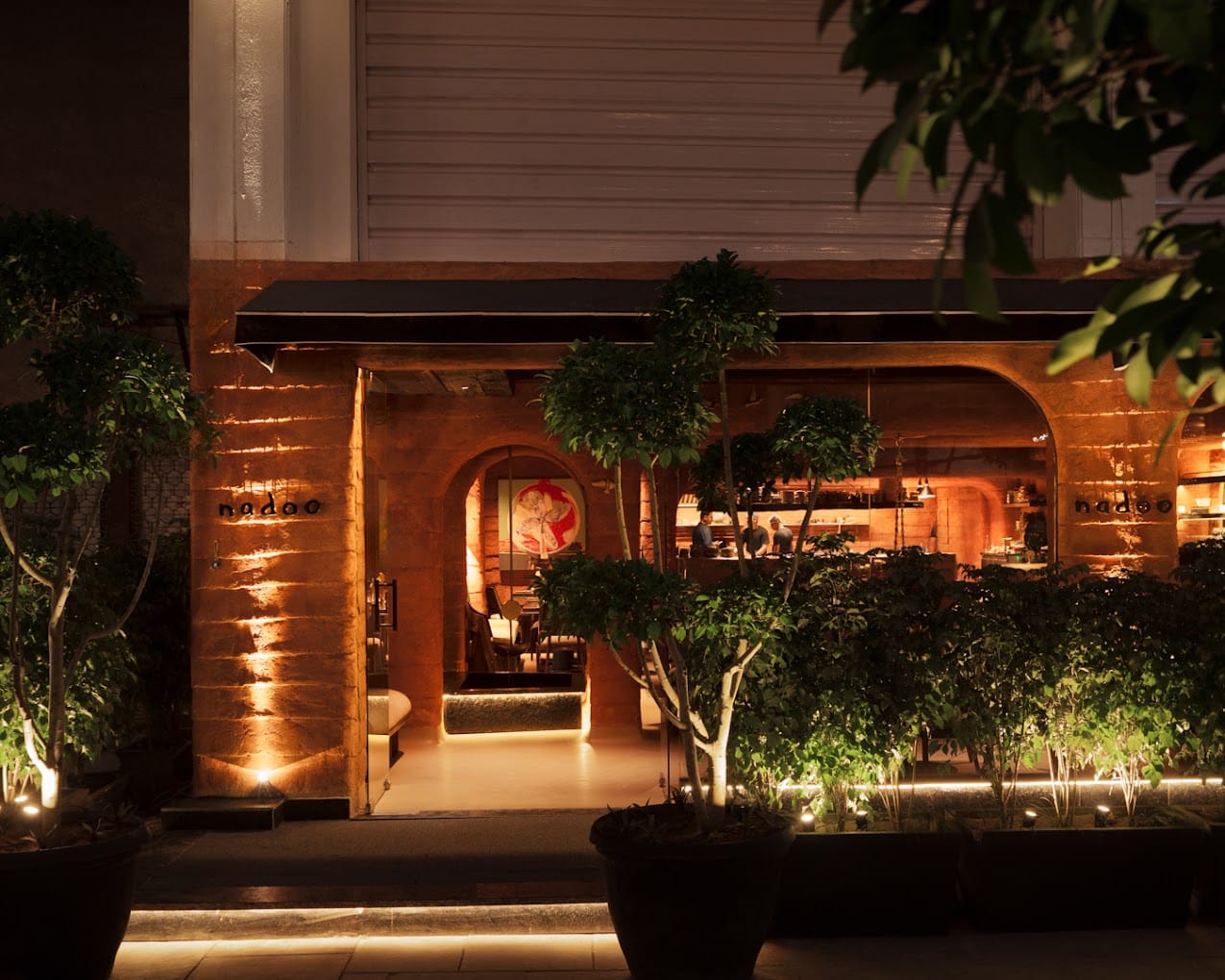
South Indian cuisine has been flattened by stereotypes in northern India for years, and even most south Indian restaurants stick to the vocabulary of one or two states. This is despite Delhi-NCR being home to thousands of south Indian dining spots, from establishments like Carnatic Cafe and iconic regional institutions like Dasaprakash and Sarvana Bhavan to neighbourhood Udupi joints. Zomato alone lists more than 2,000 south Indian restaurants across the capital region, yet, until now, no one had truly done justice to the cuisine’s range. Though Draavin Canteen manages to bring variety like Nadoo, Chef Bala’s offering comes in an upscale, fine-dining space built around the cuisine.
Chef Bala first spotted this gap during a visit to Delhi decades ago, back in the 90s, and has dreamed of owning a South Indian restaurant in the city ever since. Nadoo, the restaurant that finally captures her vision, took more than two decades to materialise. Those who know her describe her as a “perfectionist,” a “purist,” and someone who simply loves to “cook and feed.” But her favourite compliment is when people refer to her as a “custodian of south Indian culinary heritage.”
Over nearly a decade in professional cooking, Chef Bala built a reputation. She is known in particular for her deep expertise in authentic Tamil cuisine and her revival of 2,000-year-old Sangam-era recipes. Her approach combines academic study of Sangam literature, temple food traditions and Chola-dynasty history with extensive fieldwork, collecting recipes directly from home kitchens across the southern peninsula.
Recognised as one of India’s Top 30 chefs by the FoodSuperstars, Chef Bala found international recognition for her appearance alongside Gordon Ramsay in the Kerala episode of Gordon Ramsay: Uncharted (2020). She introduced Ramsay to various traditional dishes, including kanthari (bird’s eye chili) fish curry and pork curry blended with bitter lime. Now she is on a “mission” to educate the national capital, and her first few customers included filmmaker Boney Kapoor.
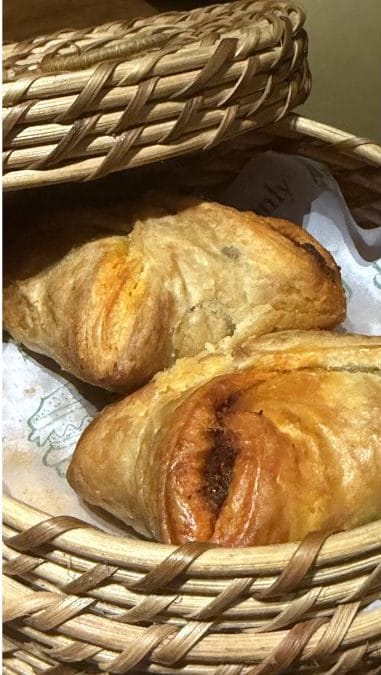
“I never knew something like an egg puff exists. I can have them everyday and wouldn’t get bored of it. But the real hero at Nadoo are the condiments, even the red sauce they serve has so much heat and flavour depth,” said Riddhima Thappar, a regular customer at Nadoo’s GK branch.
Nadoo’s Zomato reviews are a mixed bag. While many diners praise the restaurant’s “charming interiors, great food and good bustling environment”, a small but vocal group describes it as “overhyped,” arguing that the food and overall experience doesn’t justify the prices. Some customers have also expressed frustration with the restaurant’s weekend reservation policy, noting that advance bookings are mandatory and walk-ins are not accepted. However, Chef Bala says the policy is simply intended to “avoid chaos,” as the restaurant experiences heavy footfall on weekends.
Fish on the bone
Chef Bala walks up to the open kitchen, which is built without a glass barrier, to give diners a sense of access and transparency, and takes a quick look as the sous chef rolls out a variety of doughs—for pol roti, idly churros, sourdough and lavash. They are paired with a range of curries from across Kerala, Tamil Nadu, Karnataka, Andhra Pradesh and Telangana.
She has made a conscious effort to spotlight dishes rarely seen in north India: Mutton Kuzhumbu, Crab Kuzhambu, Pachakari Ishtew, Blue crab curry with kyuri pomegranate pachadi, alongside meat and seafood preparations that tend to get overlooked in Delhi’s chicken-heavy dining landscape.
The Curry Leaf Lobster, made with white butter, black pepper and curry leaf, and the Pomfret Fry, served whole, are strong examples of how she has stayed true to authentic methods of cooking and serving— even in a city that’s notoriously wary of fish on the bone.
“There is science behind leaving the bone on and that’s exactly how we eat it. I never wanted to reinterpret it for the north Indian palate. I am presenting the food with its dignity,” she said.
This approach serves as a form of resistance to the North Indian hegemony over what is categorised as “Indian” cuisine, ensuring that regional nuances are not lost to suit mainstream expectations.
Delhi’s diners aren’t the only ones at the mercy of Chef Bala’s perfectionism. Her seafood suppliers have it worse. If a fish arrives even 100 grams under her required weight, she refuses the order outright.
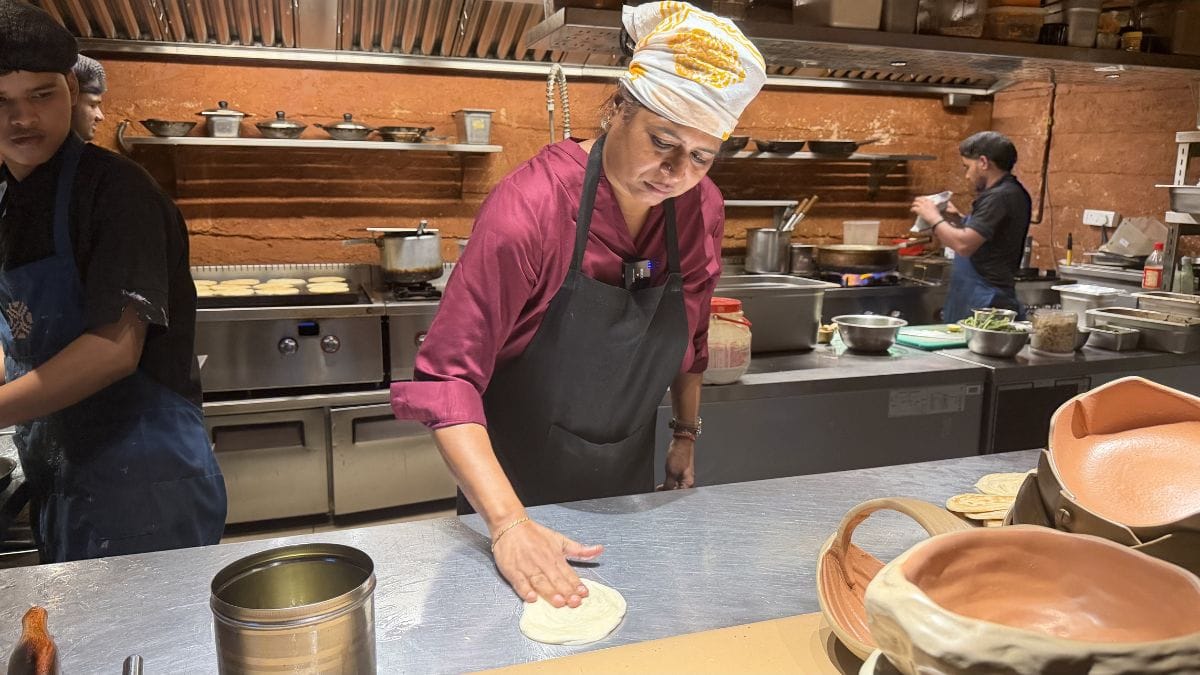
“Consistency is the key, and also the challenge here. If I don’t get a certain seafood or meat that meets my expectations, I take the dish off the menu,” she explained.
That said, Chef Bala also knows exactly how to win Delhi over. She isn’t an inflexible purist either. Her early-morning food tours of the city with friend Rajesh Tara, taking in Purani Dilli classics like nihari and chole bhature, clearly left their mark. As a tribute to Delhi’s love for raan, a mutton cut which isn’t quite popular in the south, she created the Russel Market Raan: A Chettinad-style preparation made with a hand-ground spice blend and served with crisp coin parotta.
Despite the heavy presence of meat and seafood, Nadoo offers no shortage of vegetarian options. Standouts include the Pineapple Gassi, a recipe with roots in Udupi’s Shri Krishna Temple, the Mock Fish Steak made from yam, and the Pachakari Ishtew, served with steaming-hot string hoppers, each distinct in flavour, texture and aroma.
But the real showstoppers are the desserts: The Forbidden Rice Coconut Pudding, the Crispy Pongal Pouch, and the Idli Churro with Kanthari-infused Hot Chocolate. The pudding gets its name from black rice once reserved for Chinese royalty, later brought to India by Chettiar traders. The pongal comes laced with a touch of edible camphor.
“A recurring theme in Nadoo’s menu is none of it dumbed down for the north Indian palate,” said Tara.
Also read: Don’t demonise food processing, says Chirag Paswan at Indian Healthy Snacking Summit
It all started from an X comment
Almost none of Chef Bala’s education has anything to do with how she ended up in the kitchen. She has not attended culinary school nor received any formal training. Her culinary journey began, almost improbably, with a comment on X and an impromptu pop-up in Mumbai.
Long before she became Chef Bala, she was as far from the creative world as one could get. A qualified CA, a law graduate, and two diplomas—in Six Sigma quality control and arbitration management. Nothing pointed toward food.
The turning point came when she left a comment on a cooking video by Chef Ashish Bhasin in 2015, then at The Oberoi Centre of Learning and Development (OCLD) Mumbai, expressing concern that south Indian food wasn’t getting the visibility it deserved.
“I was genuinely concerned at the time, so I took the conversation from the comments section to DMs because Oberoi’s reputation was also on the line,” Bhasin recalled. “She told me she could cook too. When I asked about her experience, she rattled off her educational qualifications, chartered accountancy, law, and diplomas. I asked again, specifically about her culinary experience, and she said she’d cooked for large gatherings.” She had cooked for large gatherings at home during festivals or events.
Chef Bhasin confessed that he had zero hope. He just wanted to get her off his back. He called the chef at Trident, Chennai and asked him to give her a shot at cooking in a commercial kitchen so that she stops bothering him.
“I told him, just let this woman come, cook and hand over a review. He called me back completely bowled over by the flavours. That’s how Chef Bala’s culinary story really began. Her command over her flavours was flawless,” said Chef Bhasin. His curiosity was piqued enough to invite her to Mumbai and witness her cooking firsthand. That invitation also marked the start of his journey backing home cooks.
She has hosted close to 100 pop-ups across India and abroad, and even ran a small hole in the wall restaurant back in Chennai. Her first shot at cooking in a commercial kitchen took place in Trident BKC in April 2016 and it was far from a smooth start. She struggled with controlling the heat of the burners, drying tomatoes and the presentation was raw and rustic. Ten years on, both her cooking and her friendship with Chef Bhasin have evolved considerably.
“She went from being a home cook to a commercial chef. Her food, as visible in Nadoo, has evolved tremendously. It’s fine-dining south Indian food and only she could have done it,” said Chef Bhasin, who has played a key role in Nadoo’s creation, introducing Chef Bala to restaurateur Sahil Sambhi, the man behind Japonico, Latango and Vietnom.
“He was looking for a south Indian chef who was committed and true to her craft, and Chef Bala was looking to come to Delhi. It felt like a match made in heaven,” said Bhasin. “Because they’re both perfectionists, I was hesitant as well. I thought they would end up pulling each other’s hair out. But the partnership has turned out to be nothing short of perfect.”
That’s how Nadoo was born, created by two perfectionists.
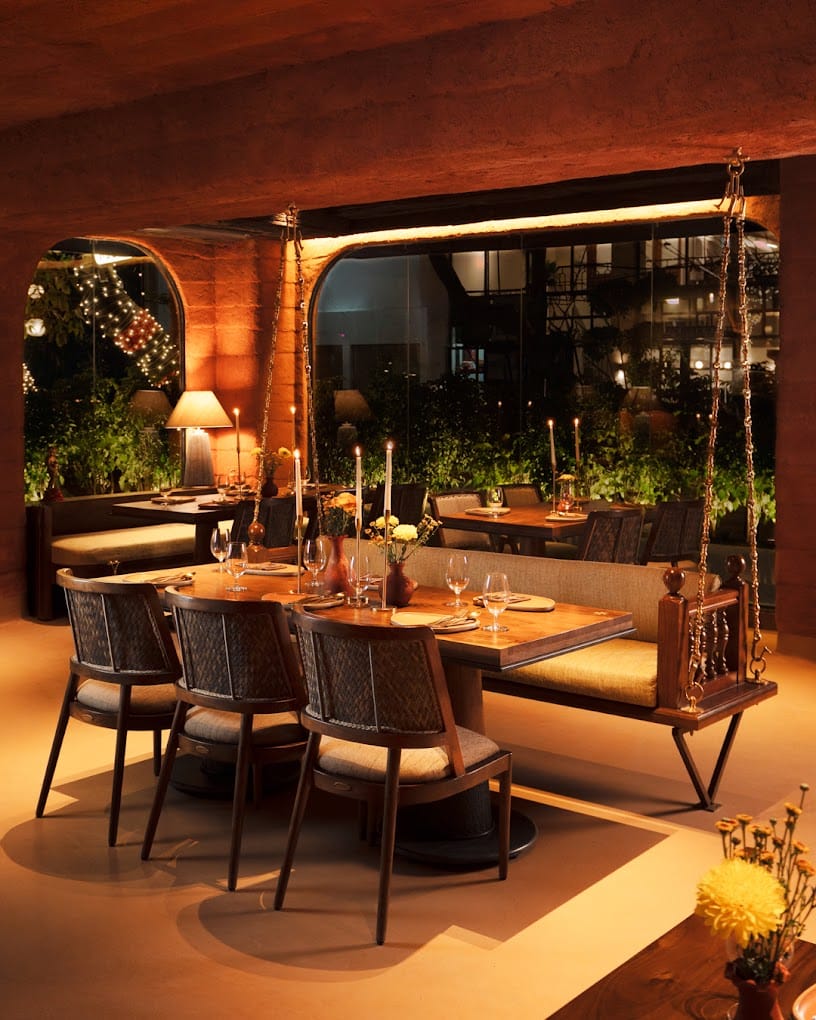
“Nadoo means ‘land’ or ‘region’ in Tamil,” Chef Bala explained, a meaning that runs through the restaurant’s design as much as its food. The space is built to feel rooted, tactile and free of cliche, deliberately steering clear of familiar south Indian designs like painted kolams or oversized entrance murtis. Instead, the interiors lean into an earthy atmosphere, with a palette drawn from soil, clay, spice and a small water body that lend the space a homely feel.
Seating is split across three zones based on geography and mood—Sun, Land and Sea. The Sea zone is adorned by a brass Nandi sculpture and spiritual art installations by artist Aarna Jai Madan. Elemental brass motifs are engraved on each tabletop, while hand-cast brass and bronze tableware, handmade stoneware, hand-painted fabric menus and brass artefacts add further tactile detail.
“Every element here speaks of our heritage, our culture. Nothing in the aesthetics has been done for Instagram. It’s like diners are eating at our homes,” Chef Bala said.
Also read: Rajma-chawal in the morning? How breakfast exposes the hidden hierarchies of Indian cities
Price she pays
For all the joy Chef Bala has found in pursuing her culinary dream in Delhi at 50, she has paid an enormous cost. Her family. Her youngest child, Srija, recalls how winding down together over Korean dramas, Bollywood music and quizzes used to be their ritual, one that has now taken a back seat.
“My mother is like the central pillar of my life. I tell her everything about my day, every little thing, I sort of dump it all on her. That doesn’t happen as much anymore. She’s so busy running both restaurants that she barely has time to pick up the phone,” said the 20-year-old.
Still, the family is happily making the sacrifice.
“I remember during Covid-19, she was bored to death. She couldn’t travel, couldn’t do pop-ups, she just wasn’t herself. Ever since she moved to Delhi, I’ve seen her far more alive,” Srija added. “She is living her dream, and we are her biggest cheerleaders.”
While Srija loves everything her mother cooks, she admits there are a few dishes she misses at home, filter coffee, rajma, and Bengaluru-style sambar among them.
Chef Bala does have one spot in the restaurant that reminds her of home. The swing seat at Nadoo, though she rarely gets the chance to actually sit on it. Her days move fast. The only real pocket of stillness is her morning coffee.
“I make my own filter coffee, no one in the world can make it like I do. That’s how I start my day,” she said, which perhaps explains why masala chai is her go-to fuel for the rest of the day.
Frequent visits over the years mean Delhi no longer feels unfamiliar to her, the weather, the traffic, the food, the people all came easily when she decided to relocate. Two things, though, have refused to be tamed.
“Parking is a big problem here. I was genuinely shocked at how hard it is to find a spot in my own society,” she said. She is horrified to see neighbours argue and fight over parking spots.
“And then there’s a very typical home problem. I clean the house before I leave in the morning, and by the time I’m back at night, there’s a thick layer of dust again. Keeping the house clean here is surprisingly tough,” she added, breaking into a laugh.
(Edited by Theres Sudeep)