





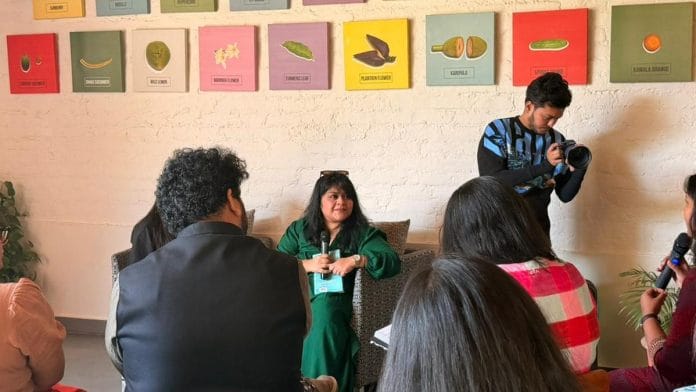


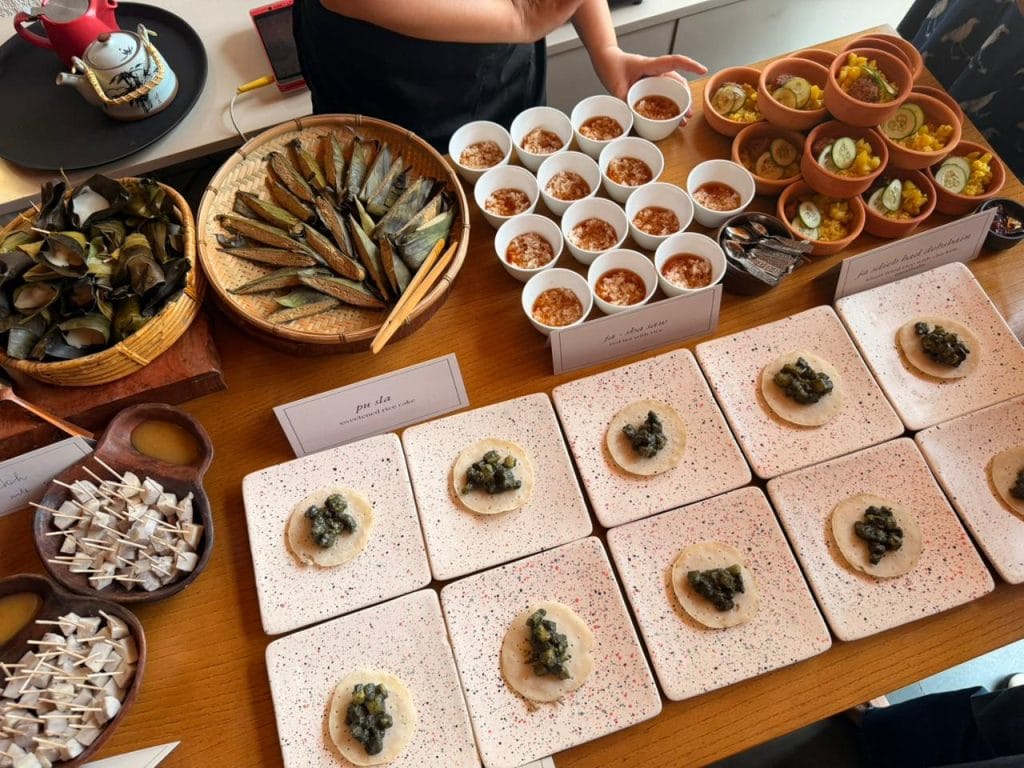
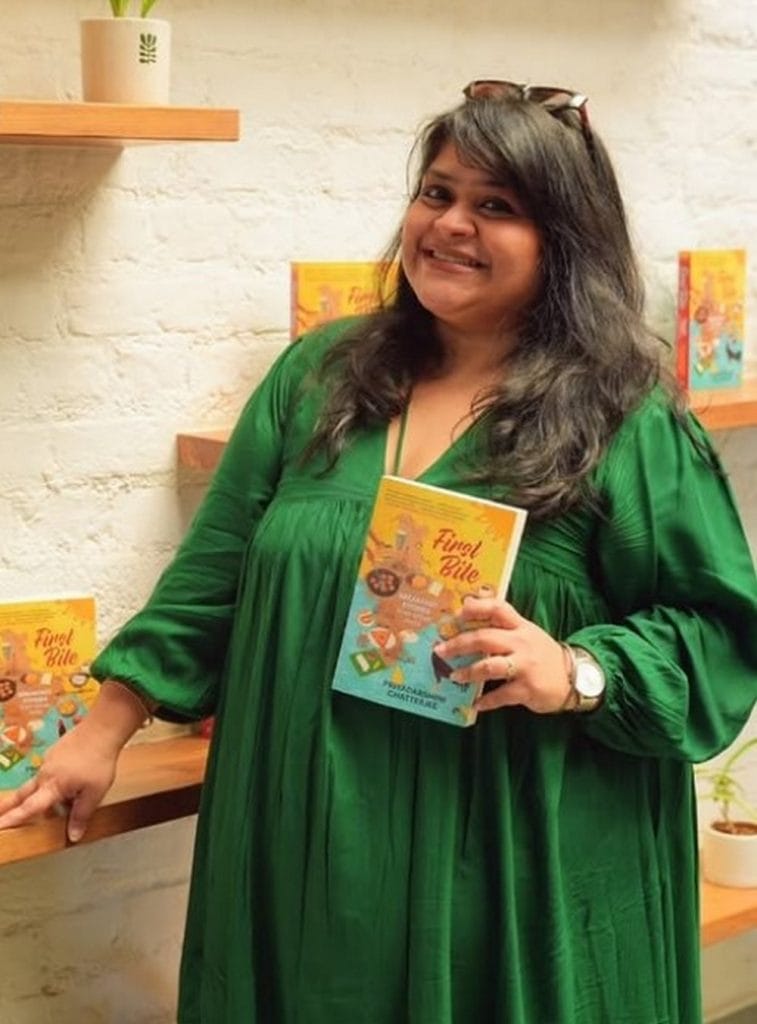
New Delhi: On a late Saturday morning, around 30 people tucked into a Khasi breakfast of red tea, rice cakes, and chicken meatballs at Indica, a restaurant in Ghitorni. They also chewed on the history, politics and regional idiosyncrasies of the first meal of the day in India. It was all part of the launch of journalist Priyadarshini Chatterjee’s first book, The First Bite: Breakfast Stories from Urban India.
In conversation with food writer and Indica co-founder Damini Ralleigh, Chatterjee unpacked the findings of her book, which examines breakfast in ten cities — Amritsar, Delhi, Varanasi, Kolkata, Shillong, Ahmedabad, Mumbai, Bengaluru, Kochi and Hyderabad. A lot can be told about the layered dynamics of class, gender and labour by what someone eats in the morning, whether it’s cucumber, rajma-chawal, nalli-nihari, or aloo-poori. Or even just salt.
In her book, Chatterjee posed a deceptively simple question: what is breakfast? Is it defined by time, by function, or by the kind of food served? She has used that first bite as a way to map cities by looking at who wakes up first, who cooks, who eats, and who is left out.
“We often hear that breakfast is not an Indian thing and that we are a two-meal society,” she said. “But in a country as stratified as ours, I wanted to find out what has been left out of that narrative.”
A recurring theme in the discussion was the contrast between the highly stylised, social media-driven idea of breakfast — smoothie bowls, artisanal coffee — and the functional, often invisible food cultures of labouring classes. As Ralleigh pointed out, it has become “the most aesthetically performed meal of the day” online.
But not all morning meals get counted as breakfast by the urban elite.
Recalling her days in Kolkata, Chatterjee said her affluent friends used to complain about the lack of “breakfast places”, even as the streets were full of people eating early-morning meals. At many food stalls, the typical lunch staple of rajma-chawal is eaten for breakfast — to be followed by hard labour rather than a siesta.
“We were thinking of a very Western idea of breakfast,” she said. “There are people whose workday is half done before a certain class wakes up. For them, it’s just food for the body — there’s no romance attached to it.”
Also Read: Dalit and Adivasi food on the menu, stigma on the plate. ‘I was told it is fed to cattle’
Breakfast labour vs livelihood
The book also foregrounds how gender shapes food practices. Chatterjee found that while women dominate domestic food labour, public breakfast spaces such as street stalls and markets are overwhelmingly male.
“The labour is female, but the livelihood is male,” she said.
One example that she gave was from her experience covering Mumbai’s dockyard. She met a popular breakfast vendor whose food is prepared by his wife, who wakes up at 3 am to do so.
Shillong emerged as a rare exception, where women are visible both as vendors and consumers in public breakfast spaces.
The book also includes a Varanasi saying that captures a different domestic pecking order: naan bahu, nun kaleva — for a young daughter-in-law, salt can be breakfast. Though many in the city keep it simple: cucumber is to Kashi what grapefruit might be to California.
Also read: Ube is all set to kick out matcha from Indian cafes. Expect purple frappe, boba tea, kulfi
Fading from the morning table
Breakfast isn’t always what it used to be. Many traditional practices are disappearing under the pressures of modernity, regulation, and changing lifestyles.
Ralleigh highlighted a passage from the Old Delhi chapter, where a baker describes the fading art of making khameer ka masala — a natural leavening agent once prepared by specialised artisans. This masala is essential for making rusk biscuits.
Chatterjee pointed to similar shifts across cities: wood-fired ovens being phased out in Mumbai, which has decreased the production of traditionally made paos, or dishes like nihari moving from being eaten at dawn to dusk due to changing consumption patterns.
“Traditions have never been static…but something does change in the experience when timings and contexts shift,” she said.
Ultimately, The First Bite does two things, according to Chatterjee: it traces the evolution of breakfast as a meal, and uses it as a lens to “read” cities — their migration patterns, histories, and internal hierarchies.
From medieval Ahmedabad’s layered past to Bengaluru’s “military hotels” that disrupted vegetarian food norms, each city offers a distinct rhythm of eating.
Her own relationship with mornings has shifted in the process. “Writing this book has actually turned me into a morning person,” she said, laughing.
(Edited by Asavari Singh)
I remember my days as a young doctor at wani block in yeotmal district of maharashtra. Early in the morning at around 6am freshly prepared Poha and spicy ghugni was served at roadside stalls. By 7am it used to be all over. Then there was someone who used to sell homemade dosa and coconut chutney in his auto rickshaw near R N Cooper hospital in Mumbai.Dosas will just fly off his auto and he would make multiple visits to his home back to replenish his stock