







New Delhi: At the outset, the 11th floor office in Summit Building in Lucknow’s Vibhuti Khand, leased by Solaris Solutions, seemed like any other call centre. But inside, telecallers from Northeastern states, speaking with a US accent and working shifts from 7 PM to 3 AM, were allegedly defrauding US citizens by impersonating representatives of reputed companies and government agencies.
The cyber fraud, Lucknow Police now say, was perpetrated using gift cards, cryptocurrency, and internet-based calling platforms. Those running the fake call centre, police sources said, recruited young men and women from different states who had prior experience with BPOs or international calling processes.
It is learnt that the fake call centre was making transactions of Rs 30-40 lakh a day, earning roughly Rs 12 crore a month and between Rs 150-200 crore a year.
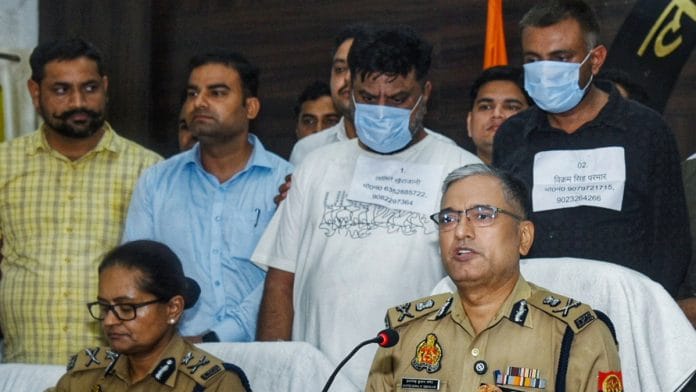
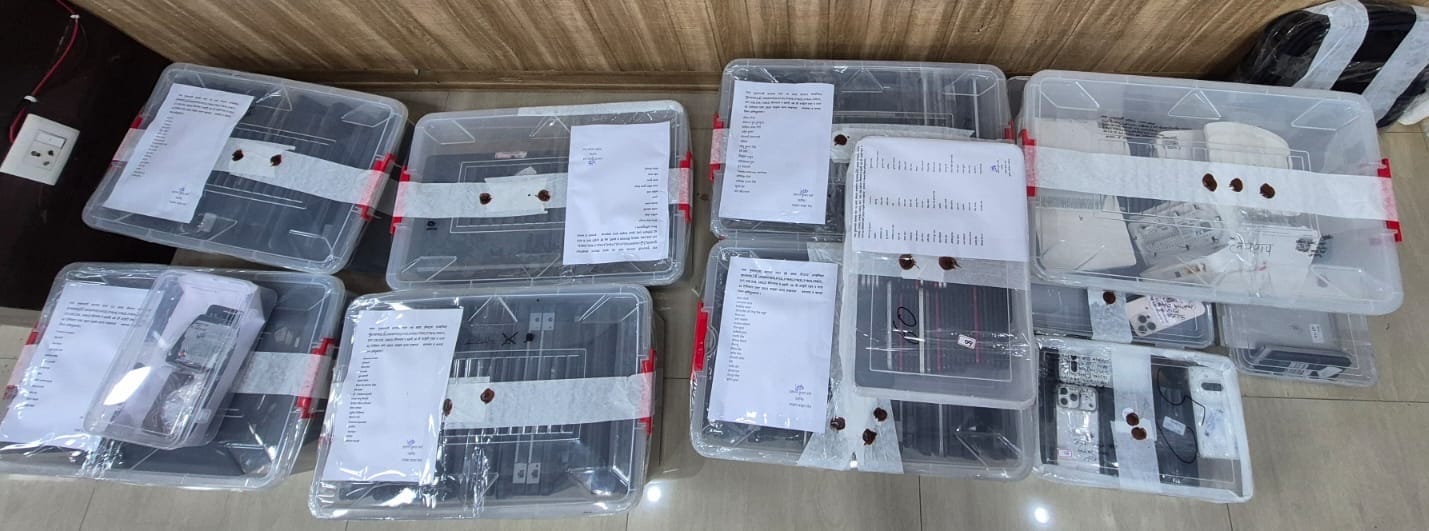
On 1 July, following allegations of fraudulent activity, Lucknow Police raided the 11th floor of Summit Building and arrested 119 people, primarily working as telecallers. They seized 103 laptops and 177 mobile phones used for calling, other digital devices, and crucial documents, besides electronic evidence.
Among those arrested were operations managers Lalit Khairajani and Vikram Singh Parmar. Lucknow Police has now launched a manhunt for an Ahmedabad-based man who goes by the alias “Charles” and has I4C complaints against him.
Telecallers who defrauded
Anybody who could speak English without fumbling would secure a job at Solaris Solutions. It would not matter if the candidate had studied only till Class 8.
A senior police officer told ThePrint that the syndicate had been active for the last six months, and all telecallers secured jobs through word-of-mouth advertising.
Most telecallers were from Northeastern states including Assam, Nagaland, Meghalaya, and others from Gujarat and Maharashtra. “Most of them were class 10 and 12 graduates,” said the officer quoted earlier.
Adding, “They were trained in committing frauds, the technology used, and were also given a script to follow.”
The officer also said that the Indians were taught to speak in a US accent to avoid suspicion. They would even change their names to American names—a man would become Calvin, and a woman would become Julie. “The job opportunities were advertised on LinkedIn and Instagram, and there was only one qualification: spoken English,” said the officer. The telecallers were also provided with food and lodging. Their salaries were around Rs 40,000, with target-based incentives.
The employees’ accommodation was arranged by a dummy company named Solaris Solutions, yet none of the employees were provided with formal appointment letters, contracts, or statutory documents.
Police said the fake call centre was committing cyber fraud by targeting foreign nationals, specifically US citizens.
Based on the evidence at hand, a case was registered at Cyber Crime Police Station under Sections 3(5), 61(2), 318(4), 319(2), 336(3), 337, 338, and 340(2) of the BNS, sections of the IT Act, and the Telecommunications Act, 2023.
A corporate work structure
Police’s preliminary investigation and interrogation revealed that operatives at the fake call centre carried out cyber fraud against US citizens in a “highly planned, technically proficient, and organised manner”.
A Crime Branch officer told ThePrint that the accused established contact with American citizens using VoIP calling systems, Eyebeam dialers, internet-based calling software, and other modern digital technologies.
Explaining the modus operandi, the officer said the accused would pose as authorised representatives or customer support officers from companies like Amazon, Microsoft, Apple, PayPal, Netflix, and Facebook.
Then, they would convince targets that there were “serious issues” regarding their bank accounts, digital wallets, or personal identities, warning that this could lead to financial or legal action against them.
Police said, once the target was “frightened”, the call would be transferred to the next level. Here, the caller would pose as an official from agencies such as the Federal Trade Commission (FTC), Federal Bureau of Investigation (FBI), US Marshals Service, US Treasury Department, or the US District Court, “further instilling fear of legal proceedings and arrest,” said the officer.
Additional DCP Kiran Yadav told ThePrint that to gain the target’s trust, “the accused would email forged government documents, such as court orders, identity theft reports, FTC letters, investigation reports, and non-disclosure agreements (NDAs), designed to look exactly like authentic government records, thereby successfully deceiving the victims.”
Bait, dial, bank and close: the MO
Lucknow Police’s investigation revealed that the entire call center operated as a “corporate structure, with specific roles assigned to each employee”.
Explaining the modus operandi, an officer from Lucknow Cyber Cell told ThePrint that the first stage was termed “baiting”.
Here, targets were sent fake text messages claiming their Amazon, Apple, or Samsung accounts had been used in activities involving child sexual abuse material, drug trafficking, or terrorism. They were instructed to call a toll-free number provided in the message to “prove their innocence”.

The second phase involved a different team. The dialer team would receive a call on the toll-free number, and engage in an initial conversation with the target to gain their trust and falsely claim that multiple bank accounts in their name had been used for criminal activities.
Now, the third team that looked into bank accounts stepped in. “The call was transferred to the banker team, where details regarding the victim’s bank accounts, available funds, cards, and other financial information were obtained. They were told that their Social Security Number (SSN) and bank accounts would be frozen pending an investigation and that, to safeguard their funds, it was necessary to convert the money into gift cards, cryptocurrency, or cash,” said the Crime Branch officer.
The last team was the closer team. In the final stage, the call was transferred to them. Members of this team would exert psychological pressure on the victim by posing as senior officials. “They would create pressure, saying the bank accounts would be frozen, hence the victims should transfer their money into gift cards,” the officer said.
The scammers would obtain the numbers and PINs of gift cards (Amazon, Sephora, Walmart, etc.), and facilitate transfers to cryptocurrency wallets via QR codes.
Then, they would arrange for parcels to be sent to a designated address in the US or organise the direct pickup of cash or gold. “Instead of receiving funds from victims directly into bank accounts, the gang collected them via gift cards, digital vouchers, and cryptocurrency. The objective behind this practice was to conceal the actual source of the funds and the ultimate,” said the officer.
‘Losses exceeding $2.9 billion’
The 2025 Internet Crime Report released on 6 April by the Federal Bureau of Investigation’s (FBI) Internet Crime Complaint Center (IC3) reveals the staggering scale of cybercrime worldwide. A major component of this global crisis is the reach of illegal call centres, many of which operate out of India, targeting victims abroad.
“Two categories of call center fraud were reported to the IC3 are Tech/Customer Support and government impersonation. In 2025, the number of complaints totaled more than 80,000, with losses exceeding $2.9 billion,” the report said.
To counter this growing threat, US authorities, including the Department of Justice and the FBI, have significantly expanded cooperation with India’s Central Bureau of Investigation (CBI) and local law enforcement agencies. “In 2025, the FBI enabled approximately 175 arrests through 13 joint operations with the CBI and other local law enforcement,” the 2025 Internet Crime Report states.
Adding, “Since 2022, the FBI and CBI have had over 1,200 exchanges of information to support criminal investigations, with more than 475 arrests across 27 joint operations. The FBI has conducted hundreds of interviews and continues to support Indian law enforcement efforts to dismantle and disrupt fraudulent call centers and the prosecution of individuals in India perpetrating these frauds.”
(Edited by Amrtansh Arora)