





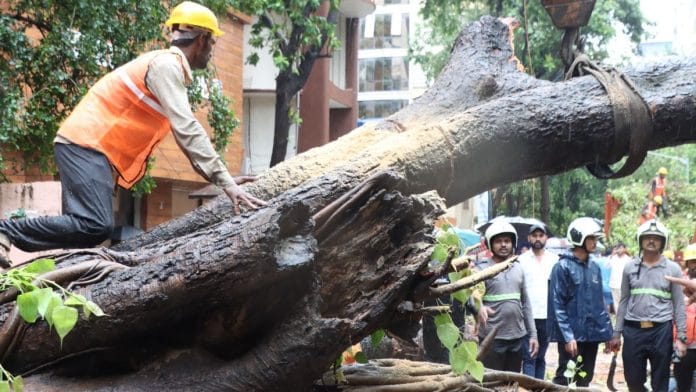


Mumbai: Within one week of the first showers, Mumbai’s annual monsoon anxiety over waterlogging has acquired yet another deadlier form — falling trees. The idea that trees provide shelter and refuge began to collapse with the trees themselves.
Between 24 June and 9 July, the Brihanmumbai Municipal Corporation (BMC) recorded 2,168 incidents of trees and branches falling. Of these, 914 were reported in the western suburbs, 623 in the eastern suburbs and 681 in the city.
The BMC will review its roadside tree-management SOPs in consultation with IIT Bombay, the University of Mumbai and arborists to examine pruning, root protection and the impact of underground utilities.
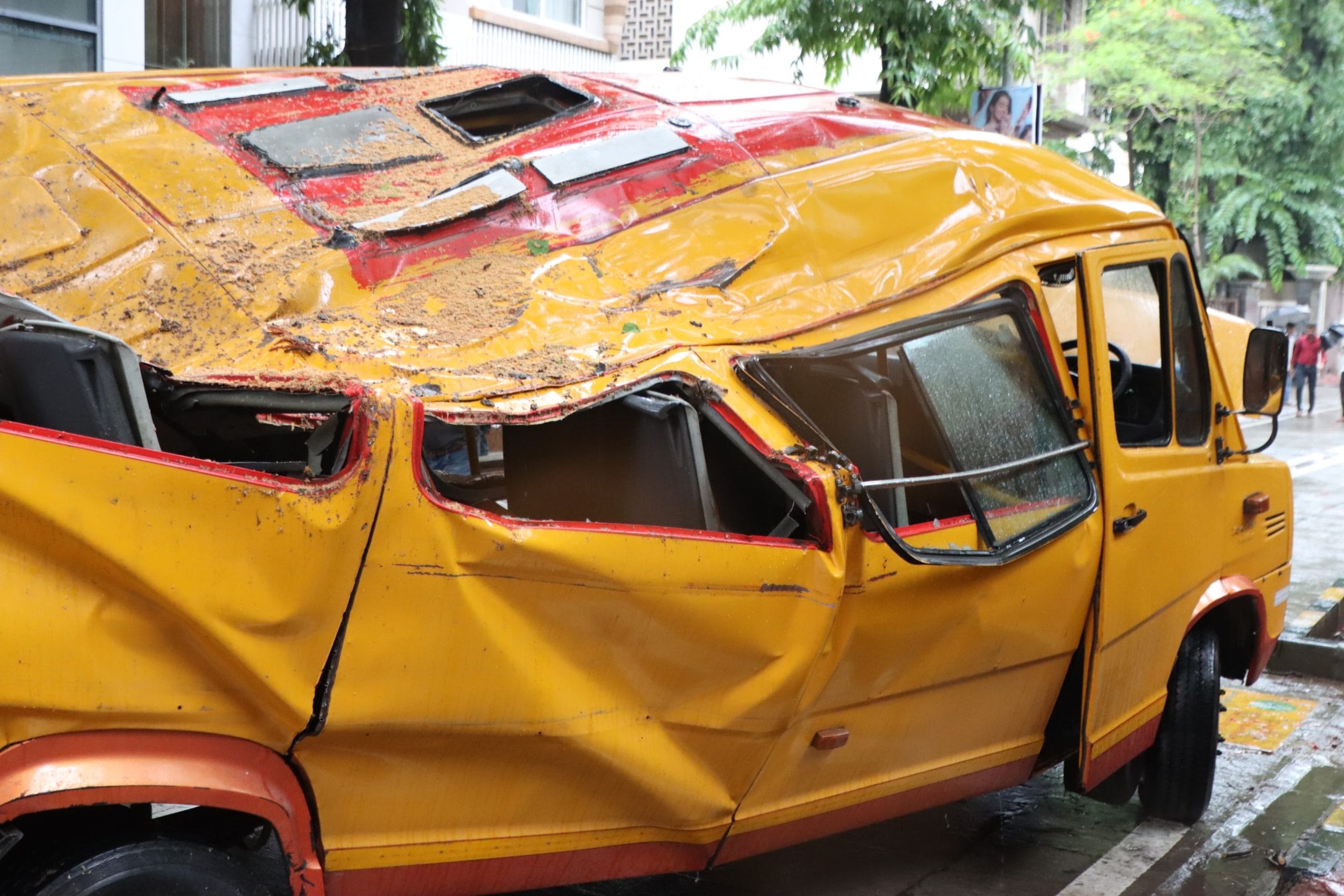
It all started on 30 June when a 70-year-old peepal tree crushed a school bus in Chembur, killing 11-year-old Vihaan Srivastava and injuring four other children. Five days later, 18-year-old Hasan Raza Jahangir Alam Syed died in Aarey Colony in Goregoan East after a branch fell on his head while he was riding a motorcycle. The following day, 63-year-old Yunus Kundawala was killed when a tree collapsed on a shop in Kurla West.
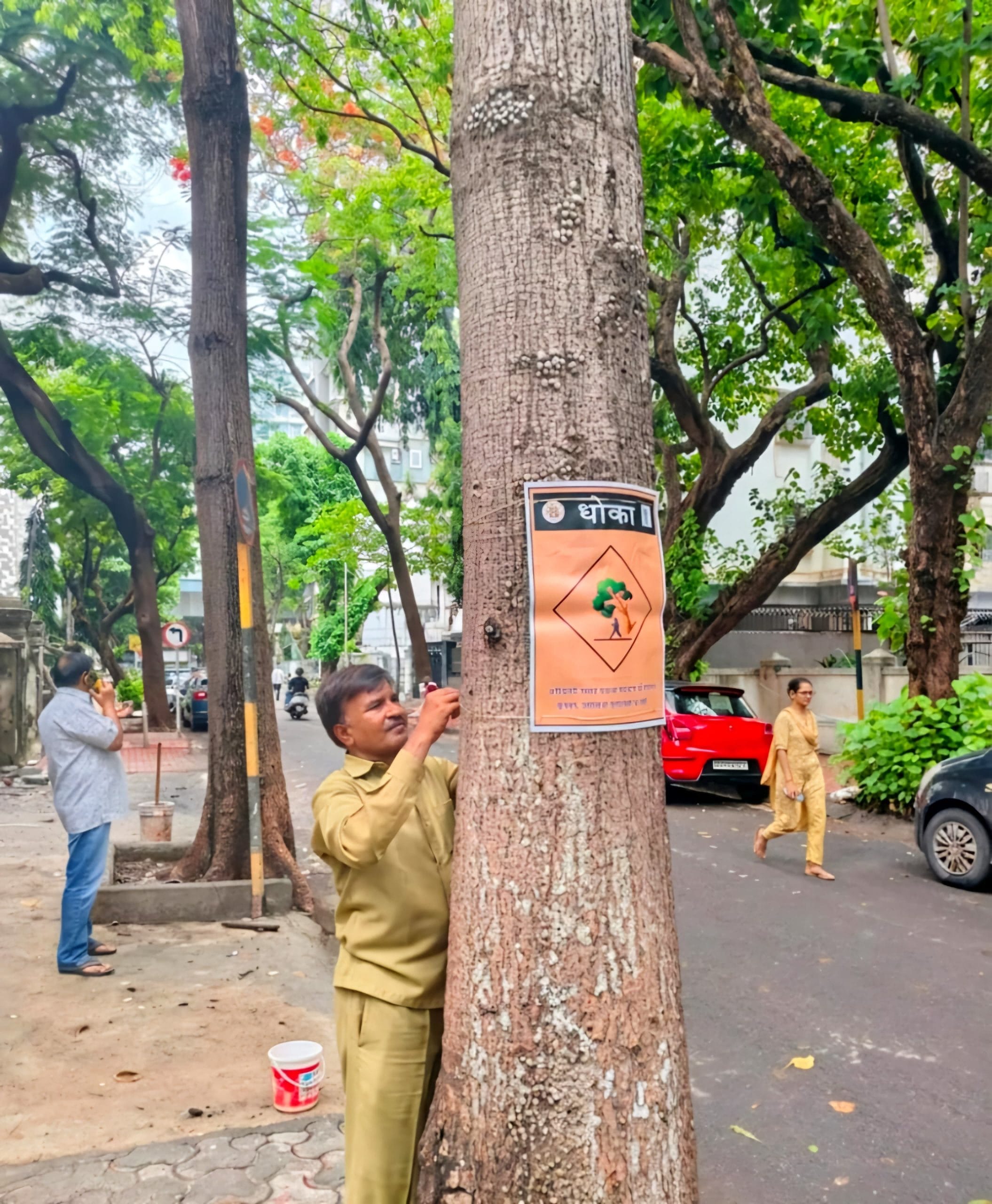
Following these incidents, the BMC installed warning posters on certain trees to help residents identify potentially dangerous trees.
“We have put up posters on trees that have tilted. This does not mean they are going to fall. Trimming of these trees will be undertaken, but it’s a message to Mumbaikars to neither stand nor park vehicles under these trees. This is part of an awareness drive,” Mumbai Mayor Ritu Tawde said.
Between 8 am on 5 July and 8 am on 6 July, the BMC’s disaster management cell received 523 complaints of trees and branches falling, the highest single-day count this season. The complaints came from across the island city and suburbs — from Kurla and Chembur to Dadar, Matunga, Goregaon and south Mumbai.
The crisis reached the Maharashtra Assembly on 8 July, when Minister of State for Urban Development Madhuri Misal responded to a Calling Attention motion moved by MLA Manisha Chaudhari.
Misal told the House that the BMC has started a risk assessment of trees with the help of TreecoTech LLP, an arborist firm, in the wake of high-velocity winds in the city this monsoon.
Initially, 5,000 trees in Bandra West are being assessed and the final report is expected within six months. The purpose, she said, is to identify dangerous or vulnerable trees early so that preventive action can be taken.
ThePrint reached out to TreecoTech LLP but the company refused to comment at the moment, stating that “the work is in progress.”
Weather or concretisation
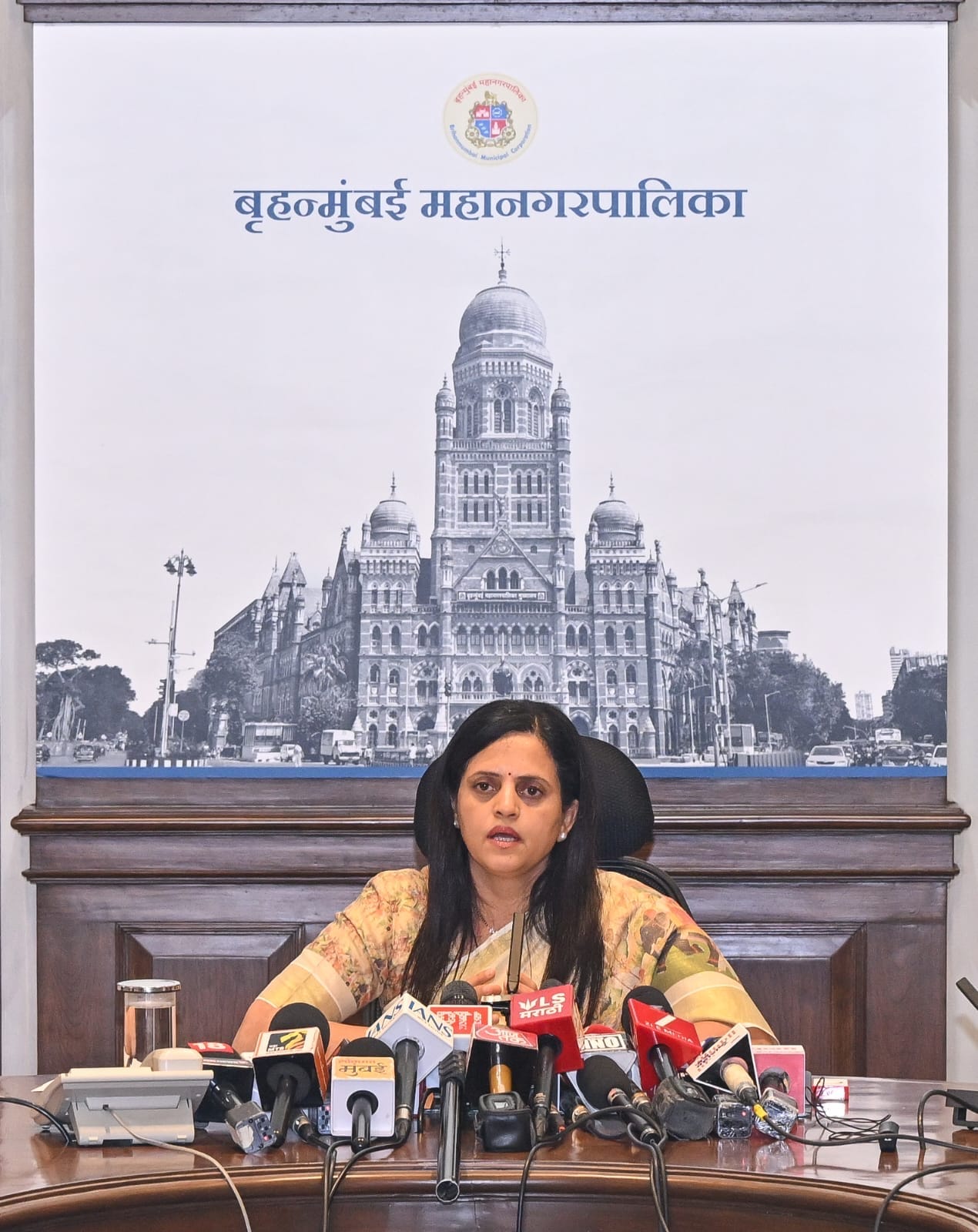
BMC commissioner Ashwini Bhide has pushed back against a single-cause explanation.
It would be “a sweeping statement to attribute tree falls only to concretisation,” she said. Strong winds touched 50-70 kmph for several days and 77 kmph in one spell, which Bhide argued caused extensive damage to the city’s green cover.
“Mumbai has nearly 29.8 lakh trees as per the 2018 census, including almost two lakh roadside trees, and many stand on footpaths where underground utilities also run,” Bhide added.
Her argument is that tree falls are not new. BMC data shows 655 tree falls in 2022, 687 in 2023, 653 in 2024 and 855 in 2025.
Cyclones had produced major spikes in tree falls too. Cyclone Nisarga brought down 323 trees in 2020, while Cyclone Tauktae uprooted 812 trees in just three days in 2021.
While intense winds may have acted as the immediate trigger this monsoon, experts argue that the extent of the damage points to deeper, long-term stresses on Mumbai’s urban trees. Years of road widening, utility trenching, redevelopment and shrinking open soil around trunks have weakened many trees well before the first heavy rains arrived, making them more vulnerable when strong winds hit.
Subhajit Mukherjee, environmentalist and founder of Mission Green Mumbai NGO, claimed that most tree falls occur near private infrastructure and redevelopment projects.
“There are more than 2,000 projects going on in Mumbai. If you see, most tree falls are around these builders’ projects,” he said. He added that out of roughly a thousand trees that have fallen, around 60 per cent were in gardens, parks and private areas.
Dry cement spread around the base of a tree is impermeable and creates a seal over the soil.
“It suffocates the roots by cutting off the supply of water and oxygen, making the roots dry,” Mukherjee said. According to him, both the BMC road concretisation project and other ongoing private projects in the city are responsible.
The classification of trees is important in understanding which trees are more prone to falling. Mukherjee claimed that out of the trees that have fallen, about 90 per cent have been non-native trees and exotic varieties like Gulmohar, rain trees and palm trees.
“Only about five per cent of the native trees have fallen. That definitely is because of concretisation, and that is a very big challenge because we have to maintain utility cables. We don’t have a choice. We don’t have space,” he said. Native trees are naturally adapted to Mumbai’s climate and geography. These native species include peepal, neem, bakul and many others.
Citizens react
Eleven-year-old Vihaan’s death in Chembur sharpened concerns. A preliminary civic inquiry suggested that excavation during road works may have damaged structural roots of the tree, triggering internal decay not visible during routine inspection.
Three civic officials — assistant garden superintendent Jagdish Bhoir, sub-engineer (roads) Arun Mundhe and assistant engineer (roads) Yogesh Parte — were suspended for alleged negligence, while Commissioner Bhide appointed deputy municipal commissioners Purushottam Malvade and Shashank Bhore to conduct an inquiry, seek expert opinion and recommend corrective steps.
ThePrint reached out to the BMC officials in charge of the inquiry. This article will be updated if and when they respond.
As more of these incidents unfolded across the city, concern spread beyond the accident sites. Residents began sharing photographs of leaning trees, exposed roots and concrete choking tree bases, questioning whether the deaths were the result of years of neglect rather than just an unusually fierce monsoon.
“The road department should be largely responsible. See pics. No understanding of the issue – how can they say tree health was ok in 2026 when the roots were damaged whilst concreting the road way back in 2024-25! No collaboration between depts,” an X user named Clarita D’silva wrote.
As reports of tree falls surfaced from one neighbourhood after another, social media turned into a running log of citizen complaints.
Chetan Kamble, a resident from Dadar, shared images of streets and called it a man-made green emergency.
“In 2023, BMC itself resolved to keep tree bases debris-free, yet our streets are lined with concrete coffins suffocating trees and sheltering the very rodents eating their roots. This is a man-made green emergency: weakened trees, rodent-devoured bases, zero preventive action,” Kamble wrote on X.
The other missing piece is the tree census. The last census, conducted in 2018, counted 29.75 lakh trees within BMC limits and around 33.7 lakh after including trees in Aarey. A fresh census began this year in May, after eight years. It is supposed to be done every five years, but an official at the BMC said that the pandemic and logistical challenges delayed it.
This time, 64 teams of botanists are recording each tree’s girth, height, canopy spread, species, health, balance, mechanical damage, ownership and GPS coordinates through a GIS-enabled Treecotech app. Large trees may get QR codes and unique IDs. The exercise is expected to take 1.5 to two years.
(Edited by Prashant Dixit)