





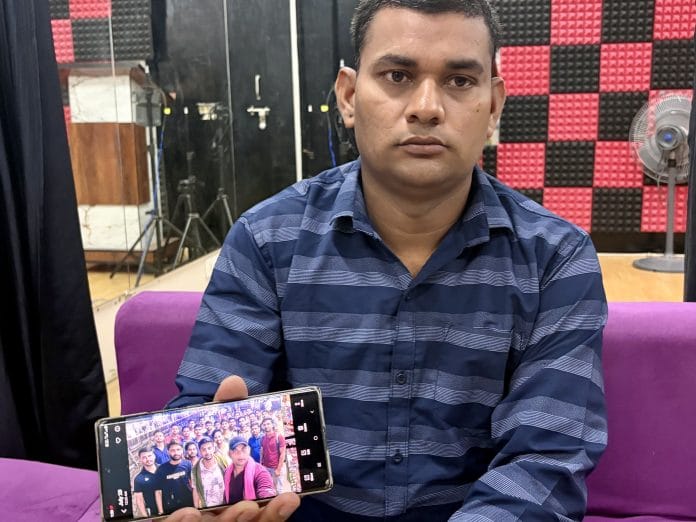


New Delhi: 32-year-old Mohit Bhardwaj returned to Bareilly from the Jantar Mantar protests in a high-heady mood. The students had won. Dharmendra Pradhan had stepped down as the Union education minister. But the assistant professor from Bareilly had bad news waiting for him back home. A suspension notice from the college authorities.
“As soon as I returned to my college on July 22, the Principal called me. He told me that the administration had seen videos of me at the protest. I was served a letter, on behalf of the college administration, which said that I was no longer needed on the job. Forget suspending me temporarily, they straight up said that I was removed from the job. The letter doesn’t name any complainant,” Bhardwaj told ThePrint.
The seven-week protest at Jantar Mantar, led by the Cockroach Janta Party (CJP), ended with a political win, with Pradhan tendering his resignation on July 25. But running parallel to the protests, yet away from national news coverage, was a less visible crackdown: the systematic use of service rules, suspension orders, and termination notices against teachers, professors, and other citizens, who attended the protest or extended support to their cause. Their cases reveal a lesser-seen repression: crushing dissent by targeting livelihoods.
Apoorvanand, an academic and writer at Delhi University, said that it has become “obvious” that educational institutions have given up on their autonomy and are working in deference to the Bharatiya Janata Party (BJP). “We can safely assume that participating in a pro-BJP programme will not have led to any suspensions or terminations,” he said.
Although Bhardwaj escaped unhurt from the police action on protesters at Jantar Mantar on July 20, he came back to Bareilly with bigger problems.
‘Raised students’ issues; served termination letter’
On July 18, when climate activist and educationist Sonam Wangchuk was picked up by the Delhi Police amidst his prolonged hunger strike at Jantar Mantar, Bhardwaj put up a Facebook post in solidarity with the students’ movement. He mobilised a group of roughly 35 students, business owners, young engineers and medical graduates from across Bareilly, and set out to join the protests at Jantar Mantar.
“I have seen how the Uttar Pradesh police services exam leak in 2024 affected many of my students. I have always raised my concerns over issues linked to public education, the quality of our campus infrastructure, and more. It was natural for me to want to go join this movement. When we saw what was done to Wangchuk, people just decided to go for the Parliament March on July 20”, said Bhardwaj.
Bhardwaj claimed that he has never been served with any notices from the Ganna Utpadak PG College, where he taught Accounts and Business Studies. The July 22 termination letter, however, referred to another notice against him from May. It did not provide any specific details of the accusations against him. It only said that “repeated complaints” against him were the reason for his termination.
“I had not been informed beforehand, given any notice, or provided any formal reason for the termination. I wrote to the Principal, the managing head of the trust running the college, and the District Magistrate, requesting for a chance to present my side of the story and demanding an impartial probe into the so-called complaints against me,” he said.
On August 5, the Allahabad High Court overturned Bhardwaj’s termination. But he still awaits reinstatement to his job.
The sole breadwinner of his family of five, Bhardwaj lamented spending nearly three weeks away from classes. “Thankfully, I have a fruits’ wholesale business on the side. I have to look after my ailing mother, my wife and two small children. The salary I earned as an assistant professor is gone,” he said.
‘Social media posts were being monitored’
The manner in which Bhardwaj came to be at the Jantar Mantar protest is striking. After he responded to Wangchuk’s post on Facebook, and declared that he would be joining the Parliament March on July 20, he had the Bareilly police at his doorstep. “My posts were clearly being monitored because that evening, the police came to my house to detain us and prevent us from going to Delhi” he recalled.
“Luckily, I have CCTV cameras around my house. The instant I spotted them on the monitor, I climbed over the wall of my house, went to the railway station and left for Delhi with some students,” said Bhardwaj.
Bhardwaj’s past stint as a member of the Samajwadi Party’s youth cell also ruffled the college management’s feathers. Speaking to ThePrint, two members of the trust – President Rajender Kumar and Vice-President Chaudhary Narender Singh – claimed that Bhardwaj’s conduct towards the college was “wrong from the beginning”.
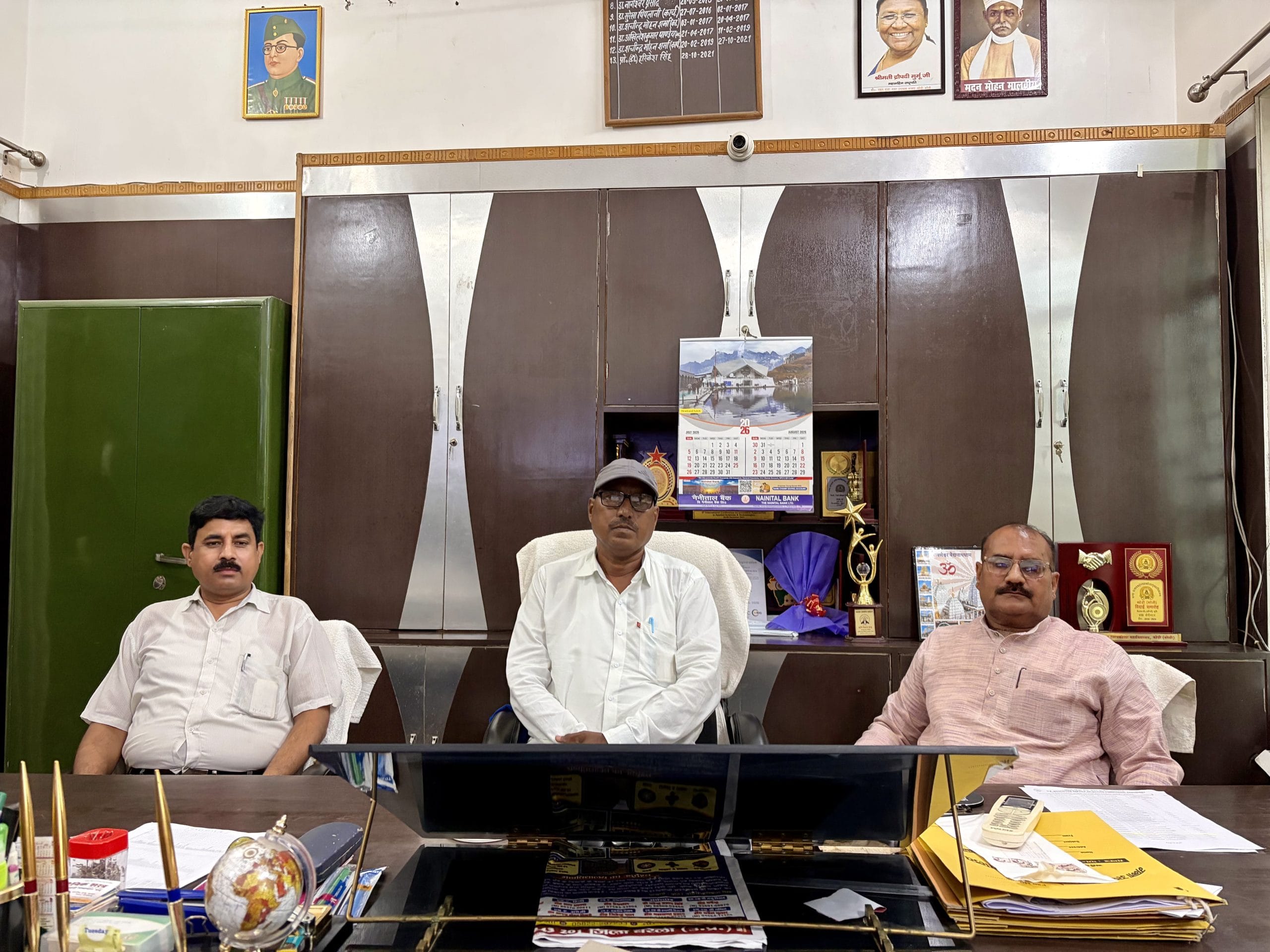
They added that Bhardwaj joined the protest as a Samajwadi Party representative and not as a teacher.
“He went to Jantar Mantar on purpose. We have served him notices earlier too. The university is a temple of education, and the act of studying is like doing pooja. Students come here to do this pooja, not to disrupt learning by joining protests,” said Chaudhry Narender Singh.
Bhardwaj’s students disagree.
“Sir ne Jantar Mantar jaakar students ke liye awaaz uthaayi, humaare liye hi toh awaaz uthaayi. Toh isme galat baat kya hai (Sir went to Jantar Mantar to raise his voice for students, for us. What is wrong with that),” asked Kshitij, a 21-year-old in the final year of his Bachelor of Commerce (BCom) degree.
24-year-old Jyoti Chaudhry, a final-year student, recalled how Bhardwaj helped her and many other students to get an admission in the college. “He is the reason that students like me got the chance to study here. I couldn’t afford the BCom degree here, but he helped me and many others like me,” she said.
Bhardwaj maintains that the protests were not limited to CJP or any political party, and that “they belong to the people, the students.” He said that the problems with the National Education Policy (NEP) 2020 was “reason enough” to be at the protest. But Bhardwaj’s plight isn’t in a vacuum.
Teachers, principals, doctors: The employment crackdown
Weeks before the July 20 crackdown on protestors, a guest teacher at the Government Middle School in Rainkpura, Rohtak had already paid the price of showing her support.
Sulekha Dalal had joined the Jantar Mantar protest to support her 21-year-old son, who was preparing to join police services. Her video from the protest site was shared widely across social media. She was suspended on June 8, two days after taking part in the protest.
The suspension order gave no specific reason for the action — as was the case with Bhardwaj — but District Elementary Education Officer Bijender Hooda had informed the media that Dalal had “violated the conduct rules for government employees.”
The incident drew the attention of CJP, which issued statements across their official social media channels and even offered legal help. Four days later, CJP spokesperson Saurav Das announced that the suspension had been revoked and she was reinstated to her job.
Elsewhere, though, others have not been as lucky as Sulekha Dalal. Over 100 kilometres away from Rohtak, in Haryana’s Kanina village, 55-year-old Naresh Kumar Kaushik is now running from pillar to post to find out why he was suspended.
Kaushik was the principal of the Government Senior Secondary School in Kanina, which falls in Mahendragarh district. His case, he believes, is “uniquely, procedurally egregious”, because the administration’s own inquiry found nothing against him, yet he is being punished.
15 girl students of his school staged a protest in support of Wangchuk on July 17 outside the school premises. Soon after, videos of their protest were shared widely by local news channels.
In the video, they can be heard saying “Goonge-behre, mat bano. Desh ka bhavishya, kharaab mat karo!” (Don’t be deaf and dumb, don’t spoil the future of our country!)” This was accompanied by slogans of “BJP, haay haay (Down with the BJP)!)
A committee, headed by the local Block Education Officer Suresh Kumar, was constituted in response to the protest. By its own admission, the committee report found that the protest had taken place after school-hours and outside the premises, and that the school’s teachers and staff members had neither instigated nor supported the students in organising the demonstration.
BEO Kumar said that the committee submitted its report after recording the statements of the school principal, teachers, students, and their parents.
“I don’t know why I was removed from the post even after this finding. I can only say that I have been serving as an educationalist for decades,” said Kaushik, as he recalled, “Even on the morning of the protest, during the school assembly, one of the girls asked me about the news of Wangchuk. I told her, ‘beta, there are some things that you should avoid getting involved in.’ These girls protested of their own accord.”
When ThePrint reached out to District Education Officer (DEO) Vishveshwar Kaushik, he refused to comment on the case but said that “appropriate action had been taken as per the rules.”
ThePrint accessed a copy of the suspension order served to Naresh Kaushik on 20 July under Rule 5 of the Haryana Civil Services (Punishment and Appeal) Rules, 2016. He alleged that the order came after BEO Suresh Kumar’s inquiry had already found no evidence of his involvement. Following his suspension, Kaushik began making rounds of government offices to seek his reinstatement, despite his disability. Kaushik is 80% disabled in his legs.
“The Haryana government can get vindictive. I want my job back and don’t want to create a controversy by speaking to the media too much,” Kaushik said, erring on the side of caution. He asserted that he is the sole breadwinner for his family of five — an ailing mother in her 90s, his wife and two children.
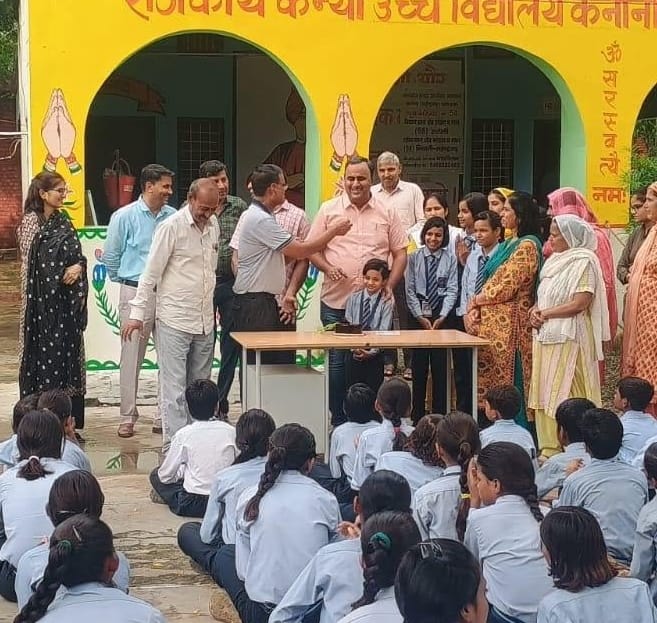
As the school principal, Kaushik had helped modernise facilities in his government school. His feat was published in a Hindi national daily back in December last year. Eight months later, Kaushik finds himself worried about his tenure.
“I want to seek action via the courts, and don’t want to be targeted by the government for speaking to the media. So I don’t wish to disclose more until I find legal recourse. All I can say is the BEO-headed committee has not found anything credible against me. Yet, I was not even given a chance to be heard, and I don’t understand why, there is no transparency,” he added.
Apoorvanand pointed out that though there are certain restrictions for government employees over participating in political programmes, there have been numerous documented instances where schools and colleges organise pro-BJP/RSS programmes and students and teachers are asked to mandatorily attend those. “So if a government employee is violating service conditions by participating in a protest, how is attending programmes organised by the ruling party or RSS not a problem,” he said. He added that educational institutions are acting as the arms of the BJP, which is evident from circulars directing students not to participate in the CJP-led protests. So that is the general tendency, which is wrong.
“Besides, why are Uttar Pradesh and Haryana governments penalising teachers for taking part in a protest in Delhi,” asked Apoorvanand.
‘Don’t want to speak to the media; want our jobs back’
Kaushik’s fear of speaking to the media is shared even by those who have been reinstated. In eastern Uttar Pradesh’s Bahraich district, a resident doctor at the Maharaja Suhel Dev Government Medical College was suspended on Sunday, July 19. But he was reinstated nearly 10 days later.
Dr. Rupak Ikhe has now decided to lie low, after he took out a solo march in support of Wangchuk in Bahraich days before the July 20 Parliament March in Delhi.
On July 17, Ikhe stepped out of his house wearing a T-shirt, with messaging in support of Wangchuk, and carrying a big placard which read, “Yeh desh nahi bikne dunga. Yeh desh nahi mitne dunga .”
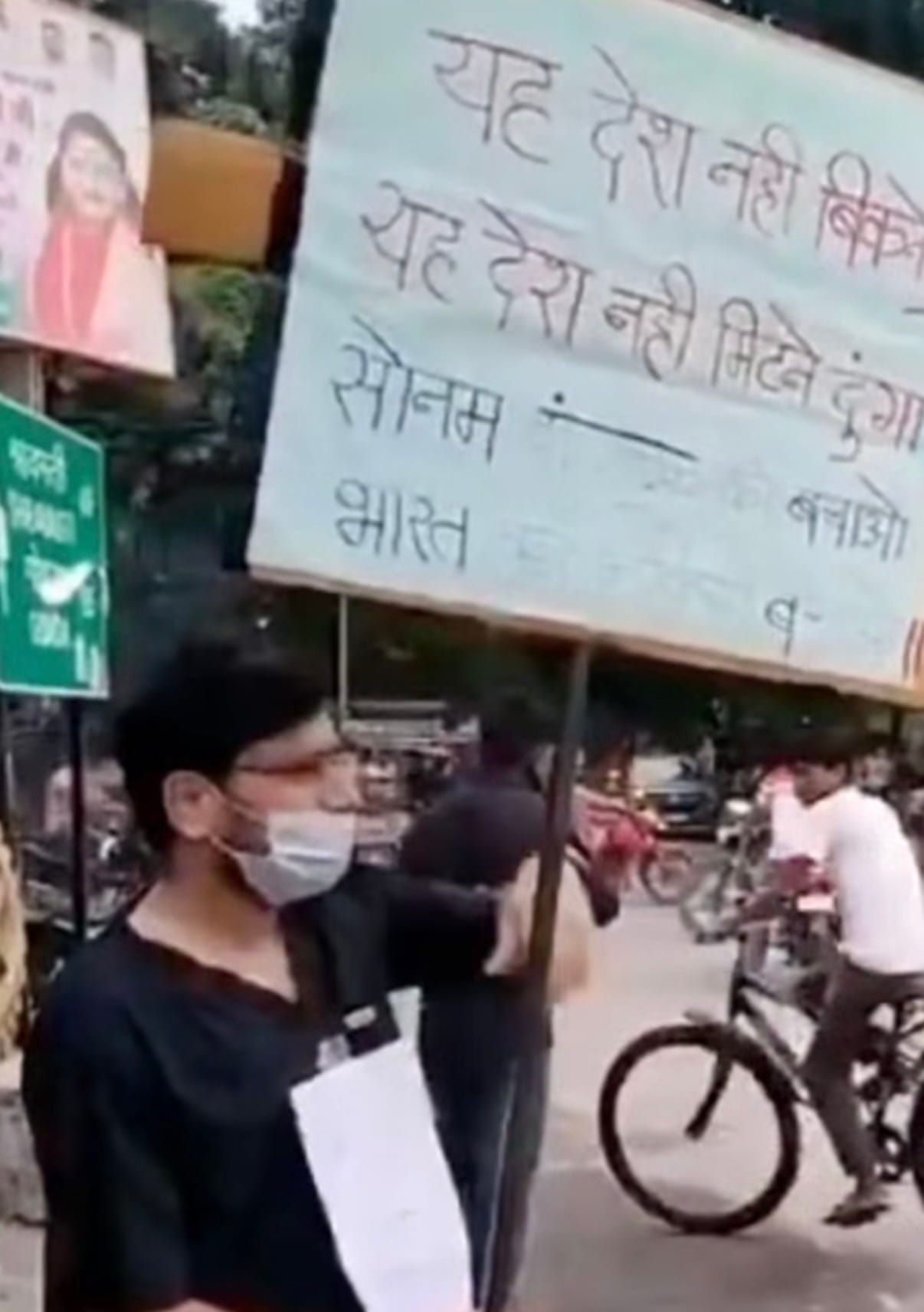
Ikhe, who hails from Amravati in Maharashtra, said that neither did he invite anyone to join him nor put out posters at the university. He went out alone, of his own volition.
“My zameer (conscience) has awakened, that’s why I’m standing here, it’s like an evening walk”, he had told local news outlets. “Our system is completely corrupt and rotten. It’s already starting to stink, and we need to do something before this rot spreads further,” Dr Ikhe had said.
Over the weekend that followed, photos and videos of him surfaced on social media.
Soon after, the government medical college’s principal Dr Sanjay Khatri suspended Dr Ikhe. He ordered a departmental inquiry against Ikhe and formed a three-member committee to examine the circumstances that led to the incident, and submit their findings.
Ikhe was reinstated, albeit in a hushed manner, he confirmed to ThePrint. He refused to comment further on the situation, citing “immense pressure from family and well-wishers”. Hoping that the matter “dies down”, the young doctor looks forward to appearing for his final exams in September.
In each of the cases of job termination, the action was swift but an official reason was either thin or non-existent. Bhardwaj points to how conduct rules were invoked without specific allegations or due process, or a chance for the suspended party to be heard.
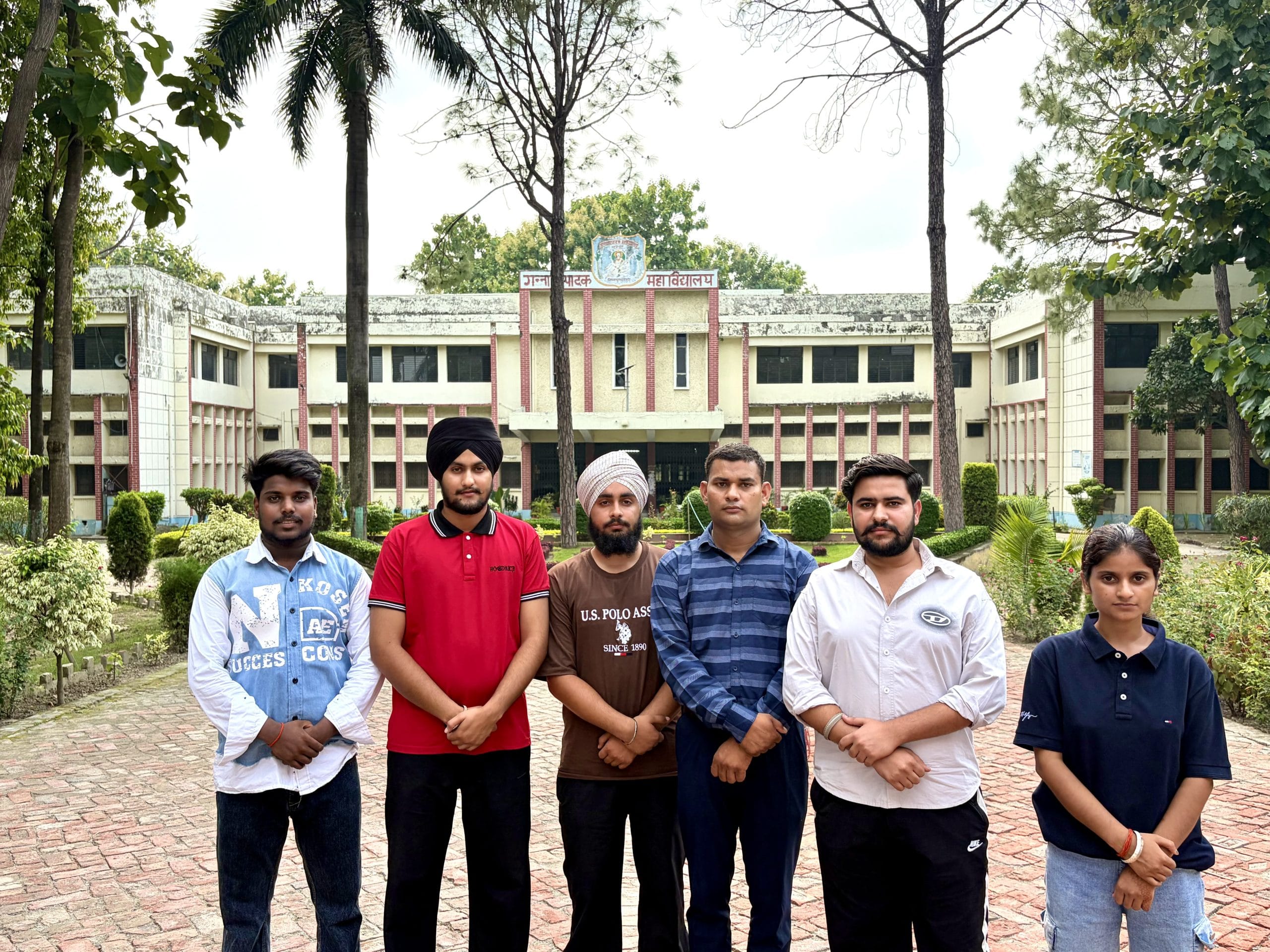
But back in Bareilly, the mood amongst Bhardwaj’s students now seems defiant. While awaiting his reinstatement, Chaudhry said that even if their professor leaves the college, his students will stop attending their classes.
Soon after the high court order overturned his termination, Bhardwaj took to social media with a post that read, “Satyamev Jayate (truth alone triumphs).”
While speaking to ThePrint, Bhardwaj said, “I’m not aware how many other teachers and graduates from UP joined the protest or supported it openly. There is too much fear for their jobs. I hope they see that only if they speak up for themselves, the fear disappears.”
(Edited by Aakriti Handa)