





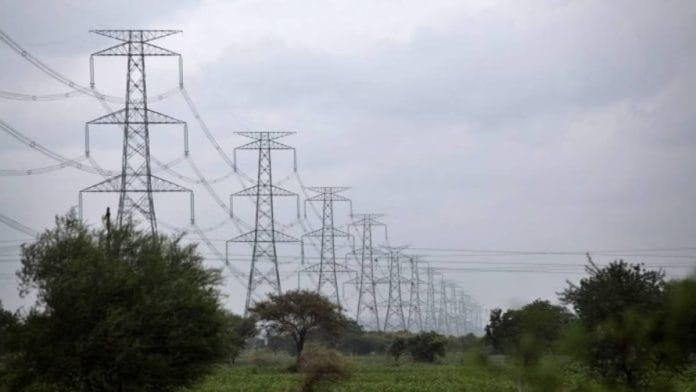


Hyderabad: In the face of intense backlash from employees, power sector experts and consumers, the Telangana Rythu Discom, India’s first dedicated power distribution company for the agriculture sector, has been given three months to resolve stakeholder concerns and commence operations.
A committee of senior government officials—including Chief Secretary Sanjay Jaju, the finance secretary, law secretary and energy secretary, as well as chiefs of the three state discoms—has been constituted to iron out the structural, financial, and operational aspects of the newly minted third discom, Telangana Rythu Power Distribution Company Ltd (TGRPDCL). The other two are Southern Power Distribution Company of Telangana Ltd (TGSPDCL) and Northern Power Distribution Company of Telangana Ltd (TGNPDCL).
The state established TGRPDCL primarily to ensure uninterrupted power supply to the farm sector and lift irrigation schemes. However, it is also mandated to manage the requirements of the Hyderabad Metropolitan Water Supply & Sewerage Board, and manage rural agricultural electricity feeders and municipal public water supply connections that operate on dedicated distribution transformers under the LT VI-B category (gram panchayats).
Believed to be a pet project of Chief Minister Revanth Reddy, the new discom was supposed to commence operations on 2 June (Telangana Formation Day). However, the Telangana State Electricity Regulatory Commission (TGERC), which earlier held a series of hearings and noted grievances and concerns from various interest groups, issued a licence to the TGRPDCL only on 10 July.
Even as the electricity regulator cleared the way for the new discom, it has asked for a “comprehensive, forward-looking business plan within three months”. In its order last week, it said the plan must detail load projections, loss-reduction frameworks, staffing, financial parameters, and interface metering.
“The ERC has asked the committee to submit a plan on the transfer policy, after which a transition date would be given for the specific category of consumers to be migrated to the new discom without any disruption in power supply to them,” Musharraf Ali Faruqui, chairman and managing director of TGRPDCL, told ThePrint.
Terming the new discom as a reform along the lines of the Andhra Pradesh Electricity Reform Act, 1998, he said the decoupling of the existing discoms was akin to the unbundling of then Andhra Pradesh State Electricity Board into Andhra Pradesh Power Generation Corporation and Transmission Corporation of Andhra Pradesh in February 1999.
Back then, the government of undivided Andhra Pradesh had granted the Transmission Corporation of Andhra Pradesh (APTRANSCO) provisional licences to engage in the business of “transmission and bulk supply” and “distribution and retail supply”. Telangana was carved out of the state in 2014.
Now, the Telangana government’s apparent hurried push to carve out a third electricity distribution entity to exclusively manage agricultural loads and government services has led senior stakeholders to categorise it as a risky fragmentation that could compromise the stability of the energy sector.
By branding the new utility as the “Rythu (Farmer) Discom”, the CM aims to counter opposition claims of being anti-farmer while legally formalising free power without installing politically sensitive consumer-end meters at farms.
Opposition Bharat Rashtra Samithi deputy floor leader T Harish Rao has written to the ERC calling TGRPDCL an “unplanned move that would throw the energy sector into uncertainty”.
Also Read: India’s power market is booming. But it’s bad for business
What experts say
While the short-term benefits to the state include an effective administrative bypass that would help in prompt clean-up of the books of TGSPDCL and TGNPDCL, as well as transfer of a major chunk of their cumulative debt of Rs 70,000-odd crore onto TGRPDCL’s books, the exercise may be difficult to execute, according to experts.
Enumerating the benefits to the existing discoms, CMD of TGSPDCL Jitesh Patil told ThePrint: “Shedding high-loss agricultural lines will instantly lower the aggregate technical and commercial (AT&C) loss statistics, which rank among the highest nationally. Also, removing the subsidised consumer base allows both discoms to elevate our current ‘C-minus’ national performance rankings, making these entities eligible to improve our borrowing capacity.”
But alongside are concerns about the new discom’s unviability—a fact that officials in the state energy department and utilities are unable to dispute. “It is highly unsustainable without massive structural funding,” a senior energy department official told ThePrint.
In his submission to the ERC, accessed by ThePrint, Dr Thimma Reddy, a highly regarded power sector analyst and convener of the People’s Monitoring Group on Electricity Regulation, argued against the fragmentation of rural power distribution. He stated that carving out a separate, agriculture-only entity appears to institutionalise indiscipline and operational inefficiency.
“The massive financial restructuring which involves transferring a debt burden of nearly Rs 71,964 crore to isolate farm subsidies does not resolve the deep-rooted operational losses and massive arrears already bogging down the state’s power sector,” he said.
“Additionally, there are administrative overcomplications, potential data masking under the guise of asset mapping, and the operational challenges of managing over 5.22 lakh distribution transformers under an isolated framework.”
The two older discoms are expected to transfer a little over 2,000 employees to the new one. Of these, experts say that only a thousand members will man the 5.2 lakh transformers and 2.6 lakh km lines—an anomaly that points to how grossly the field staff would be overburdened, and how few people the TGSPDCL and the TSNPDCL would be left with.
Besides the voluminous debt backlog, the new entity lacks a revenue model and is 100% reliant on state treasury payouts for survival.
The CMD of TGRPDCL said that of the Rs 21,000 crore total projected expenditure, the state would pump in Rs 15,000 crore annually to the new entity for farm electricity connections alone.
With some of the highest arrears still owed to the distribution companies from state departments, a heavy debt roll-over seems inevitable, according to the Telangana Retired Electricity Engineers Association (TREEA).
“It violates the very basic principle of traditional electricity economics where lucrative industrial and commercial margins offset loss-making agricultural power supply connections. The proposal has had no cabinet sub-committee reviews; it misses power purchase agreement (PPA) allocation strategies, and the premature launch announcements have only furthered apprehension among the public,” said S. Surya Prakasa Rao and R.V. Subba Rao, independent engineers and policy commentators who formally registered technical memoranda with the ERC pointing out systemic gaps in asset distribution.
Independent organisations including the Prayas Energy Group, a globally recognised Pune-based energy policy research organisation, filed a detailed, evidence-based critique highlighting structural risks to the stability of Telangana’s power sector.
The recorded concerns point to other structural and operational issues. It highlights asset ownership disputes and duplication of systems.
Creating independent IT platforms, billing systems, corporate offices, and vehicle fleets dramatically pushes up aggregate state expenditure, it said in its note to the ERC, accessed by ThePrint.
Also, dividing physical assets like substation section offices, testing labs, and warehouses across overlapping territorial zones causes bureaucratic gridlock, the engineers said.
But the largest uproar has come from the employee unions. Telangana’s electricity union is one of the most powerful, and employees fear truncation of their accumulated provident fund and gratuity benefits, besides career stagnation owing to the unilateral transfer policy.
They point out that having field staff from two different corporate entities operating the same physical grid will result in extreme coordination friction, finger-pointing during monsoon breakdowns, and blurred lines of accountability.
“We have promised an increment and a promotion to the employees who join us and many of them have expressed interest in joining the new TGRPDCL,” Faruqui said.
Also Read:
How states manage agricultural feeders
Gujarat and Maharashtra follow a model pioneered through the former’s landmark Jyotigram Yojana in 2003. The model physically separates agricultural electricity wires (feeders) from domestic and industrial wires within the same discom.
While rural homes receive 24×7 uninterrupted power all across the state, agricultural pumps are strictly rationed to 8 hours of high-quality, full-voltage power daily on a rotating schedule.
Telangana’s neighbour, Andhra Pradesh, established the Andhra Pradesh Rural Agriculture Power Ltd (APRAPL) in 2020. The special purpose vehicle acts as a subsidiary and, rather than operating as an entirely sovereign utility with independent field networks, it functions as a targeted intermediary.
It is structured to absorb the government’s direct benefit transfer subsidies and coordinate power purchase agreements, specifically for farm loads.
Venugopal Rao, convener of the Hyderabad-based Centre for Power Studies, a research organisation focusing on power sector reforms and also a consumer protection forum, observed that unlike Telangana’s radical approach of creating a standalone agricultural distribution company (TGRPDCL), other major agricultural states handle farm-sector electrification through distinct infrastructural, financial or corporate separation strategies under the framework of the Centre’s PM-KUSUM scheme.
The PM-KUSUM scheme provides subsidies (60% split between central and state governments) to farmers to install solar pumps, solarise grid pumps, or set up small solar plants on barren land to sell additional power.
While Andhra, Gujarat and Maharashtra are among the states that generate the highest solar power, Telangana’s renewable energy capacity lags because of the previous BRS-led regime’s lack of interest in such projects.
Despite the incumbent Congress government introducing in January 2025 a new framework called the Clean and Green Energy Policy aiming for 20,000 MW of renewable capacity by 2030, it has yet to take off.
(Edited by Nida Fatima Siddiqui)
Also Read: Recovery remains a dream for state-run discoms with losses rising 81% & debt up 62% since 2015-16