





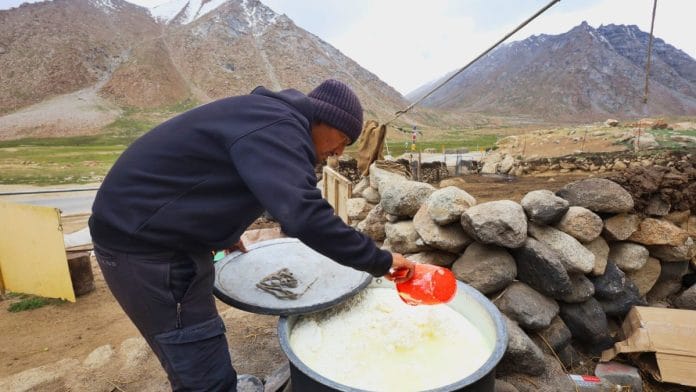


Changthang Valley, Ladakh: No crowded roads, no phone signal, almost no trace of human civilisation—just Thenlay Nurboo’s family and hundreds of yaks holding on in the rugged mountains of Ladakh. By 9 am, the milking is done. It’s the first daily step toward global stardom for the humble rustic Himalayan churpi cheese from here. Today, Ladakh’s best-kept secret is a gold winner at Brazil’s Mundial do Queijo do Brasil 2026.
The family soon turns to churning butter as large pots of fresh yellow yak milk simmer over the fire. Nearby, a fresh batch of yak churpi cheese is ready for the next stage. In Changthang Valley, generations of the family have spent turning yak milk into churpi cheese.
“My grandparents made churpi. Every household in Ladakh has made it for generations. I didn’t invent it. I only became the connector who took it from this small village in Ladakh all the way to Brazil. The victory belongs to the entire Changthang region, not to me alone,” 35-year-old dairy entrepreneur Nurboo told ThePrint.
In April, Prime Minister Narendra Modi congratulated four Indian cheesemakers whose products have won medals at Brazil’s international cheese festival. Eleftheria Gulmarg grabbed Super Gold; the Golds were won by Yak Churpi-Soft, Nordic Farm, Leh, Ladakh and Eleftheria Brunost (Whey Cheese), while the Silver was won by Eleftheria Kaali Miri (Belper Knolle Style).
For Eleftheria’s Mausam Narang, it was another international triumph. But for yak churpi, it was a breakthrough. A cheese that had long been enjoyed by nomadic communities across the Himalayas had finally found its place on the global stage and PM Modi’s Mann ki Baat.
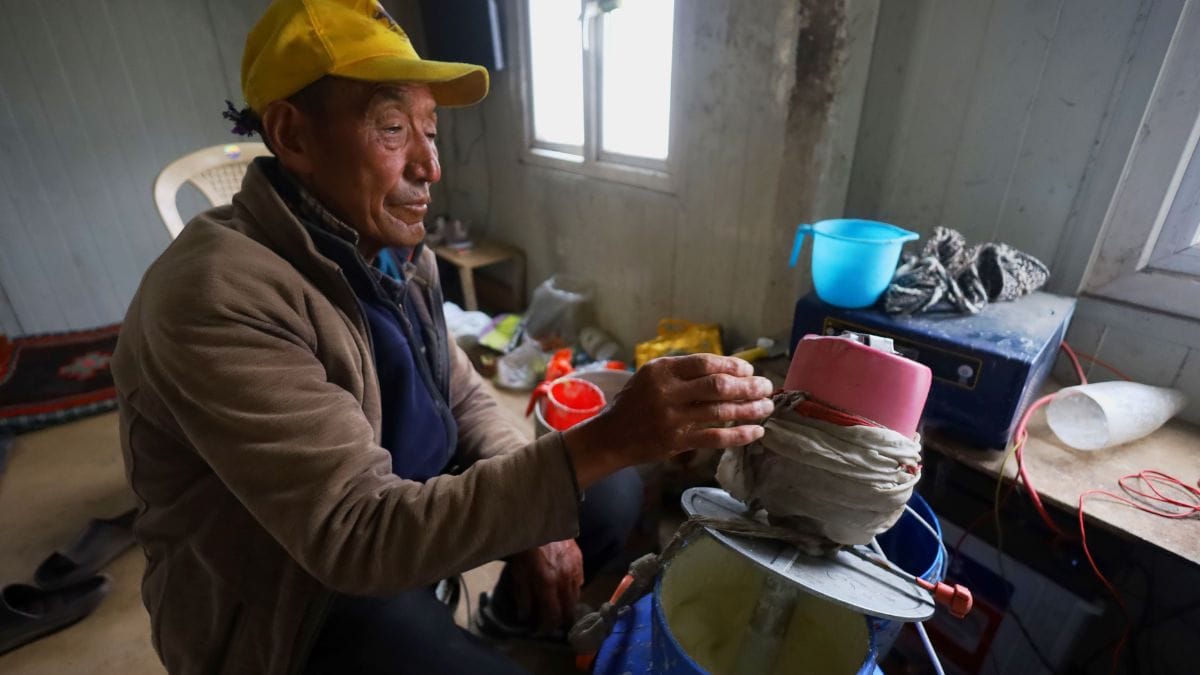
Unlike mozzarella or packaged Amul or Mother Dairy processed cheese, yak churpi carries the story of the Himalayas—of harsh terrain, survival and generations of pastoral traditions. Found in the high-altitude regions of Ladakh, Arunachal Pradesh and Sikkim, churpi was used as a taste enhancer and a protein supplement.
Now, it is finding a new audience among health-conscious consumers and fitness enthusiasts. A kg of yak churpi, when procured from the farm, costs between Rs 1,600 and Rs 2,000. More than just cheese, churpi is a tradition, a livelihood and a story that waited generations to be told.
“We have always been proud of it because it is our traditional cheese, but we never imagined that it would receive recognition at an international level. Churpi’s win among the 2,500 cheeses exhibited in the Brazil competition shows that our indigenous products can stand alongside the best cheeses globally,” a senior official of the National Dairy Development Board (NDDB) said, adding that it has opened up a completely new platform for the traditional cheese in the region.
“India has enormous potential. We have many indigenous products that have been part of our culture for generations. If they are presented well and given the right opportunities, they too can make a name for themselves globally,” the official added.
Brazil gold brings opportunity
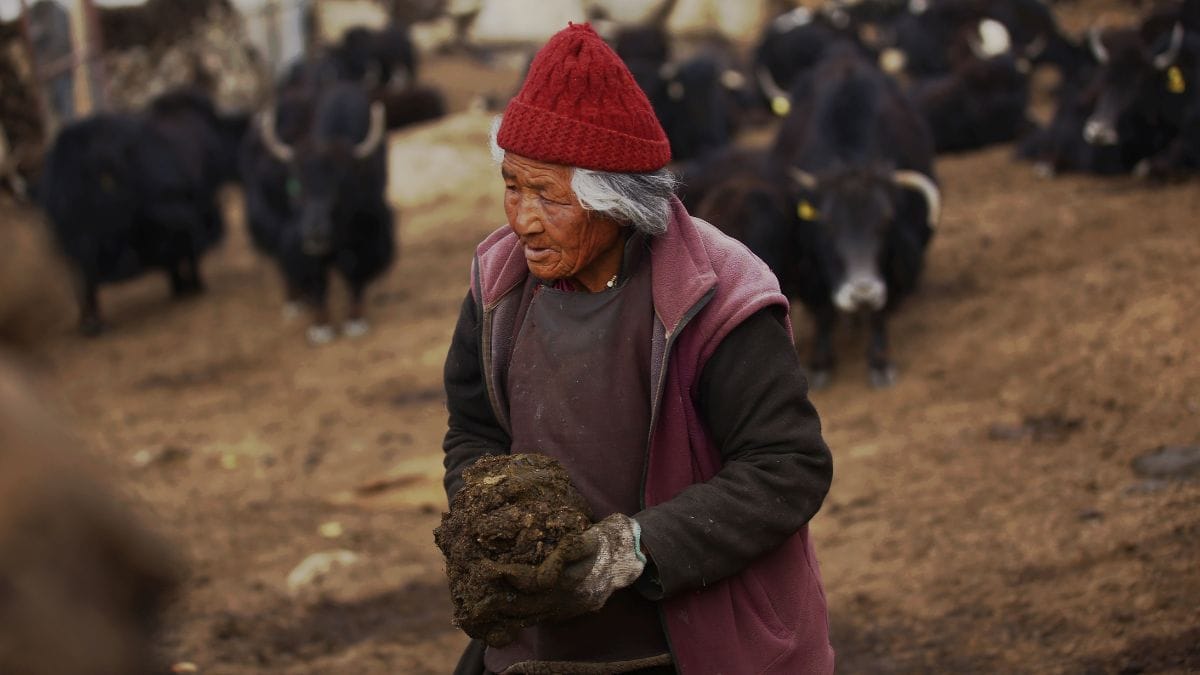
At 5 am, a pickup truck pulls into the nomadic farm in Tsoltak on the Leh-Pangong road. Nurboo arrives with his nephew, his elderly parents, and his 85-year-old grandmother. They drove for 35 kms, from Durbuk village, just in time to milk the yaks.
This has been their routine every day for seven years. Neither sick leave nor unforgiving terrain could stop them from making butter, lassi, ghee, and churpi cheese. However, for years, there was little commercial value attached to these products. It was mostly consumed within nomadic households or sold in small quantities in nearby villages and local markets.
Years of hard work have finally paid off. With gold in Brazil, churpi has cheese stepped onto the global stage, opening new doors for Nurboo.
“This award has opened a market for every yak herder in Changthang. It’s an opportunity for everyone who makes churpi to earn from it,” he said.
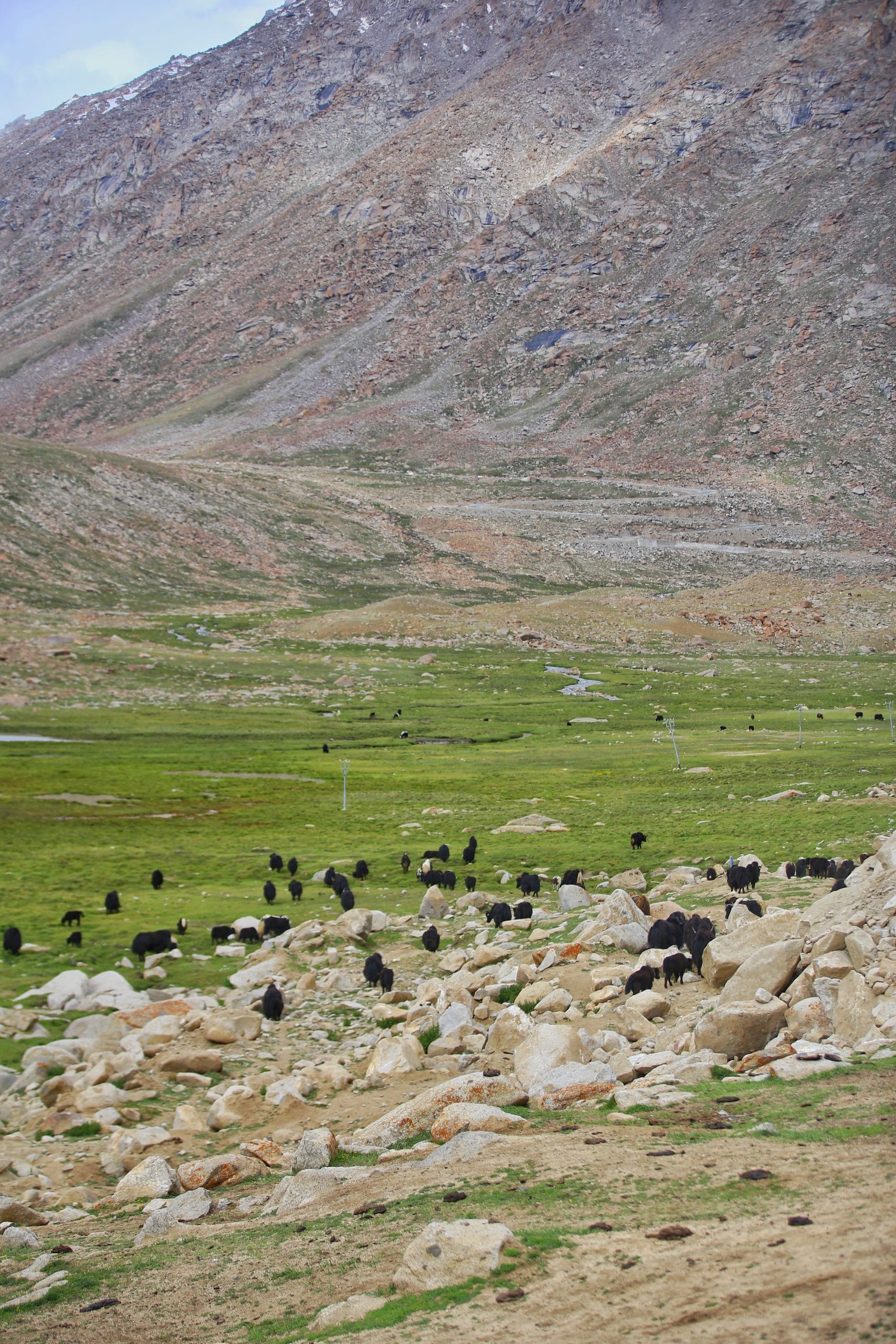
Around 2,000 herders inhabit the Changthang Valley, famous for churpi. The region is famous for its yaks. The valley provides fresh grass for grazing, making it the favourite spot for shepherds. In most herding households, six to seven family members work together every day, with each taking on different roles.
Nurboo receives constant missed call alerts—a disadvantage of living in a non-network area. In the evening, when he goes to the other side of the mountain following yaks. There, he gets little access to the internet—and that is when he replies to WhatsApp messages and calls back people. In the past three months, he cannot recall the number of calls and messages he has received.
Even his news of bagging the gold medal reached him a few days later.
“Ever since the award, I have been getting calls and messages from hotels, chefs and buyers. But I still haven’t started selling outside in a big way because I first want proper branding and packaging,” he said.
But the dream is to grow bigger.
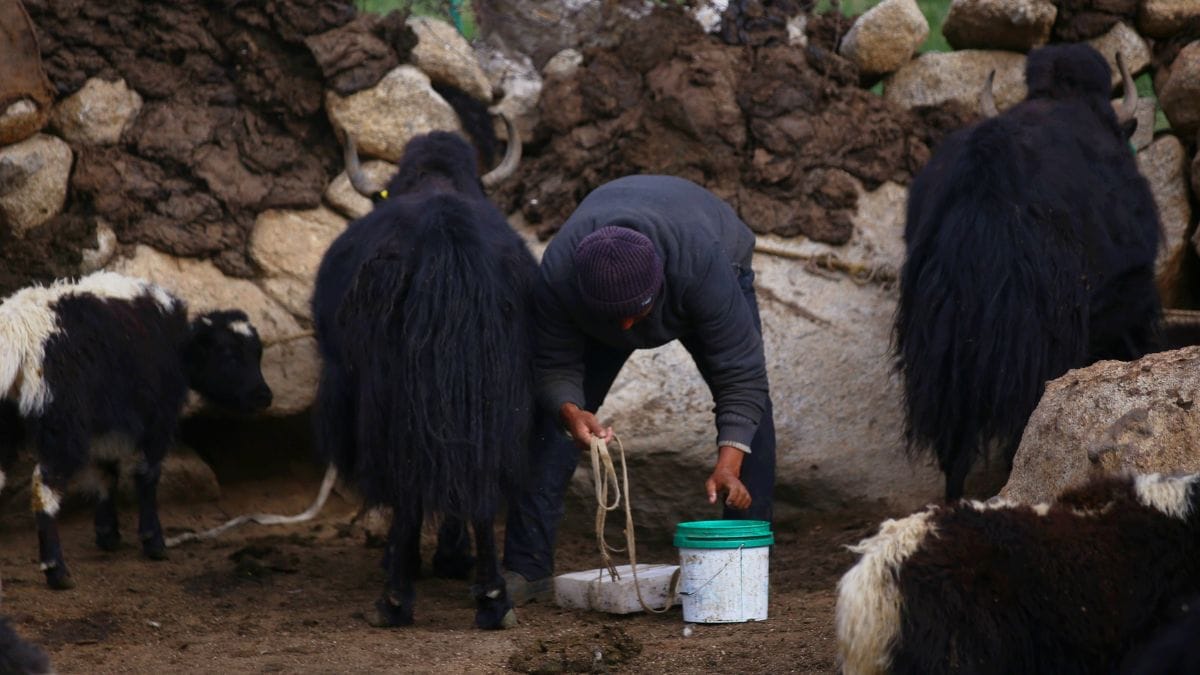
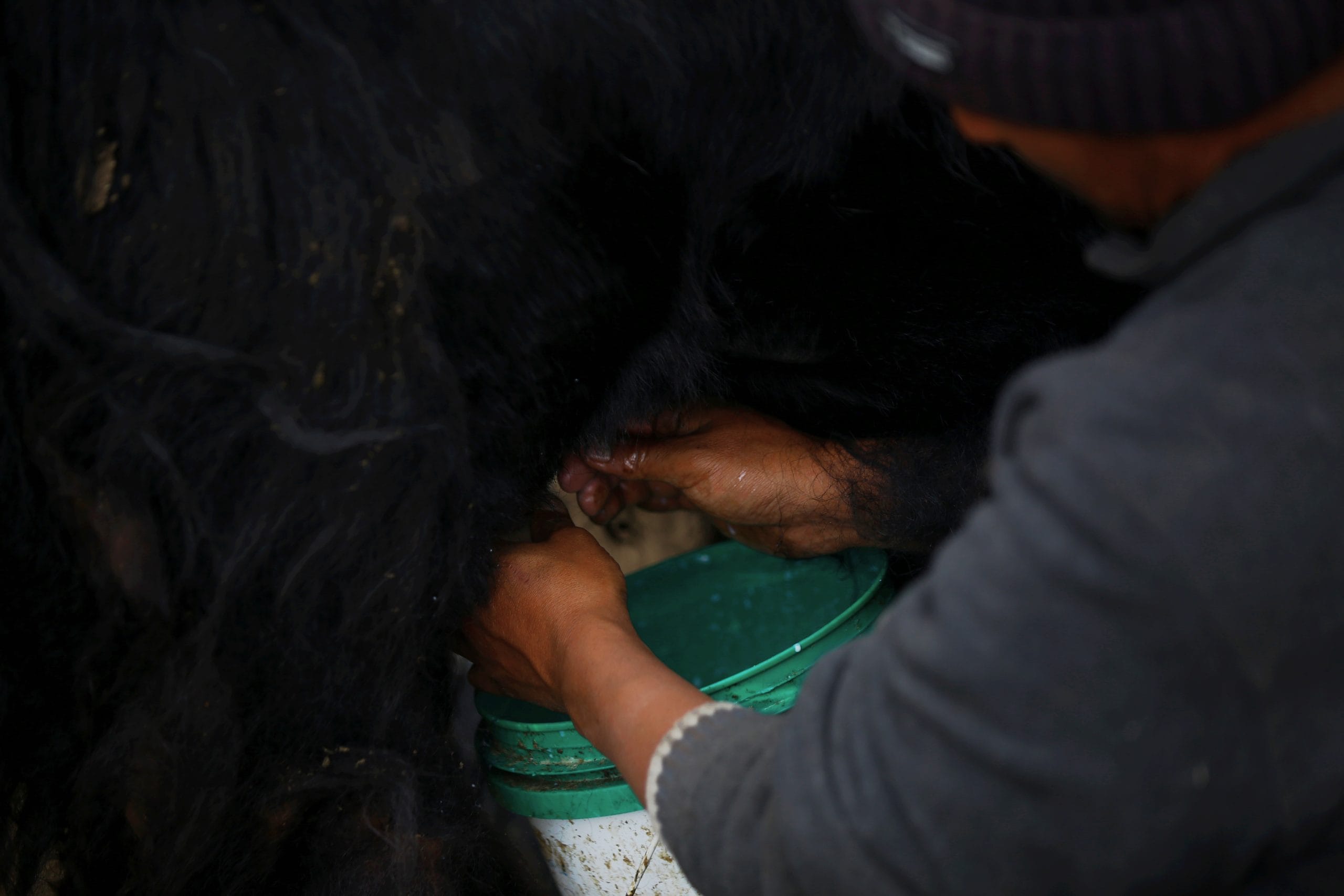
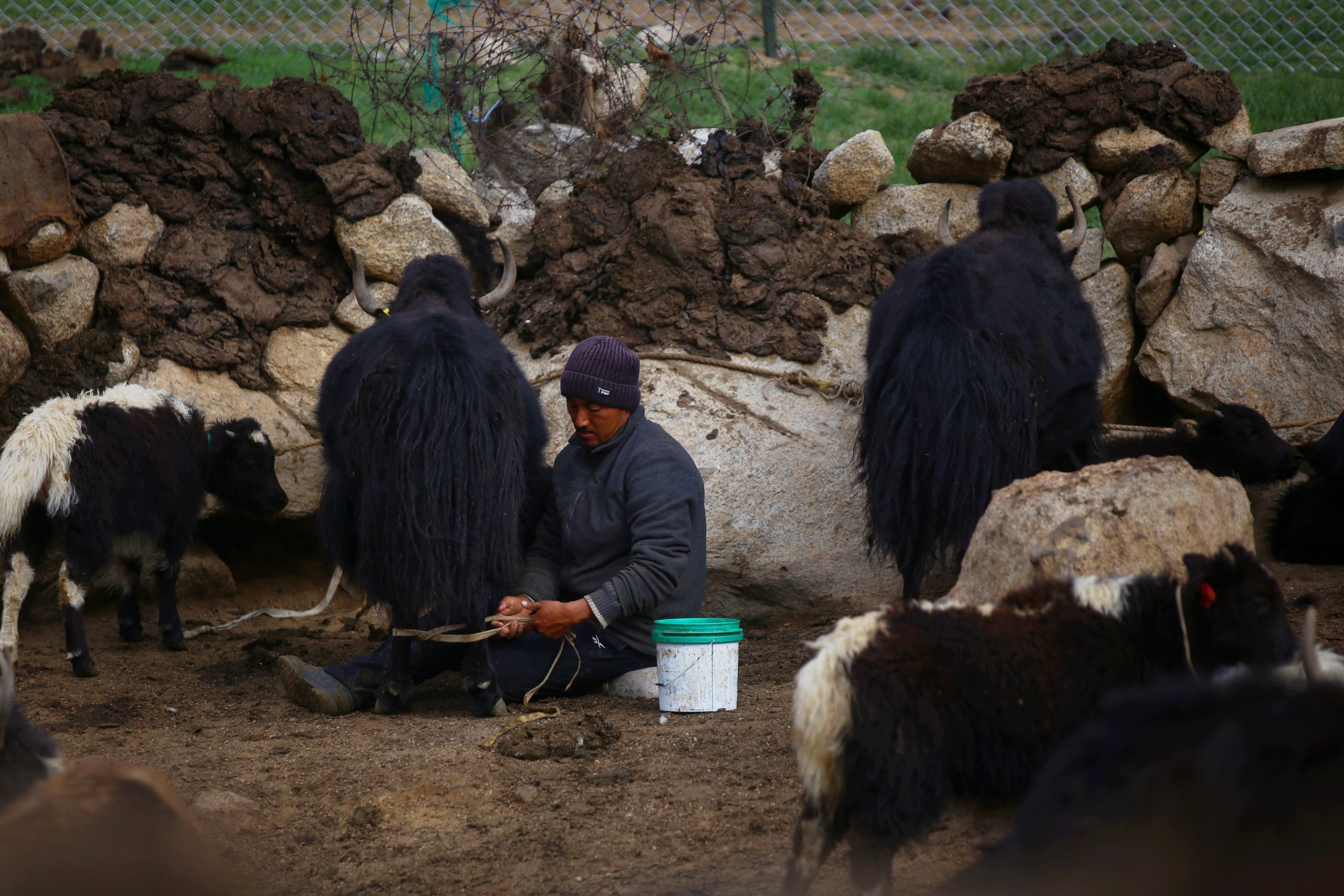
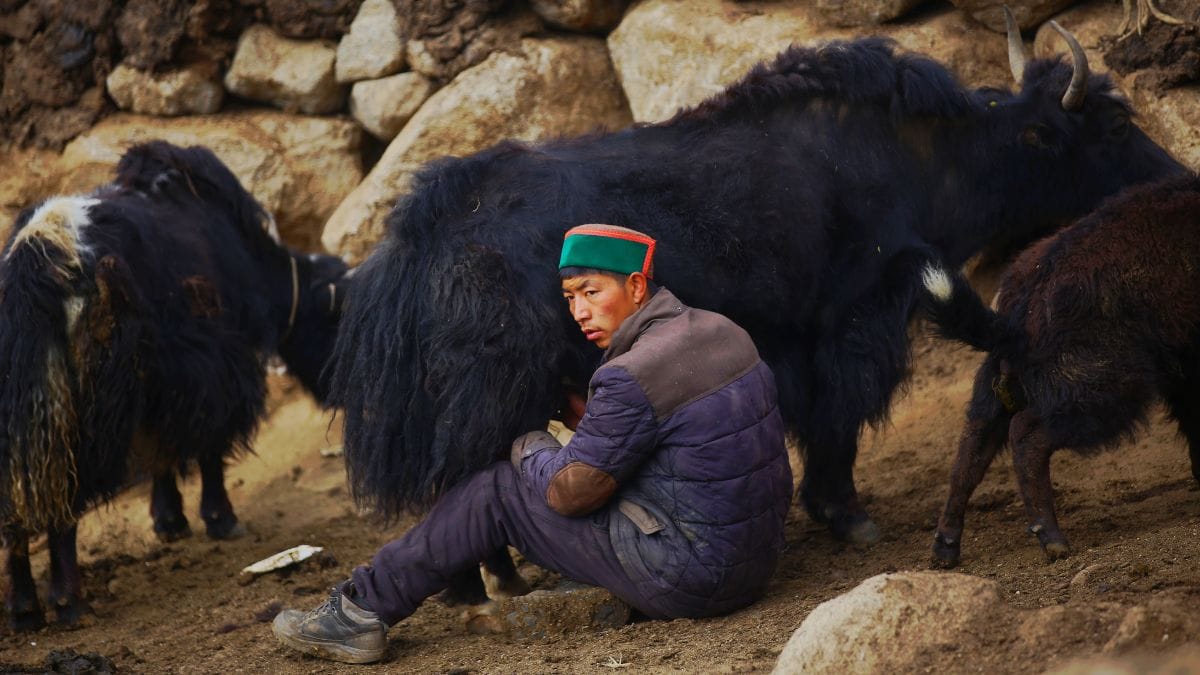
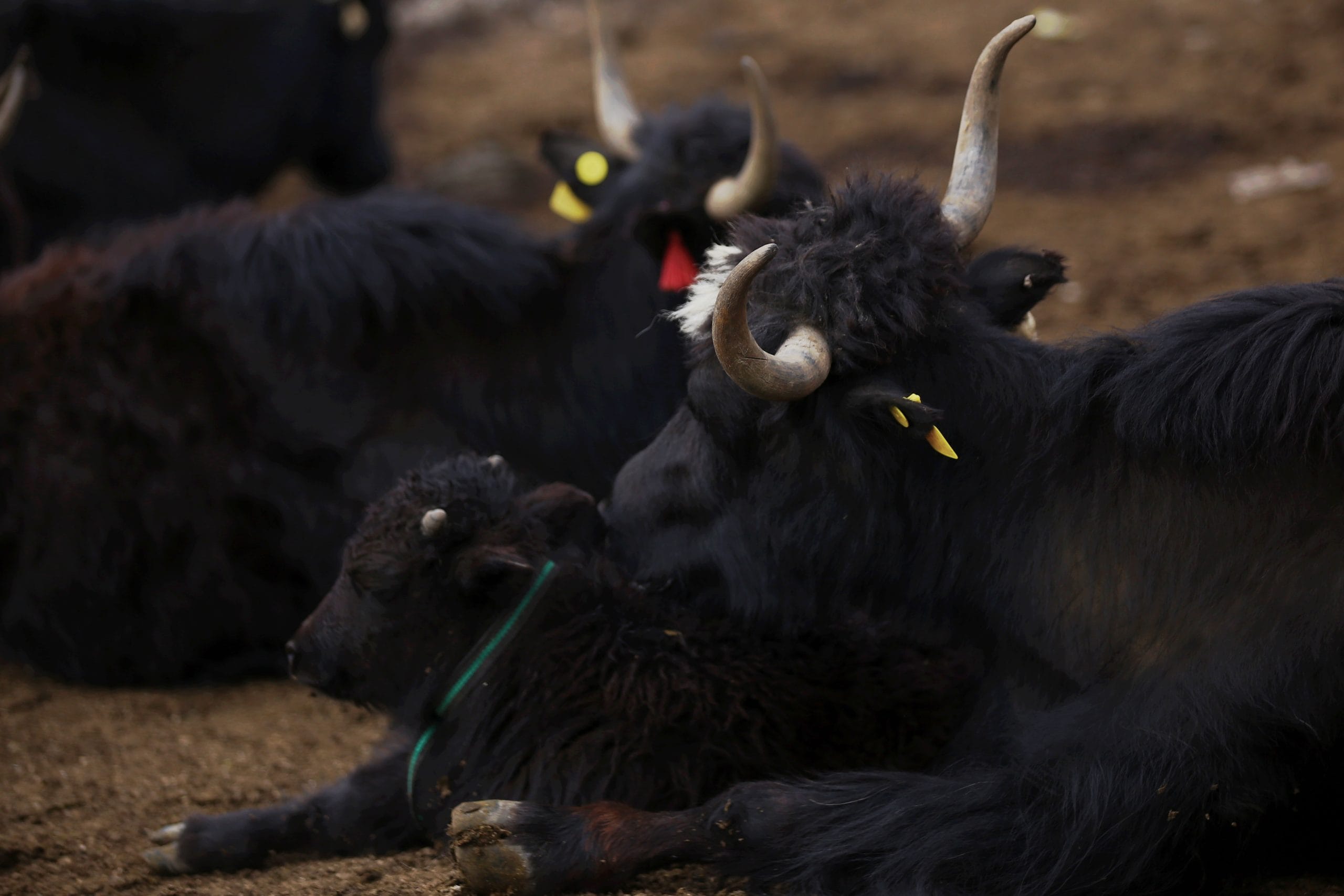
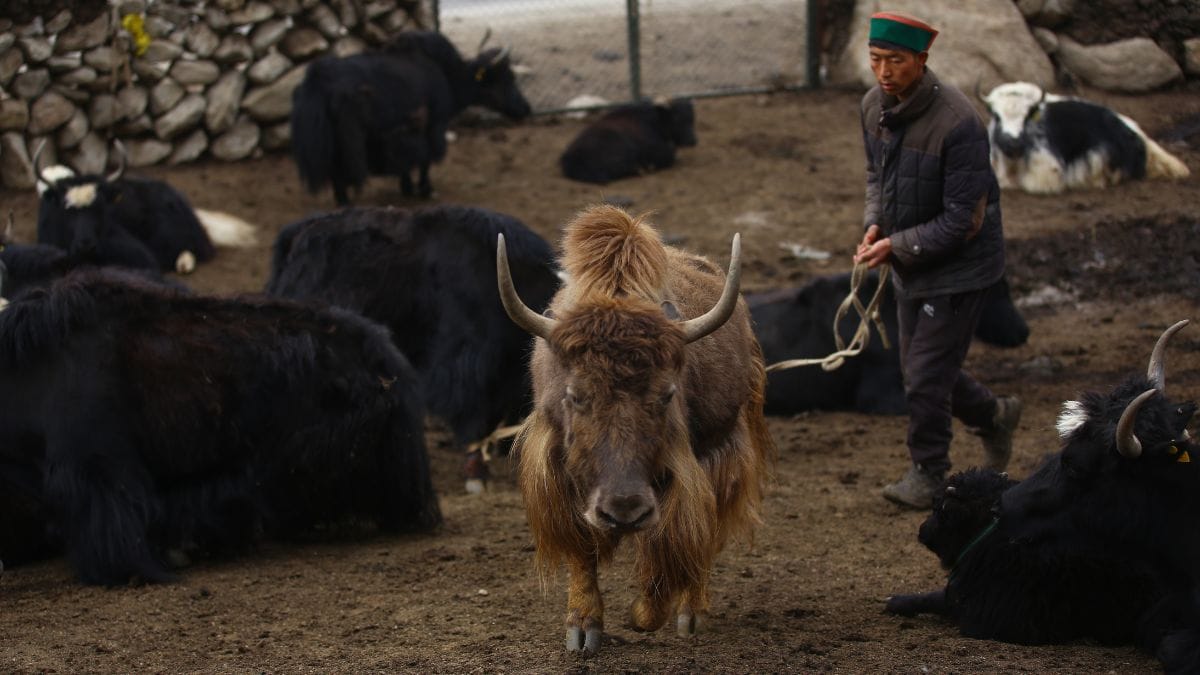
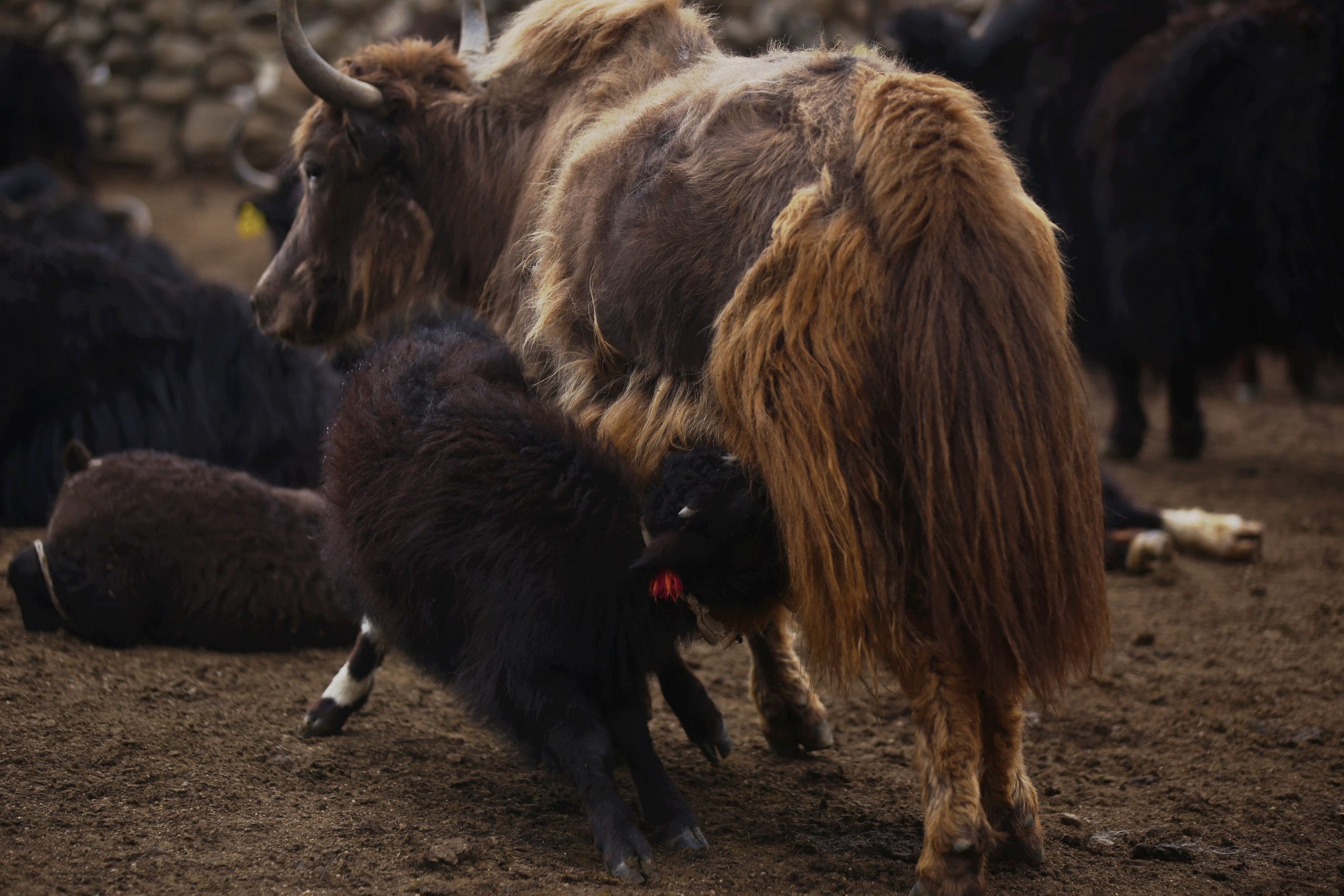
Nurboo first starts with the black rigid mother yak, and his nephew tackles the brown, who keeps running away from him. His mother and grandmother collect the yak dung to be dried and used as fuel.
“Who is the next one?” he said. He hums while milking, calming the yaks. They are family to them.
“They are not cows and buffaloes; they are very calm animals”, said Nurboo.
Also read: Where are JEE’s top-ranked women from 2012 to 2021 now? Google, Princeton, ‘curious builder’
Churpi, the nutrient master
For Nurboo’s family, every morning is a race against time and unpredictable weather. The goal for today was to collect at least 60 litres of yak milk. As the season comes to an end in July, the amount of milk a yak produces begins to decline. During the peak season, a yak gives around a litre of milk a day, but the yield drops as winter approaches.
It is the same for the entire region. The family’s priority is to collect and store as much milk as they can.
Four hours later, the milking is finally over. It was time to move to the next segment—boiling milk, churning butter and collecting cheese. It is a long process that takes the entire day. With the tourist season underway in Ladakh, the family has to open the restaurant.
Nurboo’s 73-year-old father, Tsering Motup, carries blue, white and red buckets filled with fresh yak milk into a modest one-storey dairy unit. Unlike large commercial factories, the dairy occupies a small patch of land beside the main road, overlooking the lush high-altitude pastures.
Every summer, herders from nearby villages bring their yaks to the Changthang Valley to graze. The dairy is known through word of mouth rather than the internet—a rarity in the 21st century.
The family-run farm is divided into simple sections: a small restaurant for visitors, open pastures for the yaks, a traditional rebo (yak-hair tent), and three separate workspaces where the milk is boiled, churned and turned into butter, cheese and other dairy products.
Motup shuffles between the milk kept on the stove and the butter churner.
“All my children know this work. I have four sons and three daughters. Whoever comes helps—milking the yaks, making butter, cleaning the dung, taking the animals out to graze. This is work everyone in the family does”, said Motup.
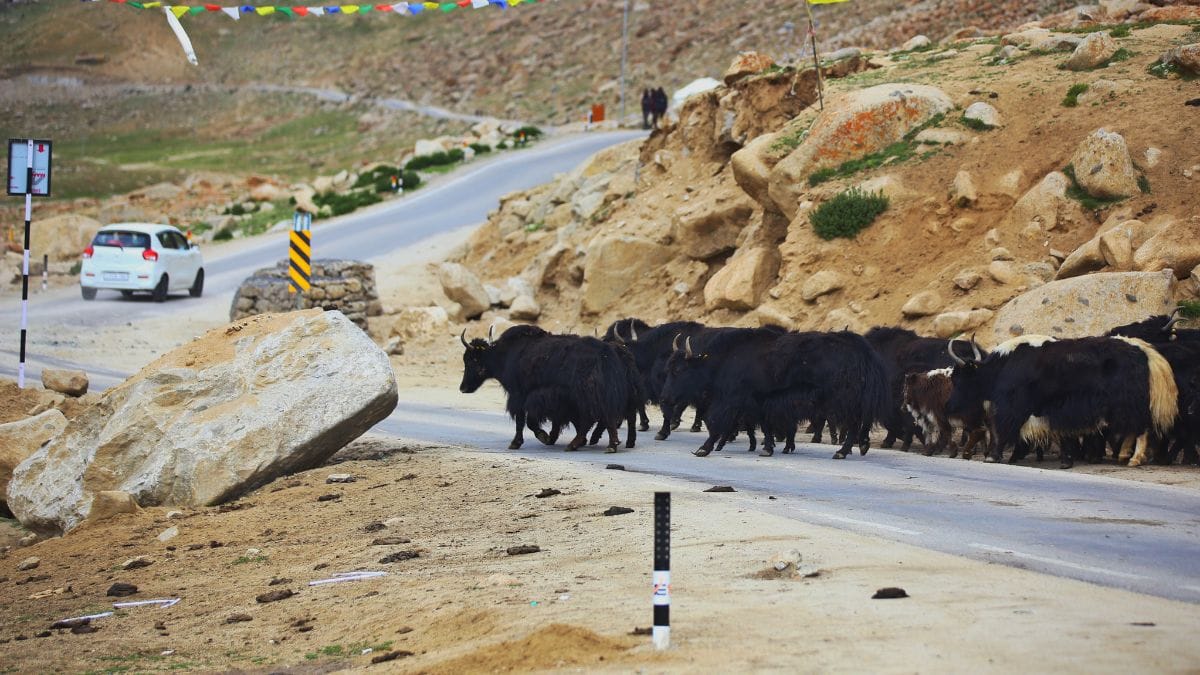
Meanwhile, Nurboo and his nephew safely cross the yaks, briefly stopping the traffic going to Pangong Lake—the famous lake seen in 3 Idiots.
For tourists, yaks crossing the roads are a spectacle. Cameras and mobile phones come out in an instant to capture the moment. It is not usual for people from the rest of India, who have only seen cows crossing the roads.
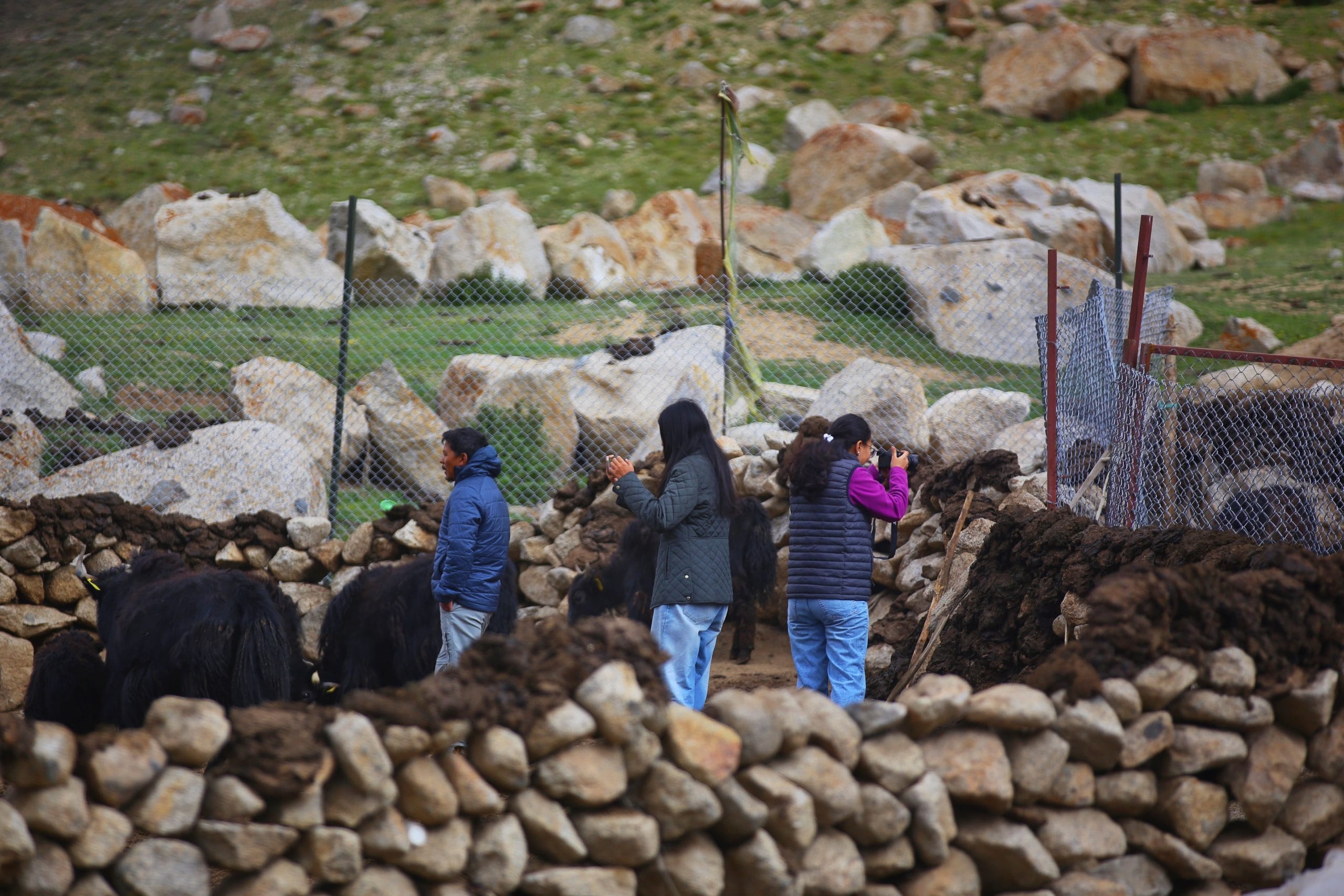
Nurboo does not sell dairy products. Over time, he has created a customer base who come to the farm and buy products—whether it is cheese or butter. Most of his sales, around 70 per cent, come from churpi.
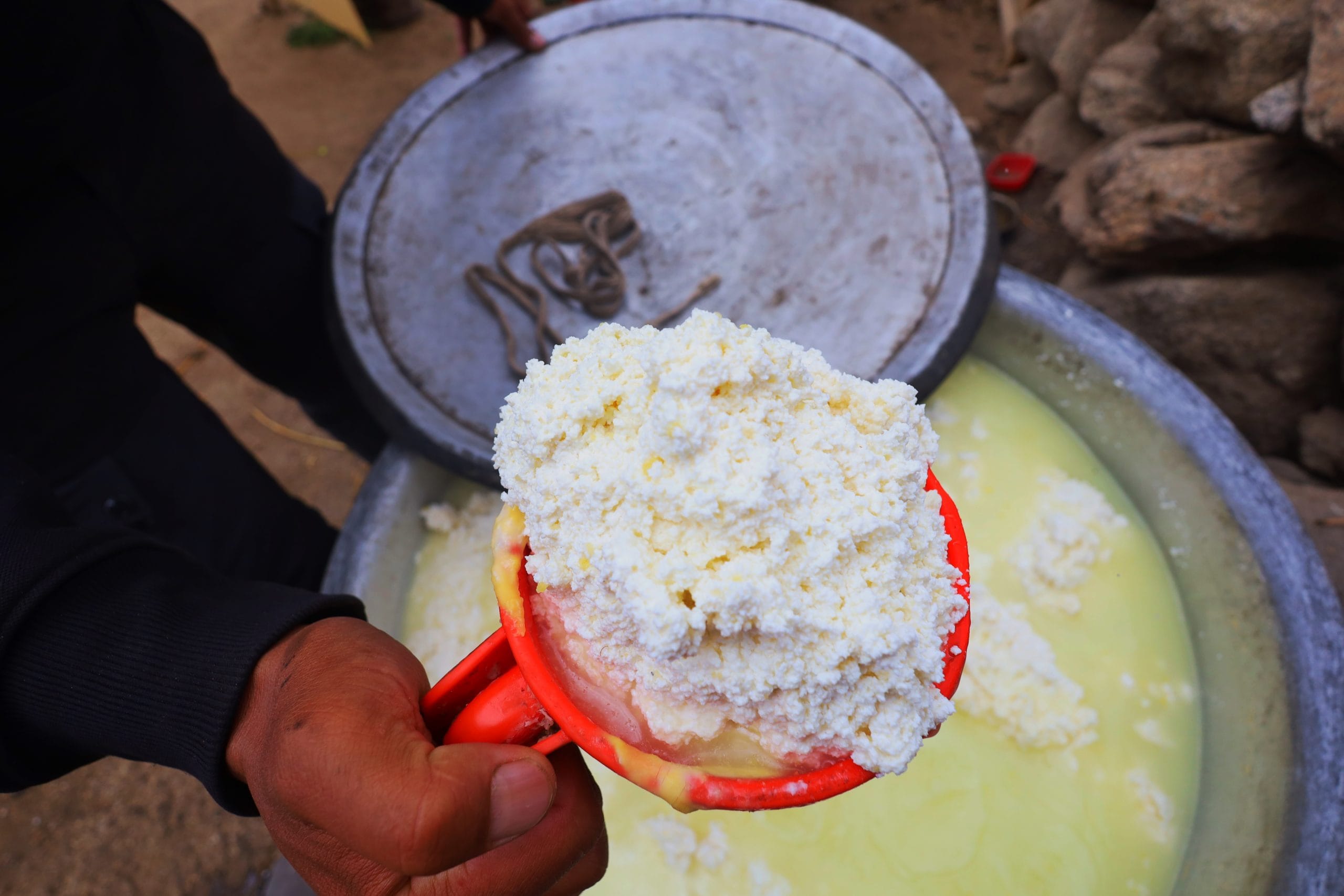
“If we do not sell the milk, we make curd. If the curd does not sell, we churn butter. If the butter doesn’t sell, we make ghee. If buttermilk is left, we make churpi. Nothing goes to waste”, said Nurboo
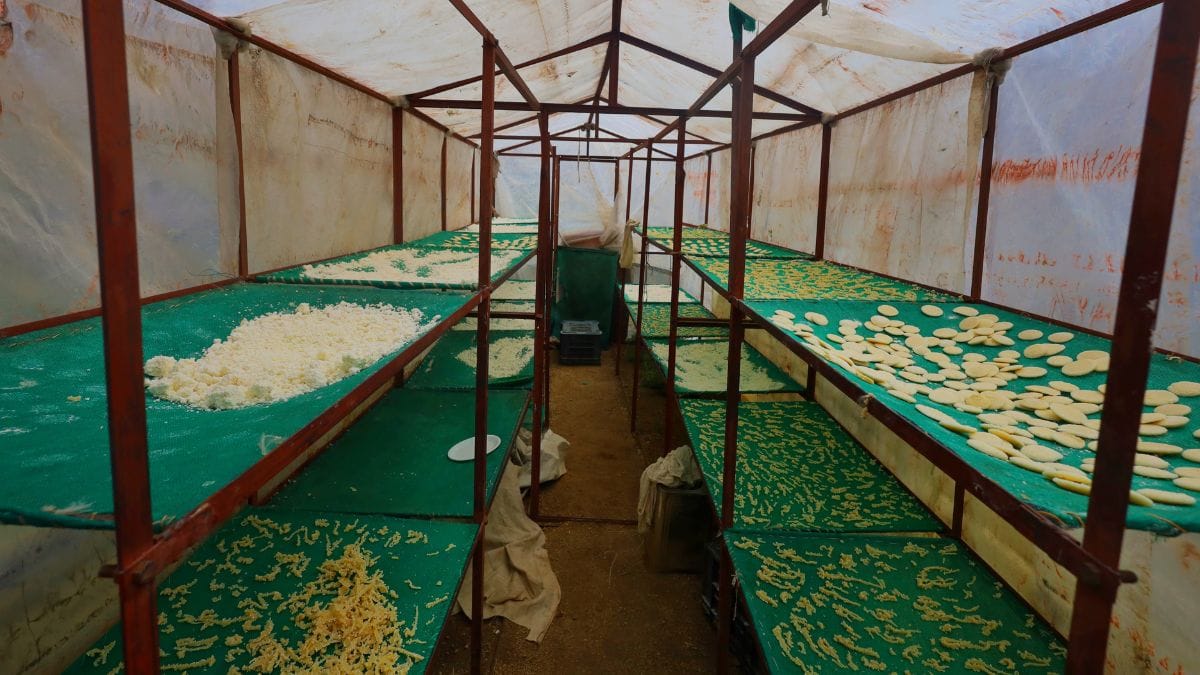
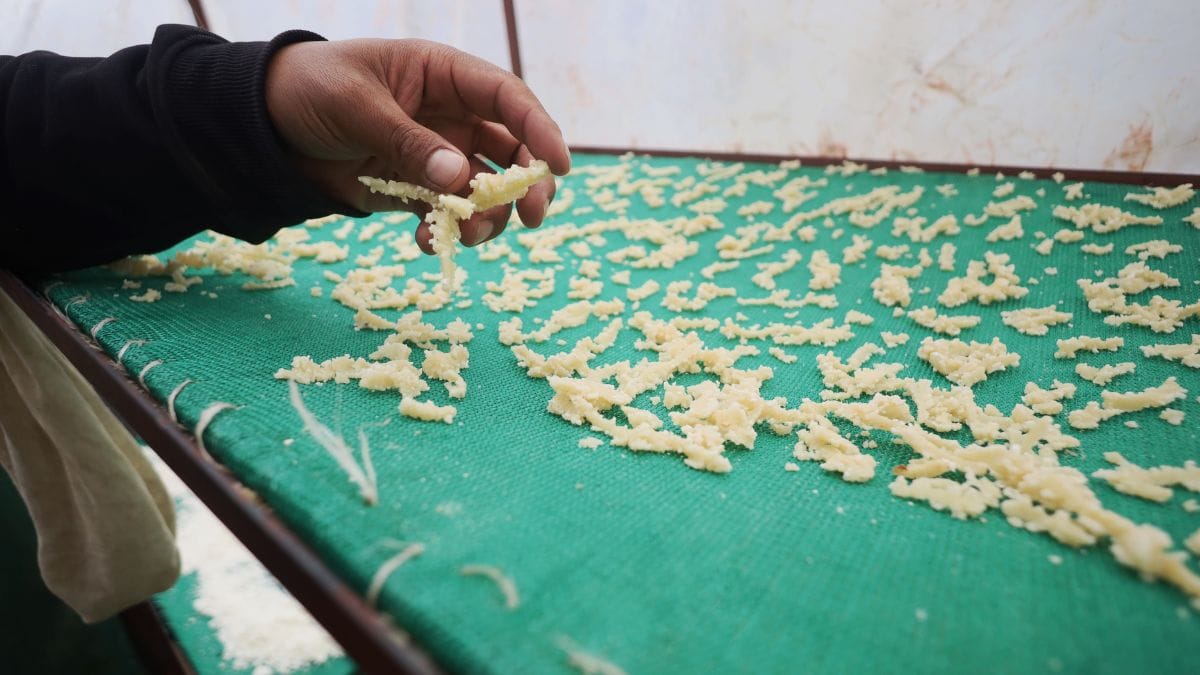
After the cheese is separated, it is left to dry. Earlier, it was dried in the open air. But with cold winds sweeping across the mountains and little sunlight, drying the cheese became one of the toughest parts of the day’s work. Now, the family uses a small greenhouse-like room made with plastic sheets, where the cheese is placed on racks to dry more efficiently.
Every batch demands the family’s constant attention, patience and dedication.
At his farm, Nurboo makes three varieties of churpi. The soft churpi looks much like homemade ricotta—fresh, white and crumbly. The hard churpi resembles a Parmesan rind—pale yellow, dense and rock-hard. The third is a sweet snack, shaped like a full moon, made from concentrated yak milk. The hard and soft churpi are sold for Rs 1,800-2,000 per kg. The moon-like churpi is sold for Rs 20 per piece.
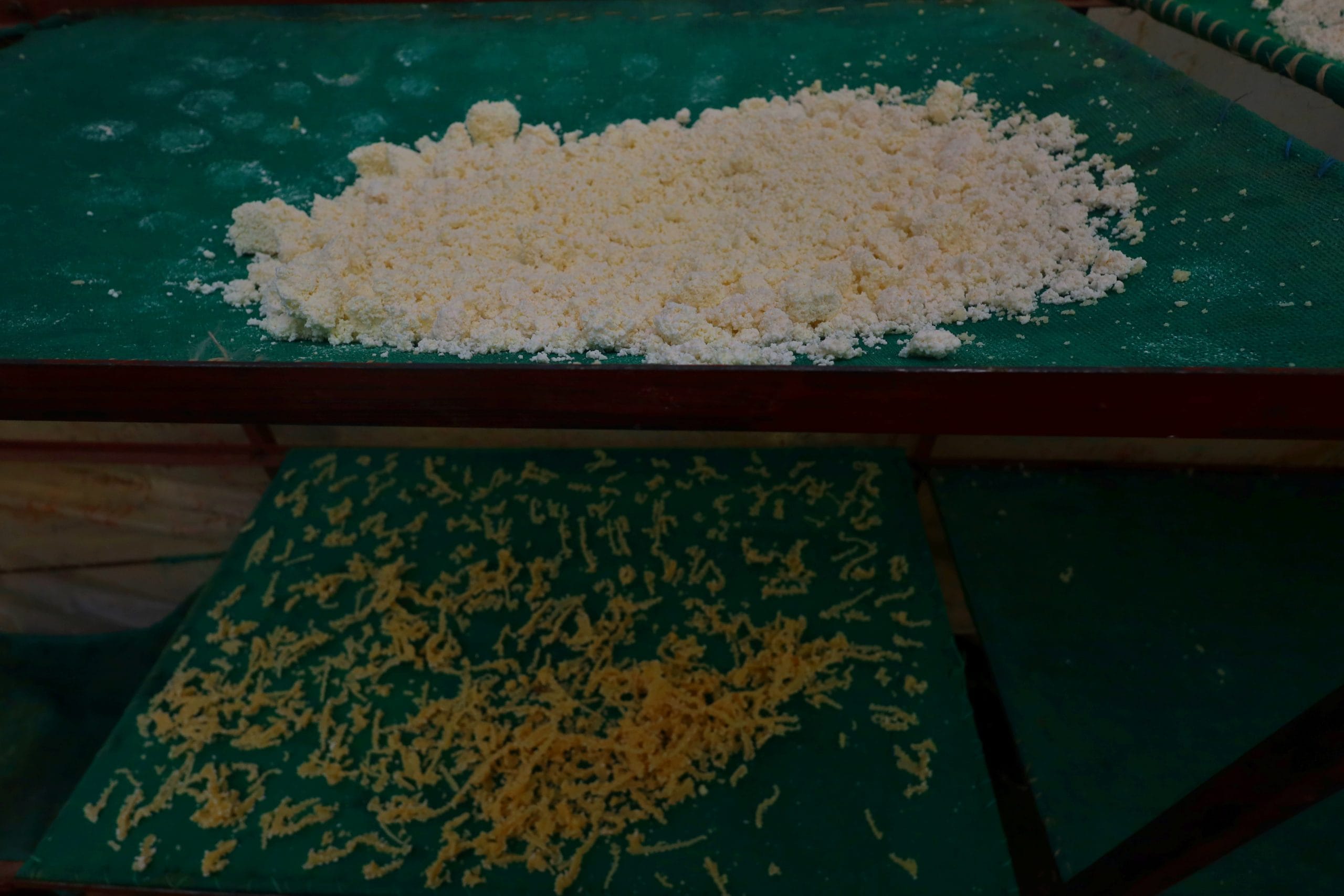
Nurboo said the same cheese was sold for Rs 600 per kg, and now the prices have doubled because of the rise in demand among the local residents—similar to that of yak milk.
“Till 2019, Ladakh remained a neglected area,” said Nurboo. “Youth have moved to cities for better opportunities and education.”
But this is changing slowly. The population that stayed back instead of only engaging in tourism or the service industry is working with natural resources. Small entrepreneurs are coming up. Nurboo is the perfect example.
The first step towards this dream was to come up with a different approach while using traditional items. He tried making mozzarella cheese, but Ladakh’s weather made it difficult. Nurboo went to the animal husbandry department in Leh—70 kilometres from his home—to make connections and learn from experts. He spoke to the National Dairy Development Board (NDDB), introduced them to churpi and made them understand the nutritional benefits of the cheese.
With all the failed experiments, he chose not to struggle anymore.
“Why should I struggle to copy foreign cheese when we already have our own traditional cheese, churpi? So I decided to focus on that,” he said. “Churpi is not something new that I invented. People in Ladakh have been making it for generations. My ancestors, my grandparents—they have all been making this cheese for years”.
Churpi is a part of Ladakhi tradition. It is served to guests during festivals, weddings and family gatherings along with thukpa, butter tea and skyu. Without churpi, celebrations and food are incomplete. For Japanese, it is Miyazaki mangoes; for herders, churpi is considered to be an expensive gift. When it gets colder, a lot of churpi mixed with Barley soup is comfort food.
Also read: Jaibir Nihal Singh is Delhi’s elite insider turning old money into viral content
Branding and community
When Nurboo decided to return to the village and work with his family, the community looked down upon him. Now, the perception has changed. More people now leave him with the responsibility of their yaks.
He gets immense satisfaction to see people now see him with dignity. They are gradually understanding the value of herding.
Earlier, while growing up, herding would be used to scare kids. Now, Nurboo said, it is our responsibility to carry forward our tradition.
For that, Nurboo has new ideas for the expansion of the business. And he also seeks government support to make this work.
“If the government gives yak dairy the same kind of support it has given pashmina, we can create a much bigger market for yak products,” he said.
Nurboo has already started working on ideas. One of his first ideas is to turn yak whey, a by-product of cheesemaking, into protein powder.
The 35-year-old is working towards sustainable growth. An idea he learnt from his “guru” Sonam Wangchuk.
“He taught me what a sustainable way of living really means. He explained its true logic to me. Because of him, today I enjoy working here,” he said.
He aims to double production and build a brand around organic and sustainable products.
Perhaps that will convince his brothers to join him in his entrepreneurial journey from the rugged mountains of Ladakh. Maybe, working on churpi cheese will become the cool job once again in the 21st century.
(Edited by Saptak Datta)
Govt must obtain Geographical Indication tag, for this Ladakhi yak cheese, so that bio-intellevtual property is not stolen.