





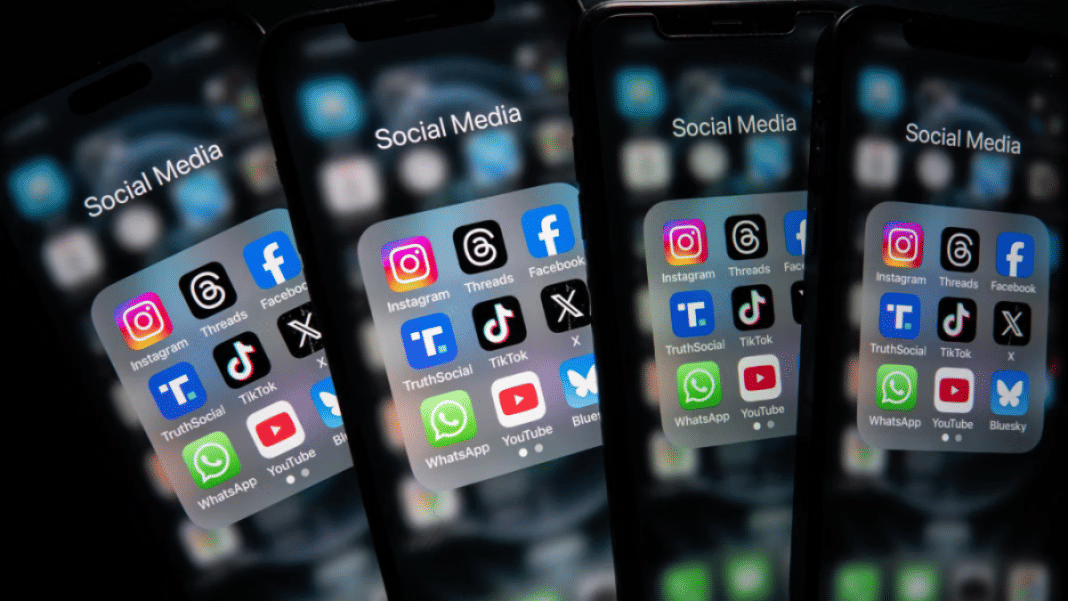


New Delhi: Indian election season is no more limited to reporting from dusty grounds of the villages or covering the chaotic urban rallies. It has shifted to a digital colosseum, and the weapon of choice is a 280-character bullet launched at remarkable speed.
With traditional rallies and campaigning taking a back seat, politics has now entered the world of Twitter wars, where hashtags, memes, and online outrage have become the new manifestos and protests. Welcome to this world, where forgotten are the reasoned debates or thoughtful conversations.
In this digital arena, elections are being fought and decided through memes, hashtags, and insult-laden replies typed at 3 am.
These days, elections are less about the candidate’s speech and more about hashtags. Hashtags are THE currency of the elections. In a sleek space cramped with interns running on coffee and Redbulls, hashtags are systematically created.
These are emotionally laden and catchy phrases and serve the purpose of bringing the party’s narrative to the fore. It’s a very simple but tactful formula. Launch an aggressive hashtag, and deploy loyalists and influencers to amplify it.
Mainstream media anchors, many of whom have become irrelevant, join in and try to make people believe the hashtag is raising a national issue. These hashtags are no less than digital battle cries and serve as a way to polarise the audience and mobilise support.
There’s a digital army behind almost every party: hundreds of anonymous people with a data plan ready to launch attacks, spread information and create planned outrage.
And if you thought your only source of fake news is WhatsApp forwards in random family groups from random uncles, you are wrong. Twitter, now X, has taken it to the next level. Misinformation, deepfake videos and AI-generated content spread like wildfire.
Political speeches have taken the backseat as well. After all, why take the trouble of explaining socioeconomic reforms when you can take down your opponent with KBC or Chhota Bheem memes. Why worry about meaningful discussions when your interns can create a “you vs the guy she told you not to worry about” meme.
In today’s fast paced world, few read manifestos, everyone loves a good roast. To put this into perspective, imagine what will catch your attention: a politician stumbling on the stage or a small party launching its manifesto at the same time.
The answer is quite obvious. And it’s not just about the memes. It’s also about snarky replies, self-deprecating humor, even accidental typos that get ‘views’. Elections have essentially turned into a meme contest, and the winner gets to run the country or state.
And of course, no discussion about X and the warfare it hosts can be complete without talking about the outrage that trends more than the latest IPhone. A harmless typo turns into a national talking point.
A 10-year-old tweet becomes a controversy. A slight tweak in a campaign strategy and bravo, you are trending again. The logic is perhaps that more outrage means more public notice. And all of this outrage sometimes makes you question: have we solved all our problems as a country and now we don’t have anything apart from a 10-year-old tweet to worry about?
The political outrage machine runs all day, everyday, ensuring that something—anything—keeps the internet perennially angry.
The real goal of course isn’t to inform or debate—it’s to drown out real issues. As voters get enraged over trivial matters, the actual, genuine problems like unemployment, inflation, infrastructure, get conveniently buried under a sea of digital distractions.
In this very chaotic X-verse, where even manifestos are reduced to a tweet, the voter is left dazed. Who to vote for? Someone with the snarkiest comebacks? Someone whose memes you really enjoyed? Or someone who actually worked for the constituency? (Seems like a utopian candidate in today’s world).
As India’s electoral fights undergo a tectonic shift from real-world to digital theatre, the fight is no longer just about policies—it’s also about perceptions.
Democracy is now a performance, where loud meaningless noise drowns out the significant whisper. In this digital cacophony, meaningful discourse is often lost to performative politics.
In the process, perhaps, the actual intention behind elections—the power of the people to shape their future is being eclipsed by a race for digital dominance. The thin line between truth and propaganda is blurring and the focus is drifting away.
This is the carnival of chaos. In which, democracy somehow survives – battered, bruised, but alive. And that somehow is both the tragedy and the triumph of Indian elections.
Mehr Menghnani is a student of Amrutben Jivanlal College of Commerce and Economics, Mumbai. Views are personal.
Mithibai College of Arts*