





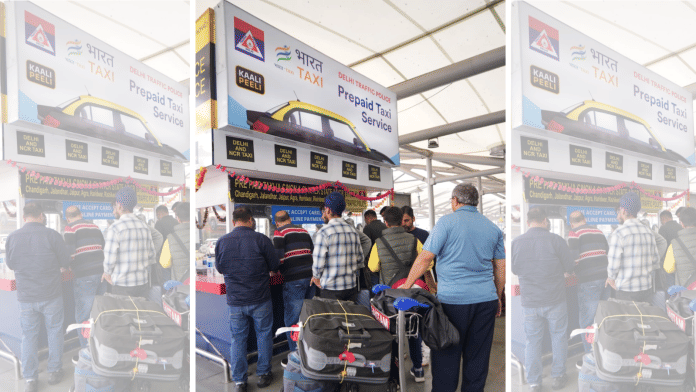


New Delhi: Bharat Taxi, a cooperative-backed ride-hailing platform positioned as an alternative to private cab aggregators, has begun a soft launch in Lucknow and Chandigarh as it accelerates its national expansion plans.
“Bookings have started for the cities of Lucknow and Chandigarh on Bharat Taxi application,” a senior official from Bharat Taxi told ThePrint.
The platform has onboarded around 25,000 drivers in Lucknow and 15,000 in Chandigarh, a second official said. The registered fleet includes bike taxis, three-wheelers and cabs.
The latest rollout comes months after Bharat Taxi formally launched operations in February 2026 under Sahakar Taxi Cooperative Ltd, a multi-state cooperative society registered under the Multi-State Cooperative Societies Act, 2002. While the cooperative was established in June 2025, commercial operations began earlier this year.
At present, the service operates in Delhi, Gurugram, Noida, Faridabad and Ghaziabad in the NCR region, besides Ahmedabad, Rajkot, Somnath and Dwarka in Gujarat. Since its launch, the company claims to have registered 5.5 lakh drivers across its bike, auto-rickshaw and taxi verticals.
After Lucknow and Chandigarh, Bharat Taxi is preparing to enter Mumbai within the next month, followed by Jaipur by June-end or July, said the first official.
“In the next one year, Bharat Taxi services would be available in all major cities and towns of India,” the official said.
The expansion strategy appears to mirror the cooperative’s NCR model, where it works in coordination with public institutions and local authorities. In Lucknow, Bharat Taxi plans to collaborate with the traffic police and the Uttar Pradesh Metro Rail Corporation to strengthen commuter safety and service delivery.
A similar partnership is being planned with the Mumbai Metro Rail Corporation once operations begin in the financial capital of the country.
The company is also attempting to differentiate itself from dominant app-based aggregators through its business model. Bharat Taxi operates on a zero-commission framework, pitching itself as a driver-friendly platform in which earnings remain largely with drivers, referred to as “Sarathis”.
Initially, the platform did not levy any charges on drivers. However, it has now introduced a nominal subscription-based payment structure to meet operational expenses.
“We are currently charging daily subscription fee or per ride nominal fee from our Sarathi (driver) partners,” the official said.
Unlike private cab aggregators, Bharat Taxi official says it does not impose surge pricing on commuters during peak hours. However, the platform does allow congestion-linked pricing in situations involving prolonged traffic delays.
“We would have to give the driver the cost incurred on being stuck in traffic for long hours,” the official said.
The cooperative-backed service is entering an intensely competitive market currently dominated by established private cab aggregators that continue to rely heavily on incentives and discounting to retain both drivers and riders.
“A challenge that Bharat Taxi is currently facing is the heavy discounts offered by private cab aggregators,” the second official said. “They are burning cash through heavy discounts and high payouts to drivers but it is not sustainable in the long-term.”
ThePrint reached out to Bharat Taxi competitors Uber and Ola for comment via email, but had not received a response till the time of publication.
Bharat Taxi argues that its cooperative structure gives it a fundamentally different operating philosophy from venture-backed ride-hailing firms. Under the model, drivers themselves are stakeholders in the cooperative, making profitability and long-term sustainability central to its approach.
“Based on the cooperative model, Bharat Taxi needs to maximise profit for its members which are Sarathis only,” the second official said.
(Edited by Nida Fatima Siddiqui)
Also Read: Ola & Uber to soon have a new competitor as 8 cooperatives take the wheel. All about Bharat Taxi