





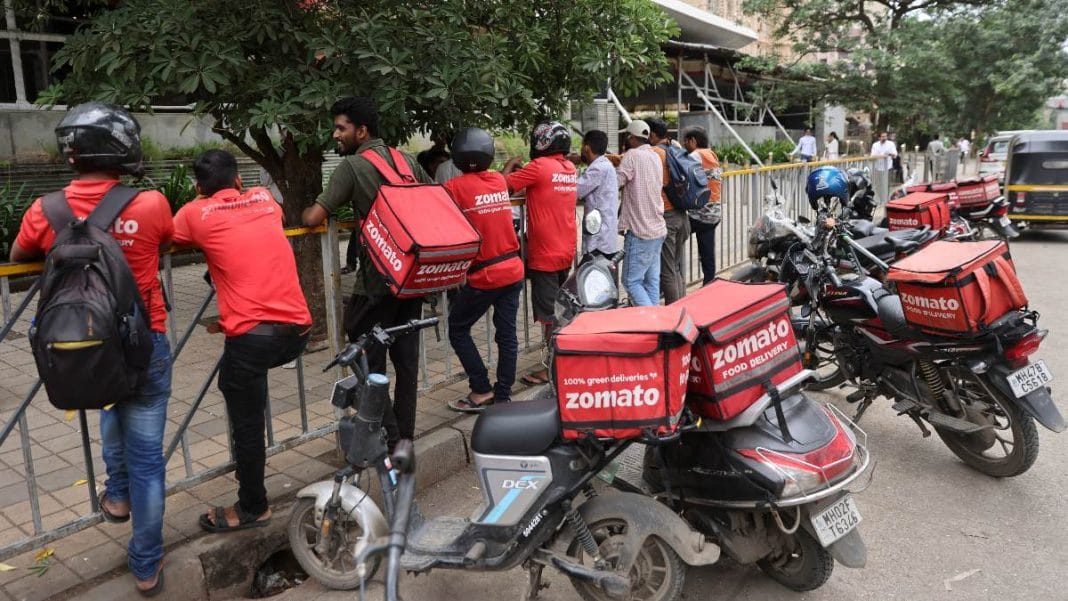


I am a loyal Swiggy customer and noticed that recently it has started a separate app just for cheaper meals. It got me thinking about how things get sold cheaply in India.
An article in HT Mint gave some more insights on this. Apparently, Swiggy and Zomato are planning to grow by targeting price-sensitive customers, rather than increasing order frequency among their existing base. They are approaching it very differently.
Swiggy has built a separate app for cheaper food called Toing, where it makes use of the existing infrastructure of riders and restaurants. Eternal, Zomato’s parent company, is building ‘Bistro’ by redesigning kitchen operations and supply chains to prepare low-cost meals.
Zomato’s founder, Deepinder Goyal, said something which stuck with me: ‘You can’t cut your way to cheap, as dropping the fees won’t make a meal cheap; it will just move the loss to someone else, maybe the restaurant, the platform or an investor. Somebody still has to pay.’
Competition is heating up in this space. Swish raised funding; Rapido has launched ‘Ownly’ with zero commissions; Flipkart too is entering. Will all of these survive? It got me thinking.
Low prices come from two places broadly—either someone reduces the cost, or somebody funds the loss. To the customer its the same cost. So is one path better over the other in the long run? I don’t know, but I tried to look at some cases.
Dmart offers goods at low prices as they have built better economies of scale, better suppliers, and they own many of the stores so they don’t pay rent. Their low prices can be categorised as “Real cheap”. The likes of Zepto, Amazon now, Flipkart minutes too are offering similar low pricing, but a lot of that is “Funded cheap”.
Let’s look at how it has played out in the past for some of them.
A few years ago, BYJU’S ads were everywhere. In the race to grow fast, it had Shah Rukh Khan as the brand ambassador, big discounts, and FIFA sponsorship. However, all this growth was funded and did not last long once funding dried up.
On the other hand, Physics Wallah went for slower growth and focused on being profitable. So when the funding slowed, BYJU’S collapsed, but Physics Wallah did well.
So my thinking is that in the long run, real cheap survives while many of the funded cheap die.
Of course, every pattern has exceptions. Jio took massive losses, gave free data and captured the market. They did not die; rather, they became the leaders. This is because they became so big so fast that they turned the funded cheap into real cheap. Once you have the infrastructure, towers, etc in place, the low pricing becomes sustainable. So maybe funded cheap can win if it becomes real cheap before the funding runs out.
Let’s look at Air Deccan, the first Indian low-cost airline. They built real cheap without any frills, but they still died because they expanded from 2 cities to 65 faster than funding could support. So real cheap isn’t always safe unless you have really strong deep-pocket backing.
The pattern emerging for me is that funded cheap has to become real before the funding runs out, and not try to grow faster than the economics allow.
I don’t know if that’s how things might play out in the long run for most companies. I’m just a seventeen-year-old who loves ordering on Swiggy. Let me know what you think: Which approach will win in the long run, Swiggy’s Toing, Zomato’s Bistro or both?
Vivaan Bagree is a Grade 11 student at Aditya Birla World Academy. Views are personal.
Also read: In the age of AI, India’s education system needs to cultivate skills, not just board exam scores