



US President Donald Trump Wednesday indicated that talks to end the Iran war could resume in Pakistan this week, days after negotiations between the two sides collapsed over the weekend and triggered America’s move to block Iranian ports.
“You should stay there, really, because something could be happening over the next two days, and we’re more inclined to go there,” Trump told a New York Post reporter who was in Islamabad for the first round of talks. After an interview discussing prospects for negotiations, the reporter said the President had called her back “with an update”.
After the weekend talks ended without the two sides agreeing to a deal, Trump declared a US naval blockade on ships using Iranian ports in the Gulf to increase pressure on the country’s economy. His administration also said it was a counter to Iran’s near-total closure of the Strait of Hormuz since the US and Israel attacked Iran on 28 February.
While the US blockade drew angry rhetoric from Iran, signs that diplomatic engagement might continue helped to calm oil markets, pushing benchmark prices below $100 per barrel. Analysts say oil prices are likely to remain elevated for weeks after the strait is fully reopened, due to backlogs, damaged infrastructure and elevated uncertainty
US-Israel & Iran war | HIGHLIGHTS
10 pm: ‘Continue to approve plans in Lebanon, Iran’
Eyal Zamir, the head of Israel’s military, said Wednesday during a visit to the 162nd Division in Beit Lif area that he has approved plans “for the future”.
“We continue to conduct ongoing situation assessments and approve plans both in Lebanon and in Iran,” he was quoted as having said by the Israel Defence Forces (IDF).
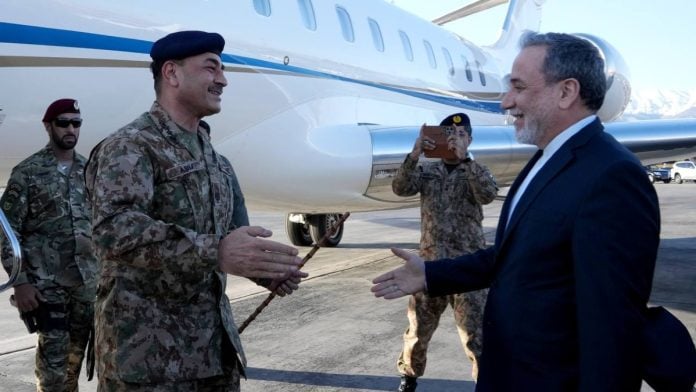
8 pm: Munir-led delegation arrives in Tehran
A Pakistani delegation led by Field Marshal Asim Munir arrived in Tehran with a message from Washington about the second round of US-Iran talks, according to Tehran Times.
📸 Arrival of Pakistan’s Army Chief, General Asim Munir, in Tehran, welcomed by Foreign Minister @araghchi. pic.twitter.com/HWwvhAV0Nx
— Government of the Islamic Republic of Iran (@Iran_GOV) April 15, 2026
5.30 pm: Trump says ‘permanently opening’ Strait of Hormuz
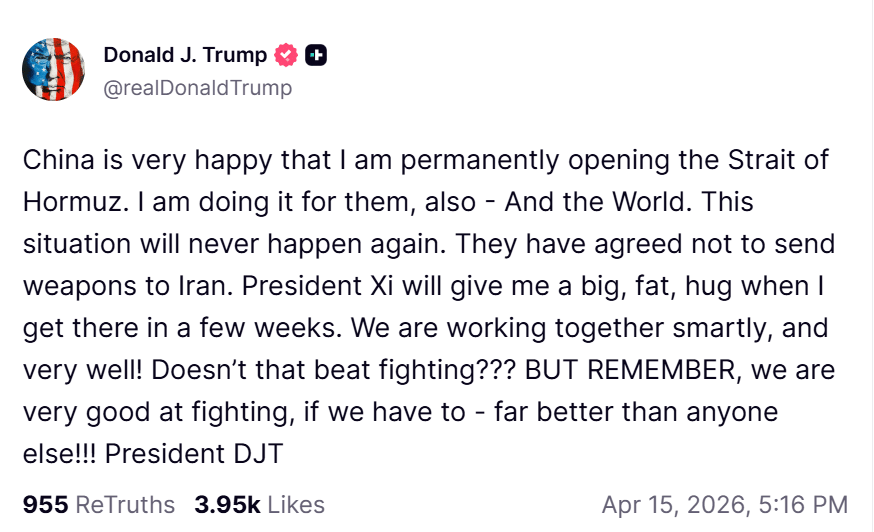
US President Donald Trump said in a post on Truth Social that he is ‘permanently reopening’ the Strait of Hormuz and that China will not send arms to Iran.
“China is very happy that I am permanently opening the Strait of Hormuz. I am doing it for them, also – And the World. This situation will never happen again. They have agreed not to send weapons to Iran,” Trump wrote.
Adding, “President Xi will give me a big, fat, hug when I get there in a few weeks. We are working together smartly, and very well! Doesn’t that beat fighting??? BUT REMEMBER, we are very good at fighting, if we have to – far better than anyone else!!!”
4.40 pm: Iran warns it will close shipping from the Gulf & Red Sea
The Iranian military has said the US blockade, if it continues, will “constitute a prelude to violation of the ceasefire” and that Tehran will not allow “any exports or imports to continue in the Persian Gulf, the Sea of Oman, and the Red Sea”, BBC reported Wednesday.
Any such closure would further shake energy supplies to countries around the world.
3.35 pm: India gets 4 million barrels of Iranian crude, says Bloomberg
According to Bloomberg, around 4 million barrels of Iranian crude arrived in India, making it the first such import in seven years.
The import was secured as the US waived sanctions on Iranian crude stranded at sea when the war broke out. India, the Bloomberg report said, is racing to secure volumes of oil before the waiver period, up to April 19, expires.
“The Jaya, a very-large crude carrier fully laden with Iranian crude, is discharging its cargo at Paradip on India’s east coast this week, according to people familiar with the matter and ship-tracking data from intelligence firms Kpler and Vortexa,” the report said.
Also Read: US blockade of Iran ports in Hormuz may hit China hardest, but India could feel price pain too
3.20 pm: Pakistan to suspend power supply for 2 hours daily
Pakistan will suspend electricity supply for about two hours during the evenings every day to manage the cost of power, which has been increasing amidst the Iran war, Bloomberg reported Wednesday.
Managing load during the peak demand period would prevent power prices from significantly increasing for households. Read the full report here.
2.40 pm: Any attempt to make Iran ‘surrender are destined to fail’
Iranian President Masoud Pezeshkian has said any attempts by the US or Israel to force Iran to “surrender” are “destined to fail and the Iranian nation will never accept such an approach”, BBC quoted him as saying at a meeting with emergency services Wednesday.
Iran, he said, has always “stressed the need for constructive talks and interactions with various countries”. His remarks come after Trump said US-Iran talks could restart in Pakistan “in the next two days”. State news agency IRNA cited a diplomat as saying that Tehran had “no information” about dates for the talks.
“What justification is there in targeting civilians, elites, children and destroying vital centres, including schools and hospitals, within the framework of international law and humanitarian principles,” Pezeshkian asked.
2.20 pm: US looks at ways to clamp down on Iran economy
The US Treasury Department has warned a number of banks, including those in Hong Kong, the United Arab Emirates, Oman and China, with possible imposition of secondary sanctions for handling transactions related to Iran.
The letters, first reported by Fox Business Tuesday, inform the banks that the US has evidence Tehran processed roughly $9 billion in 2024 through “US correspondent accounts using a series of front companies”, notably in Hong Kong and the UAE.
The warning comes as Washington looks to curb Iran’s ability to export goods. Iran’s economy has been struggling with high inflation and a collapsing currency. Before the 40-day war, Tehran faced the largest citizen protests against the government in years.
Read ThePrint’s full report here.
1.45 pm: Russia urges dialogue to end Hormuz blockade
Backing Tehran, Russian Foreign Minister Sergey Lavrov said during his visit to China that West Asia countries understand that Iran wouldn’t have blocked transit through the State of Hormuz were it not for “American aggression”.
Russia, Lavrov said, is in favour of continued negotiations between Iran and the US.
Russia will accept any solution to the Iranian uranium enrichment issue that suits Tehran’s interests, the minister added. “The International Atomic Energy Agency has never recorded that Iran’s uranium enrichment was for military purposes. I hope the US will be realistic and refrain from continuing its aggression in the Middle East, which is even harming its allies,” he said.
Earlier in the day, Lavrov had said Russia will be able to meet China’s oil requirements that may get affected due to US’s blockade of Iranian ports this week.
US had announced its own blockade as a way to hurt Iran economically after the two sides failed to reach an agreement on ending the war in negotiations held on 11-12 April. About 90 percent of Iran’s crude exports are typically sourced by China, because of which any blockade of Iranian ports would hurt Beijing the most.
Besides this, the US had also hoped the economic damage from not being able to earn from its oil would push Iran into reaching an agreement on Washington’s terms.
1.15 pm: Will talks happen in Pakistan in two days?
While Trump has indicated that negotiations with Iran on ending the war could happen in the next two days, Pakistan Prime Minister Shehbaz Sharif’s four-day visit to Saudi Arabia, Qatar and Turkey has raised questions about timing of any future discussions.
It isn’t clear if the talks will be organised in Islamabad, as the first round on 11 April began, in the absence of the country’s Prime Minister.
Sharif and Pakistan Army chief, Field Marshal Asim Munir, had welcomed US Vice-President J.D. Vance at the airport after the American delegation arrived in Islamabad for the first round of negotiations last Saturday.
Also Read: Saudi Arabia to lend another $3 bn to Pakistan to boost forex reserves, days after $5 bn pledge
12.50 pm: Iran says ‘no info’ on talks
Iran’s state news agency IRNA said, citing a diplomatic source, that the country had “no information” on the next round of negotiations.
IRNA said messages were exchanged between Tehran and Pakistan, which has been mediating the negotiations with US, but nothing was confirmed.
On Tuesday, Trump indicated that US-Iran talks could happen in Islamabad, Pakistan’s capital, over the “the next two days”. Trump also said, in another interview Tuesday, that the war was “close to over”.
12.40 pm: Fighting goes on in Lebanon
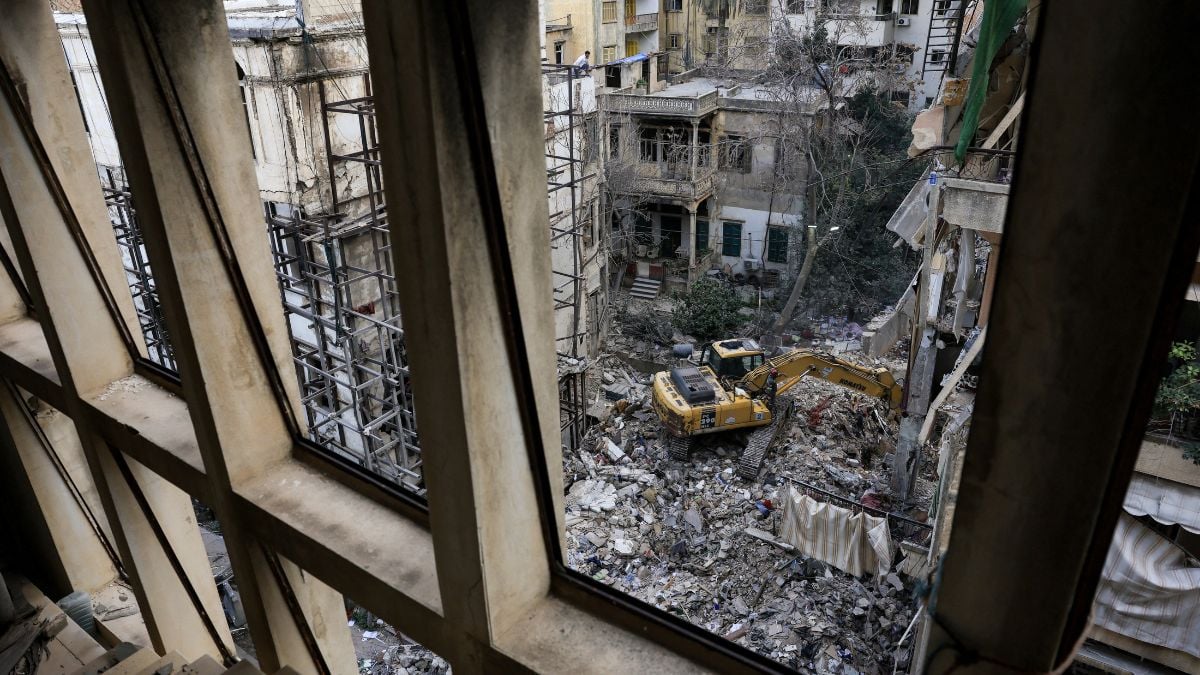
An Israeli drone targeted the town of al-Babliya in Sidon district of south Lebanon, Al Jazeera reported, adding that air strikes were documented in Qalila town in the region.
The Israel Defense Forces (IDF) said it struck “Hezbollah terrorists and military infrastructure” over the past few days and “will continue to operate against the Hezbollah terrorist organization”.
In retaliation, Iran-backed Hezbollah said its fighters targeted Israel’s Metula, Kfar Giladi and Kiryat Shmona with rockets Wednesday.
12.10 pm: China says reports of military aid to Iran ‘fabricated’
Media reports that claimed China was providing military support to Iran were purely fabricated, the country’s foreign affairs ministry spokesperson Lin Jian said.
On the US threatening tariff hikes over this accusation, Jian said if the Trump administration goes ahead with this move, Beijing will “respond with countermeasures”.
11.45 am: Vance heckled at event
US Vice President JD Vance faced hecklers during a speech at a Turning Point USA event, where he said Pope Leo should “be careful when he talks about matters of theology”.
"You're Killing Children": JD Vance Heckled at Conservative TPUSA Eventpic.twitter.com/5vsnJvz6n2
— NewsWire (@NewsWire_US) April 14, 2026
11.00 am: Trump rails against ally Meloni
Trump hit back at Italy Prime Minister Giorgia Meloni, who was in the President’s good books, until she criticised the US war in Iran.
“I’m shocked at her. I thought she had courage, but I was wrong,” the US President told Italian newspaper Corriere della Sera.
Earlier in the week, Meloni, in rare criticism of Trump, had said his remarks against Pope Leo were “unacceptable”.
“She is the one who is unacceptable… Because she doesn’t care if Iran has a nuclear weapon and would blow up Italy in two minutes if it had the chance,” he said in response.
Meloni’s right-wing government this month announced that Italy will not renew its defence cooperation pact with Israel.
Italy has been one of Israel’s closest allies in Europe over the past few years, but Meloni’s government has run into multiple protests, with Italians asking the country to restrict arms sales to Tel Aviv over its actions in Gaza.
Meloni’s government in March also lost a referendum on a judicial reform, and elections are due in 18 month. Since the referendum result, Meloni has described the US-Israel war in Iran as a trend of interventions that are “outside the scope of international law”, BBC reported.
10.30 am: Amazing two days ahead, says Trump, again hinting at end to war
The US President has suggested once again that the war end was imminent. “I think you’re going to be watching an amazing two days ahead,” Karl quoted the President as saying.
Trump noted the war “could end either way” but expressed a preference for a diplomatic breakthrough. “I think a deal is preferable because then they can rebuild,” Trump said.
“They really do have a different regime now. No matter what, we took out the radicals. They’re gone, no longer with us,” he said.
President Trump told me today he isn't thinking about extending the ceasefire. He doesn't think it will be necessary.
"I think you’re going to be watching an amazing two days ahead," he said. "I really do."
I asked if the war ends with a deal, or "do you just say, look, we…
— Jonathan Karl (@jonkarl) April 15, 2026
10.15 am: Trump claims war ‘close to over’
Trump has told Fox News that the US’s war with Iran is “close to over”, a claim he has made few times before.
The remark was shown in a Fox News preview clip of the interview, which is expected to air Wednesday evening, US local time.
Trump, ask about the war, is heard saying, “I think it’s close to over, yeah… I view it as very close to over.”
Trump has sent conflicting messages over the 7-week course of his war, from claiming the conflict is “nearing completion” to repeating that the US may escalate hostilities by hitting Iran’s power infrastructure.
The US is “on track to complete all of America’s military objectives shortly, very shortly,” he had said, before claiming that “we never said ‘regime change’”, a term used by him and Israeli Prime Minister Benjamin Netanyahu just hours after they launched the first strikes in the ongoing conflict against Iran on 28 February.
Iranian authorities have previously alleged that Trump makes claims about ending the war only to assuage markets, which have been tossing and tumbling since the war sunk West Asia into chaos.
10.00 am: Oil prices stable, markets up
Oil prices were largely steady Wednesday as markets banked on hope that the US and Iran may reach a deal to end the over month-long war. The price of global benchmark Brent crude gained just above $95 a barrel.
Nifty 50 rose 1.49 percent to 24,198.30, and Sensex added 1.52 percent to 78,009.81, as of 9:45 am Wednesday. Nikkei 225 in Japan was up by around 1 percent while South Korea’s Kospi rose by 3 percent.
“Optimism has strengthened following reports of progress in the resumption of US-Iran talks and early signs of de-escalation,” said Ponmudi R, chief executive of Enrich Money, told Reuters.
9.45 am: ‘Small bit of economic pain’ worth it, says US
On the US’s Iran war, Treasury Secretary Scott Bessent told BBC that a “small bit of economic pain” is worthwhile for long-term international security.
His statement came as International Monetary Fund warned of a global recession due to the war, which has upended energy and petrochemical supplies world over due to effective closure of the Strait of Hormuz in the Gulf.
IMF Tuesday presented three growth scenarios: weaker, worse and severe, depending on how the war unfolds. Under its worst-case outlook, the global economy teeters on the brink of recession, with oil prices averaging $110 a barrel in 2026 and $125 in 2027. The most benign scenario for its World Economic Outlook was taken as “reference forecast”, which assumed a short-lived conflict and oil prices normalising by the second half of 2026.
9.30 am: Trump’s widening feud with Pope?
Continuing his public tirade against Pope Leo, Trump said in another online post that someone should tell the head of Catholic church Iran must not have a nuclear weapon.
“Will someone please tell Pope Leo that Iran has killed at least 42,000 innocent, completely unarmed, protesters in the last two months, and that for Iran to have a Nuclear Bomb is absolutely unacceptable,” Trump wrote on his social media platform Truth Social.
“AMERICA IS BACK!!!” he added.
🚨 Trump: “Will someone please tell Pope Leo that Iran has killed at least 42,000 innocent, completely unarmed, protesters in the last two months, and that for Iran to have a Nuclear Bomb is absolutely unacceptable. Thank you for your attention to this matter. AMERICA IS BACK!!!… pic.twitter.com/ISFO0MDQLq
— Raylan Givens (@JewishWarrior13) April 15, 2026
The statement comes two days after Trump attacked the Pope on social media, calling him “weak on crime” and “terrible on foreign policy” after the pontiff, the first US born Pope, criticised the US and Israel’s war on Iran. Pope Leo, without naming Trump, said had “no fear” of the US administration and would continue to denounce war.
9.10 am: Trump praises ‘fantastic’ Pakistan army chief
After hinting that the second round of talks may be held this week, Trump went on to praise Pakistan’s army chief, Field Marshal Asim Munir, who he said was doing a “great job” in arranging the negotiations.
“He’s fantastic, and therefore it’s more likely that we go back there,” Trump said.
Also Read: Pakistan se azaadi. Grow up India, stop giving it prime real estate in your psyche
9.00 am: Recap of Israel-Lebanon talks
US Secretary of State Marco Rubio Tuesday hosted a meeting between envoys for Israel and Lebanon, which the State Department described as the first major high-level engagement between the two countries since 1993.
Lebanon sought a ceasefire to end Israeli strikes that have killed more than 2,000 people and forced 1.2 million from their homes, while Israel was pressing for Beirut to disarm Iran-backed Hezbollah.
The US State Department said afterward that the two sides agreed to continue their talks.
Israel’s ambassador to the US said he was hopeful the Lebanese government wanted to reduce Hezbollah’s influence, while Lebanon’s ambassador to the US said in a statement that the meeting was “constructive”, and the date and location of the next meeting would be announced in due course.
Lebanon’s government sought the negotiations despite objections from Hezbollah.
Israel, despite the talks and a two-week Iran ceasefire announced by Trump on 6 April, has continued to pound Lebanon, where it says it is targeting Hezbollah. Israel and the US claim this military operation is not covered by the ceasefire, but Iran has insisted that it is.
An end to hostilities in Lebanon was one of Iran’s points for negotiating over the past weekend.
8.45 am: Trump wanted ‘grand bargain’, says Vance
On Tuesday, at an event in Georgia, US Vice President J.D. Vance, who led the American delegation at the first round of talks, said Trump wanted to make a “grand bargain” with Iran but there was a lot of mistrust between the two countries. “You are not going to solve that problem overnight,” Vance said.
#WATCH | US Vice President JD Vance says, "The President made a policy that Iran cannot have a nuclear weapon and we are making sure that very thing happens… The President doesn't want a small deal, he wants a grand bargain… This is why we made a ton of progress in Pakistan,… pic.twitter.com/BfdoWPXPio
— ANI (@ANI) April 14, 2026
8.30 am: Two days of US’s blockade
US Central Command said no ships made it past its blockade of Iranian ports in the first 24 hours it was in place, while six merchant vessels turned back. Centcom said more than a dozen US warships were involved in the blockade, which only applies to ships going to or from Iran.
However, shipping data showed the blockade had made little difference to Strait of Hormuz traffic on Tuesday, with at least eight ships crossing the waterway.
The United States’ NATO allies, including the UK and France, said they would not be drawn into the conflict by taking part in the blockade, although they have offered to help safeguard the strait when an agreement is in place.
China, the main buyer of Iranian oil, said the US blockade was “dangerous and irresponsible” and would only aggravate tensions. US Treasury Secretary Scott Bessent criticised China for hoarding oil during the war.
More than 10,000 U.S. Sailors, Marines, and Airmen along with over a dozen warships and dozens of aircraft are executing the mission to blockade ships entering and departing Iranian ports. During the first 24 hours, no ships made it past the U.S. blockade and 6 merchant vessels… pic.twitter.com/dpWAAknzQp
— U.S. Central Command (@CENTCOM) April 14, 2026
Source: Reuters
8.00 am: Multiple sources hint at talks
Since Tuesday, West Asian, Pakistani and Iranian officials have also said negotiating teams could return to Pakistan this week, but no date was agreed upon. United Nations Secretary General António Guterres also said it was “highly probable” that talks would restart.
Also Read: Modi, Trump discuss need to keep Strait of Hormuz open & secure after Iran hints at ‘new mechanism’