



Welcome to The First Metro. I am Manasi Phadke, a thoroughbred Mumbaikar and once every fortnight, I try to bring to you a glimpse of India through Mumbai-tinted glasses. Trust me, the hues seem different.
We are accustomed to seeing politicians make a beeline for project inaugurations, throw public tantrums on not being invited to a groundbreaking or completion ceremony of any infrastructure project they may be loosely connected to, and deliver long speeches with hidden political agendas at such occasions.
So when the ‘Highway Man of India’, Union Minister Nitin Gadkari—who never misses an opportunity to talk about all the infrastructural revolution he has brought about in the country—said that he does not want to attend the inauguration of the Mumbai-Goa highway, many ears perked up.
Not just this, he went a step ahead to say that he was “ashamed” of the project, of how much it has been delayed. And I can see why.
It is refreshing to see a politician—a Union Minister, in fact—take responsibility for his government’s failure, in no uncertain terms. But the government’s inability to complete the Mumbai-Goa highway expansion project has been a well-known reality for several years now.
Occasionally, political parties that may have had an axe to grind with the ruling party of the day, have staged protests and asked questions. Politicians on the ruling side have held press conferences accepting the delay, blaming it on immoral contractors and giving explanations. But on the ground, little has changed.
Gadkari squarely taking responsibility, while speaking at the inauguration of a six-lane elevated corridor at Porvorim in Goa, is also not new. He has said the same thing a couple of times in the past, just not in the same words.
At a similar project inauguration about a couple of years ago, the minister had spoken about how he had implemented projects successfully all over India, and even outside, but rued the fact that he had been unable to complete the Mumbai-Goa project in all these years.
Maharashtra has a history of several infrastructure projects taking two decades or more to be completed—like the Navi Mumbai International Airport, the first terminal of which was finally inaugurated last year, or even the Sewri-Nhava Sheva Mumbai Trans Harbour Link, the connector to the Navi Mumbai airport, and a road that promised to spur development on the mainland.
But these were capital-heavy, risky and ambitious projects.
Also Read: The Marathi ‘Challenge’
The Mumbai-Goa highway, on the other hand, was seen as a road expansion and repair project with an initial budget of Rs 3,500- Rs 4,000 crore, though it does have some elements bordering the ambitious—the passage through the Karnala bird sanctuary, for instance. But its journey has been no different: long, complicated and full of challenges.
The project dates back to 2007, when the United Progressive Alliance (UPA) government at the Centre decided to take up the task of expanding the two-lane rickety Mumbai-Goa highway, known as NH-66.
I have spent my childhood travelling on the NH-66 almost every year, or every second year. We would do a week-long vacation in Goa, driving through our much-beloved Konkan region and our native Ratnagiri district. For me, the drive was as much an attraction as the destination, not because the road quality was worth the drive (it was actually exactly the opposite), but the landscape was so picturesque.
The road, in fact, was so bad, full of unpredictable and frustrating traffic snarls, that it would anyway take us hours to reach Goa. Knowing this very well, my father and I would decide to treat the journey as a part of our vacation—two days to be precise. Every now and then, we would stray away from the awful highway on to even more awful small roads, off the beaten track.
Along the way, there would be thick bushes dripping with small ‘karavanda’ berries (which, Google now tells me, are called Bengal current or carandas plum) and pluck a whole bunch of those tiny shiny black beads. We would then find a small shimmering water body somewhere, and spend half an hour under the shade of large jamun trees, snacking on our berry loot.
And we would always halt for the night somewhere in Ratnagiri or Sindhudurg, before continuing our journey to Goa the following day.
My mother and sister, who have always been prone to motion sickness, remember the drive very differently—the way they could feel the bile rise to the tip of their mouths on the bumpy roads. The idea of eating anything, even my favourite karavandas, was unthinkable because the pathetic condition of the road ensured they couldn’t keep anything down, and the short stops next to streams used to be their only respite, a moment to catch their breath or empty their guts before moving on and going through the same struggle all over again.
The Kashedi ghat, known for its sharp hairpin bends and steep climbs, was their worst enemy.
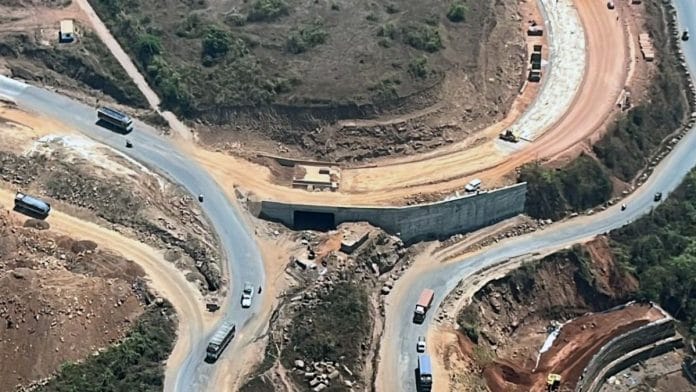
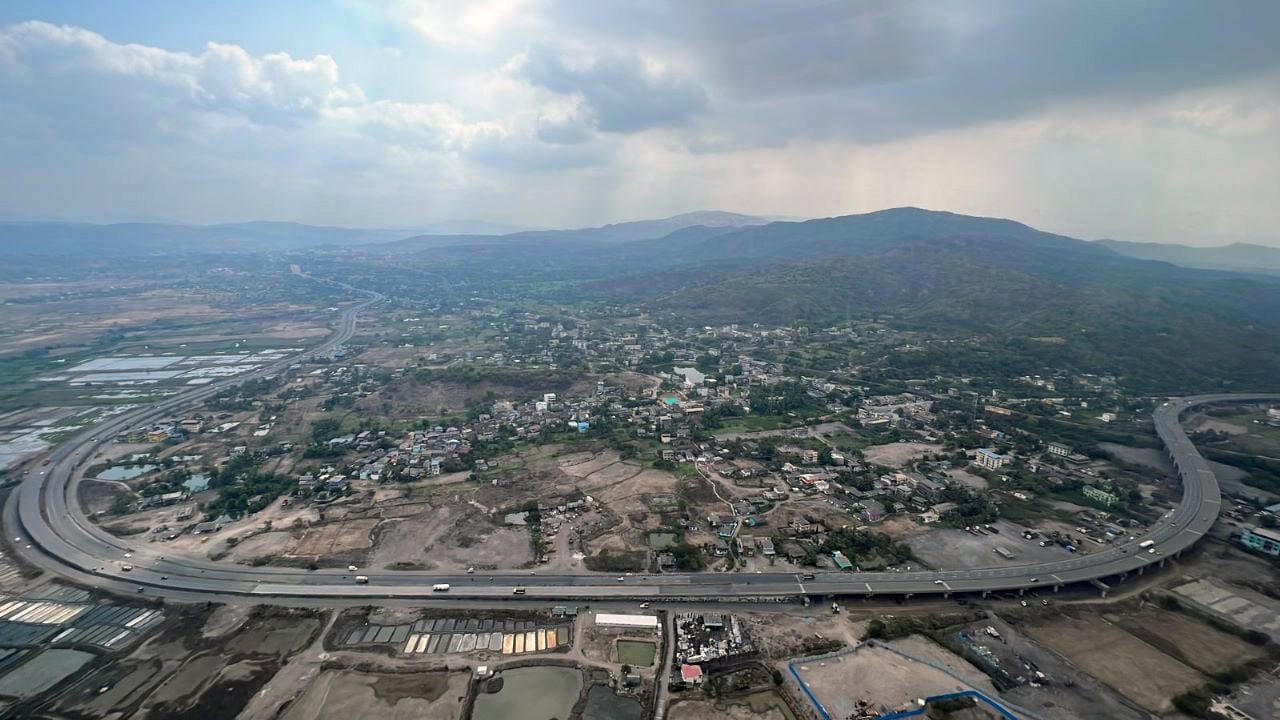
The ongoing Mumbai-Goa highway project involves expanding the 555-km road from two to four lanes, featuring multiple flyovers, bypasses and structural upgrades. The dreaded Kashedi ghat route will be replaced by twin tunnels of two kilometres.
A major chunk of the 555 kilometres—471 km to be precise—is in Maharashtra. Much of this work is being done by the state public works department, while a small portion is under the National Highway Authorities of India (NHAI).
Overall, the commute that takes 13 hours between Mumbai and Goa would significantly reduce to about seven hours, officials have said, time and again. But, while the project was conceived in 2007, the construction started only in 2011. The then government had initially set a deadline of 2016. But several things went wrong.
The project had a slow start with multiple land acquisition woes and delays in getting clearances, especially environmental approvals for the Panvel-Indapur section, which had to go through the Karnala bird sanctuary. A clearance from the wildlife board came only in 2015, with several conditions to protect the ecologically sensitive nature of the area, including mud underpasses for animals, monkey ladders, noise reduction barriers, and so on.
There were also troubles on account of contractors—substandard work, delays, and contract terminations at a few places due to shoddy execution.
When Gadkari spoke in Goa earlier this week, his frustration was evident. He said that his department has set seven world records for various infrastructural feats. But in the context of the Mumbai-Goa highway, he added his department should have set a world record by blacklisting and debarring the largest number of contractors.
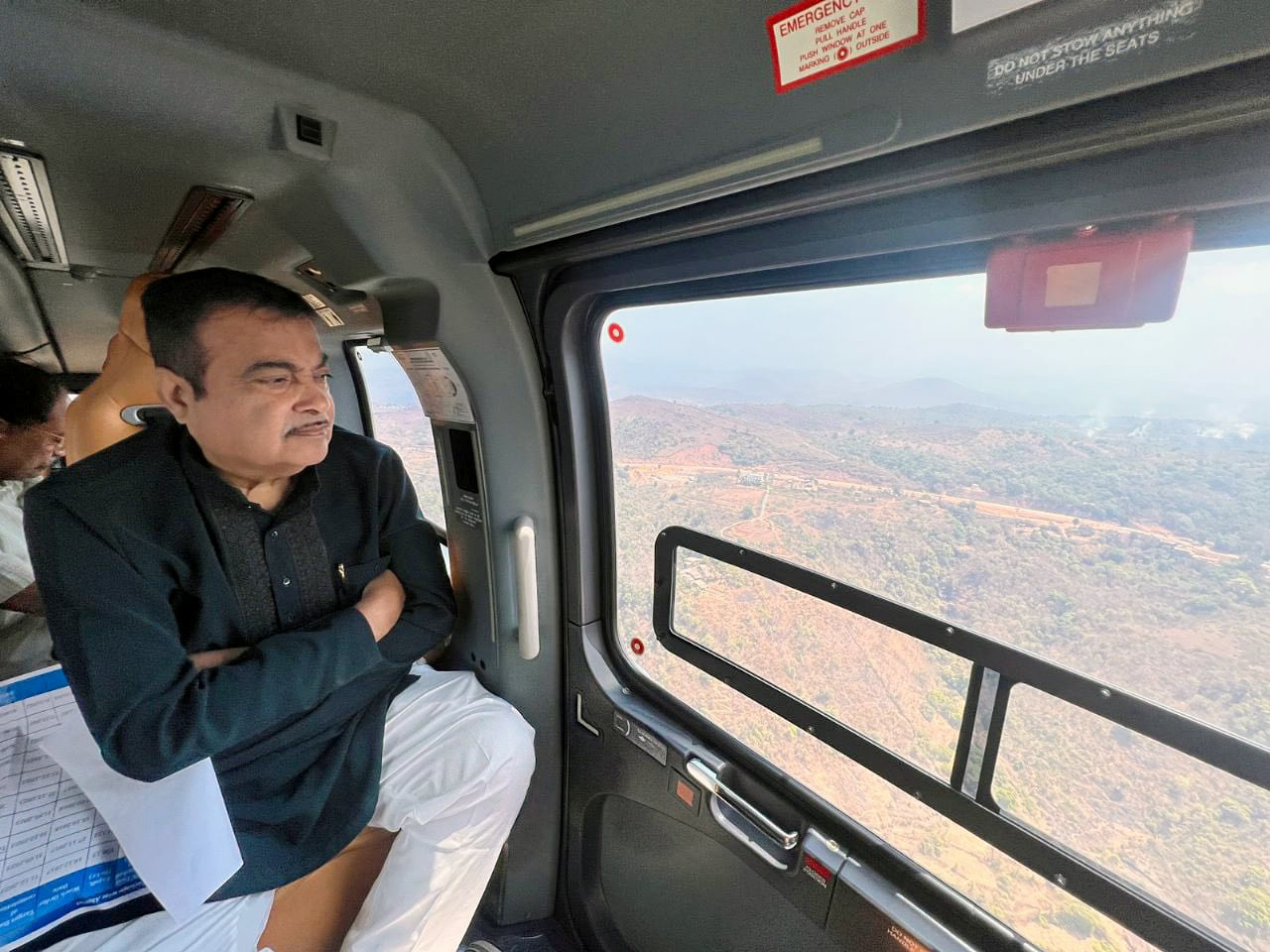
The minister assured that he had taken a review and that the work is 93-94 percent complete. In 2023 as well, he had given similar figures after conducting an aerial inspection of the road with Maharashtra Industries Minister Uday Samant, who hails from Ratnagiri. He had then said that the road would be open to traffic in January 2024.
We have been driving to Goa every year since 2021-22, after the pandemic ebbed, with our young daughter and two dogs. Every year before we set off, we have to check various travel blogs where car aficionados log every detail of their drives to figure out the best route. And to be fair, the highway, from Rajapur onwards, has been more or less complete for at least a couple of years now.
That part of the drive is so swift, so smooth that it makes me hope every year that before our next trip, the rest of the highway would be done. We shouldn’t have to sit and figure out the easiest route, which always involves a significant detour—going through Pune, Sangli, sometimes Kolhapur, straying into Karnataka for a bit, and so on.
There’s another benefit of the whole road being ready. We wouldn’t have to take our entire family all the way to Goa every year. I can give them a taste of Konkan, reaching Ratnagiri or Sindhudurg in a handful of hours by road. We can pluck karavandas, have small picnics by water bodies and run amok on the stunning, vast beaches.
Unfortunately, development has eluded this entire Konkan stretch. Road connectivity between Ratnagiri and Sindhudurg districts is nowhere as good as it is in several other parts of Maharashtra, though it has been showing signs of improvement over the past two-three years. The roads that lead to these districts from major cities, like Mumbai and Pune, are also shoddy, making the journey tiring.
The two Shiv Senas have been fighting for political control over the two districts, and the BJP has got a strong foot in through Narayan Rane and his son Nitesh Rane. But there just doesn’t seem to be any strong political will to nurture Konkan. Perhaps it is this lack of political will with regards to developing Konkan that has also spilled over to the Mumbai-Goa highway.
The Konkan region has immense tourism potential, and a strong scope to develop a horticultural economy, creating employment for scores of aspirational youth who, for years, have migrated to Mumbai or Pune in search of jobs. Wherever development has been proposed, like a contentious chemical refinery in Ratnagiri at Barsu or a nuclear power plant at Jaitapur, local residents have feared it is against the character of the region, which is bountifully blessed with everything beautiful, and will destroy its ecology.
There’s now a hotel by Taj proposed in Sindhudurg, a formal agreement for which was signed this month, nearly five years after I first heard about the move in the government as a journalist.
Konkan’s biggest problem is the poor, winding, rickety access—a major reason why tourism has been so slow to pick up. When the Mopa airport was inaugurated in Goa, people from the state feared it would end up helping Maharashtra more than Goa, with Sindhudurg not too far away. And to a certain extent, it definitely has.
But an expanded and revamped Mumbai-Goa highway can solve Konkan’s connectivity problems.
So, here’s hoping that Gadkari’s exasperation actually leads to some solid action on ground, and we can consider a Dapoli or Karde instead of Goa for our next family road trip—or even along with it—gliding on smooth roads.
Also Read: The ‘nayak’ of Mumbai’s ‘pataal lok’