



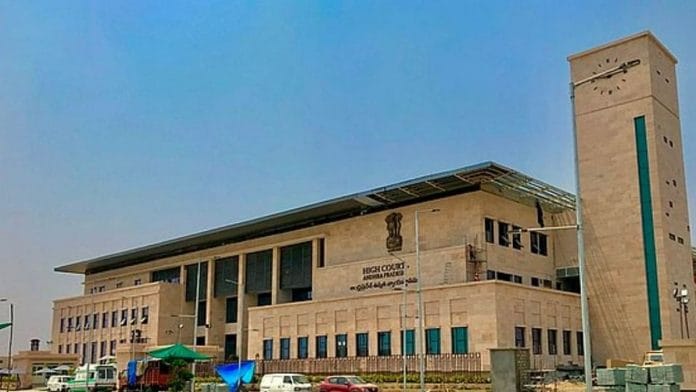

New Delhi: The Andhra Pradesh High Court has put on hold a high-stakes Defence Research and Development Organisation (DRDO) underwater mine contract, ruling that authorities cannot accept an “abnormally low” bid without first checking if the supplier can actually deliver.
In response to a legal challenge by rival bidder Jaykay Enterprises, the High Court has now ordered a fresh, formal scrutiny of the winning Rs 1.44 crore quote submitted by Apollo Micro Systems for next-generation naval mines. Apollo’s was a bid that sat 90 percent below DRDO’s own Rs 14.5 crore internal project estimate.
Justice Ravi Cheemalapati, on 9 September, clarified that while an extremely low price isn’t automatically invalid, DRDO and the Naval Science and Technological Laboratory (NSTL) failed to complete the mandatory, written “Abnormally Low Bid” (ALB) capability checks before declaring a winner, implying that the contract cannot proceed until that official evaluation is completed.
Also Read: AMCA tender issued, HAL sits out as private sector takes centre stage
The controversy & petitioner’s case
The dispute centers on a tender dated 17 December, 2025, issued by NSTL/DRDO, for the development and supply of seven units of the Processor-Based Moored Mine – Next Generation (PBMM-NG), warhead shells, test systems, and technical services.
Following technical qualification, financial bids were opened on 22 January 2026, wherein Apollo Micro Systems Ltd was declared the lowest (L-1) bidder with a quote of Rs 1.44 crore. Pursuant to a 60:40 production-sharing arrangement under tender terms, the L-2 bidder, ICOMM Tele Ltd, agreed to match the L-1 rate.
However, petitioner Jaykay Enterprises—ranked L-9 with a bid of Rs 13.99 crore—challenged the financial approval. The petitioner alleged that the winning quote was ‘predatory, commercially unworkable, and compromised mission-critical defence capability’.
Jaykay Enterprises contended that the tender failed to prescribe any minimum benchmark price or cost floor, enabling unrealistic under-quoting.
Demonstrating a component-wise cost breakdown, the petitioner asserted that sourcing select critical components from NSTL-approved vendors alone aggregated to Rs 3.84 crore, with additional essential components costing Rs 2.64 crore. Furthermore, it contended that manufacturing seven sinker section assemblies at recent benchmark rates of Rs 20 lakh per unit would cost Rs 1.40 crore alone. Combined with four explosive-filled warhead shells estimated by NSTL at Rs 21.85 lakh per unit (Rs 88 lakh), the petitioner estimated the minimum conservative manufacturing cost at over Rs 8.26 crore for PBMM-NG units alone.
The petitioner highlighted that, of the 12 qualified bidders, eight submitted bids ranged between Rs 6 crore and Rs 36 crore. Moreover, the prescribed Earnest Money Deposit (EMD) of Rs 44.40 lakh indicated an estimated project cost between Rs 8.88 crore and Rs 22.20 crore under DRDO guidelines. “Underquoting in mission-critical underwater warfare systems leads to project delays, contract failures, compromised safety/quality, repeated extensions, and re-tendering, which harms national security,” the petitioner argued.
The petitioner also argued that NSTL violated a DRDO Procurement Manual 2025 clause by accepting an unworkable bid without seeking mandatory written price analyses or evaluating execution feasibility.
Judicial restraint vs procedural compliance
In examining the legal issues, the High Court reiterated that judicial review in tender matters is strictly confined to inspecting the decision-making process rather than substituting executive wisdom.
Reaffirming established Supreme Court precedents, the judge noted that “evaluation of tenders is primarily a commercial and technical function” and courts do not sit as appellate bodies.
Addressing the petitioner’s demand to invalidate the tender for lacking a minimum cost floor, the High Court rejected the argument. It observed that the DRDO Procurement Manual deliberately avoids a rigid normative percentage below estimated cost, as “a rigid mathematical threshold may exclude a genuinely efficient bidder”.
Thus, the absence of a fixed minimum price floor did not render the tender invalid.
However, the High Court emphasised that avoiding a rigid threshold places greater responsibility on procuring authorities under a clause when a quotation appears exceptionally low.
The judgment cited the manual’s core directive: “An Abnormally Low Bid (ALB) is one in which the Bid price, in combination with other elements of the Bid, appears so low that it raises material concerns as to the capability of the Bidder to perform the contract at the offered price.”
Upon inspecting confidential records submitted in sealed cover, the High Court observed that the stark disparity between Apollo’s Rs 1.44 crore bid and the admitted project estimate of Rs 14.5 crore clearly triggered the requirement for formal ALB scrutiny. It found that official records failed to show that required pre-award price analyses, detailed clarifications, and capability assessments were completed before declaring Apollo as the lowest bidder.
Seeking clarifications retroactively or relying on L-2’s willingness to match the bid could not cure the procedural omission. The bench held that “a bidder’s price break-up or explanation is not, by itself, the procuring authority’s assessment,” and that “undertakings given by the bidders… do not amount to an independent assessment by the procuring authority”.
The verdict
The Andhra Pradesh High Court, in its 64-page ruling, emphasised that in defence procurement, “public interest is served not merely by selecting the lowest numerical quotation but by ensuring, through the prescribed procedure, that the selected bidder can perform the entire scope at the offered price”.
Citing binding principles, the bench held that post-award quality inspections by supervisory bodies cannot substitute for pre-award financial viability scrutiny.
Refusing the petitioner’s prayers to cancel the tender entirely or directly allocate 50 percent of the contract quantity, the High Court clarified that its ruling was strictly procedural.
The judge did not find Apollo’s bid to be “inherently invalid” and said that the relief granted is thus “confined to correction of the decision-making process”.
Accordingly, the High Court disposed of the writ petition, directing DRDO and NSTL authorities to evaluate the bids of L-1 and L-2 “strictly in accordance with the procedure envisaged under in the 2025 manual of the DRDO”.
If the bidders successfully withstand detailed scrutiny and demonstrate operational viability, the tender award and financial approval dated 22 January, 2026, will stand permitted; otherwise, authorities must proceed in accordance with the governing procurement framework, the High Court said.
(Edited by Amrtansh Arora)
Also Read: Telangana HC stays CAT order that set aside Jaiteerth Joshi’s appointment as BrahMos chief