



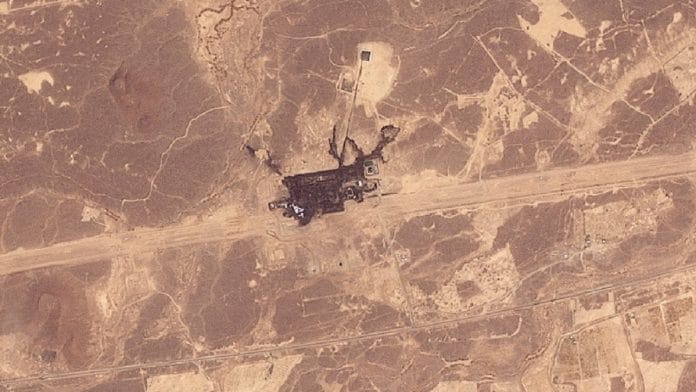
New Delhi: India could face a higher crude import bill if Saudi Arabia’s shutdown of its East-West oil pipeline lasts beyond a few days, as refiners compete for alternative supplies in an already tight global market.
The 1,200-km pipeline was shut down on 10 September as a precaution after coming under aerial attack. It had been carrying roughly 5 million barrels per day (mbpd) of crude to Saudi Arabia’s Red Sea coast, equivalent to around 4-5 percent of global oil supply.
Russian crude delivered to India’s west coast is already at a premium of around $2.50 a barrel, while Brent is around $107 a barrel and the UAE’s Murban crude is near $119 a barrel, according to Natalia Katona, an Abu Dhabi-based commodity analyst.
“With Brent already above $100 and recently reaching about $107.82, a lengthy outage could push prices higher,” said Umud Shokri, an energy strategist and geopolitical analyst based in the US.
For India, the bigger concern is not the loss of Saudi crude itself, but the potential increase in the cost of securing alternative supplies. A prolonged disruption could force Asian refiners to compete for replacement barrels, pushing up crude differentials and freight costs.
For Indian refiners, however, the impact would be mixed. Higher fuel prices could improve refining margins, but this gain could be offset by higher crude costs.
India’s direct exposure to Saudi crude is relatively limited. Saudi supplies averaged around 315,000 b/d in August, compared with India’s total crude imports of about 4.7 mbpd. This was already down from roughly 600,000 b/d in March-April, when the crisis was at its peak.
India’s exposure to Saudi LPG has also seen a sharp decline. According to Katona, Saudi Arabia supplied around 140,000 b/d of India’s 845,000 b/d LPG imports in February, but Saudi cargoes stopped completely from July onwards.
India’s physical supply is unlikely to be hit hard, but replacement crude could become more expensive if the outage tightens the wider market. Indian refiners could turn to the US, Africa and Latin America, but higher freight costs and differences in crude grades could increase expenses.
Shokri said the price impact would depend on how long the pipeline remains shut, how much crude Saudi Arabia can reroute, and whether spare capacity elsewhere or emergency stock releases can offset the disruption.
Another concern for India and other Asian buyers is the potential impact on Saudi Arabia’s Red Sea refineries. The East-West pipeline supplies several refineries, power plants and desalination facilities on the Red Sea coast. “The buried pipeline itself was probably not hit; the more exposed pumping and pressure-maintenance stations are the likelier targets,” Katona told ThePrint.
Before the shutdown, around 5 mbpd was moving through the system towards the Red Sea coast. About 2 mbpd was consumed locally, while the rest was available for exports.
The East-West pipeline has a reported capacity of 7 mbpd, but has been operating below that level as attacks by Iran-backed Houthis have restricted Saudi tanker movements through the Bab el-Mandeb Strait.
The lower utilisation gives Saudi Arabia some flexibility in managing the outage. However, Katona said Red Sea inventories could sustain exports and domestic requirements for only around seven to ten days.
If repairs take longer, the transportation disruption could develop into a wider supply shortage.
Saudi Arabia exported around 610,000 b/d of refined products in August, of which about 340,000 b/d were loaded at Yanbu. The Jizan refinery had already suspended operations around 7-8 September, and other Red Sea refineries would also have to lower their runs if crude supplies remain disrupted, Katona said. Jizan refinery and Yanbu, a key Red Sea export hub, are part of Saudi Arabia’s western energy corridor, which has repeatedly faced drone and missile attacks from Yemen’s Houthi movement.
Reduced refinery operations could tighten Asian supplies of petroleum products, potentially pushing up product prices and refining margins.
Also Read: India’s Russian crude imports set to fall in September amid tighter supply, Iraq a key alternative
Rerouting crude is not straightforward
Saudi Arabia could redirect some crude from eastern terminals such as Ras Tanura, but replacing East-West pipeline flows would not be straightforward.
The pipeline was built partly to reduce Saudi Arabia’s dependence on the Strait of Hormuz, sending more crude through the strait would expose those barrels to the same security risks the pipeline was designed to avoid. “The amount of additional oil Saudi Arabia could move through Hormuz would depend on terminal capacity, tanker availability, insurance, naval protection and the security of the route,” Shokri said.
The immediate pipeline outage may, therefore, not push out a large volume of crude from India’s supply chain. The greater risk is what it does to the price of replacement barrels.
If repairs extend beyond the estimated seven to ten days, the market could begin pricing a deeper disruption, including a possible reduction in Saudi production.
For India, that would mean higher import costs and potentially greater pressure on the rupee, while more expensive crude and refined products could raise costs across diesel, aviation fuel, petrochemicals and transportation.
(Edited by Amrtansh Arora)
Also Read: US sanctions on Iran: Why India could face high oil bill despite not buying Iranian crude