



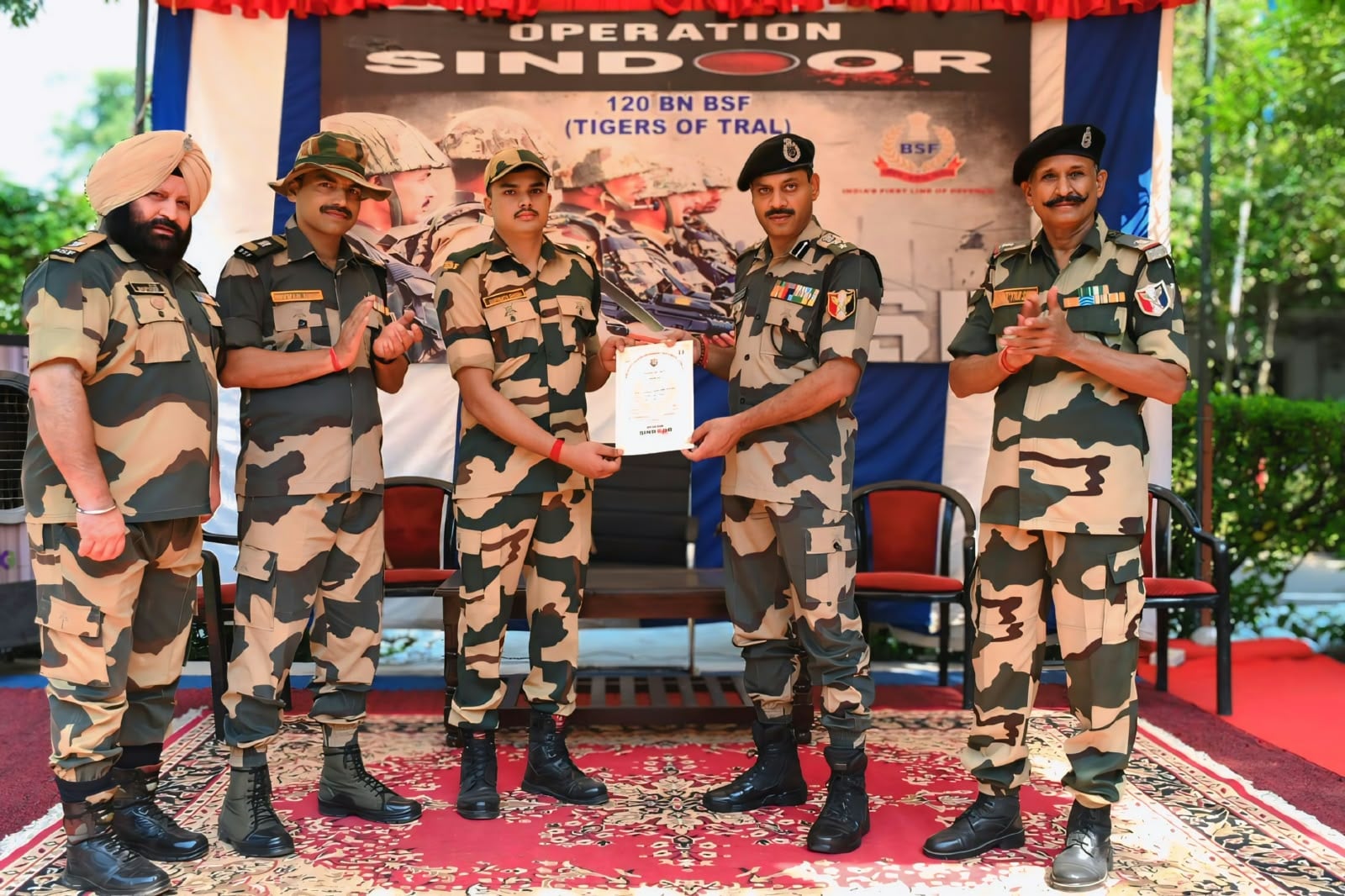
New Delhi: Deployed in Jammu’s R.S. Pura, constable Gopinath Ghosh’s duty as a cook was to ensure no man stationed on the active border with Pakistan went hungry during Operation Sindoor in May last year. Ghosh was diligent, and was commended by the Border Security Force (BSF) brass on the conclusion of the operation.
Having served during one of the trickiest times within a year of joining the force, the 23-year-old was thinking of some downtime when the BSF sent him for training in Indore. Four months passed, Ghosh has further sharpened his skills in health and hygiene, as well as other functions of his trade.
In May this year, everything came down with a crash. “I got the shock of my life when everything was going so well for me,” Ghosh recalled the day when his supervisor at the training centre informed him that scrutiny of his certificates had revealed it one had been issued by an unaccredited institute.
The BSF constable was sent back to his unit in Kashmir, where he was asked to explain why he should not be dismissed from service. He was eventually dismissed in June.
Ghosh’s case is one of around 400 tradesmen who have been sacked from India’s border force for submitting forged certificates. Deeper scrutiny of the issue, including responses obtained from these affected tradesmen, reveals they were hit by cyber-fraud so clever that even the BSF missed it during the verification process.
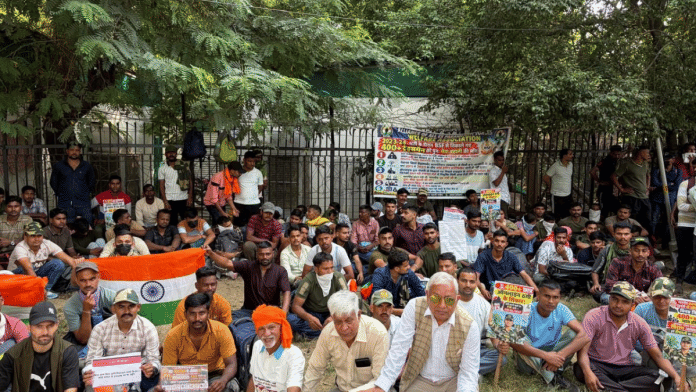
These dismissed tradesmen, under the leadership of the Alliance of All Ex-Para-Military Forces Welfare Association, mobilised these men for a protest and hunger-strike outside BSF headquarters at the CGO Complex on Friday.
A delegation of the association, led by the president and retired additional director general H.R. Singh, and the association’s general secretary, Ranbir Singh, met BSF Director General Praveen Kumar and Inspector General Makrand Deoskar, who oversees the force’s personnel department, earlier this week.
“These jawans have not done forgeries, and instead they have fallen prey to a well-designed conspiracy and cybercrime network,” Singh told ThePrint, saying he conveyed the same message to the BSF brass.
“Another important point is that NSDC Level-1 course for cook/water carrier posts was not available on SIDH portal across the country between 2015 and 2023 as per information received from Right to Information (RTI) queries. So, it also raises questions about how this was included in the eligibility criteria.”
ThePrint has reached out to a BSF spokesperson comment via calls and texts. This report will be updated if and when a response is received.
Also Read: After Naxalism, Shah sets agenda for BSF to weed out infiltrators—don’t just stop, identify & deport
‘Unprecedented eligibility criterion’
The entire controversy goes back to February 2023, when the Ministry of Home Affairs (MHA) released a notification to recruit 1,284 vacancies—1,220 for males and 64 for females—for constable-rank posts in the trades of cobbler, tailor, washerman, barber, sweeper, cook, water carrier, and waiter in the force.
The physical requirements were on a similar scale to those of previous years, but for the cook, water carrier, and waiter trades, there was a new requirement.
It required candidates to produce a certificate of National Skills Qualifications Framework (NSQF) Level-I Course in Food Production or Kitchen from the National Skill Development Corporation or from institutes recognised by the National Skill Development Corporation (NSDC).
Tradesmen who have been dismissed from the service attribute the entry of this eligibility requirement at the core of the problem. “It was for the first time in the history of tradesmen recruitment that such a certificate was asked for,” Bulandshahr-based Tarun Sharma said. “Earlier, the recruitment process was based on a tray test, where candidates were asked to prepare food to show their eligibility and if they really knew cooking.”
Candidates such as Sharma underwent a physical and written examination, followed by document verification, during which they submitted all required NSDC certificates.
After all verification, hundreds of candidates were called to the National Rozgar Mela organised by the central government, where Prime Minister Narendra Modi distributed appointment letters to more than 2,100 candidates for these tradesman posts.
Sharma was among one of them. A commerce graduate from Bulandshahr, Sharma said that he opted for the tradesman job due to the stability it offered by virtue of being a government job. “You know the current job scenario and hence being a lone earning member of the family, I had to apply for this post,” Sharma said, adding that a lump sum amount of Rs 40,000 was being offered to tradesmen like him.
All of this came to an end in March last year, when he was dismissed from the service after his superior issued a show-cause notice at his posting in Chhattisgarh. Sharma was asked to explain why he should not be dismissed from the service when the skill requirement certificate he had submitted was found to be fake.
According to the show-cause notice, Sharma submitted a certificate of water carrier issued by the Kota-based Career Point Institute of Skill Development, which had not responded to the BSF’s notice during the verification process. Additionally, the BSF brass reached out to the NSDC to verify the authenticity of certificates issued in their name by candidates.
“The details of the candidate have been thoroughly reviewed and found to be fraudulent. The candidate’s details do not match our institute’s records. We confirm that this certificate was not issued by us and does not belong to our organisation. The said candidate has not completed training from their institute, and the certificate is found invalid,” the NSDC responded to the BSF’s bid to verify the authenticity of certificates.
However, the rot ran deeper, candidates claim, as evidenced by a response obtained through the RTI.
In response to a query on the number of similar certificates issued since 2015 and till 2023 when the recruitment was initiated, the NSDC said that it had not issued any such certificates for nearly eight years—drawing questions from the affected candidates and CAPF (Central Armed Police Forces) veterans on the very selection process that mandated submission of such certificates.
“If the NSDC had not issued any such certificates in the last eight years, on what grounds were the certificates made part of the eligibility criteria?” a dismissed tradesman asked. “Why was this certificate included in the list for the first time in the history of recruitment when the certificate issuing authority itself has come to say that it never issued any certificates? Then does that mean there were no eligible certificates on the date of notification of recruitment?”
Between Punjab, Assam and UP & a YouTube ‘teacher’
Apart from being on the list of tradesmen sacked from the service, the trio of Sharma, Abhikash from Punjab’s Pathankot, and Jagarnath Roy from Bongaigaon district are also connected to their tragedies by a common thread—their unawareness about the NSQF certificate and a teacher who ran his classes on YouTube for the recruitment into such posts in the CAPF.
“There was no such course in Pathankot, and we had to rely on Google to get information about the certificate,” Abhikash told ThePrint from his native village, located on the international border.
The temptation of a government job was too great to resist the urge to look desperately for the certificate. “I tried searching about how I can qualify for that certificate but found no such centres locally. I tried Google and YouTube searches and reached this teacher, who has a history of teaching candidates online for examination of constable ranks in CAPF,” he explained.
These Google searches led to YouTube channel named ‘Defence 93’, whose owner, Mukesh Yadav, assured them of certificates after classes and training. “They were teaching us online basic training on correct ways to clean vegetables and quantifying the amount of salt required for a particular dish,” Abhikash said.
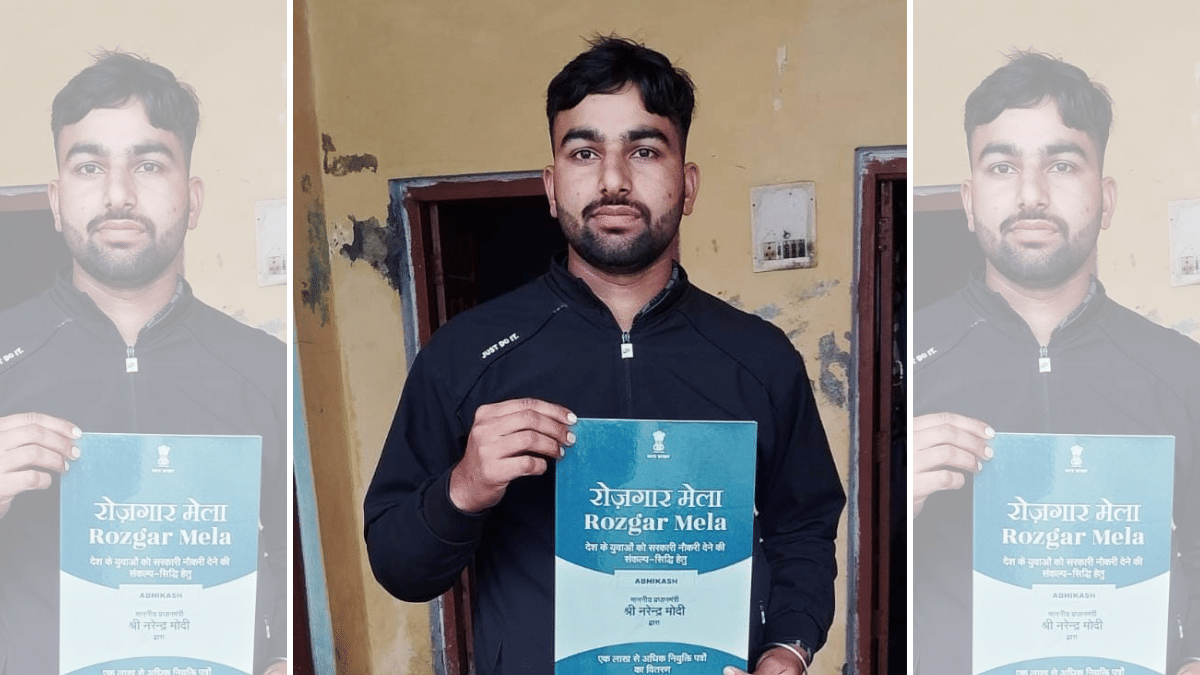
After they enrolled, they were also provided with dedicated links for their classes and certificates were issued after an examination of 50 questions. After securing certification, Abhikash said he qualified in the examination and was called for the Rozgar Mela, where he claimed that he was handed the appointment letter by PM Modi.
However, things changed upside down in a matter of a year. “I am barely earning Rs 10,000 a month to make ends meet for my family and see no hope.”
“The QR code on the certificate was indeed working and showing our details and father’s name, and Aadhaar number, which did not suggest anything of being a fake certificate,” Roy told from his village in Assam. Roy also served in Baramullah at the height of hostilities on the border with Pakistan during Operation Sindoor.
All of their lives were going smoothly until one event far off in Jharkhand’s Kodarma upended their lives and livelihoods. The Kodarma Police received a tip-off about Yadav’s web of forgery operating right under their noses.
“Under the guise of providing education, he was allegedly defrauding the general public and students through a conspiracy involving online video calls. He reportedly used online platforms like YouTube and other social media to promise employment in exchange for large sums of money, while displaying forged certificates and tampered documents,” a Jharkhand Police officer documented the input that formed the basis of the FIR against Yadav.
Yadav was booked under sections related to criminal conspiracy, cheating and criminal breach of trust along with violations of the Information Technology Act 2008, and was arrested from his place of operation.
The police found evidence of fake certificates, WhatsApp chats, and audio recordings of conversations about securing employment on his phones, along with videos showing his mobile number alongside fake certificates and encouraging students to obtain such certificates.
The arrest took place on 8 February in Kodarma, and tradesmen who had procured certificates through him started receiving show-cause notices around the same time. Tarun Sharma from Bulandshahr, for instance, received a notice on 12 February.
(Edited by Nardeep Singh Dahiya)