




New Delhi: Two days before the Constitution was adopted by the Constituent Assembly on 26 November 1949, social reformer and Congress leader Keshavrao Jedhe congratulated Dr B.R. Ambedkar and his colleagues for framing the country’s new Constitution. But he had a concern.
“Some members (of the Assembly) while congratulating Dr Ambedkar have called him the present Manu. I am certain that he would not like this appellation. I know he hates Manu who has created four castes, the lowest of which is the untouchable class,” Jedhe said.
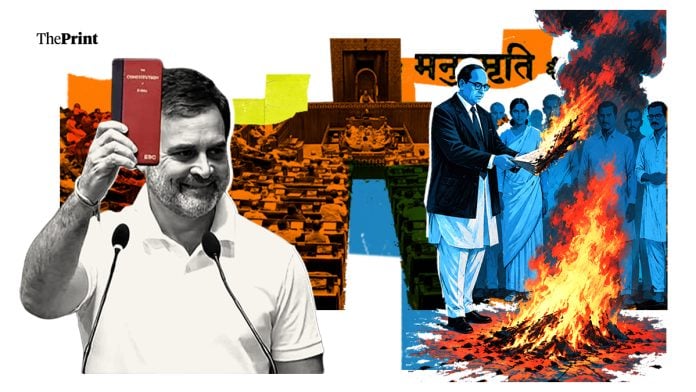
Recalling Ambedkar’s public burning of the Manusmriti during the Mahad Satyagraha in 1927, Jedhe asserted that Ambedkar had instead framed the ‘Bhim Smriti’—the Constitution of India.
Nearly eight decades later, the debate over Manusmriti continues to have political resonance. In August this year, Congress leader Rahul Gandhi’s remarks on Manusmriti and women’s rights at a ‘Chhatron ki Goonj’ event in Pune drew sharp reactions from several BJP leaders.
The Leader of Opposition in the Lok Sabha spoke against the “Manusmriti mindset”, exhorting students to “smash patriarchy”, and said women belonged to themselves, not their fathers, husbands or sons. “The Manusmriti says clearly that in childhood, a female must be subject to her father…in youth, she belongs to her husband, when her lord is dead, she belongs to her sons. A woman must never be independent…These words are a shame,” Gandhi said.
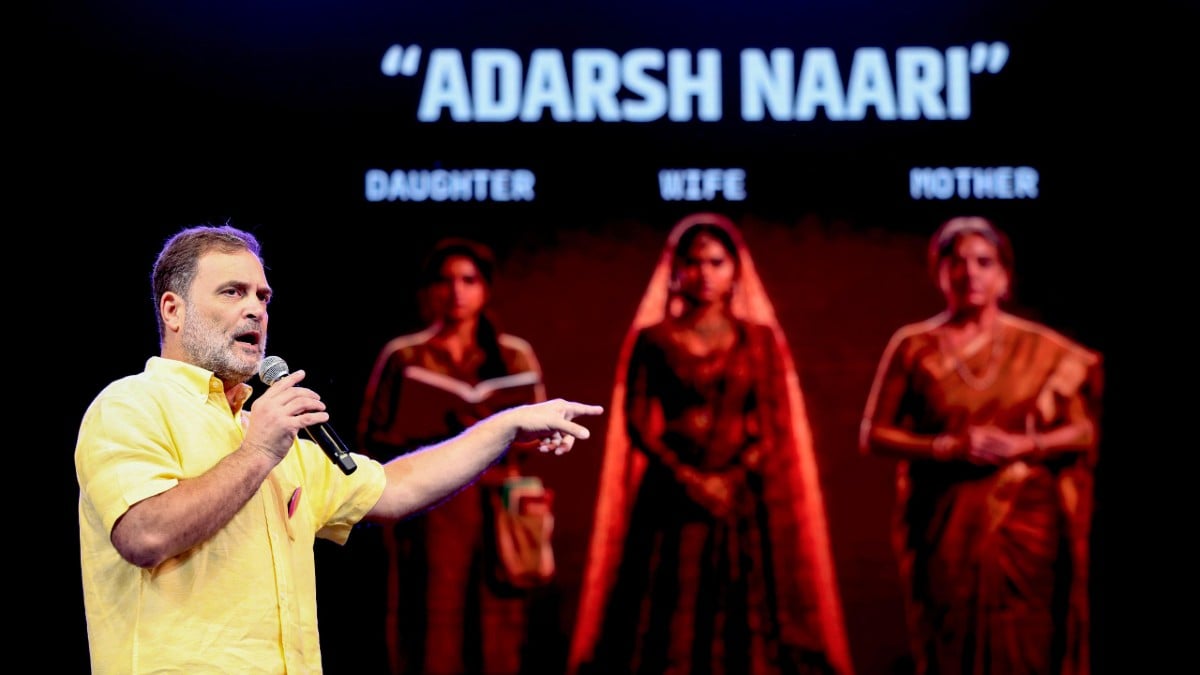
In response, BJP leaders quoted other verses from Manusmriti that they claimed emphasised respect for women, and accused Gandhi of targeting Hinduism under the garb of women’s empowerment.
The political exchange echoes a debate that had already found its way into the Constituent Assembly-Legislative Debates. Manusmriti and other Smritis came up repeatedly during discussions on the Hindu Code Bill, the Uniform Civil Code, the upliftment of Scheduled Castes (SCs), and even polygamy and polyandry.
However, the way the text was invoked by members varied widely. Some cited it strategically to push for reform or demonstrate their willingness to accept principles contrary to the Manusmriti. Others invoked the Smritis to defend traditional Hindu law and oppose the Hindu Code Bill.
“In the debates, several members said that we need to go beyond the ancient laws, which caused a lot of problems. So that way, the Constituent Assembly was very progressive in its outlook,” S.N. Sahu, former press secretary to former President the late K.R. Narayanan, told ThePrint.
As an illustration, Sahu referred to the statement made by K.M. Munshi, one of the most active members of the Assembly, in November 1948, during discussions on the draft Constitution. Referring to the Hindu Law draft pending before the Legislative Assembly, Munshi had asserted that most of its provisions would run counter to the injunctions of Manu and Yagnyavalkya. “But after all, we are an advancing society. We are in a stage where we must unify and consolidate the nation by every means without interfering with religious practices,” Munshi had said.
Also Read: Rahul Gandhi is taking on Manusmriti and patriarchy. It’s a new political language
Constitution as ‘Bhim Smriti’
Anurag Bhaskar, Adjunct Professor at NALSAR University of Law and author of The Foresighted Ambedkar, said the contrasting positions were particularly evident in the way members viewed Ambedkar himself. “A few oppressor-caste members praised Dr Ambedkar for his efforts in leading the process of drafting India’s Constitution, by calling him as the ‘modern Manu’, viewing both figures primarily as lawgivers,” said Bhaskar.
However, Dalit members were “deeply uncomfortable with this comparison,” noted Bhaskar.
“For them, Dr Ambedkar represented not the continuation of Manu’s legacy, but its rejection. One member memorably suggested that the ‘law of Manu’ had been replaced by the ‘law of Mahar’ (referring to Dr Ambedkar’s caste) founded on equality. One member called the Constitution ‘Bhim Smriti’.”
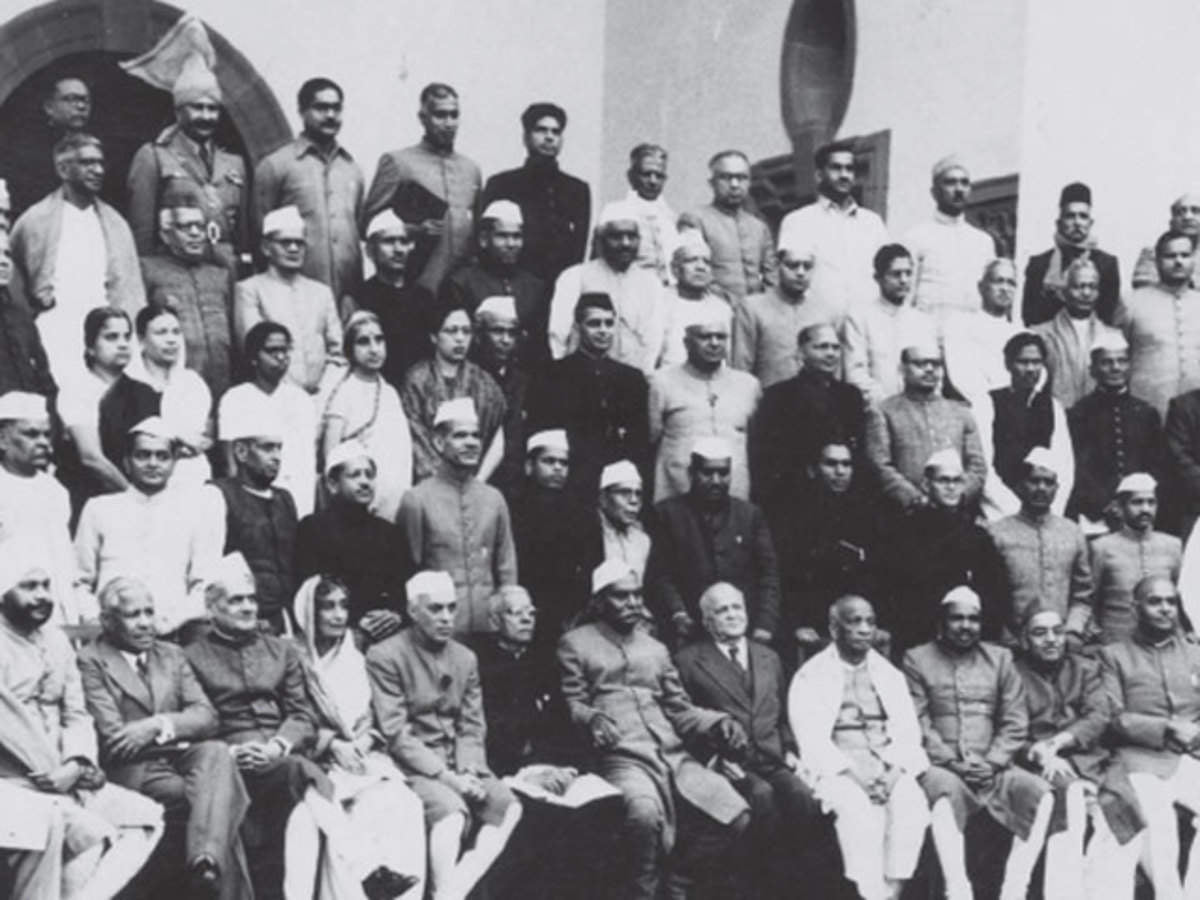
Notably, Dalit leader and member H.J. Khandekar described the Constitution as ‘the law of Mahar’, drawing a contrast between the social order represented by Manu and the new legal framework being adopted in the country.
“If I may do so, Sir, I call this Constitution the Mahar law because Dr Ambedkar is a Mahar and now when we inaugurate this constitution on the 26th of January 1950 we shall have the law of Manu replaced by the law of Mahar and I hope that unlike the law of Manu under which there was never a prosperity in the country, the Mahar law will make India virtually a paradise,” Khandekar said on 21 November 1949.
Another Constituent Assembly member, Har Govind Pant, had said that there was “some similarity in the old Manu Smriti and the present Smirti,” or the Constitution. He drew a comparison between the safeguards provided in the Constitution for Scheduled Castes and Scheduled Tribes and the protection that the Manusmriti was intended to provide to Brahmins.
He said that in ancient times, the Brahmans had no possessions and considered it unnecessary to secure protection for themselves, so the Manusmriti provided for their protection. Similarly, in the Constitution, safeguards have been provided for SCs and ST. “Their (SCs and STs’) protection was necessary because they could not protect themselves. Therefore we see that there is some similarity in the old Manusmriti and the present Smriti,” Pant said on 24 November 1949, two days before the Constitution was adopted.
“The only difference is that in place of ‘Gau, brahmana hitaya cha’ (for the good of the cow and the Brahman), there is now ‘Gau pariganita hitaya cha’ (for the good of the cow and the Scheduled Castes),” Pant said.
When Ambedkar cited Manusmriti to argue for women’s rights
The Hindu Code Bill went through multiple lives before being passed as four separate bills in 1955-56. The Bill was introduced in 1947 and referred to a select committee of the Constituent Assembly in 1948. It was then reintroduced and debated by the Constituent Assembly-Legislative between 1949 and 1950. The Bill being stalled resulted in Ambedkar’s resignation in September 1951, with the then law minister saying that the Bill was “killed and buried, unwept and unsung”.
While discussing the Bill, Ambedkar referred to the large number of Smritis and said Manu and Yajnavalkya were among those regarded as the highest authorities. “There is no doubt that the two Smritikars whom I have mentioned—Yagnavalkya and Manu, rank the highest among the 137 who had tried their hands in framing Smritis,” Ambedkar said on 24 February 1949, 22 years after he led the mass burning of the Manusmriti.
Ambedkar argued that both the Manusmriti and the Yajnavalkya Smriti said that a daughter could claim one-fourth of her father’s property. “It is a pity that somehow for some reason, custom has destroyed the efficacy of that text, otherwise, the daughter would have been, on the basis of our own Smritis, entitled to get one-fourth share.”
The Bill took the daughter’s share a step further than what was mentioned in the Smritis and increased it to be equal to that of the son.
Commenting on Ambedkar’s “strategic” mention of Manu while responding to the conservative opponents of the Bill, Bhaskar told ThePrint: “His argument was simple: if they insisted that the Hindu Code Bill must remain faithful to the Shastras, they could not ignore the fact that even the authorities they revered supported some inheritance for unmarried daughters. They could not invoke certain parts of tradition to deny women a share in property while disregarding those parts of the same tradition that benefited women.”
“Dr Ambedkar was exposing the selective and convenient use of the Shastras by the oppressor castes. He was not presenting the Manusmriti as the source or foundation of women’s rights. Nor was he withdrawing his fundamental criticism of the caste-based, patriarchal and unequal social order supported by it,” Bhaskar added.
He asserted that when Ambedkar described Manu and Yajnavalkya as the highest-ranking Smritikars, he was only “recognising their relative importance within traditional Hindu law”.
“It did not amount to moral approval of their codes. Acknowledging that a text has historically exercised authority is not the same as accepting that authority as just, legitimate or worthy of respect,” said Bhaskar.
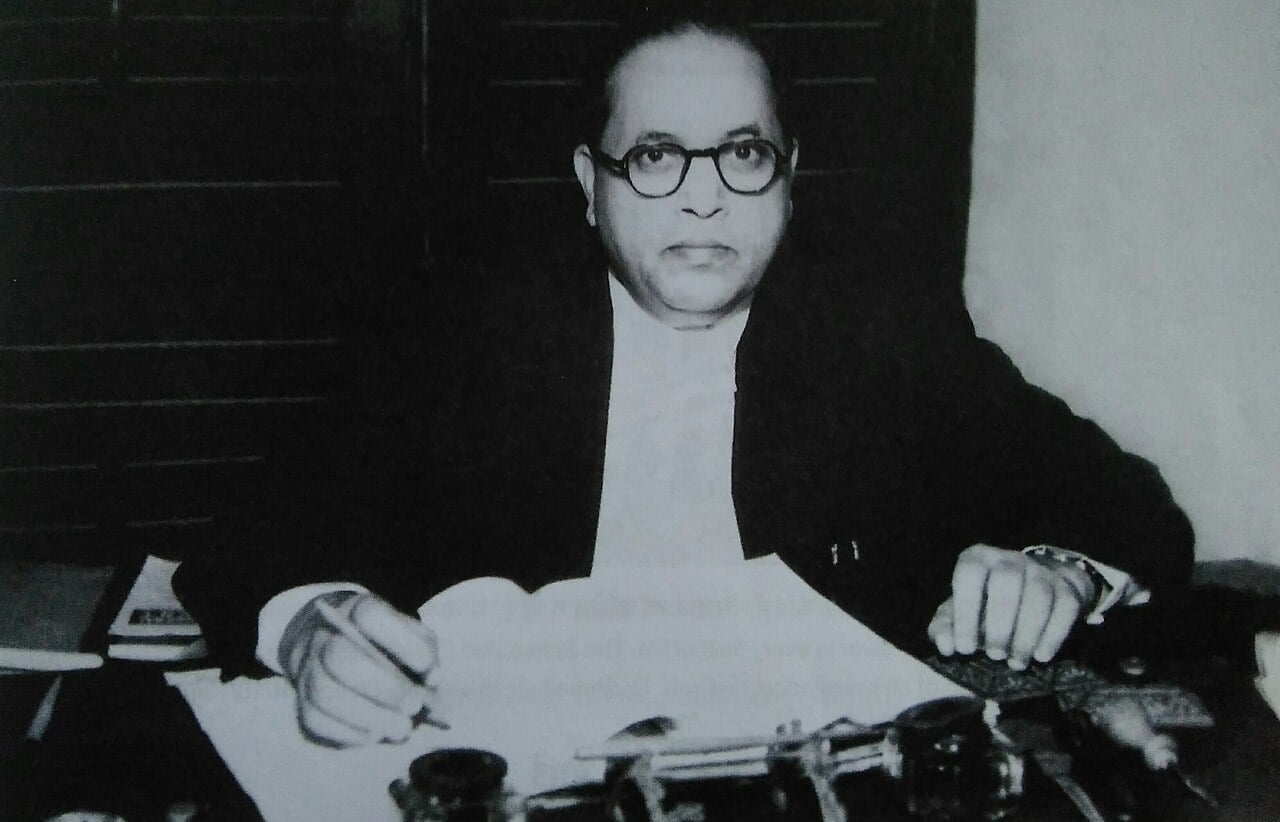
In this manner, rather than presenting women’s inheritance as a departure from tradition, Ambedkar used provisions in the Smritis to establish that women had historically enjoyed rights that later practice had curtailed.
Ambedkar also described himself as a “progressive conservative”, invoking philosopher Edmund Burke’s idea that reform should be rooted in inherited institutions.
“He (Burke) said that those who want to conserve must be ready to repair and all I am asking of this House is this: that if you want to maintain the Hindu system, the Hindu culture, the Hindu society, do not hesitate to repair where repair is necessary. This Bill asks for nothing more than repairing those parts of the Hindu system which are almost become dilapidated,” Ambedkar said while arguing for the Bill.
Sahu explains that, by describing himself as a progressive conservative, Ambedkar meant that he wanted to “conserve what is good in Hindu society, and therefore his objective was to repair Hindu society so that it was conserved”.
During the same discussion, H.V. Kamath, another member, pointed out that Ambedkar had promised some citations from the Smritis. “Will he keep his promise?” he asked.
In response, Ambedkar said he would do so at the end. “I was going to cite certain texts which show that the rights which the Vedas had given to women were taken by the Smritis in the meantime and some other Smritis tried to restore those rights. I shall cite them in the course of my speech.”
His strategic reliance on the Smritis was also evident in his arguments citing stridhan to advance his point about entrusting women with property rights.
On the same day, Ambedkar pointed out that the arguments against women getting absolute property rested on the opinion that women are “imbecile”, are “always subject to the influence of all sorts of people” and that “wily men” may influence women into disposing of their property to the detriment of themselves and others.
However, “in certain kinds of property which is called stridhan property, the Smritis are prepared to invest women with absolute right,” he pointed out.
“There can be no question at all that a woman has an absolute right over her stridhan property. She can dispose of it in any way she likes. My submission to the House is this. If the woman can be trusted to dispose of her stridhan property in the best way she likes, and nobody has ever raised an argument for the obliteration of that rule of Mitakshara, the burden of proof lies upon the opponents who say that the other part of the property, namely widow’s estate, which the woman has inherited, should not become her absolute property,” he asserted.
Conservatives invoked Manusmriti to resist reform
The same references to the Smritis were used by members on the other side of the Hindu Code Bill debate. When Ambedkar referred to the existence of 137 Smritis and cited Manu and Yajnavalkya in support of women’s rights, some members challenged the way he was using these texts.
During the argument, Ambedkar had said: “I do not know why our ancient Brahmins were so occupied in writing Smritis and why they did not spend their time doing something else it is impossible to say, assuming that occupation was a paramount occupation of the day.”
In response, a day later on 25 February 1949, Marathi freedom fighter V.S. Sarvate, who was a former sarsanghchalak of the RSS, remarked that Ambedkar’s statement was “very unnecessary for development of his argument,” in an otherwise lucid speech.
“I may remind him that these 137 Smritis were not written simultaneously. They were written in a period covering more than 250 years at the least. Thus on the average it took them about 20 years to write each Smriti. That means, one for every generation. But…what happens is that during the space of one year the Honorable Doctor prepared more Smritis than one. So he need not…indulge in that unedifying observation,” he added.
Another member, Gokulbhai Daulatram Bhatt, also objected to Ambedkar’s statement on the Smritis. “He (Ambedkar) says, ‘Smritis continued to be prepared. The Brahmans went on writing. What else had they to do, after all?’ What is the work being done by your department? That was exactly what the writers of Smritis did. It was a department which amended laws and rules from time to time,” he questioned.
Bhatt also spoke about the wisdom of the Smritis and the Smritikars (the authors). He pointed out that the Smritikars had laid down that if a woman was not given her stridhan, then she should be given a share in the property equal to that of the son.
“It is wrong to consider that our Smritikars have mentioned anything at random. Our Smritikars were past masters of the science of Eugenics. They were not common people. They were highly learned and well informed persons. Whatever doctrines they laid down were perfect in all respects and were propounded after mature consideration,” he asserted.
Bhatt said their decrees were so perfect that it was not considered important to have any changes introduced in them after 6, 8, 10 or 12 months.
“Our Smritikars were very wise and intelligent. Deep meditation of hundreds of years is essential to suggest any changes in what they have written. Undoubtedly you may make suitable amendments therein, based on time to time amendments have been made in these Smritis. But we must consider this fully whether by introducing these changes, society will be benefitted or put to loss.”
According to Seth Govind Das, elected to the Constituent Assembly from Central Provinces and Berar, one of the groups that opposed the Hindu Code Bill consisted of the same people “who oppose this measure with the same viewpoint as was exhibited by certain antagonists at the time of enactment of law for the abolition of Sati, the law which got passed by the late Shri Ishwar Chand Vidyasagar for widow remarriage and the measure put forth by Mr Sharda for the prevention of child marriages”.
He asserted that this group was of the opinion that no change could be made in what had been prescribed in the text of the Vedas, Shastras and Smritis.
However, Das pointed out that if one went through the Smritis, the tenets laid down in one Smriti differed from those in another. He reiterated Ambedkar’s claim that the Smritis conferred upon women the right to inherit property to the extent of one-fourth of the share.
Das asserted that it would be “greatest possible injustice” if women were precluded from inheriting property, but “some improvement should necessarily be made in the domain of succession even if these are the views held by Manu and Yagnavalkya”.
Das felt that due to a switch from a matriarchal system in the past to a patriarchal system, women should not have a share in their father’s property, but in their father-in-law’s property instead.
The debate went beyond inheritance
The Smritis also surfaced in arguments over marriage, a Uniform Civil Code and the extent to which personal law should remain rooted in religious traditions.
While advocating for a provision to allow polygamy and polyandry if both spouses agreed to it, Kamath said, “It has been a regrettable incident or development of our history—our long and ancient Hindu history—that whatever rights women enjoyed in the early Aryan Age, the Vedic, Upanishad and Smriti age, fell into disuse and were not given effect to in the later medieval age. I hope that this Code will work so that women, whose paradise was lost in the dark medieval age, will regain in the modern age.”
K.M. Munshi also used the ancient texts while arguing in favour of a provision in the Constitution for a Uniform Civil Code. He argued that if religious practices of the past had been interpreted so broadly as to cover the whole field of life, it was time to draw a line. “We have reached a point when we must put our foot down and say that these matters are not religion, they are purely matters for secular legislation.”
Some members, therefore, advocated for looking beyond the text of the Smritis and religious authorities, and argued in favour of a modern, democratic law governing even personal matters like marriage and divorce.
Manu and the question of caste
If the Hindu Code Bill debates showed Ambedkar “strategically” using traditional texts in support of reform, his broader opposition to Manusmriti was inseparable from its association with caste hierarchy.
Bhaskar asserted that Ambedkar was “among the fiercest opponents of the Manusmriti, and perhaps no figure in modern Indian history criticised and challenged it as systematically as he did”.
“Throughout his writings, he exposed it as a source of legitimacy for caste hierarchy, untouchability and the oppression of women and oppressed castes. He severely criticised Manu in Annihilation of Caste. The burning of the Manusmriti at Mahad under his leadership was the clearest public expression of that opposition,” he told ThePrint.
Notably, an issue weighing on the minds of the makers of the Constitution was the upliftment of those who had faced centuries of discrimination in the country.
On 27 November 1947, V.I. Munishwamy moved a resolution seeking measures to ameliorate the condition of Scheduled Castes and address the continuing effects of caste discrimination. He demanded that the Union government spend at least Rs 1 crore each year for the next 10 years for the upliftment of the condition of SCs by providing them house sites and drinking water, and by supplementing the educational grants sanctioned by provincial governments. An amendment to provide for “adequate steps” instead of prescribing expenditure of Rs 1 crore was moved and adopted in December 1947.
During the discussion on the resolution, Prof Yashwant Rai, a Dalit leader from Punjab, asserted that Hindu society had, for thousands of years, “treated these poor people as down-cast and has taken away their equal rights from them”.
“…it is clearly stated in Manusmriti that the first three classes, i.e. the Brahmans, the Kashtriyas and the Vaishyas are twice born, the fourth is the Shudra and a fifth does not exist. Therefore the Harijans belong to the fourth group and are a part and parcel of the Hindu society,” he said.
Rai also referred to questions raised on dining with the Shudras while referring to Manusmriti itself. “Lord Manu has declared—we should eat the food cooked by the hands of Shudras especially when a Shudra has openly declared his identity.”
Rai even asserted that the classification that existed in the past was based on occupation and not on the basis of the birth of a man. “It is a shameful affair for us. We will therefore remove this blot of infamy from Hindu society by doing away with untouchability. Casting away the distinctions of caste we have to renovate the system of interdining amongst us,” he said.
The resolution was adopted with amendments.
This is an updated version of the report.
(Edited by Chingkheinganbi Mayengbam)
Also Read: Why Manusmriti can’t be defended by cherry-picking its punishments for men