






Welcome to The First Metro. I am Manasi Phadke, a thoroughbred Mumbaikar, and once every fortnight, I try to bring you a glimpse of India through Mumbai-tinted glasses. Trust me, the hues seem different.
About 15 years ago, a very close Kannada friend of mine, unknown to me then, had moved
to Mumbai. We happened to meet about a year after she had moved here and almost instantly hit it off.
Years later, in one of our idle discussions, she mentioned to me how I was her first Marathi friend. Until she had met me, her impression was that the language, and the people who spoke the language, were rather abrasive. In short, not someone she would enjoy talking to, or not someone worth learning the language for.
And here’s how she said she sees it now—it’s the politics that’s been at fault for the perception that she, and perhaps several like her, have had. The language, which the politicians have tried to promote and protect, has ironically been a victim of the process.
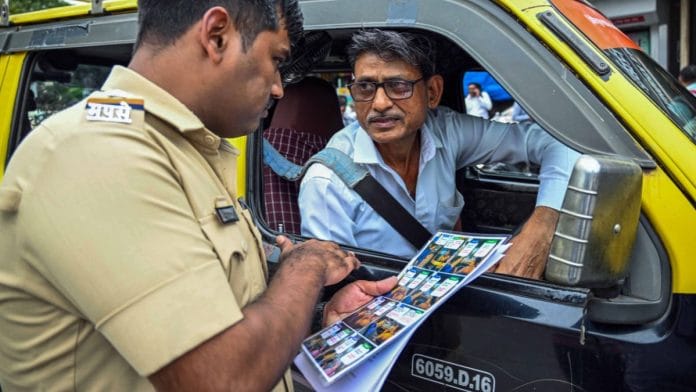
Over the last several days, we’ve been hearing about auto-rickshaw and taxi drivers in Maharashtra being tested for a working knowledge of Marathi, including speaking skills. Failing the test means risking suspension or even termination of their license to ply.
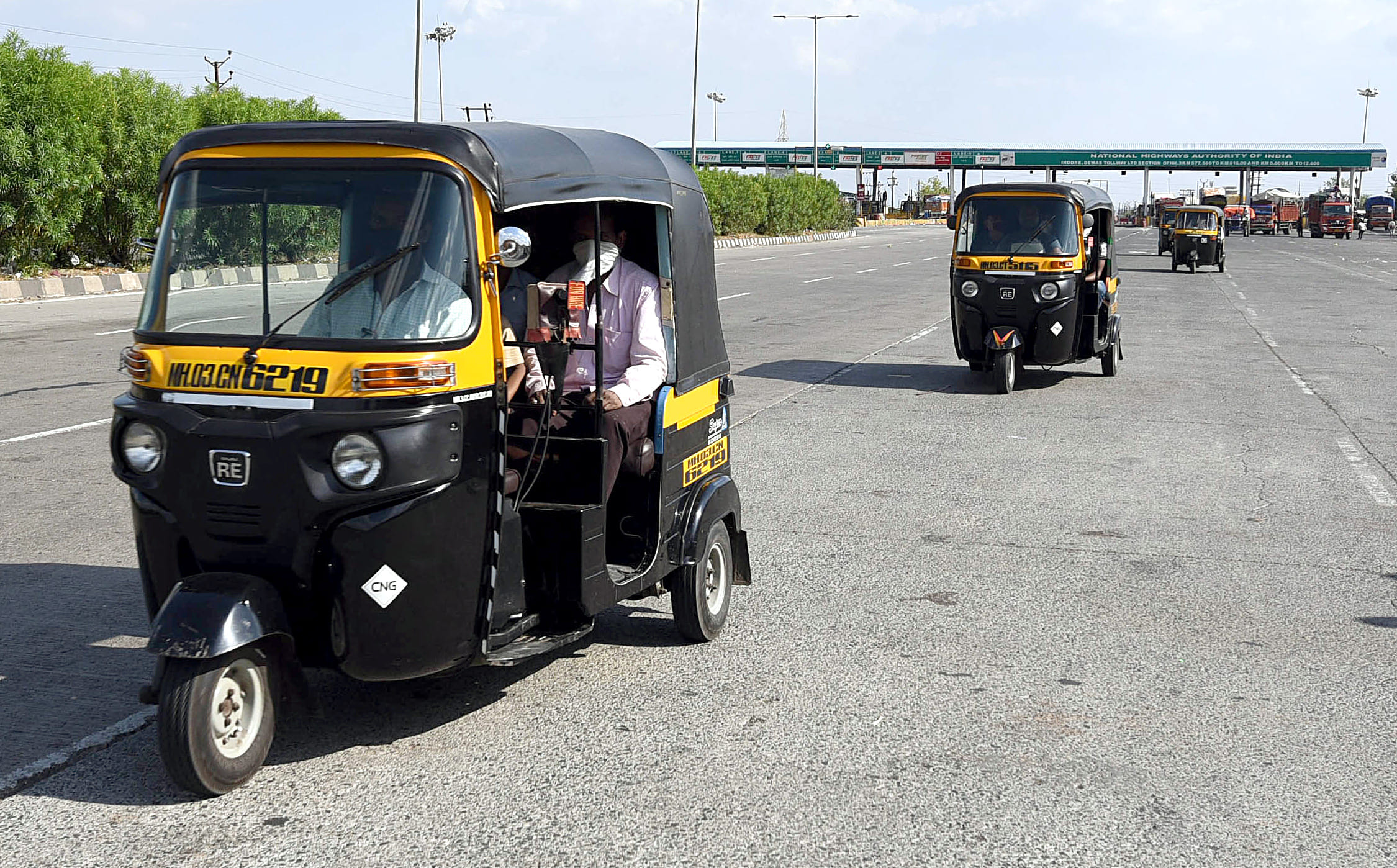
Mumbai alone has more than 2.8 lakh auto-rickshaw permits and about 20,000 taxi permits, and there are almost five lakh drivers who ferry commuters across shifts throughout the day. A large number of them are from northern states.
This has once again ignited the language debate, which has framed Maharashtra’s politics since the 1950s, starting with the Samyukta Maharashtra movement.
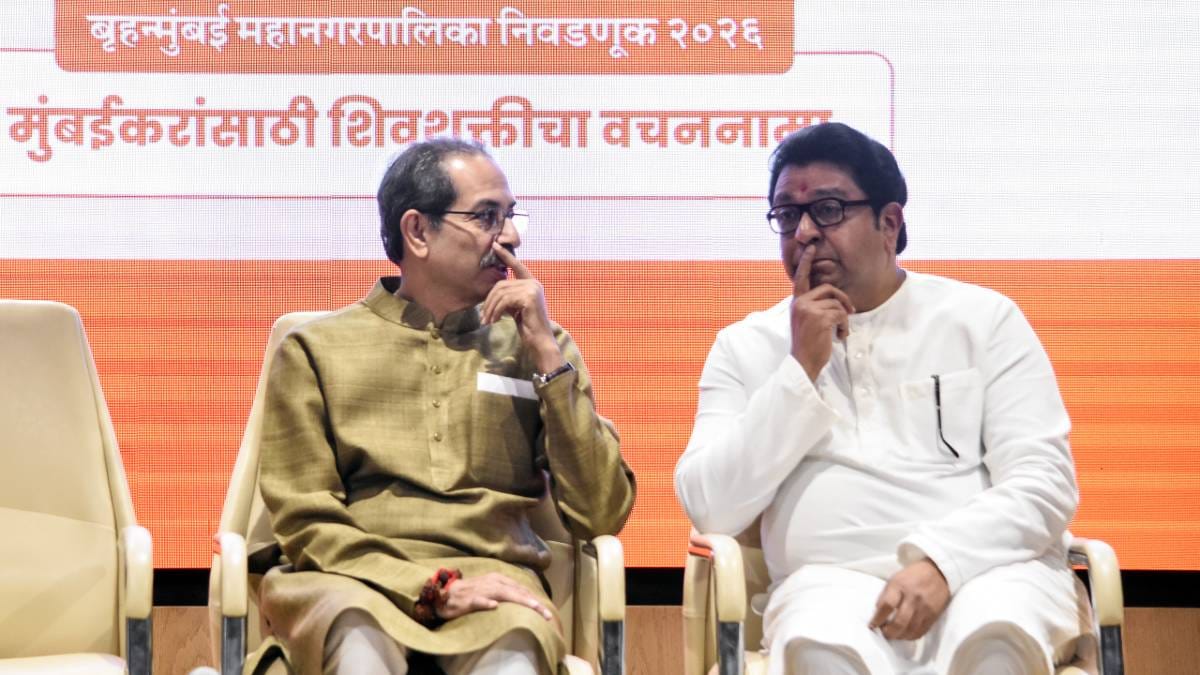
The Bal Thackeray-founded Shiv Sena built its political stock on this language debate with belligerent speeches and street violence.
When the party split in 2005 with nephew Raj Thackeray walking out and forming his own Maharashtra Navnirman Sena, he borrowed from the same political stock.
But, his party had an axe to grind. It had to show that it can drive the Shiv Sena’s ideology more effectively than the Sena itself. After all, Raj had projected himself as the most capable person to take over the party’s reins from his ageing uncle, and Bal Thackeray had thumbed his nose by choosing son Uddhav over the prodigal nephew.
And so, the aggression surrounding Maharashtra’s language politics went up several notches.
There was a time around 2008 when MNS volunteers attacked centres where railway recruitment exams were being conducted and drove away candidates from northern states. Their grouse was that advertisements for railway jobs in Mumbai were being consistently placed in newspapers in northern India, instead of in Marathi newspapers, making it difficult for the Marathi youth to land these jobs in their own state.
The campaign had a pretty ugly culmination. A 25-year-old labourer from Uttar Pradesh was allegedly lynched to death on a local train in Mumbai by a group of Marathi-speaking men.
Also Read: The ‘nayak’ of Mumbai’s ‘pataal lok’
I was working as a rookie journalist in Bengaluru at the time, wearing the shoes of a
migrant in a different city, different state. And I remember how this incident had gone down among my cosmopolitan group of colleagues. It wasn’t just Raj Thackeray or the MNS that was the subject of ire and ridicule, but the supposedly “hot-headed” Marathi
population at large.
Someone said, it’s not ‘Marathi manus’ (Marathi person), but ‘Marathi manhoos’ (ill-fated). There wasn’t much that I could say besides ignoring the barbs and telling them that neither the political party, nor the incident, are a true reflection of the Marathi-speaking population.
The people of Bengaluru had similar concerns over a sudden influx of migrants from all over the country with the rise of the city as India’s IT capital. The impression was that these migrants move around in cliques, look down on local Kannadigas, display a certain disdain towards learning the language and so on. The auto-rickshaw drivers were almost militant in their refusal to deal with non-Kannada speakers.
Back in 2009, a local friend of mine had written a long social media post talking about how the locals feel belittled by migrants in Bengaluru, and I felt compelled to apologise to him as a person from the migrant community. He waved away any angst that I had. It doesn’t apply to people like you, he said.
To be sure, I made genuine efforts at learning the language. It was tough. The script felt alien and unlike Hindi-Marathi, or Gujarati-Marathi where some words are similar-sounding, Kannada and Marathi despite being neighbours seemed to have very little in common. But, my efforts did reap some fruit. I could see people’s faces soften when they would ask me ‘Hesaru?’ And I would respond, ‘Manasi’. Auto-rickshaw drivers were more tolerant of a migrant like me because I would try to say “stop madi” (please stop) and “dhanyavadagalu” (thank you).
Okay, she doesn’t know the language, but she is making an effort, and that deserves some kindness and appreciation.
I left Bengaluru for Mumbai in less than two years, or else, I am sure I would have made much more progress with the language by now. I truly believe that language is a window to an entire culture that adds a different dimension to our personality and our perspectives.
The Kannada friend of mine who I had referred to at the start of the piece grew up in Gujarat where she learnt fluent Gujarati, and developed a taste for the food, culture, and festivals.
In Mumbai, hanging out with me and my family, she has picked up a whole lot of Marathi and is a permanent fixture of all our customs and celebrations. In contrast, I have another migrant friend who puts her hands over her ears every time we start talking in Marathi in front of her, and whatever her reasons may be, I have to say, it feels a little offensive.
Then there’s this Marwari friend who has grown up in Mumbai’s Prabhadevi area. He speaks impeccable Marathi, listens to Marathi film songs in his car, yearns for ‘ukdiche modaks’ on Ganesh Chaturthi and even votes for Raj Thackeray based on the MNS leader’s Marathi speeches. “Sometimes the guy makes a lot of sense,” he says. He celebrates his
own Marwari roots too, but knowing the language opened up an entire new world for him, one where he feels a strong sense of belongingness.
Coming back to Maharashtra’s abrasive language politics, in 2014, the BJP demonstrated that it has significantly expanded in Maharashtra and become almost as strong as the then undivided Shiv Sena in Mumbai. The Sena, in turn, felt compelled to project its roots as the saviour of Marathi and the voice of Maharashtra even more strongly.
In 2015, the Maharashtra government had issued a diktat to multiplexes to screen Marathi films in prime slots. Author Shobhaa De had put up a social media post mocking the decision. “Devendra diktatwala Fadnavis is at it again. From beef to movies,” she had written, adding a witticism that cinema patrons should be served dahi misal and vada pav.
Devendra 'Diktatwala' Fadnavis is at it again!!!From beef to movies. This is not the Maharashtra we all love! Nako!Nako! Yeh sab roko!
— Shobhaa De (@DeShobhaa) April 7, 2015
The Shiv Sena decided to own the controversy involving the supposed protection of Marathi language and culture. Pratap Sarnaik, now the minister enforcing the mandatory Marathi knowledge rule among auto-rickshaw and taxi drivers, had back then filed a breach of privilege motion against Shobhaa De. Several Shiv Sena workers also reached the author’s Mumbai home with platters of misal and vada pav.
The split of the Shiv Sena in 2022 created more aspiring flag bearers of Marathi pride. At the same time, the BJP also upped its ‘Marathi manus’ outreach because its dream of “shat pratishat BJP” (100 percent BJP) can never be fulfilled without significantly taking over the votebank of both the Shiv Senas and whatever fan following remains of Raj Thackeray.
While language politics hasn’t been spilling onto the streets of Mumbai as violently as during the early days of Bal Thackeray and Raj Thackeray, it’s just as acerbic as before, with every party making a move to best the other.
It reminds me of this card game that I used to love playing as a child: ‘Challenge’ (some called it ‘Bluff’).
Someone plays a card, and others in the game put the same card, or pretend to put the
same card, on top, saying “Upar ek” (one more). More often than not, most players are bluffing, and there will always be someone who will attempt to call their bluff.
Take this situation of making Marathi compulsory for auto-rickshaw and taxi drivers, for instance. The Eknath Shinde-led Shiv Sena, through Pratap Sarnaik, the state transport minister, started the game.
The transport department said there had been a lot of complaints from commuters about auto-rickshaw and taxi drivers, particularly in Mumbai, who had no working knowledge of Marathi. The Regional Transport Office at Mira Bhayander did a pilot inspection and found that a large number of the drivers in this township, part of the larger Mumbai Metropolitan Region, did not know Marathi.
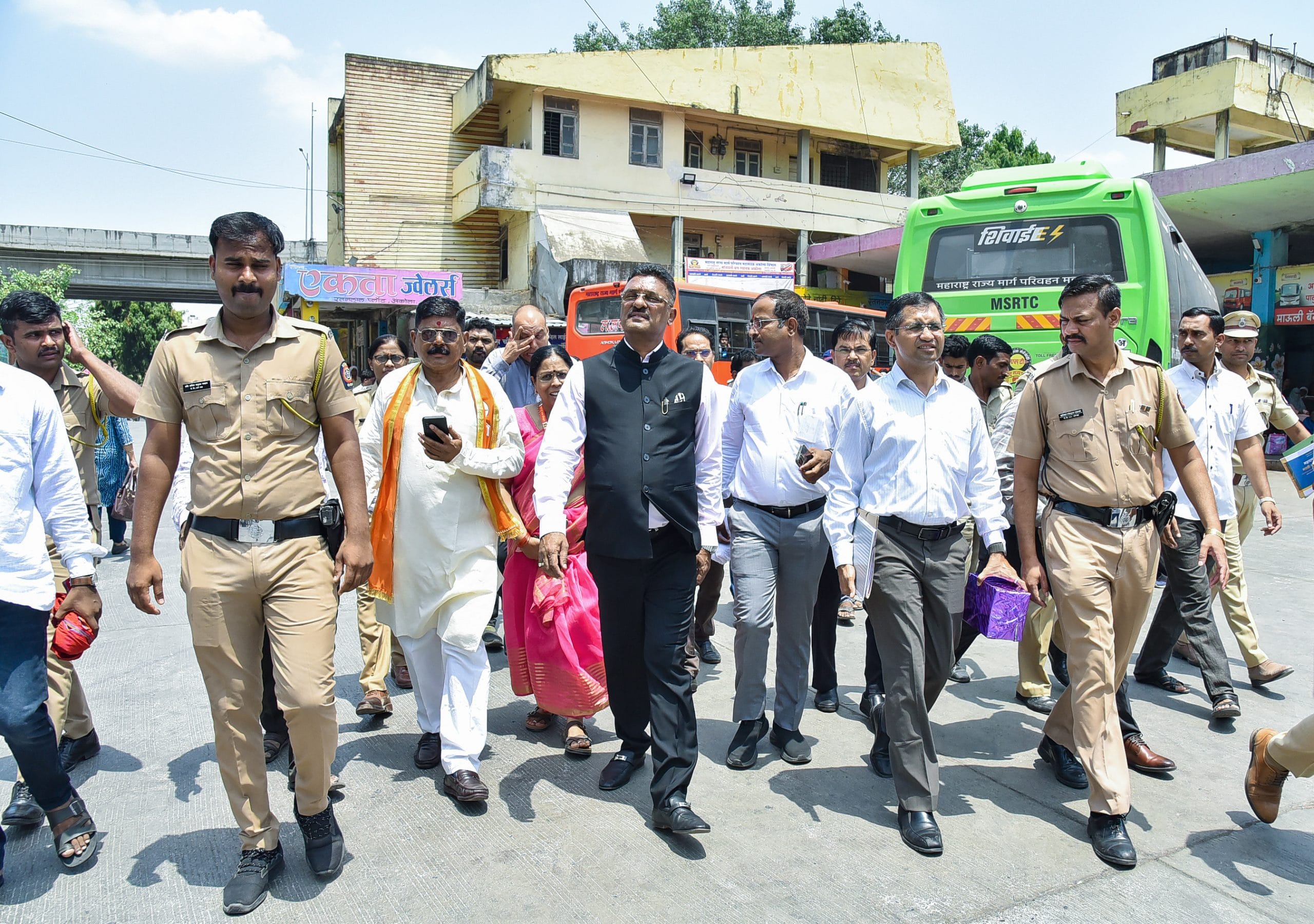
This prompted the transport department to set a 15 August deadline for all drivers of commercial vehicles to learn the language. The department brought the Maharashtra Motor Vehicles (Third Amendment) Rules, 2026, with the intention of removing any ambiguity regarding the compulsion to speak the local language.
In 2017, the Bombay High Court had set aside a similar decision of the Maharashtra government.
There’s a court petition against the most recent directions too, and while Transport Minister Sarnaik is sure that his department has covered the legal ground, we’ll have to see what view the court takes.
Meanwhile, here’s how this game of ‘Challenge’ played out.
A department led by the Eknath Shinde-led Shiv Sena played the first card, making Marathi compulsory for drivers of commercial vehicles. The government organised training sessions for basic Marathi proficiency.
The rival Uddhav Thackeray-led Shiv Sena did its “Upar Ek” by demanding that the government should not allow bike taxis as it will hurt the ‘Marathi manus’. Many Marathi youngsters, the party said, drive auto-rickshaws for a living, and bike taxis will eat into the earnings of Marathi auto-rickshaw drivers.
Next, the Samajwadi Party played its card. Akhilesh Yadav targeted the natural rival of his party, the BJP. He said, not only is the party failing to create jobs, but it is also troubling those trying to earn something with sheer hard work.
It’s hard to forget that Uttar Pradesh elections are due early next year.
Then, the Eknath Shinde-led Shiv Sena played another card. Deputy CM Shinde at a grand
function in Borivali distributed certificates to drivers who had completed the Marathi proficiency course, making sure that his party owned the issue.
The BJP went next. CM Devendra Fadnavis went over the head of the Shiv Sena transport minister. He extended the deadline for autorickshaw and taxi drivers to learn Marathi by one more year.
Read between the lines, the message intended was that we don’t simply want enforcement of the rule, we care about the livelihoods of drivers and want them to genuinely learn the language.
There are some key questions that I am just throwing out here, without any prejudice.
A number of these drivers lack formal education and some of them are older. Is it easy then to pick up a new language?
Even with a perfectly sound formal education, age and the related agility of the brain on one’s side, how confident do we feel speaking a new language even if we can fully understand it?
Migrants living in Mumbai, working as drivers, cooks, nannies and so on, with modest salaries, bend over backwards to make this life work. They stay away from their families, pay very high rentals for cramped houses and pick up more than one job to make ends meet. If they are told their livelihood depends on learning a new language, most will perhaps do that too.
But, if Marathi proficiency is important in this job, why isn’t it important in several other professions as well, where there’s a fair amount of public interface? Would enforcing Marathi proficiency across several such job profiles be practical for a city that has always dreamt of being a formidable player on the global financial map?
Why is it that Mumbai’s language politics only impacts the poor, while the city’s affluent can continue looking at the local language as part of an ‘othering’ phenomenon?
I had heard a fellow parent once say that she is glad her child is learning Marathi in school. Not because of the ‘window to an entire culture’ argument, but because she can give more precise cleaning instructions to her domestic help.
We can perhaps blame this ‘othering phenomenon’ on language politics too. The ‘poor Marathi manus’. Not our kind.
But, parties will continue playing their cards. The larger question is, who will call whose bluff?
Also Read: The Mundhe phenomenon