



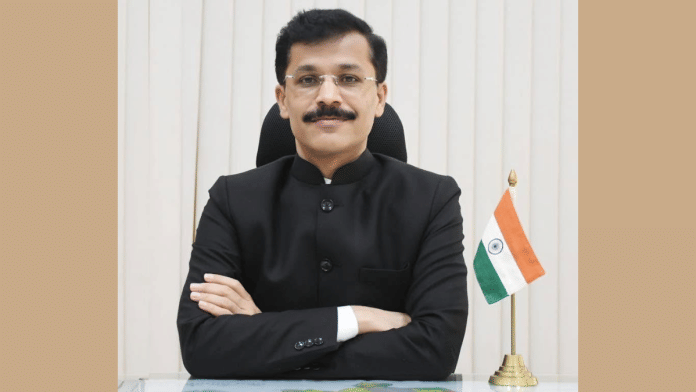
Welcome to The First Metro. I am Manasi Phadke, a thoroughbred Mumbaikar, and once every fortnight, I try to bring you a glimpse of India through Mumbai-tinted glasses. Trust me, the hues seem different.
I remember a time when I was about 23 years old. I had found a good job. I was getting my first taste of adult independence—managing my own money and my life, which was all about work and friends, and not much else in between. At least once a week, we would wrap up work by 9-9.30 pm and head out for dinner and drinks, a little karaoke session or some carefree dancing.
I was finally at an age and a stage in my life when there was no curfew. And then suddenly, there was one—except that this one wasn’t enforced by my parents.
It was a curfew enforced by a stringent cop called Vasant Dhoble, as assistant commissioner of police in Mumbai Police’s Social Services Branch. Just as the party would be warming up, Dhoble would arrive with his team, often with cameras, and it would be time to go home. He raided major restaurants and pubs citing a plethora of reasons—that they were operating beyond permissible hours, or were playing DJ music without the necessary licence, or were overcrowded, and so on.
He was hailed as a hero by some as the enforcer of the law and a cop who was finally putting an end to the “drunken nuisance” that residents around these establishments had to put up with. Many others painted him as a villain. They saw his action as ‘moral policing’, and questioned his methods, especially the need to swoop in with cameras.
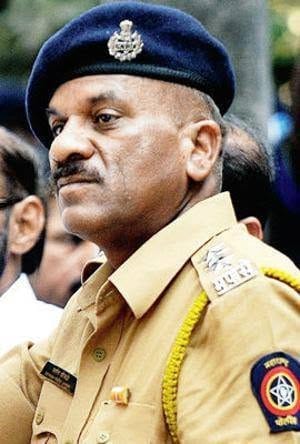
But, irrespective of which side of the debate one was on, one thing was certain. At that point, almost everyone in Mumbai knew the name Vasant Dhoble—even those allergic to newspapers.
Cut to now.
At this point, almost everyone in Mumbai—even those who follow every development in the US-Iran war, but are clueless about what’s happening in their own backyard—knows the name Tukaram Mundhe, commissioner of the Maharashtra Food and Drug Administration, who has recently shut down several popular and high-profile eateries for allegedly flouting norms, scrutinising them with a hawk’s eye.
I am not trying to compare the two officers. I wouldn’t say they are cut from the same cloth. Their career trajectories have also been very different. But, it’s just the similarity of the two situations. Like Dhoble, everyone now knows Mundhe and while some praise the methods, others find them excessive.
Many, including politicians like Milind Deora, have lauded Mundhe’s work in enforcing safety and hygiene in something as critical and basic as food. Many others, including Deora’s Shiv Sena colleague Sanjay Nirupam, have criticised his procedure as “draconian”.
While doomscrolling on Instagram one day, I came across a very witty post by an old college friend, Sonal Ved, who has written multiple cookbooks, and has become a phenomenon in herself, commanding a large virtual audience with her humour. “Mumbai’s restaurants are cleaning up like their in-laws are coming over,” she wrote. “Mundhe Guide is the new Michelin Guide.”
Here’s another wisecrack from her:
“Le Tukaram Mundhe at the country’s best restaurants: ‘Why is there fungus and bacteria in your kitchen?’
…Le Chef: ‘Sir, that’s koji. That’s lacto-fermented cabbage, that’s sea buckthorn kombucha for our juice pairing course.’”
I had a hearty laugh at her witticism. And then I went back to the first conversation I had with Mundhe after he was named the FDA Commissioner. I had congratulated him on his posting, though there wasn’t anything particularly congratulatory about it. It was his 25th transfer in his career of 21 years, and his second transfer in just two months.
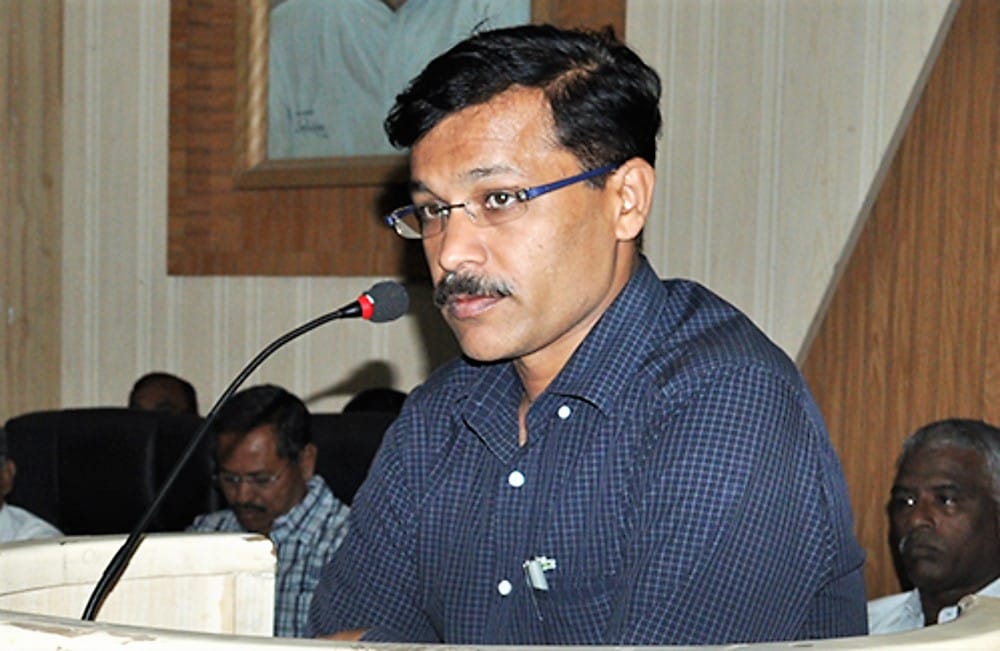
Before being posted at the FDA, Mundhe was given the posting of Principal Secretary (disaster management, relief and rehabilitation), but it was abruptly put on hold after the minister of the department, BJP’s Girish Mahajan, known to be close to Chief Minister Devendra Fadnavis, supposedly expressed some reservations about working with Mundhe.
The 2005-batch IAS officer has acquired quite a reputation within the political establishment, and most ministers are hesitant to work with him.
For the honest and straightforward Mundhe, the only thing that matters is the rule book. Anything and anybody that comes in between him and the rule book is sidestepped and disregarded. As a result, Mundhe has often had friction with the politicians he has had to work with.
After his transfer was put on hold, Mundhe was left without a posting for a month. So my cheery “congratulations on your posting as FDA Commissioner” may have been a bit out of place, but I sincerely meant it.
Food and safety standards in our country are abysmally poor and the enforcement of any rules is nonchalant. We have read about stuff like rats being found in the kitchen of popular eateries like Bademiyan, and have still occasionally continued to eat their rolls.
Mundhe’s posting as FDA Commissioner was unfortunately also a demotion. Not in the strictest sense, but a principal secretary being appointed as FDA Commissioner is seen more as a downward movement in the ‘babu’ kingdom than the next stepping stone. His predecessor, Shridhar Dube Patil, is from the 2014 batch, and his predecessor Rajesh Narvekar, who took charge in 2024, is from the 2009 batch.
Also Read: Mumbai: Of white (fault)lines & identity politics
In my message to Mundhe, I had said, the food safety sector is in dire need of a clean-up. I won’t share his reply as it was a confidential off-the-record conversation, but he didn’t seem too thrilled about another transfer and the profile/seniority of the posting within the bureaucracy.
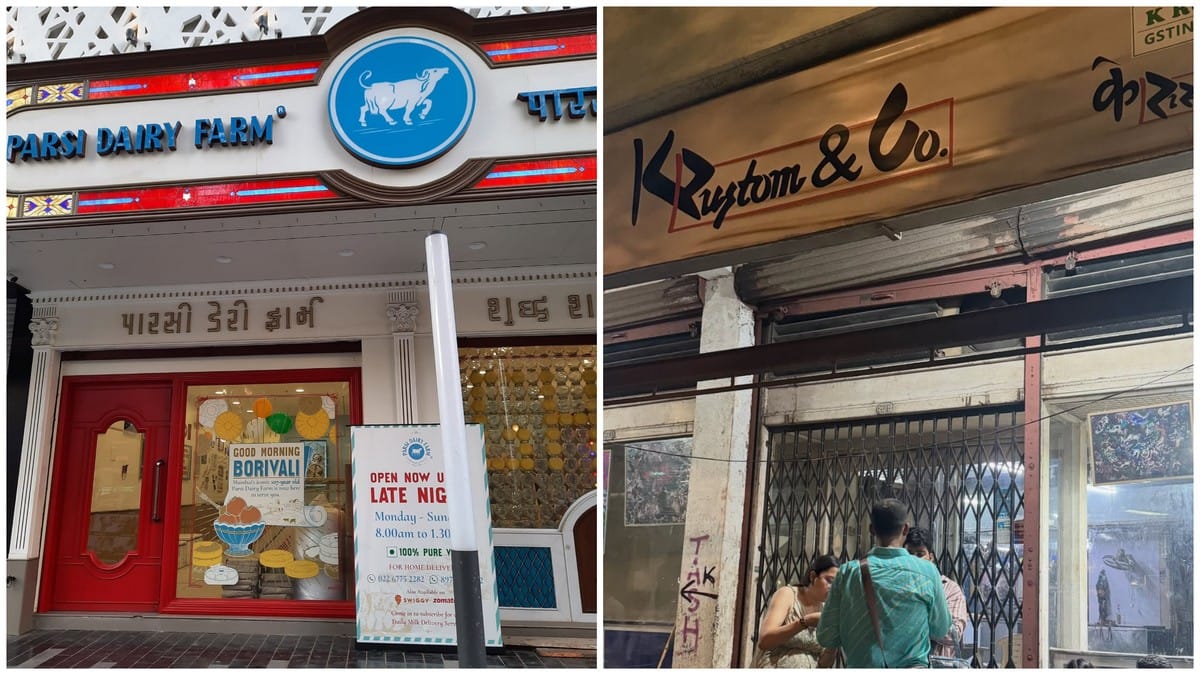
And when he took charge, he did what he has always done in every posting—raid, penalise and attempt to straighten anyone straying from the rule book. He started with Patanjali for allegedly making misleading claims about magical cures for certain diseases, and decided to invoke the stringent MCOCA for any illegal trade of tobacco and nicotine products. And he raided many, many eateries and establishments across the state, temporarily shut locally celebrated places—such as Parsi Dairy Farm and K. Rustom & Co—suspended food licences of high-end clubs, such as Willingdon and CCI, and banned junk, fried food in the periphery of schools.
I immediately thought of the flies-infested star fruit and tamarind sprinkled with salt and chilly that I used to eat outside my school, sometimes swapping that for the kalakhatta ice gola, and felt a tinge of nostalgic sadness. At the same time, I felt so glad that my daughter’s school neither serves junk food nor allows such vendors to set up shop anywhere nearby. It’s great that Mundhe is making that the norm for all schools.
The first time I heard of Mundhe was in 2016. He was the Navi Mumbai Municipal Commissioner at the time, and was building a large fan club of Navi Mumbai residents with his actions against illegal construction, unauthorised hawkers and corruption.
At the state level, BJP and the undivided Shiv Sena were in power under CM Devendra Fadnavis and were constantly at loggerheads with each other. Mundhe, the Navi Mumbai civic chief, had become a flashpoint in the ruling coalition. The Navi Mumbai general body of corporators passed a no confidence motion against him, with the Congress, undivided NCP and undivided Sena joining hands to oust the bureaucrat. Only six corporators voted against the motion—all six from the BJP.
I was at Hindustan Times and tracking the story. Around this time, Devendra Fadnavis had come to our newsroom for a freewheeling conversation with HT journalists, and I had asked him about Mundhe. It was really refreshing to see how firmly the CM had stood behind the bureaucrat.
“Tukaram Mundhe is a very efficient officer. There have been some systems in the Navi Mumbai Municipal Corporation that were not very legal and quite non-transparent for many years. He tried to change them. That disturbed many people,” he had said, adding that he had just advised Mundhe to improve his communication skills with elected representatives.
The Shiv Sena had gone all out against Mundhe, publishing an editorial against him in the party’s mouthpiece, Saamana, saying that the party wholeheartedly supported honest and bold bureaucrats like G.R. Khairnar, who was a deputy municipal commissioner in the BMC and had taken tough stands against illegal construction and encroachment. But Mundhe, the editorial read, works with a hot head and lack of self restraint, and if the BJP corporators were given the independence to vote as they liked, even they would have voted in favour of the no-confidence motion.
It’s a different story that four years later, when Uddhav Thackeray was CM and Mundhe was locked in conflict with some BJP leaders in Nagpur, Thackeray decided to firmly back the bureaucrat. “If an officer’s stern approach is being used for public welfare, then what is wrong with that?” Thackeray had said in an interview with Rajya Sabha MP Sanjay Raut in Saamana.
Four years later, it was the BJP that was having issues with Mundhe.
Coming back to 2016 and Navi Mumbai, Fadnavis had overturned the no-confidence motion as CM, but eventually succumbed to the corporators’ pressure and transferred him five months later, even before Mundhe could complete a year in the post. Normally, IAS officers remain at a given post for three years.
Wherever Mundhe has gone, it’s been the same story. Most citizens have hailed him. In some postings, citizens have actually poured out on the streets to protest his transfer.
And politicians, irrespective of party, have rejected him. Most politicians, however, agree on one thing—Mundhe is an honest officer. He is 100 percent honest, but is arrogant and high-handed, and takes decisions unilaterally, undermining political authority, they have said.
Knowing his nuisance value for ministers and politicians, at times, Mundhe’s postings have also had political calculations. For example, when Uddhav decided to appoint Mundhe as municipal commissioner of BJP stronghold Nagpur, just a month after he had taken charge as CM of a patchwork coalition formed to keep BJP out of power. In one of my conversations with Mundhe, he too had told me about how he was afraid that it would come across as a political posting.
It had played out exactly as he had feared. BJP leaders there had levelled several allegations of corruption and misappropriation against him, leading to government inquiries being opened up against him. Sources in the government had back then told me that his tenure as Nagpur civic chief was so tumultuous that Mundhe was hoping that then CM Uddhav would intervene, and had even requested for a transfer, which finally came only in August 2020.
The FDA posting is also being seen as political in a way. Mundhe has to work with NCP Minister Narhari Zirwal, who Fadnavis has been reportedly unhappy with. Zirwal has stirred one too many controversies for the government of late. An employee from his department was caught by the Anti-Corruption Bureau accepting a bribe, and later a purported video showing him with a transperson in a compromising position had gone viral. From Fadnavis’s point of view, if Zirwal has to deal with a strict bureaucrat known to challenge his political bosses, then it’s probably not a bad idea.
Zirwal has started facing the heat already. A bunch of FDA employees have complained to him about how recent changes to working hours and shift patterns are causing them hardships.
In 2022, when Mundhe had been kept waiting for a posting for a few months, I had met him at a cafe in South Mumbai. He didn’t have a posting, so he didn’t have an office. At some point in our conversation, I caught myself thinking how hard it must be for the family of an officer who faces such frequent transfers, how challenging it must be for the spouse to retain a job, and how difficult it must be for the children who have to move cities and schools every few months—Navi Mumbai, Pune, Nashik, Nagpur, Mumbai, and who knows where next.
I had asked him why he had never considered settling down at one place and taking a job in the private sector. It would pay him a great deal more, and his extensive knowledge of different public sectors, straight forward attitude and a penchant for rules would also be very well appreciated, I said.
He immediately took affront. “Why should I leave? I am doing everything right.”
Right at that moment, a young man—probably a college-goer—interrupted our coffee and conversation. “Sir, are you Tukaram Mundhe?”
The bespectacled Mundhe with his trim moustache nodded.
“I’m a big fan, sir. Please keep up the good work,” the young man said.
Tukaram Mundhe knows he has several detractors within the government. But he also knows he has many fans—that’s what keeps him going.
Also Read: Mumbai: Changing urban landscape & the true Mumbaikar test