



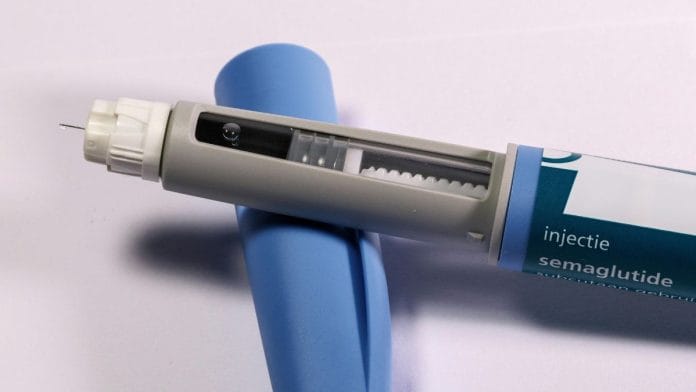
New Delhi: “Down 50+ pounds,” writes one user on Reddit’s ‘GLP-1 microdosing community’, describing how small doses of tirzepatide, a GLP-1 (glucagon-like peptide-1) medicine used to treat type 2 diabetes and obesity, helped control hunger and sustain weight loss.
The community, which records 27,000 weekly visitors and 1,700 weekly contributions, has become a space for internet users to discuss taking lower doses, reducing side effects and maintaining weight loss after stopping treatment.
One user said they started tirzepatide using a Zepbound KwikPen at a lower dose because they were worried about nausea. “Hardly had any side effects,” they wrote.
“I still enjoy food but I don’t think of snacking as often and can stop when I’m full. Highly recommend microdosing,” the user wrote.
Microdosing, which generally refers to taking doses much smaller than those recommended for treatment, has become a topic of debate among GLP-1 users and doctors as people experiment with lower doses. The term has gained currency through online communities where users share their experiences, but it has no recognised clinical definition and is not an established medical dosing strategy.
While some users say smaller doses help curb hunger with fewer side effects, the practice is not supported by established treatment guidelines. Doctors distinguish self-directed microdosing from medically supervised dose adjustments, and caution that there is limited evidence on whether arbitrary low doses can sustain weight loss or provide the wider health benefits demonstrated with doses tested in clinical trials.
Dr Ambrish Mithal, group chairman and head of endocrinology and diabetology at Max Healthcare in New Delhi, explained that some people do this to reduce side effects, lower costs or achieve a certain weight for cosmetic reasons.
“The main concern is when people change their doses without medical advice. We as doctors also adjust and often prescribe low doses for individual patients, but that is different from people experimenting on their own,” he said.
Dr Mithal said he often sees patients seeking “quick” weight loss for social occasions. “I have patients calling me and saying, ‘I just want to lose 2-3 kg because my daughter is getting married’,” he said.
GLP-1 medicines mimic a hormone involved in appetite and blood sugar regulation. Semaglutide acts on GLP-1 receptors, while tirzepatide acts on both GLP-1 and glucose-dependent insulinotropic polypeptide (GIP) receptors. They help people feel fuller and eat less.
These medicines are used to treat type 2 diabetes and, in eligible patients, obesity. Clinical trials have shown substantial weight loss with studied doses. But treatment can cause nausea, vomiting and diarrhoea. Weight can also return after the medicines are stopped. This has prompted some users to experiment with smaller doses, hoping to retain the appetite-suppressing effects.
What counts as microdosing?
According to Dr Mithal, starting semaglutide at 0.25 mg once a week, for example, is part of the standard dose-escalation process. It is not microdosing. Doctors usually start with a low dose and increase it gradually, depending on how a patient responds and tolerates treatment.
However, he said, patients may start at a dose lower than 0.25 mg and continue to do so just because it’s working for them. But it may not work for everyone.
Dr R. Goswami, professor of endocrinology at the All India Institute of Medical Sciences (AIIMS), New Delhi, said that apart from taking less than the prescribed dose, extending the interval between injections can also be called microdosing.
Some patients skip injections and then resume treatment, he said. “There is no standard protocol for microdosing. We follow the doses that have been tested in clinical trials.”
Dr Goswami cautioned that changing doses or injection schedules without medical advice can cause appetite to return and lead to weight regain.
“For patients taking these medicines to manage diabetes, inconsistent dosing can also affect blood sugar control,” he said.
Can smaller doses maintain weight loss?
Clinical trials have established the effectiveness of specific GLP-1 doses, but whether lower doses can deliver similar weight loss or sustain it over time remains unproven.
Dr V. Mohan, a Chennai-based diabetologist, points to the SURMOUNT-4 clinical trial of tirzepatide to explain why stopping treatment may affect weight maintenance.
In the trial, participants first received tirzepatide for 36 weeks and lost weight. They were then assigned either to continue the drug at their maximum tolerated dose of 10 mg or 15 mg weekly, or to switch to a placebo for another 52 weeks.
Those who continued tirzepatide lost a further 5.5 percent of their weight, on average, while those switched to placebo regained about 14 percent of their weight, both measured from their weight at the end of the first 36 weeks. The findings highlight the role of continued treatment in maintaining weight loss.
However, the trial did not examine whether lower doses could help patients maintain their weight loss. While some patients may seek smaller doses to reduce treatment costs, Dr Sweta Budyal, senior consultant in endocrinology and diabetology at Fortis Hospital Mulund, Mumbai, recommends considering a cheaper alternative instead.
“If cost is an issue, I would give them the option of going on generic versions and taking the proper therapeutic dose,” she said.
All experts ThePrint spoke to agree that evidence is lacking on whether very low doses provide the same cardiovascular, kidney or liver benefits seen with studied treatment regimens.
Dr Anusha N. D., consultant endocrinologist at Fortis Hospital in Bengaluru, also said doctors may reduce a dose if a patient has reached their target weight, experiences side effects or struggles with the cost.
Though Dr Mohan said that taking very low doses is naturally not expected to cause major side effects, Dr Mithal warned that changing doses by manipulating injection pens or following instructions shared online can lead to dosing errors.
“Treatment also requires monitoring for side effects and complications, including gallstones and muscle loss associated with excessive weight loss,” he said.
Dr Anoop Misra, Chairman of Fortis C-DOC Hospital for Diabetes and Allied Sciences in New Delhi, also said that microdosing is not supported by established treatment guidelines.
“People struggling with cost or side effects should discuss their options with a doctor. These may include slower dose escalation or an appropriate maintenance dose,” he said.
The advice from doctors is to individualise treatment, not improvise dosing.
“There is no one size fits all,” Dr Mohan said.
(Edited by Viny Mishra)