



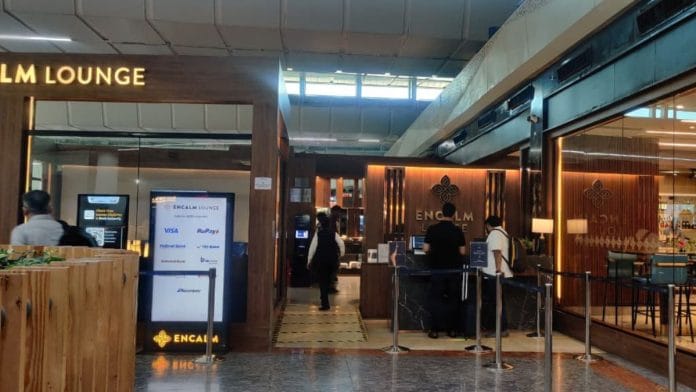
New Delhi: By 7 am on a humid June morning, sleepy travellers clutching boarding passes and phones stand in a queue outside the Encalm lounge at Delhi airport’s Terminal 3. Some have already pulled up their credit and debit cards, ready to flash proof of access. A suited businessman impatiently checks his watch while a young couple bickers over which card will get them entry.
Behind a small desk at the entrance stands 22-year-old Preeti, whose job is to decide who gets in. Or rather, whose card does. Every few seconds, a traveller hands over a credit card. Preeti taps it against the machine.
Approved. Approved. Declined.
The machine’s verdict often determines the mood of the next few minutes. If rejected, an excited passenger quickly turns red, demanding the concierge contact the bank while demanding immediate entry.
“Our job is to just check the cards with a machine. But customers don’t understand that we don’t know any other details. We can only check if it’s accepted or declined,” said Preeti, who moved from Uttar Pradesh to Delhi a little over a year ago and now works rotating shifts at the airport lounge.
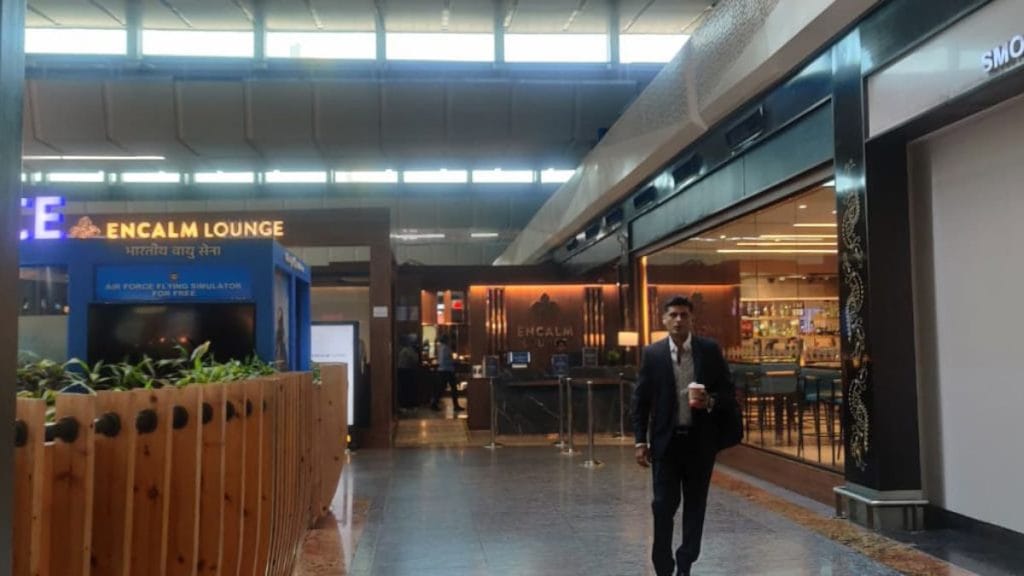
In an average shift, she sees nearly 500 passengers pass through the doors. The morning rush is the busiest. Travellers stream in looking for breakfast before flights to Mumbai, Bengaluru, Kolkata and beyond. The well-heeled jostle with the aspirational middle class at the buffet. Others sink into sofas and open their laptops. For a couple of hours, the lounge becomes a temporary living room suspended between destinations.
And increasingly, between classes.
This is where India’s great airport clash of the classes now happens: the consultant with an American Express Platinum card, the young professional using a complimentary quarterly visit from a salary-account credit card, the family trying lounge access for the first time after watching an Instagram Reel promising “free airport food”.
The airport lounge is the newest stage on which status is performed.
Preeti sees that performance unfold every day, one card swipe at a time. Demanding explanations, people ask her why their card was accepted last month but rejected today. They want answers she doesn’t have.
“For just Rs 2 meals, they would argue so much,” she said. “They would ask why their six-year-old child is not getting complimentary food. But they paid for his flight, no? Why are they expecting something different here?”
A decade ago, such scenes would have been unusual.
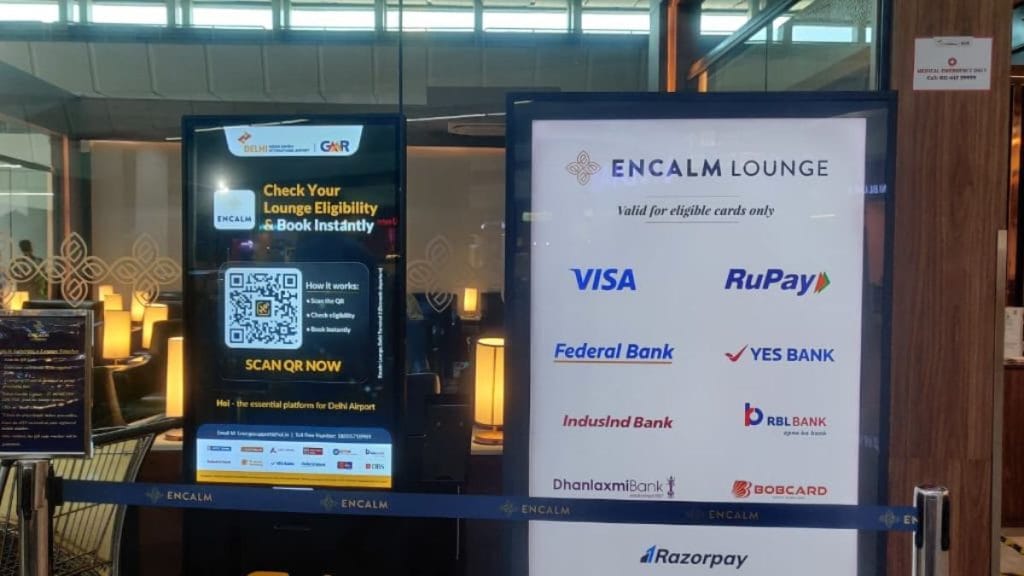
Airport lounges were once the preserve of business-class passengers, frequent flyers and corporate travellers whose jobs kept them permanently in transit. Today, access comes bundled with an expanding universe of credit cards offered by banks, fintech companies and payment networks. A swipe can unlock buffet meals, air-conditioned comfort and a brief reprieve from some of the country’s most expensive food courts.
Few spaces capture the changing aspirations of urban India quite like the airport lounge — part waiting room, part status symbol, part promise that a better life might be just one card upgrade away.
But as with every marker of status, the more accessible it becomes, the less exclusive it feels. What was once a privilege has become a goal.
“Lounges are a mass marker of the elite. Earlier, it was a different space — quieter and gave away free stuff. Now outside and inside the airport, it’s pretty much the same,” said author and social commentator Santosh Desai. “And as more people gained access, the exclusivity of the lounge weakened.”
Like all forms of conspicuous consumption, the lounge derives its value from scarcity. The moment too many people gain access, the search begins for a newer, more exclusive room.
“Now there is a search for better spaces where the mainstream audience isn’t allowed,” Desai smirked.
For Desai, the airport lounge is less a travel amenity than a window into how class operates in modern India. The practical advantages matter less than they once did. Airports themselves are increasingly comfortable, with better seating, cleaner terminals and more dining options. Yet travellers continue to queue outside lounges, sometimes for 20 minutes or more, for the privilege of entering.
“The value has become largely symbolic,” he said. “People are looking for distinction.”
The room behind the room
For Abhijit Chakraborty, the airport lounge is more infrastructure than indulgence.
The 35-year-old Delhi-based data scientist spends enough time moving between cities and countries that airports have become a recurring backdrop to life. There are leisure trips abroad, weddings in distant cities, work commitments that appear unexpectedly and the inevitable connecting flights.
When he reaches an airport, he does what he has always done: he heads to the lounge.
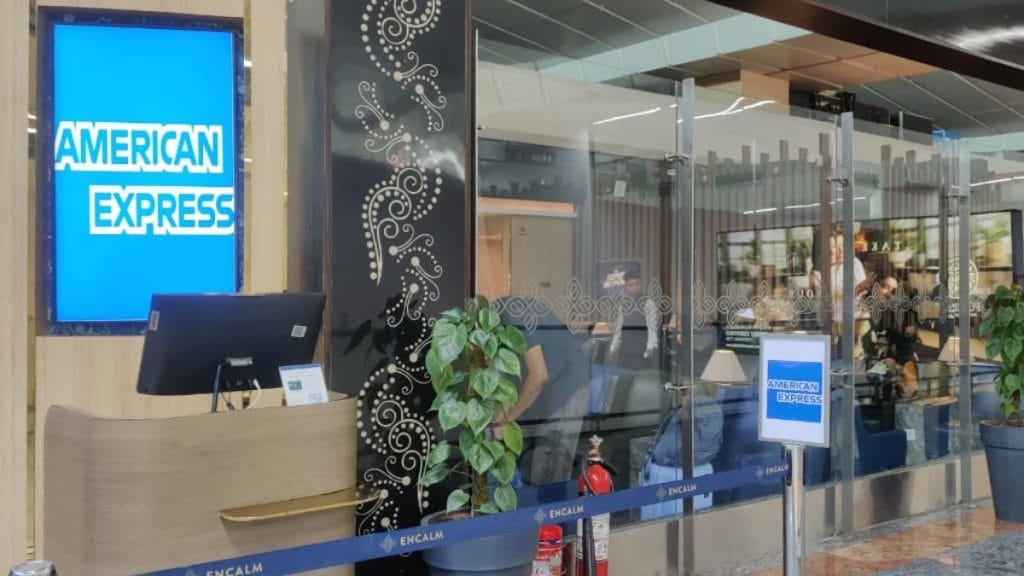
“Where do you wait at the airport if not the lounge?” he asked, sitting cross-legged at the Amex lounge, sipping coffee. “The food court is always too crowded or noisy, and I need the quiet, whether it’s for a personal call or a meeting. So, the buffer time I have before a flight, I will always spend it at the Amex lounge. It is also much less crowded. It helps me take a minute away from the bustle and rush outside.”
For Abhijit, lounge access was never aspirational. He grew up watching his parents use American Express cards and inherited the habit almost as a family ritual. Airports came with lounges, the way childhood came with privilege. He belongs to a certain tribe of people for whom exclusivity was so complete, they never had to perform it.
For years, airport lounges functioned as islands of exclusivity. Access came through business-class tickets, airline loyalty programmes or premium cards held by a relatively small slice of affluent travellers. They offered something airports did not: space. Space to work, eat, and escape the churn of travel.
The credit-card industry changed that equation.
As India’s consumer economy expanded, banks discovered that few benefits generated as much excitement as airport lounges. A lounge visit costs banks money, but it also makes customers feel they have entered a different category of consumer. Soon, access was being bundled into premium cards, then mid-tier cards, then entry-level cards. What was once a luxury perk became a customer acquisition strategy.
According to lounge operator Encalm, access through banking partnerships has risen significantly in recent years as travel and lifestyle experiences became central to how cards are marketed. First-time and infrequent travellers are increasingly accessing the lounge.
“The massive growth in traveller footfall across Indian aviation has transformed airport lounges into an essential component of the modern journey,” Vikas Sharma, Group CEO of Encalm lounges, told ThePrint.
Then, banks turned exclusivity into a retail product, packaging it into annual fees, reward points and quarterly spending thresholds.
The result is visible across Indian airports today. Lounges that once catered largely to corporate travellers now accommodate a far broader mix of passengers — young professionals, travellers and tourists, families and occasional flyers who may have qualified for access through a salary-account credit card or a spending threshold.
As more people enter the club, the less special the membership feels.
While entry-level and mid-tier cards offer a handful of domestic lounge visits each quarter, premium products continue to promise separation. American Express remains among the most aspirational brands. Its flagship Platinum Charge Card, which carries an annual fee of more than Rs 66,000, offers access to premium airport experiences across the world, from Centurion Lounges to global lounge networks and concierge services.
The product being sold is now an assurance that there will always be another room, better and more exclusive than the one outside.
The same logic is visible among lounge operators themselves. Encalm’s portfolio now stretches from card-access lounges used by thousands of travellers every day to Encalm Privé, aimed at business-class passengers, and Xenia, a first-class concept built around privacy, personalised service and exclusivity.
The ladder keeps extending upward.
But the banks had other ideas about who deserved to belong.
Also read: The making and unmaking of Delhi designer district Shahpur Jat
Buying a better wait
Pratyusha Bhattacharya watched airport lounges from the outside for years.
She would watch travellers drift in with cabin bags and emerge balancing plates piled with dosas, poha, sandwiches, pastries and fruits. Some eat quickly before rushing to their gates. Others settle in for a second helping. Around the coffee machines, small queues form and dissolve. Tables fill up with half-finished breakfasts, abandoned cups and plates carrying more food than their owners can finish.
For months, the 29-year-old would drag a laptop bag through terminals, hunt for an empty charging point and settle into hard plastic chairs near the boarding gate. A sales professional, she spends much of her month travelling between cities. The airports came first. The credit cards came later.
“I used to look at people going into lounges and wonder what was inside,” she said. “Mostly, I just wanted somewhere to sit for a bit.”
The attraction was never a luxury to her.
She just wanted relief from carrying two laptops through an airport between flights. She wanted relief from paying several hundred rupees for a sandwich and coffee that could swallow a noticeable portion of a modest monthly salary.
Then came her first credit card. The lounge benefit was modest: one complimentary domestic visit every quarter.
She treated it almost like a rationed privilege.
“There would be a long trip coming up, and I would think, okay, this is the one time I should use it,” she said.
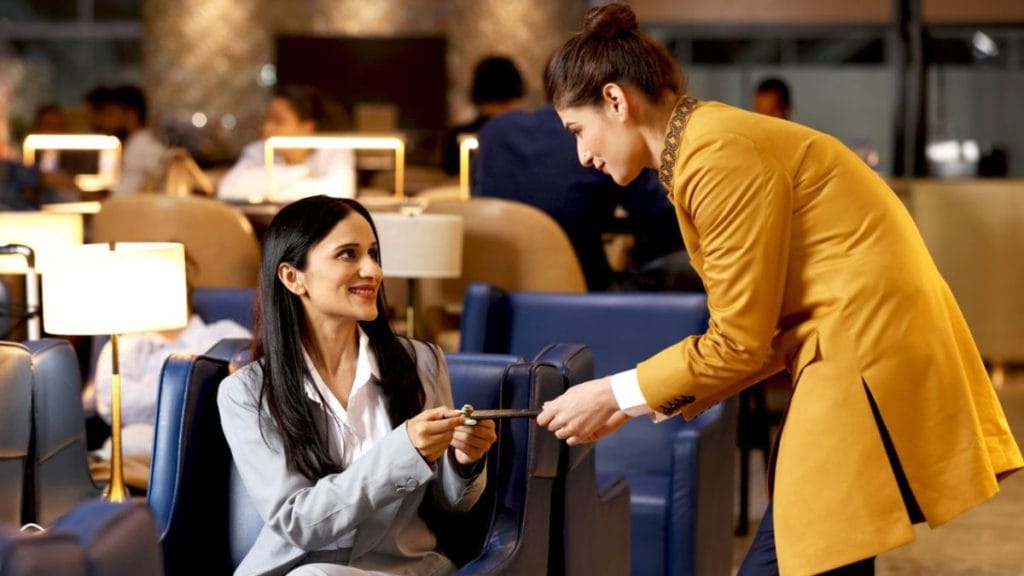
Soon, there was another card. Then another. And another. Today, she has at least five.
“My salary has gone up now, and I can get more cards. There is spending too, I spend quite a bit nowadays, so it doesn’t hurt,” she said.
If premium cards once targeted a relatively narrow slice of affluent travellers, banks today compete aggressively for the expanding salaried middle class. Salary-account holders are routinely pitched cards with travel benefits. Mall kiosks and airport counters market reward programmes. Some cards offer lounge access in exchange for minimum quarterly expenditure, while others waive annual fees altogether if users cross spending thresholds.
The pitch is remarkably consistent.
Spend more, travel more, live a little better — “There are some things money can’t buy.”
The lounge sits at the centre of that promise.
A generation ago, the middle class aspired to fly. Today, many aspire to fly comfortably.
The growth of social media has only accelerated the phenomenon. Airport lounges feature prominently in travel influencers’ videos, “airport hacks” Reels and card-review channels that teach viewers how to maximise benefits. Entire online communities now exist to discuss lounge eligibility, spending thresholds and the best cards for travel rewards.
Luxury, once hidden behind membership desks and invitation lists, now comes with tutorials.
Bhattacharya admits she understands the appeal. The lounges themselves have become part of her travel routine.
They are where she catches her breath between flights, charges her devices, answers emails and occasionally meets strangers.
“Once it was so crowded at Delhi airport that I had to share a table with another woman,” she said. “She wasn’t happy initially when I asked if I could sit there. But then we got talking and spent almost an hour discussing our lives. I even took her number.”
Also read: Mumbai heat has turned Versova beach into a bedroom. Who is sleeping there?
The business of belonging
The lounge may feel free. It is anything but.
Every complimentary meal, cup of coffee and airport sofa is paid for by someone. Usually, that someone is a bank.
Behind the promise of “free lounge access” lies a sprawling business ecosystem connecting airports, lounge operators, payment networks and financial institutions. When a traveller swipes a card for entry, the lounge bills the card issuer. The traveller may pay Rs 2, but the bank pays substantially more.
The arrangement works because the real product is not the meal — it is the customer.
For years, banks have used airport lounges as one of their most effective acquisition tools. Consumers who may not care about reward points or cashback understand the value of a meal at an airport. Lounge access is tangible. It can be photographed, posted online and experienced immediately.
The strategy has worked so well that it has redrawn the country’s credit-card landscape.
What began with premium cards issued to affluent customers has steadily moved down the income ladder. Today, banks compete to offer increasingly attractive travel benefits to salaried professionals, young earners and first-time cardholders.
The bank doesn’t sell you a meal. It sells you the story that you’re too important to eat where others do.
Take SBI cards, for example.
Unlike private banks that often target affluent urban customers, SBI’s reach extends deep into India’s middle class. The bank’s outsourced sales agents are a common sight in shopping malls, approaching customers with promises of rewards, cashback and travel perks. They start giving cards to customers earning Rs 40,000.
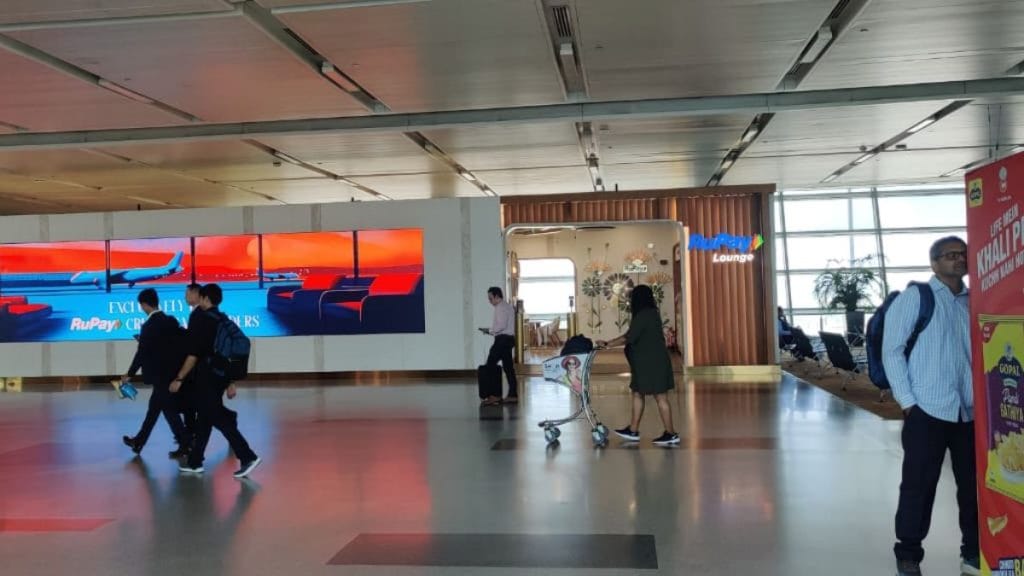
The country’s most popular SBI cards sit squarely in the aspirational middle.
“Credit cards and lounge access are a way to incentivise customer complaints with benefits,” a senior SBI official said.
The SBI Prime card, among the bank’s biggest sellers, offers eight domestic lounge visits and four international visits annually. The SBI Elite card offers similar travel-focused benefits. At the top sits Aurum, SBI’s premium offering, with unlimited lounge access and luxury privileges aimed at affluent customers.
At the lower end of the spectrum, cards like Pulse offer limited lounge access, while entry-level products focus on affordability and basic rewards. Together, they form a ladder, one rung above another. One aspiration feeding the next.
The government’s push for RuPay has added another dimension to the race. Once dominated by Visa and Mastercard, India’s payments ecosystem is increasingly encouraging consumers toward domestically developed alternatives. Many RuPay cards now come bundled with lounge benefits as well, turning airport hospitality into another front in India’s payments competition.
The result is people from vastly different income groups can enter through the same door. But not necessarily through the same card.
“Nowadays, everyone wants lounge access. The fascination for free stuff and the social media culture is driving this,” the SBI official said. “The result is overcrowding, lounges are like a supermarket now.”
And not every lounge accepts every network. Visa, Mastercard, American Express and RuPay all have different partnerships and eligibility requirements. Some cards work at one lounge but not another. Others require a minimum spending in the preceding months. Rules change frequently. Customers often discover the fine print only when standing at the reception desk.
Which is how a benefit designed to make travellers feel special can sometimes produce the opposite feeling entirely.
Rahul learned that the hard way.
Also read: Hindu boy, Muslim girl got married in Budaun. Celebration in one area, mourning in another
Access denied
Long before Rahul ever stepped into an airport lounge, he had already spent years looking at them — on his phone.
The 37-year-old IT professional’s social media feeds were filled with travel influencers documenting airport rituals with almost religious devotion. There were videos explaining which credit cards unlocked lounge access and elaborate walkthroughs of buffet spreads. The message was always the same: if you knew the system well enough, the airport could become a much nicer place.
For someone who spent most of his time working from home and travelled only a handful of times a year, it was hard not to be drawn in.
“It looked fancy,” Rahul said. “Not luxury exactly, but like you had figured something out. Everyone seemed to know these tricks. They would say airport food is expensive, just get this card and you can eat for free.”
Unlike frequent flyers who spend days every year in transit, Rahul’s trips were infrequent and carefully planned. A holiday in Goa or a visit back home. But when he eventually signed up for an SBI credit card that came with lounge access, the benefit quickly became part of how he imagined travelling.
The attraction was never the sofa or the WiFi; it was the feeling that he was getting something extra. It worked for a while, but then it didn’t. Last year, Rahul had a last-minute trip home and a long layover between flights. Tired, hungry and looking forward to a meal, he joined the queue outside the lounge and handed over his card. The machine rejected it. Assuming there had been some mistake, he tried another card. That didn’t work either.
The queue behind him continued to grow, making him anxious.
“It didn’t work, and someone standing behind me just said, ‘Move along’,” he recalled. “At that point, I wasn’t even thinking about lounge access. I was hungry, and I just wanted to sit down somewhere and eat.”
Only later did he realise he had already exhausted his complimentary visits for the year.
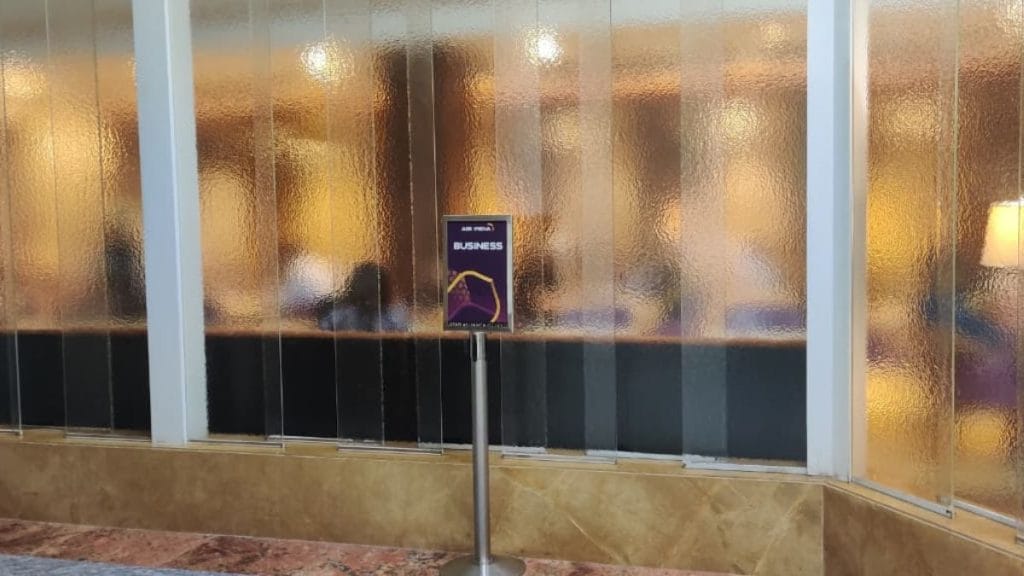
The episode lasted barely a few minutes, but it exposed one of the less glamorous realities of India’s lounge boom. The benefits are often far more complicated than they first appear.
“It was embarrassing,” Rahul admitted. “No one was rude. It was just awkward standing there trying different cards and realising none of them worked.”
He laughed while recounting the story.
“I got greedy, I think. The two or three times I travelled every year, I always got lounge access. So I got used to it.”
An SBI official says nothing can be done if the card declines at the counter.
“Sometimes they go to the wrong lounges. And if a card is declined, the embarrassment to the customer cannot be remedied over the phone,” he said.
And this expectation extends far beyond Rahul’s generation.
Also read: The new foreign media battle in India— inside the playbooks of RT, Sputnik, BBC & DW
The next-gen of cards
Twenty-year-old Sanchita has not yet graduated from college. She does not own a premium credit card. But she already knows exactly which one she wants.
Her friends are planning a trip to Europe next year. Discussions about itineraries quickly gave way to discussions about airport lounges, forex benefits and travel cards.
“My friends keep talking about lounge access and travel cards,” she said, laughing. “They keep saying airport food is ridiculously expensive, and if we’re taking so many flights across Europe, it just makes sense to have it.”
She has already started lobbying her parents for a Scapia card. The appeal? It has unlimited international lounge access.
Scapia, the Bengaluru-based travel-fintech startup, issues cards in partnership with Federal Bank. The card was designed almost entirely around the aspirations of younger travellers. It offers zero forex markup on international spending, rewards are linked directly to travel bookings and airport benefits that would once have been associated with far more expensive cards.
The company markets itself less like a bank and more like a travel companion. But it has partnered with Federal Bank, meaning any customer getting a Scapia will automatically have an account with the bank.
In earlier generations, people opened bank accounts because they needed banking services. Increasingly, younger consumers enter through lifestyle products and travel benefits instead.
For Desai, this progression says something important about how aspiration works in modern India. He points to India’s “well-established” caste hierarchy that has now seeped into the class structure.
So, after lounges and business class flights, what’s next for exclusivity at airports?
“The ultimate sign of status in an airport is when you’re exempt from frisking. There are 32 categories of people, and they can’t be frisked,” Desai said. “Imagine the sense of privilege in believing that the rules that apply to everyone else do not apply to you. People will always look for the next marker.”
(Edited by Saptak Datta)
Please stop posting this slop. 5000 word nothingburger. Not a single new fact or insight – this article could have run 10 years ago word to word. And a bunch of AI sounding slop to boot.
This is a poorly edited article. Spends thousands and thousands of words without little material to show for it.
Who edited this? This article could have been two paragraphs, max.
Five million words in this article . . . more crowded and more exasperating than any airport lounge . . . Everyone is a journalist these days 😞