





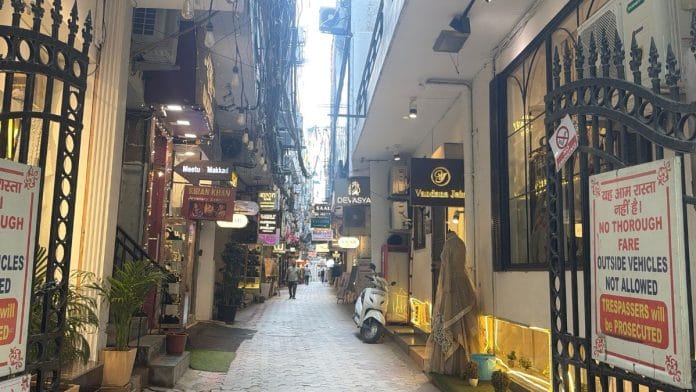


New Delhi: After Hauz Khas Village became Delhi’s answer to Soho in the 1990s, the city’s tastemakers and style gurus were looking for the next urban village to reinvent. Their collective gaze turned a few kilometres away to Shahpur Jat — an urban village with farmlands and ponds and the capital’s fashion industry’s backroom. Today, it has become the Chandni Chowk for Delhi’s elite.
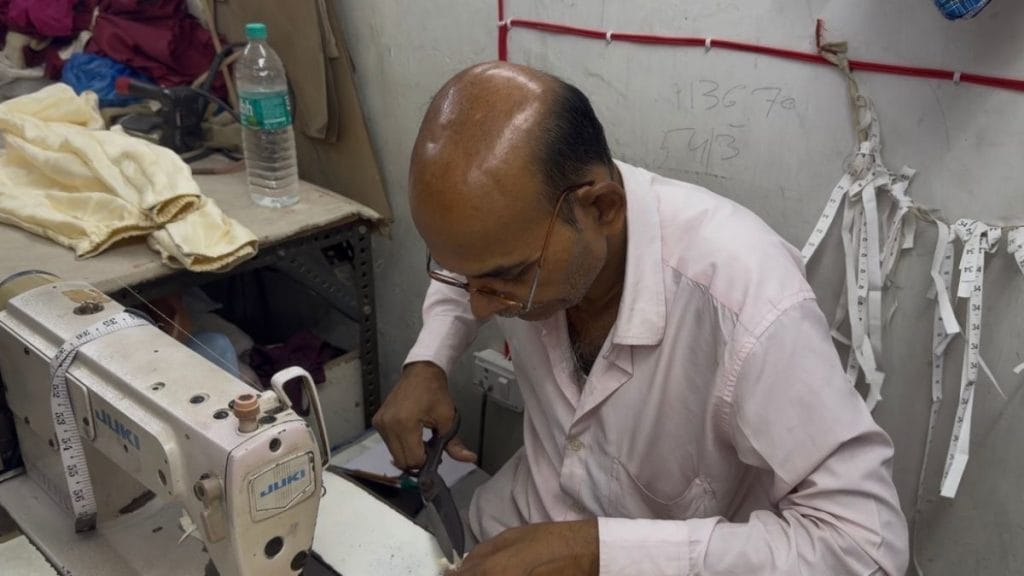
At the time, Shahpur Jat was not known for designer lehengas or wedding shoppers. Inside cramped rooms and dimly lit lanes, artisans stitched garments, embroidered fabrics and attached beads and sequins that would eventually find their way into Delhi’s showrooms and fashion weeks. The village itself remained largely invisible.
Then the designers took notice.
Drawn by cheap rents and unconventional spaces, labels like Ritu Kumar and Dastkar began opening studios and workshops inside old village homes in Shahpur Jat. By the late 1990s and early 2000s, a new generation of independent designers, from NIFT and Pearl Academy, were drawn to the village. Soon after came restaurants, home decor stores and creative businesses.
Publishers such as Juggernaut Books and Penguin Random House India would also operate from Shahpur Jat at different points, helping transform the neighbourhood filled with cattle sheds and buffaloes into a glittering creative hub. By the late 2010s, Vogue was calling it Delhi’s new design destination, with many declaring it had surpassed Hauz Khas Village itself — aided in part by the latter’s own social and commercial decline.
Sandeep, an artisan from Uttar Pradesh who has been working in Shahpur Jat for over 20 years, said the transformation happened almost overnight.
“One day it was a village, and the next day it was a glamourised market,” he told ThePrint. “Places where cows and buffaloes once stood were replaced by fancy boutiques, mannequins dressed in lehengas.”
But beneath the bridal stores and carefully curated storefronts lies another Shahpur Jat — one still grappling with overcrowding, crumbling infrastructure, lost farmland and a growing sense among some residents that the village which made the neighbourhood possible is slowly disappearing. The result is a place where high fashion and urban neglect exist side by side.
Puneet Siinghal, founder of the Delhi Dehat Project, says behind Shahpur Jat’s polished image, lay bare the realities faced by the residents.
“Families are packed into extremely cramped spaces where sunlight barely reaches. The tragedy is that residents often fall through the cracks of governance neither fully served by the DDA nor effectively addressed by the state government,” he said. “They have been left ‘Ram bharose’ (at mercy of the gods).”
Cattle to couture
When 45-year-old Sandeep arrived in Delhi from Jaunpur in the early 2000s, he came looking for work. His first job at Shahpur Jat paid Rs 3,000 a month. He spent his days braiding threads in one of the village’s many garment workshops, part of the vast but largely invisible workforce that powered Delhi’s fashion industry from behind the scenes.
Back then, Shahpur Jat was still unmistakably a village on the edge of the city.
Families farmed the surrounding land. Open courtyards, ponds and gathering spaces formed the centre of community life.
The first major rupture came with the construction of the Asian Games Village ahead of the 1982 Asian Games. Around 135 acres of agricultural land was acquired, fundamentally altering both the geography and economy of Shahpur Jat. Farming became increasingly difficult.
Then came the village’s second transformation in the 1990s. After the designers came in, home decor establishments like The Wishing Chair and restaurants like The Potbelly and Poochki were set up and soon became crowd pullers. Delhi’s first dog-friendly cafe, Puppychino, also opened in Shahpur Jat and continues to run.
Soon, the lanes were filled with tailoring units, embroidery workshops and small family-run businesses, creating an ecosystem that few other parts of Delhi could replicate. Most people coming into the neighbourhood were workers, suppliers and traders. Few arrived to shop.
“The business kept on coming. We would earlier have a shortage of labourers. Nowadays, if I compare, of course work has witnessed a dip but the situation isn’t that bad. It fluctuates season to season,” said Sandeep.
When fashion designer Shiva Jangra came to Shahpur Jat nine years ago to set up her bridal couture label, the prices of her embroidered lehengas ranged between Rs 33,000 and Rs 2 lakh. For designers like the 38-year-old, Shahpur Jat was the obvious option.
“By then, Hauz Khas Village had become more of a party destination,” she said. “Designers were looking for a serious fashion market, and Shahpur Jat offered that. One after another, brands started moving here, and before long it had become a wedding hub.”
It was not just gentrification; a new specialised ecosystem centred on India’s billion-dollar wedding industry was booming in Shahpur Jat.
Shikhar Tiwari, 62, and a landlord of Shahpur Jat, who has rented two of his shops to designers, says it felt like their village was now getting attention.
“We felt like Shahpur Jat had finally arrived. Money started to flow in. To some extent we thought it was God compensating for our lost land,” Tiwari said.
As the village evolved into a retail destination, the ecosystem began to change. The boutiques became visible but the workers became less so.
Many of the artisans, some of them migrants from UP and Bengal, who once occupied prominent spaces found themselves retreating deeper into the village as commercial rents rose. Today, visitors arriving in Shahpur Jat encounter designer storefronts first. The workshops that support them are often hidden behind residential lanes and unmarked staircases.
Inside one such workshop in a narrow, dimly lit lane, craftsmen sit cross-legged around wooden embroidery frames, carefully stitching sequins and zari onto bridal wear—spectacles perched on their noses. The work remains painstakingly manual. A single garment can take days, sometimes weeks, to complete.
Yet many workers say the industry no longer feels as stable as it once did. Around two decades ago, embroiderers typically earned between Rs 150 and Rs 300 per day, whereas today these artisans can earn anywhere from Rs 600 to Rs 1,500 per day on premium orders. Orders have become less predictable and margins tighter as more and more designers increasingly hired their own artisans.
“We moved from cauliflower farming to zari work, and now even that is slipping away from us,” Tiwari said. “Business has been difficult. Work has fallen by nearly 20 to 25 per cent.”
Also read: Mumbai heat has turned Versova beach into a bedroom. Who is sleeping there?
Paradox of an urban village
Shahpur Jat may now be synonymous with bridal couture, but its earliest identity was a Lal Dora village.
The term dates back to a colonial-era land settlement conducted in 1908-09, when a red line was drawn around village habitation areas, separating residential settlements from agricultural land.
Like many of Delhi’s urban villages, Shahpur Jat developed largely outside conventional planning regulations. But its trajectory differs from that of several other urban villages in Delhi. While HKV became synonymous with nightlife, cafes and bars, and places such as Khirki Extension developed reputations for artist collectives and affordable rentals, Shahpur Jat evolved primarily as a fashion and design cluster.
Unlike Mehrauli, whose economy remains tied to tourism around heritage monuments, or Lado Sarai, which became known for galleries and creative studios, Shahpur Jat built its identity around couture, textiles and wedding retail.
This gave Shahpur Jat an identity distinct from its better-known counterparts.
Former designer Avnni Kapoor explains how Shahpur Jat was an “afterthought” or more like a “back up option” for designers at that time. The 48-year-old explains that because people couldn’t afford the Bina Ramani-influenced HKV, Shahpur Jat became their second best bet.
“It is safe to say Shahpur Jat has managed to survive the test of time. It has outperformed HKV,” she said. “But, naturally, we have lost our most premium crowd to Mehrauli and Dhan Mill.”
The customers who frequent Shahpur Jat today are looking for curated designer experiences rather than the bargaining culture associated with traditional markets like Chandni Chowk.
But as affluent customers began visiting the village, villagers were exposed to lifestyles and social norms very different from their own.
Women arriving alone in cars, running businesses or smoking cigarettes in public were sights that initially stood out to many villagers. For residents like Tiwari, who grew up conservative, even seeing women move around alone, without a male companion and dressed in western clothing, felt signs of a changing world.
“It felt like the outside world was forcing its way in,” he said.
A shopkeeper put things in perspective.
“Our women had never even heard of things like getting their eyebrows done,” he said with a laugh, quickly clarifying that he meant no disrespect. “Today, they know about film stars, beauty trends, makeup, everything.”
But with time, these sights became routine.
Dressed in a spaghetti top and beige shorts, Rita Thappar, a shopper from Delhi, does not mind venturing beyond the polished storefronts and deeper into the village’s maze-like interior where she can get a bridal lehenga for the fraction of boutique prices.
“You can find something that looks like a Rs 1 lakh lehenga for Rs 20,000,” she said. “It may not look polished from the inside, and the lanes can seem chaotic, but I’ve never felt unsafe here. In fact, I feel more comfortable walking around Shahpur Jat than in places like Sarojini Nagar or Chandni Chowk.”
For the shopkeepers in Shahpur Jat, these colliding cultures are now “completely normal”.
“Today, women walk through the village wearing shorts and nobody stares at them,” the shopkeeper said. “It is a very safe market for women shoppers.”
But when the glamour became monotonous, the residents started to miss their village.
Also read: Hindu boy, Muslim girl got married in Budaun. Celebration in one area, mourning in another
The village behind the storefronts
For all the attention Shahpur Jat receives as a fashion destination, many residents still tell its story through what was lost rather than what arrived: land.
Standing outside his three-storey home, 58-year-old JayKaran Pawar points beyond the dense cluster of buildings that now surround him and begins describing a landscape that no longer exists.
“There was a talab (pond) here. This entire area where the Asian Games Village stands today was our land. We had our farms here.”
This acquisition not only killed the livelihood of farmers but also altered the village’s relationship with land.
“We have become part of the city now,” Pawar said. “The only village left is in the name, Shahpur Jat Village. Of course, we feel bad. Our land was taken away and our fathers got nothing in return.”
Many residents then turned to the only asset they had left: property.
Houses grew taller and rooms were rented out. Over time, Shahpur Jat evolved from an agrarian settlement into a rental economy, with commercial leases and tenant income replacing agriculture as the primary source of wealth for many families.
This divided Shahpur Jat into two groups: the original settlers and the renters.
“People of the village aren’t welcomed on the other side. They are not even allowed to enter the park. But no one has the right to stop them, you have acquired their land and now restrict them only from entering,” said Puneet Siinghal.
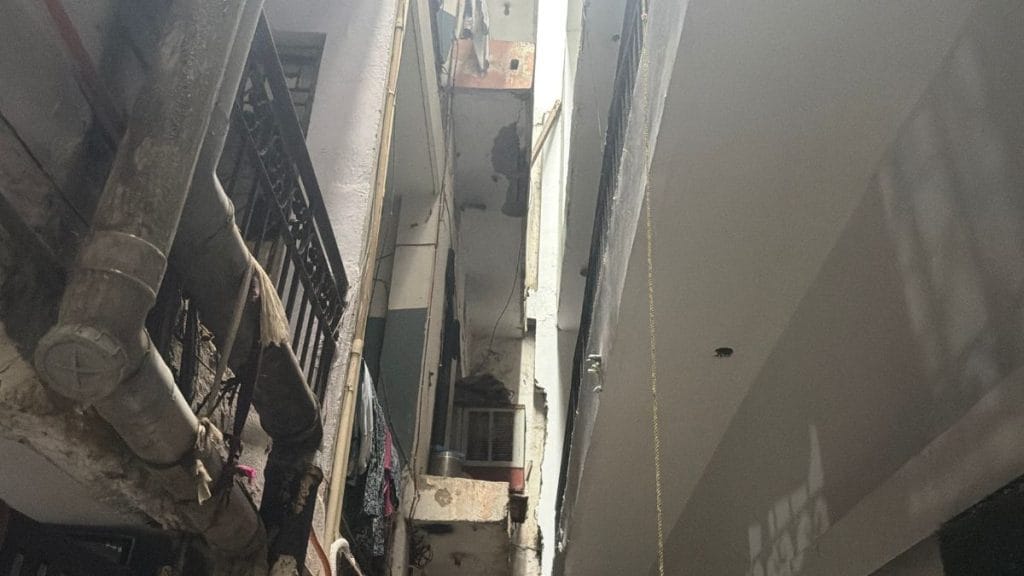
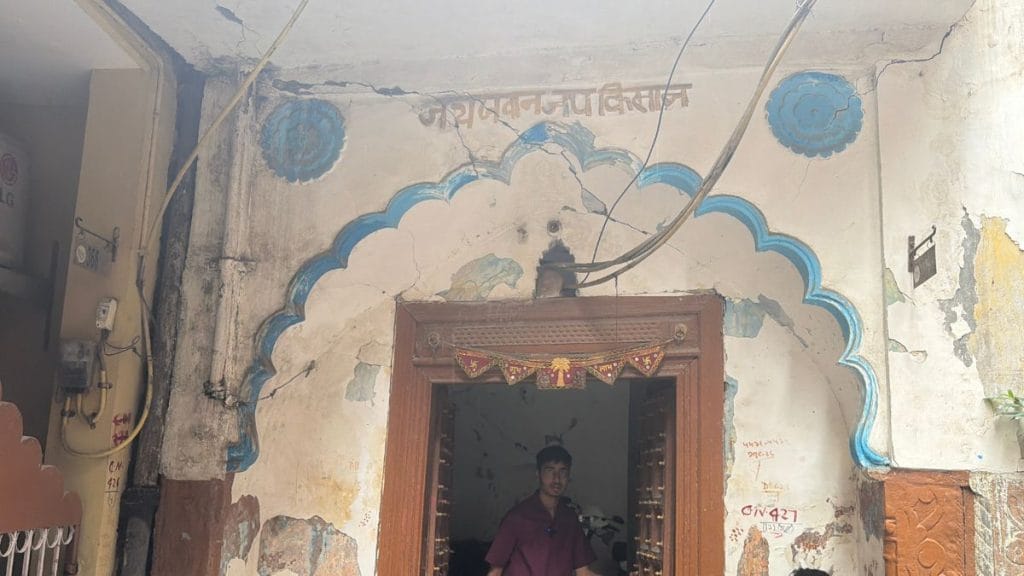
Outside, the polished storefronts and parking facilities cast a posh impression. But deeper inside, where many of the original residents still live, the landscape changes. Narrow lanes snake between towering houses built close together. Electrical wires hang overhead.
Shops facing the main market command rents running into several lakhs of rupees each month. Properties tucked away in the interior lanes often fetch only around Rs 40,000. On the contrary, the rent of the workspaces is somewhere between Rs 12,000 to Rs 15,000.
“Idhar zyada clients nahi aate (we don’t get many clients here),” the store manager of an ethnic boutique Komalyaa said. “In a month, barely 4-5 clients come — people who find us through social media or through word of mouth.”
Even as its geographical footprint shrank after the land acquisition, Shahpur Jat’s population continued to grow. Families built upward rather than outward, producing the dense urban jungle that exists today.
Siinghal says Shahpur Jat was built for 5-10,000 people. But today, nearly 25,000 people live there.
“We urban villagers are living in a paradox. This is neither a village nor a city. It’s like an island, which doesn’t come under anyone’s jurisdiction. They are sprinkled all over Delhi and have become very crampy,” he said.
Also read: The new foreign media battle in India— inside the playbooks of RT, Sputnik, BBC & DW
Prosperity, with potholes
In Shahpur Jat, prosperity and neglect often occupy the same lane.
The wealth brought by boutiques, commercial rents and wedding retail is visible everywhere. So are the potholes, clogged drains and overcrowded streets.
Just a few minutes of rain fills puddles. Rickshaws, scooters, delivery workers and pedestrians compete for the same sliver of space, navigating around stagnant water and overflowing drains.
Inside a small dyeing shop, 40-year-old Nawab, a migrant worker from UP, watched the scene unfold. What frustrates him is not the work or the crowds, but the infrastructure.
“Where will we go?” he asked. “This is our home now.”
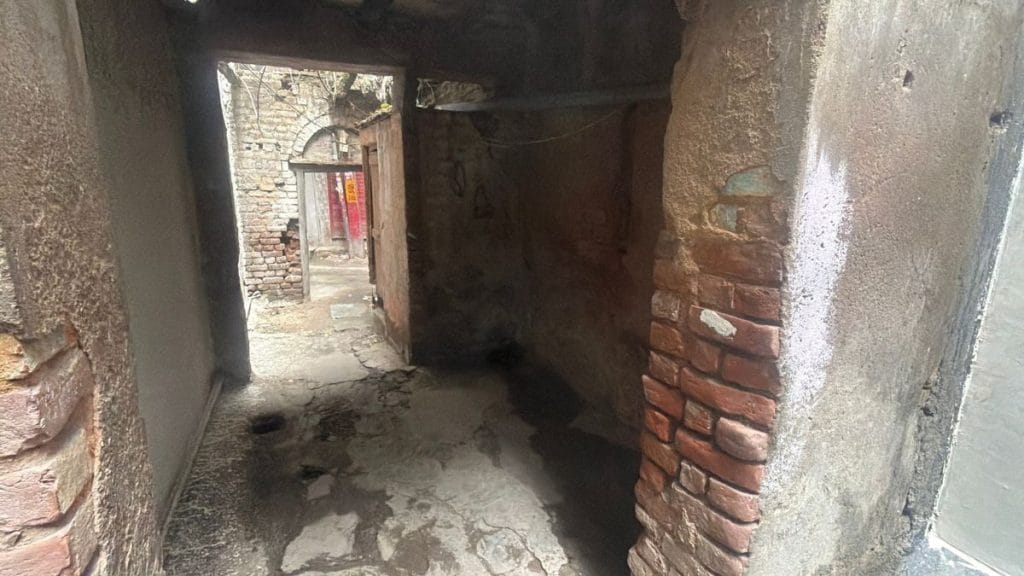
Residents and workers complain that water and sewage networks designed for a much smaller settlement now serve a population several times larger. During the monsoon, they say, flooding and overflowing drains remain a recurring problem.
“Hum apne dum par zinda hai yaha,” said Rinku, a 22-year-old worker at a local dyeing unit. “We are surviving on our own here.”
Siinghal says the neglect is institutional.
“In Europe we romanticise their old infrastructure and here 5000 year old havelis are decaying and no one is ready to put a thought to it because there are no such laws,” he said.
Pawar said many landlords who own commercially valuable properties at the front of the village have also moved out, building larger homes elsewhere while continuing to collect rent from Shahpur Jat.
The divide is also generational. While older residents speak about lost farmland, ponds and village life, many younger residents see Shahpur Jat primarily as a stepping stone.
Rinku, whose family has lived in the village for decades, says he hopes to eventually move to Noida or Gurugram in search of better opportunities.
“My family is much more attached to this place than I am,” he said.
Also read: The truth behind India’s ‘Rs 2.5 lakh’ Japanese Miyazaki mango craze. It starts in Jabalpur
What is the real Dilli?
For Congress worker Mannat Sharma, the greatest threat facing Shahpur Jat is not redevelopment or rising rents. It is forgetting.
“Gen Z wouldn’t know anything about it. I can guarantee,” he said. “They wouldn’t know about our existence, about our history. And, we have seen how people, communities get erased in history. We don’t want people to forget about us.”
To preserve that history, Sharma wants to organise heritage walks through Shahpur Jat. The aim is to introduce visitors to what residents call the “real Delhi”— the villages and communities that existed long before the city expanded around them.
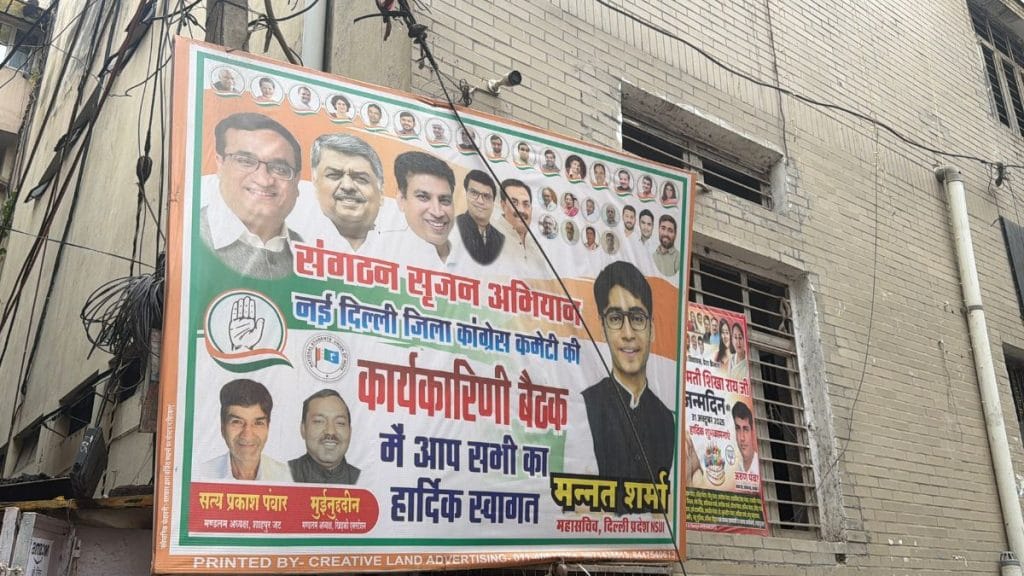
The walks will focus on the stories hidden behind boutiques: the ponds that disappeared, the courtyards that became rental units and the families whose farmland once stretched across parts of South Delhi.
“It is the only way to preserve this side of Delhi,” Sharma said. “Through folklore.”
On any given day, shoppers arrive in Shahpur Jat searching for lehengas, jewellery and designer labels. Few stop to consider the village beneath the boutiques.
Yet for older residents such as Pawar, that village remains the place they call home.
“We gave up our land once. We won’t make that mistake again,” he said. “No matter what changes, your village remains your village.”
(Edited by Stela Dey)
Triya Gulati has a flair for writing.
Her Article on Shahpur Jat Village was well researched and exhaustive and extremely enjoyable.
Best Wishes to her
Syed Naqvi
Advocate
Supreme Court of India
#9811199777