





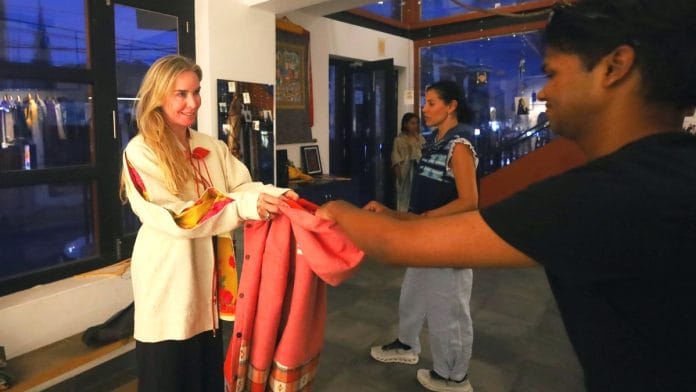


Leh: Padma Saldon runs her hand along a long yak-wool coat embroidered with apricot blossoms and explains the Ladakhi needlework to a tourist from Cuba. Beside them, a traveller from the US lifts a handwoven wool jacket and examines the intricate motifs stitched onto the sleeves. The two select several reversible jackets and capes for themselves and their children, each priced between Rs 15,000 and Rs 25,000.
Floral accents, rich fabrics and vibrant blues, oranges and yellows catch the summer sun inside Padma Saldon’s boutique 2112 Saldon—it has been designed to let natural light show off the clothes. But she has a higher purpose than just selling garments. She wants Ladakhi clothing to reach runways and everyday wardrobes, rather than be relegated to a ceremonial, kimono-like existence.
“Ladakhi clothing is not for museums or festivals. The idea is to take traditional elements and make them wearable in everyday life, while still respecting where they come from,” she said.
In Leh, a new generation of designers—including Saldon, Padma Yangchan, Jigmet Disket, Stanzin Palmo, Jigmat Norbu and Jigmat Wangmo—is turning Himalayan heritage into high fashion. Labels such as Namza Couture, 2112 Saldon and Jigmat Couture are blending indigenous fibres, sustainability and centuries-old craftsmanship. In the process, they are trying to rebuild the region’s textile economy and take Ladakhi clothing from the rugged mountains to international streets and Bollywood.
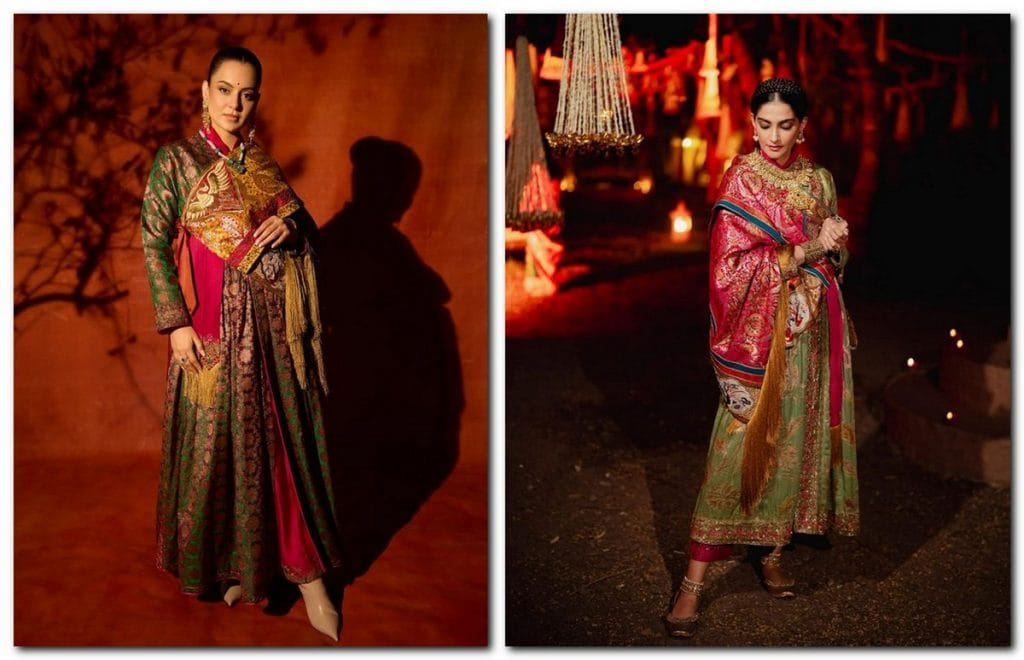
The clothes have already made it to celebrity wardrobes. Bollywood actor Sonam Kapoor Ahuja wore a Namza Couture mogos, a gown-like Ladakhi robe crafted in Banaras silk and paired with a rani-pink bok cape, to Anant Ambani and Radhika Merchant’s pre-wedding function in Jamnagar. Kareena Kapoor Khan has posted pictures of herself in a floral mustard Namza shirt. Last December, Kangana Ranaut wore a vibrant green goncha layered with a mustard bok shawl to a winter wedding—and later chastised fashion bloggers for calling it an Anarkali.
Namza took khullu (yak wool) fabrics and tie-and-dye mogos to London Fashion Week in 2019, while 2112 Saldon made its runway debut at Lakmé Fashion Week in 2024 where she won the GenNext Award for her collection ‘Memoirs of Ri Yul’.
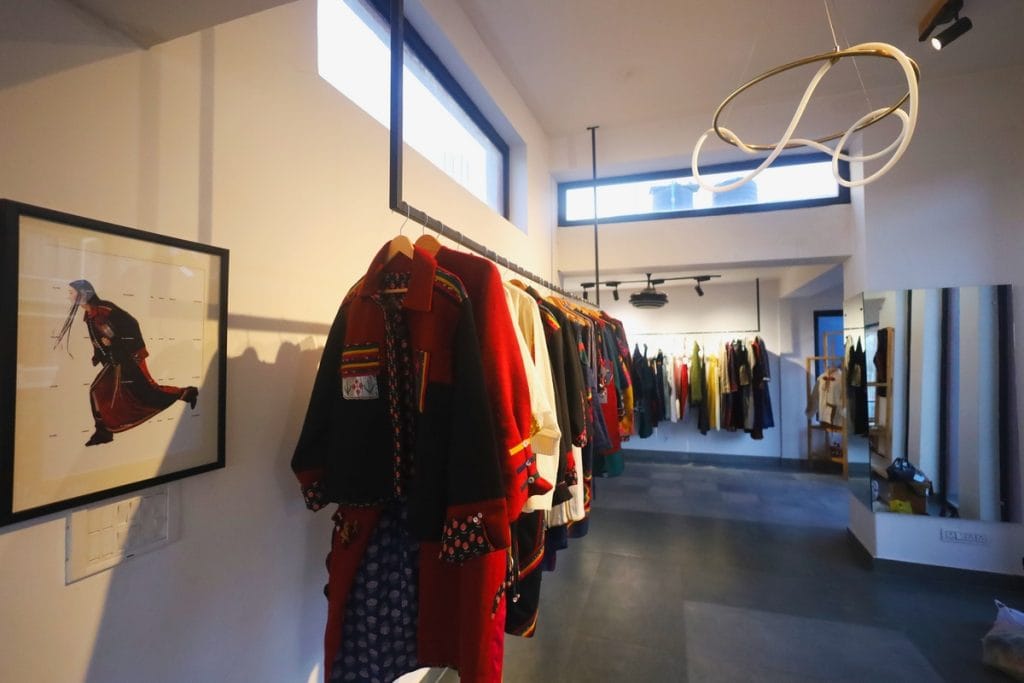
But the clothes are tied tightly to their roots. Saldon is not trying to leave behind the goncha, now largely worn by elders. She wants to broaden its reach: a yak-wool coat worn over jeans, warm and chic enough for a Paris winter. And Namza wants brides to swap the lehenga for a mogos. Practicality and sustainability are also at the heart of Jigmat Couture, one of Ladakh’s oldest fashion brands.
“Ladakhi clothing was never created as fashion. It evolved because people had to survive in one of the harshest climates in the world. Every garment had a function—keeping the body warm, protecting it from the wind and lasting for years. Beauty came naturally through the craft,” said Jigmat Norbu, an NIFT graduate who co-founded the label with his wife Jigmat Wangmo in 2010.
Also Read: Ladakh’s yak churpi cheese has reached the world. A gold medal in Brazil is just the start
First fabric, then design
Namza Couture, 2112 Saldon, and Jigmat Couture all began with a homecoming. Their founders left jobs in metro cities and returned to Ladakh, setting up boutiques in Leh and training local weavers themselves. That commitment shows even in their lookbooks.
Whether it is Namza’s brocade silk creations or Saldon’s bold palettes, their collections are photographed against the backdrop of Buddhist monasteries and Ladakh’s stark mountains.
These designers are in the thick of every stage of production, from buying raw sheep and yak wool directly from local weavers to stitching the final luxury garment in their Leh workshops. Ladakh’s pashmina is globally famous, but these designers also want to introduce the world to the region’s broader, lesser-known textile heritage.
“Ladakh loves colour. If you go to the monasteries, you will see colourful wall paintings. Even our traditional garments and jewellery are very colourful. Ladakh is geographically dry and brown, but the colours we wear are vibrant. That’s something we’re very fond of,” said Jigmat Couture’s Wangmo, a NIFT Mohali graduate.
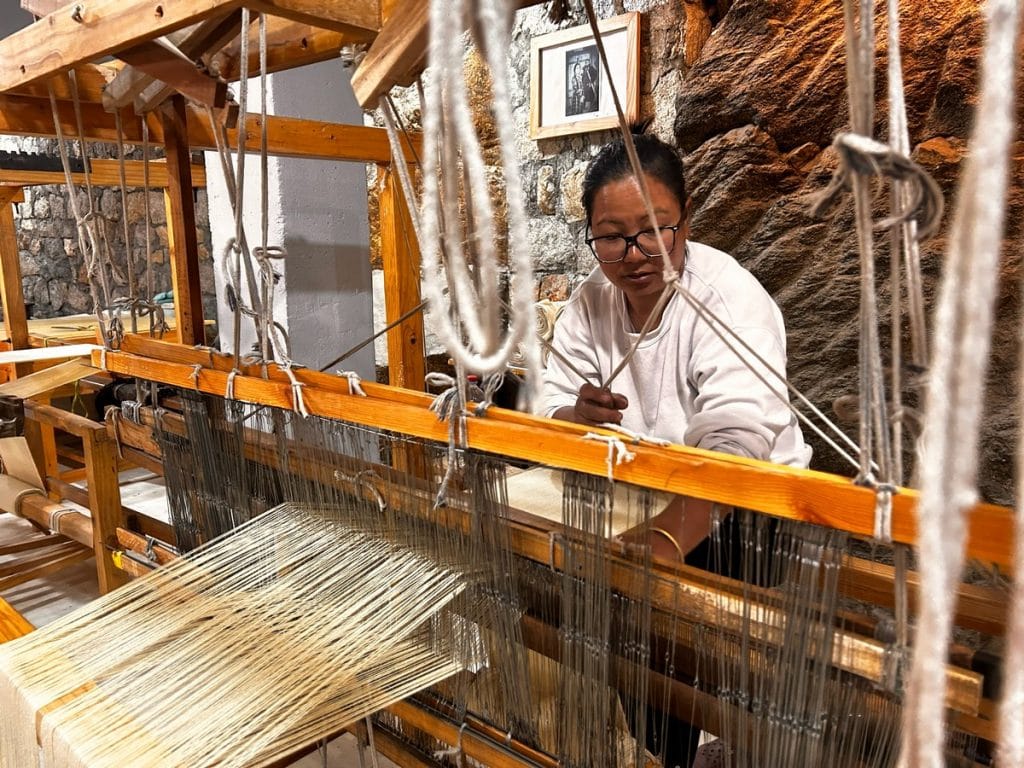
Her process flips traditional design on its head.
“Most designers sketch first and buy fabric later. I do not work like that. First the fabric has to come in front of me. I have to understand its texture, its fall and its weave. Only after that do I decide what garment it should become. My entire collection depends on the fabric,” she told ThePrint.
Most designers sketch first and buy fabric later. I do not work like that. First the fabric has to come in front of me. I have to understand its texture, its fall and its weave. Only after that do I decide what garment it should become. My entire collection depends on the fabric
-Jigmat Wangmo, co-founder, Jigmat Couture
To build an ecosystem, several of these designers have looped in weavers from remote villages, sometimes bringing them to Leh.
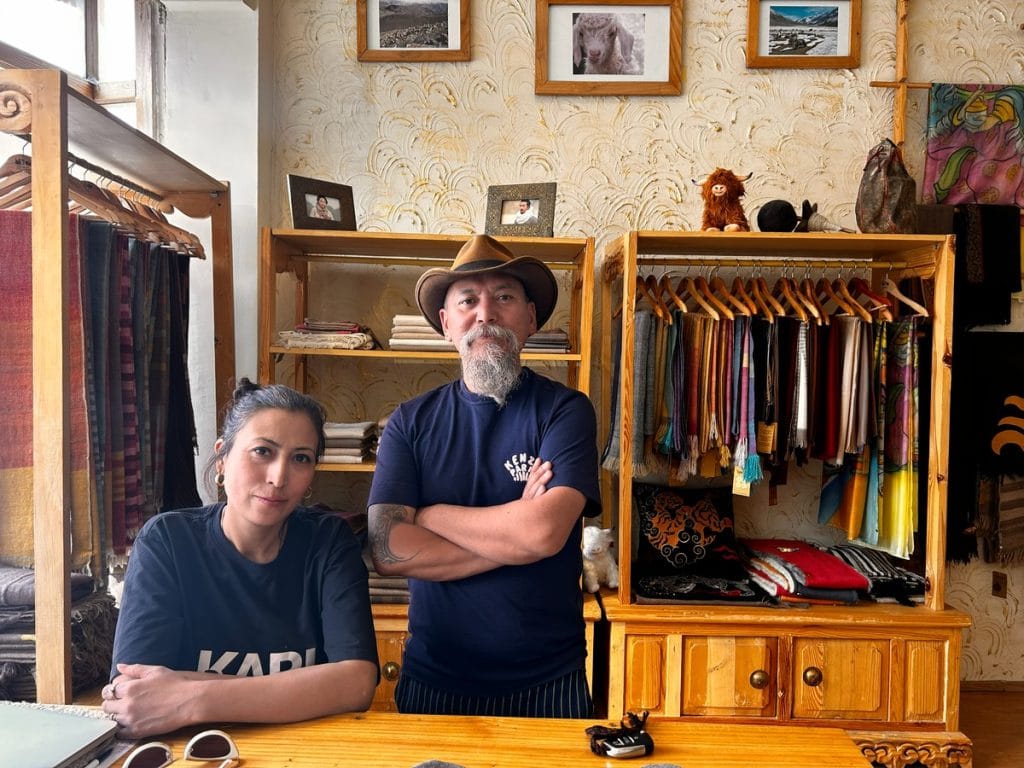
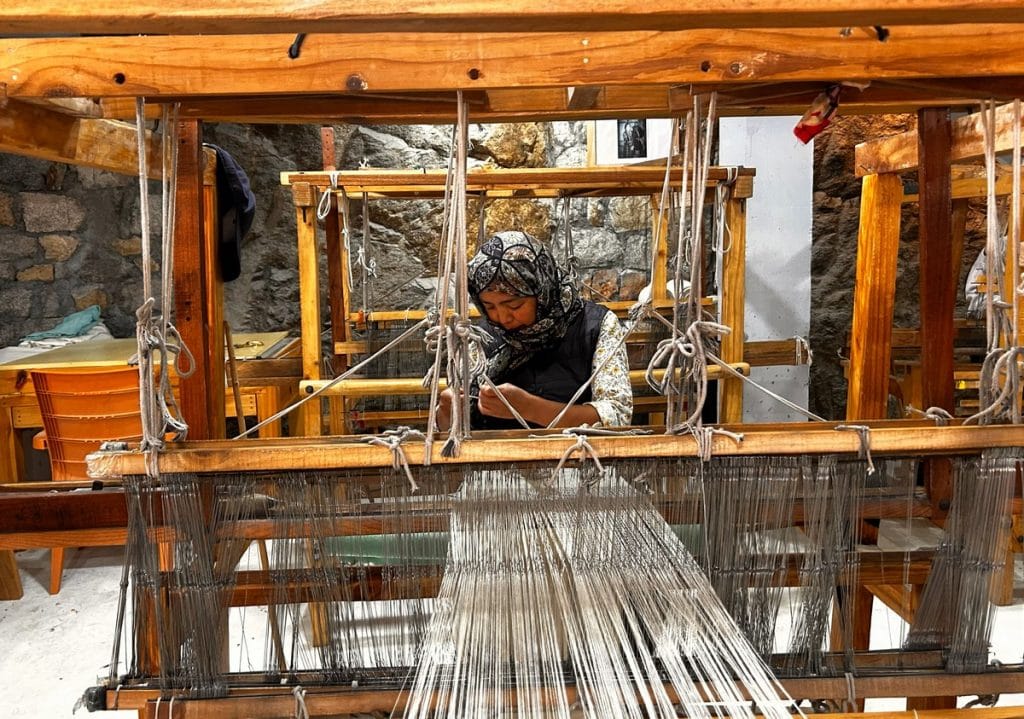
Inside Namza Couture’s luxury store—founded by Padma Yangchan and Jigmet Disket—a small space is dedicated to an in-house workshop. Some artisans work on a loom, while others iron finished fabrics nearby.
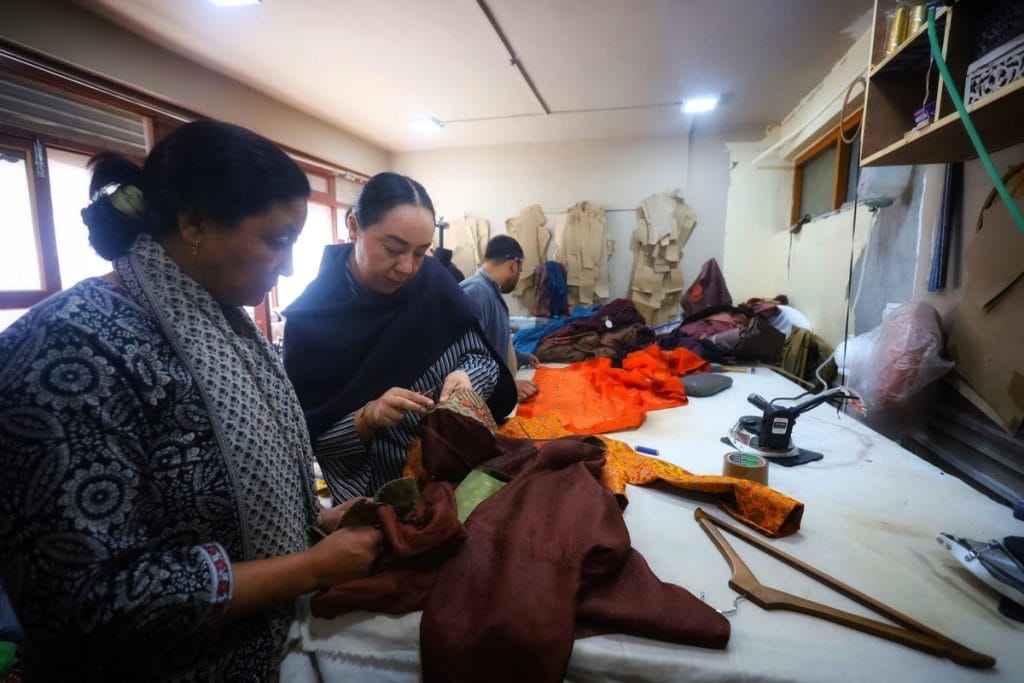
“We bought our own loom and started training people. Most of our weavers are women. The first step was to convince them. Slowly, we made a sample and then gave it to them to reproduce. That’s how we slowly built our weaving community,” said Yangchan.
Several of these designers are also collaborating with craftspeople across India, whether it’s Saldon’s use of Ajrakh block prints or Yangchan’s fondness for Banarasi brocades.
An LSR graduate who left a media career across Delhi, London, and Mumbai to return home and launch the label in 2016, Yangchan splits her time between Delhi, Varanasi, and Leh to revive old textiles.
“My brocade and silk weavers are in Banaras, while my woollen weavers are in Ladakh. We develop the designs here, make samples, and then work closely with the weavers to recreate them,” Yangchan said.
In Ladakh, the seasonal rhythms have always included weaving: summers are farming season, while winters are for the loom.
“Weaving has always existed in Ladakh. Earlier, our mothers spun yarn and our fathers wove cloth. People made their own tents, carpets, clothing, and household textiles. But it was never commercial. Nobody imagined it as something that could become a design industry,” said Norbu.
Saldon, who trained at NIFT and also has a production unit in Delhi, built her brand around Nambu, a handspun sheep wool. She collaborates directly with artisans from Phyang village to handle the hand-spinning and weaving.
“Every piece has passed through so many hands. One person weaves it, another spins the yarn, someone else stitches it, and then there is the entire design process. That is what makes it beautiful,” she said.
Her assistant Vikas said he sometimes implores Saldon to spend a little less lavishly on fabrics, but she insists that budget is no bar for her vision.
Also Read: How a handful of farmers made strawberries a wonder in Rajasthan
Bridal ‘dream’ and biker style
Beyond tourists and celebrities, there’s a small but growing market in Ladakh itself for local couture, and Namza is at the centre of it with its bridal wear.
“Lehengas are repetitive. People want to wear something different now,” said Yangchan, who received the Union government’s Nari Shakti Puraskar in 2022. “If you really look at the Ladakhi silhouette, it already has that elegance. People can relate to it, but at the same time it feels fresh.”
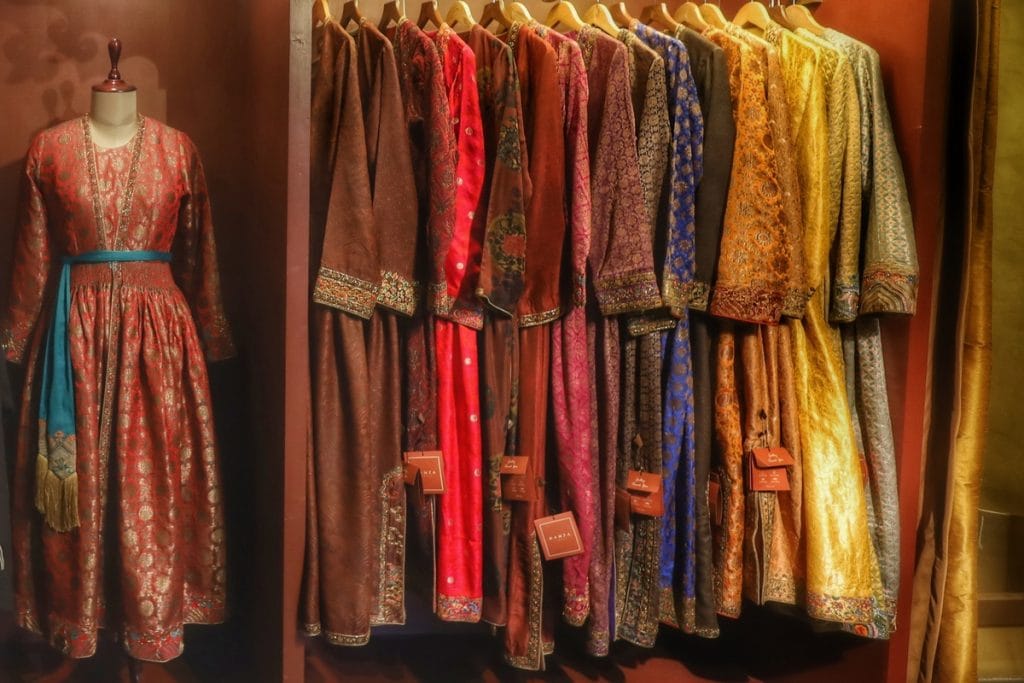
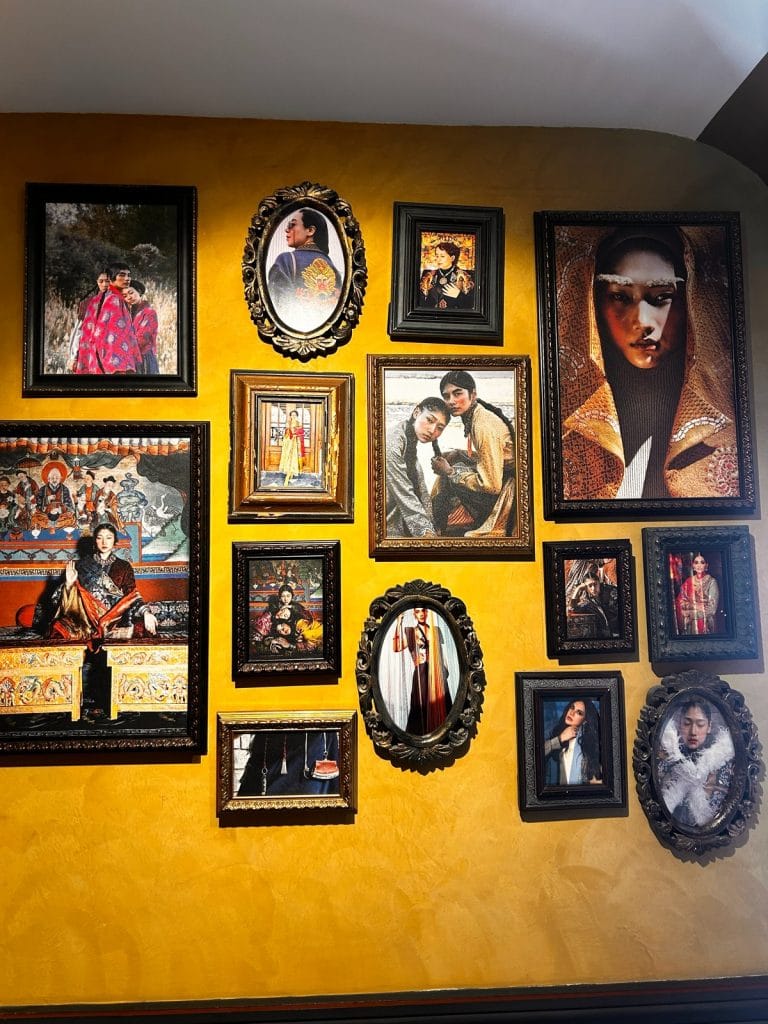
To create her bridal designs, Yangchan draws on Silk Route trade history, pairing traditional cuts with handwoven pashmina, pure silk, and revived heritage brocades —the kind seen in Namza outfits worn by Sonam Kapoor and Kangana Ranaut.
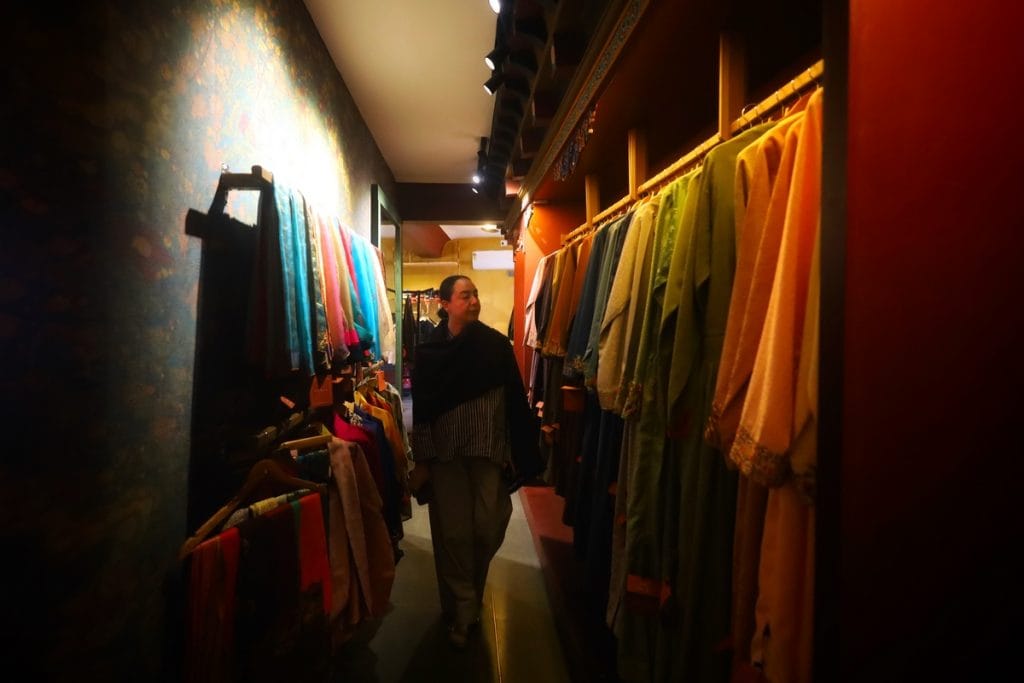
That elegance is on display in her store, where bright, shiny fabrics stand out against the dark wood.
Right now, most brides in Ladakh want to wear Namza. That has become a dream for many girls. They want one Namza bridal because they know it will stay with them for life.
– Padma Yangchan, co-founder, Namza Couture
“Right now, most brides in Ladakh want to wear Namza. That has become a dream for many girls. They want one Namza bridal because they know it will stay with them for life,” Yangchan said.
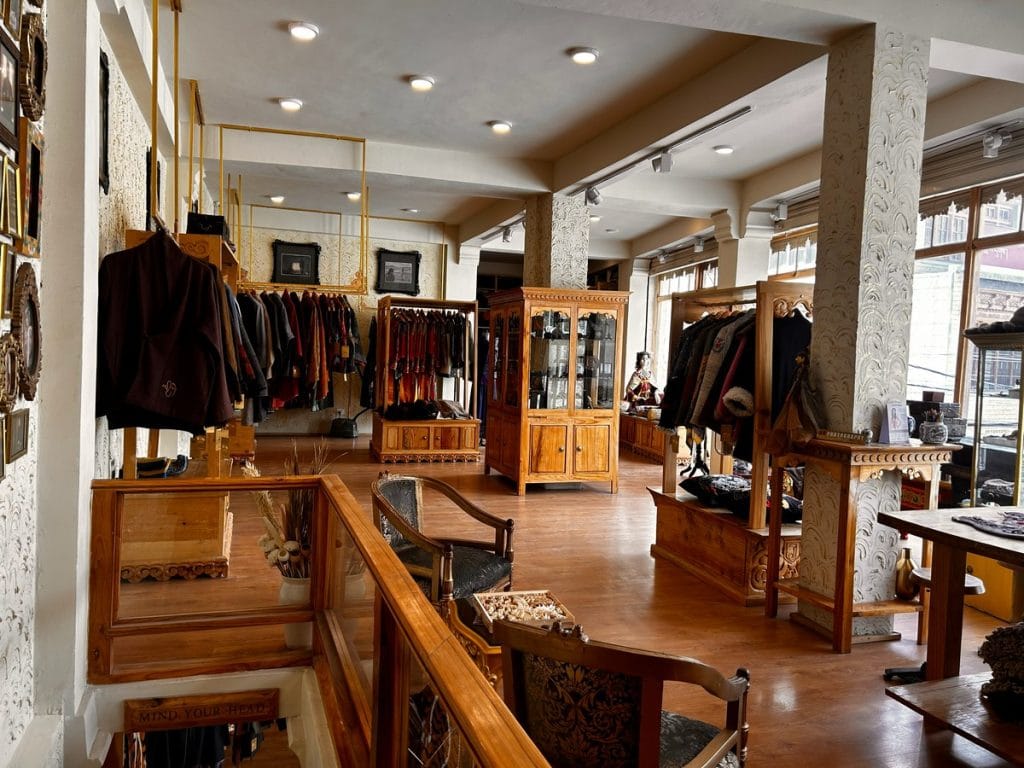
Overlooking Leh’s main market, Jigmat Couture has a more earthy aesthetic. Inside its double-storey store featuring traditional Ladakhi woodwork, the USP is local yak and lamb wool, fashioned into jackets, skirts, dresses, and sweaters that can ward off the harshest cold.
“We have these beautiful fibres from this land. We switch between pashmina and wool—balancing ancient wisdom of textiles with modernity,” Norbu said, calling it “a fusion of Ladakh and the rest of the world.”
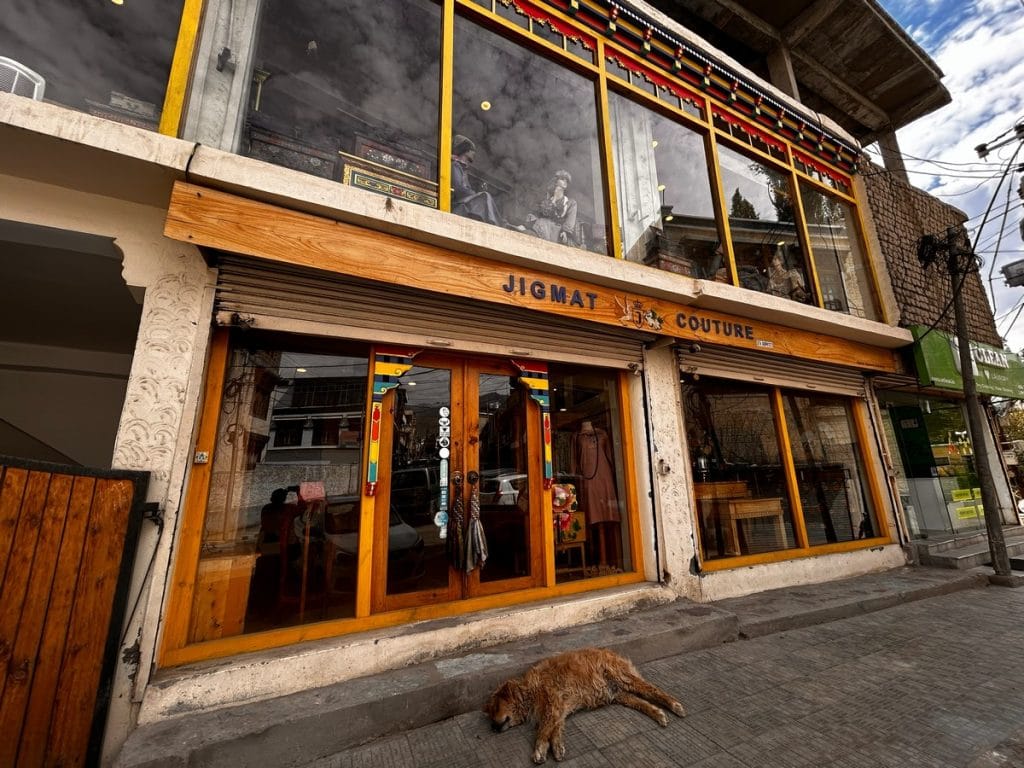
For this year’s collection, the couple broke away from regional silhouettes, taking inspiration from the lakhs of motorcyclists who ride through Ladakh’s dramatic terrain each year. Norbu, who focuses on textiles, selected heavy yak wool, while Wangmo designed ensembles decorated with Buddhist motifs, Ladakhi script, and the four mythical animals found on Tibetan prayer flags—the snow lion, tiger, dragon, and makara.
On one white woollen jacket, Wangmo used bright, sparkly embroidery to bring those symbols to life.
“The campaign is very modern, a fusion collection,” Norbu said. “But everything is made from our own wool textiles.”
Slow fashion for the soul
While everyday clothing for young Ladakhis still comes from fast-fashion e-commerce or shopping trips to Delhi, these local labels have become a new kind of aspirational luxury. Prices range from a few thousand rupees for a scarf to lakhs for a bridal outfit, which means it’s out of reach for most, but that’s part of the appeal.
The brands themselves intentionally eschew speed and overproduction. It’s about slow, deliberate creation, where quality is the main metric. But slow doesn’t mean easy. Every piece is painstaking, hands-on work.
When winter freezes commercial life in Leh, the artists and designers keep going. Every January, Padma Saldon starts brainstorming for her annual collection. For the next three months, she researches Ladakhi history for inspiration and prototypes designs with her tailors.
I am a slow fashion label. I take my own time. From a business point of view, it may not be the best approach, but I am feeding my soul more than my business.
-Padma Saldon, founder, 2112 Saldon
When 2112 Saldon launched in August 2022, she operated out of a tiny workshop that she describes as a “cubicle of artisans”.
“Masterji would stitch, and I would do all the finishing and designing,” she said.
Saldon produces just one collection a year. For her ‘Ajrakh Story’ line in 2024-25, she combined elements from traditional Ladakhi kitchens with a centuries-old block-printing technique from Gujarat’s Ajrakhpur. She developed a stencil pattern based on the thab (a traditional Ladakhi stove) and spent ten days in Gujarat sampling motifs on cotton and modal silk.
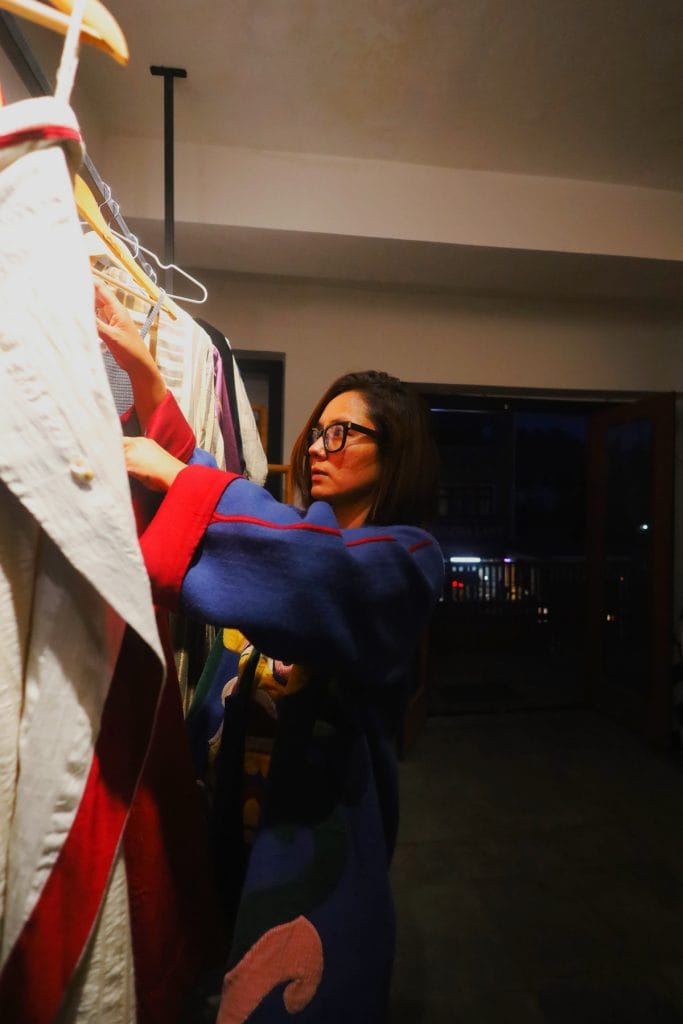
“If tomorrow I want to work with artisans in Lucknow, I’ll do the same thing: take inspiration from Ladakh, collaborate with craftspeople there, and create something together,” Saldon said. “I am a slow fashion label. I take my own time. From a business point of view, it may not be the best approach, but I am feeding my soul more than my business.”
That ethos is shared by other Leh couture houses. Both Namza and Jigmat Couture release only one collection a year, putting every garment through months of work with local weavers and tailors. Each has been in business for over a decade, and almost every collection has a larger ambition—whether it is Jigmat Couture’s Zangla Queen, which revived Zanskar’s thik-ma resist-dyeing tradition, or Namza’s 2024 Hor-Lam, named after the ancient Route of the Hor People.
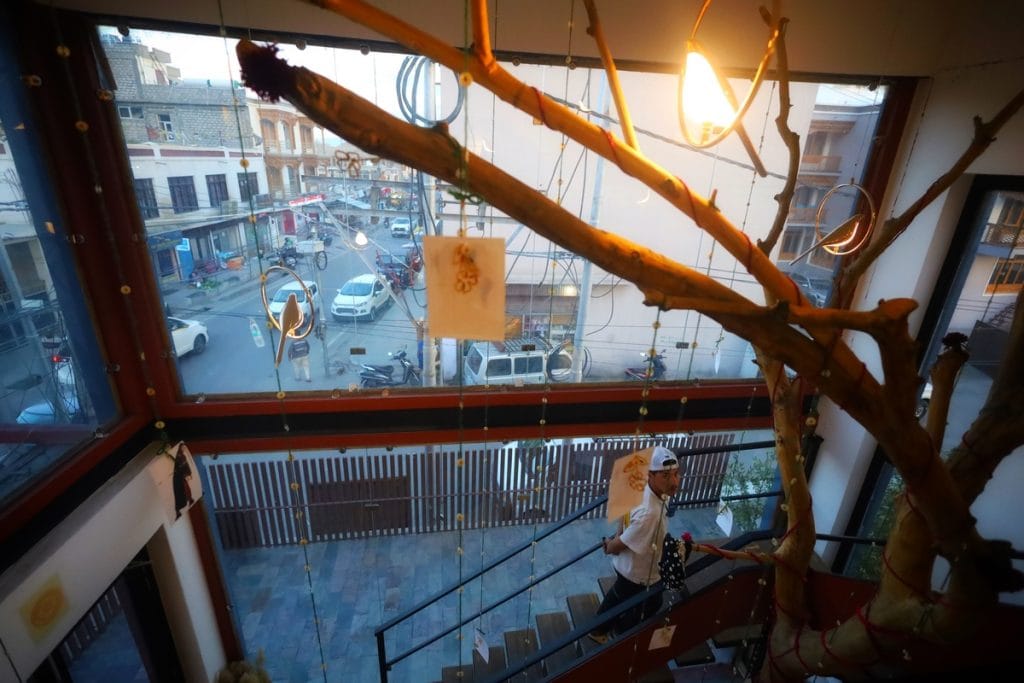
“A lot of art goes into every piece because these details cannot simply be replicated,” Saldon said. “Even if I make the same jacket again, there will always be some difference because so much of it is done by hand.”
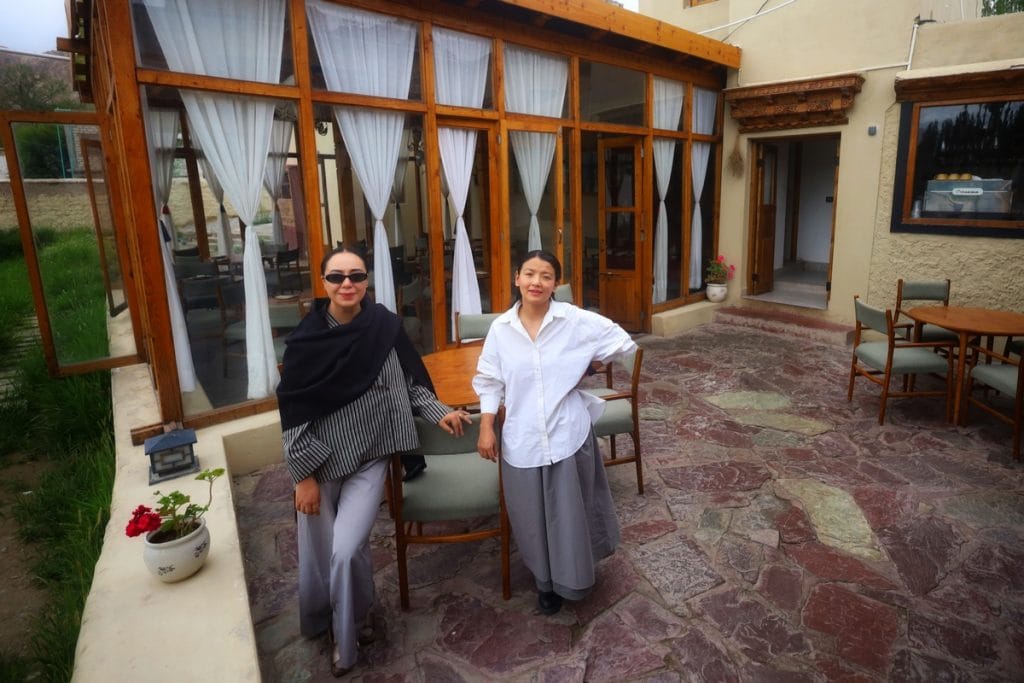
Now, some of these fashion brands are taking their philosophy to new spaces in their quest to create a self-sustaining “ecosystem”. Next door to her boutique, Yangchan has opened a semi-outdoor restaurant serving “lost” Ladakhi dishes made with handpicked mountain herbs and produce from its own kitchen garden.
Meanwhile, Jigmat Norbu is opening his private textile collection to the public as a museum. His label, Jigmat Couture, also runs a factory on Nubra Road with on-site accommodation for its female artisans, allowing weavers from surrounding villages to live and work in one place.
Back at 2112 Saldon’s sunlit boutique, the two travellers finish selecting their pieces. Both are visiting Ladakh as part of a group tour, and this is their second visit to the shop during their stop in Leh.
They had arrived in Leh expecting to take home standard travel souvenirs. Instead, they are leaving with handcrafted Himalayan luxury. For Roberta Beatty, who lives in Hawaii, what pulled her in was the vivid colours, but what really won her over was the “efficiency” of the clothes, especially the reversible jackets.
“It’s such a good collection. Yak wool is so warm,” Beatty said, adding that her new outfits would come in handy during her travels around the world.
(Edited by Asavari Singh)