





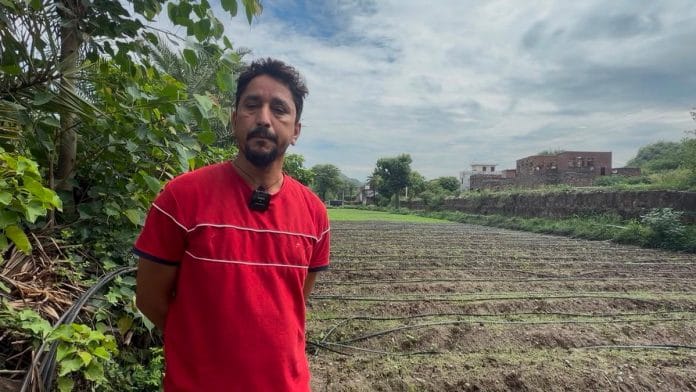


Udaipur: The dirt track to Narayan Singh’s farm cuts through a rugged landscape. Strawberry cultivation here seems unthinkable. This is, after all, Rajasthan.
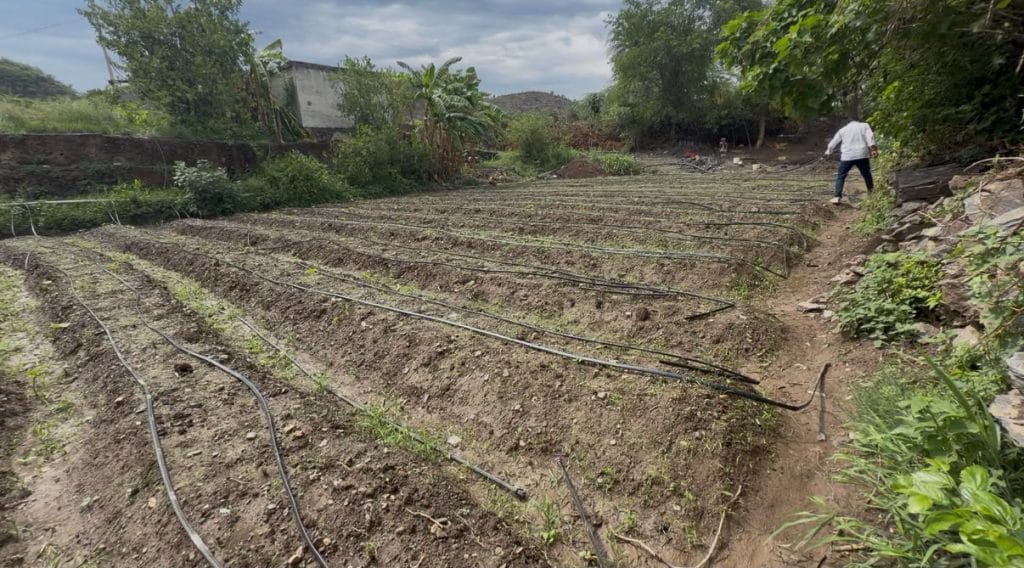
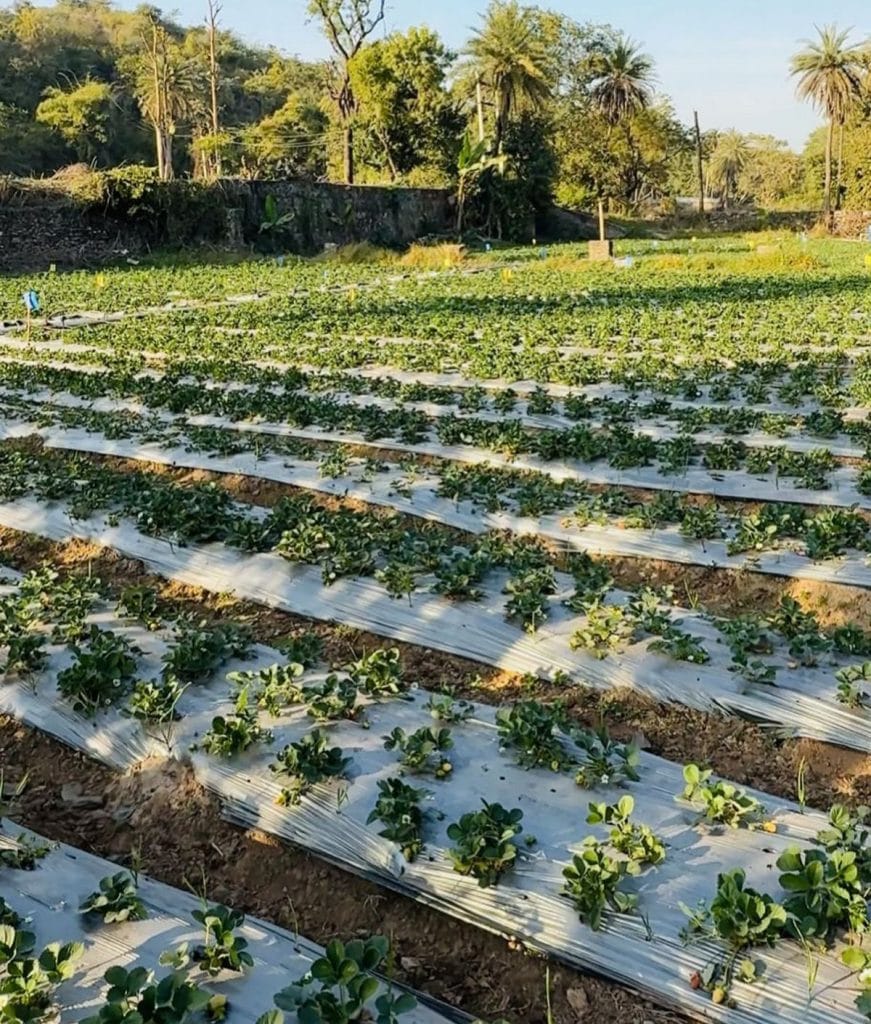
And yet, from late November to early February, 10 acres of leased land outside Kunda village, about an hour’s drive from Udaipur, are covered with rows of strawberry plants. They sit under sheets of silver-black mulch, with drip lines running between them and workers bent over the beds before sunrise.
Ringed by dry hills, temperatures here are extreme, plunging to −2°C in winter and soaring to 48°C in summer. Strawberries normally need temperatures between 20°C and 25°C to fruit well, such as in Mahabaleshwar, India’s strawberry capital. That single belt in Maharashtra accounts for about 85 per cent of strawberry production in India, estimated at around 20,000 tonnes a year as of 2020-21.
Against those odds, Singh and a handful of other growers have made this parched region bloom with strawberries.
Singh, 35, walks the field in a collarless red shirt and jeans, his sandals caked in mud. Six years ago, he was a bank employee. Today, he is among the very few farmers in India cultivating strawberries outside Maharashtra and Himachal Pradesh.
A lot of people here told me they were trying strawberries for the first time. We went from house to house, doing our own marketing, and that’s how our client base grew.”
-Narayan Singh, strawberry farmer
“These plants have to be looked after like small children,” Singh said, standing at the edge of a row that has just been planted and will be in full bloom by December. “The three of us brothers are in this field from four in the morning until eleven at night. We work with forty to fifty labourers every day, and it still takes three months before we can bring in a crop.”
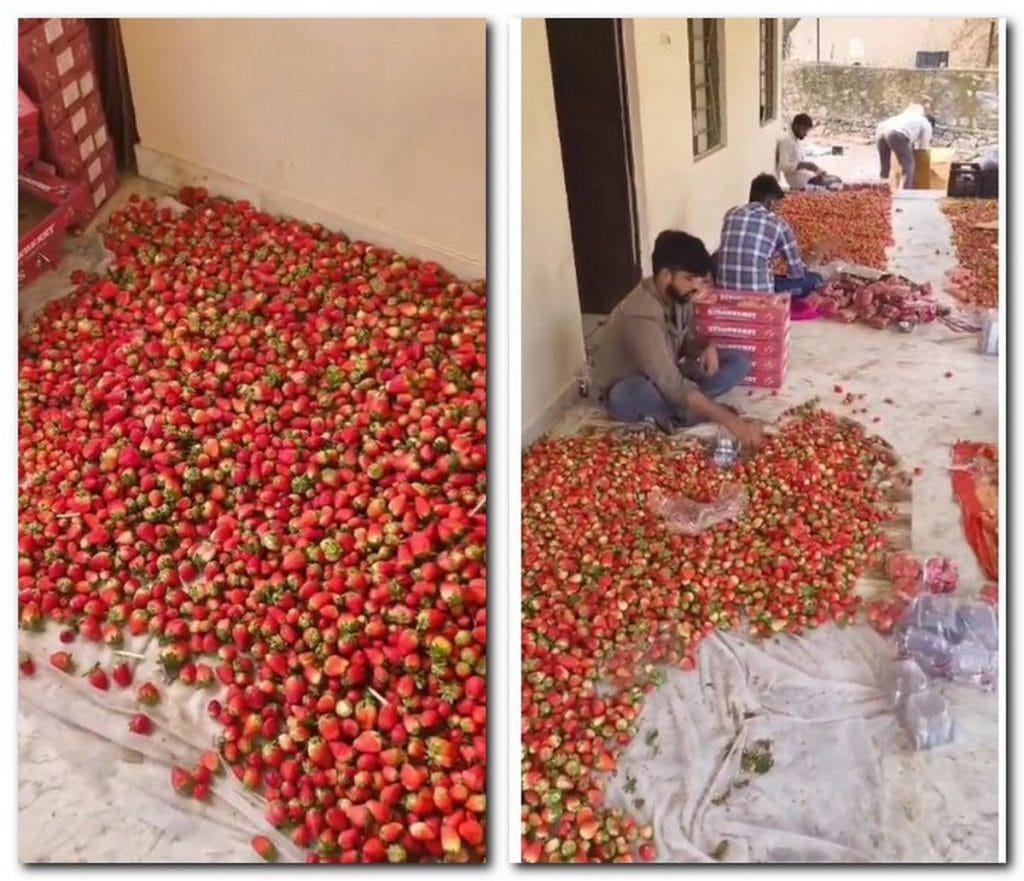
During harvest season, close to a hundred workers bustle among the rows on any given day, according to Singh. It is an unusual sight in a region where farm labour is more often measured in ones and twos than in dozens. Most of them are local people who, until Singh arrived, had never grown or even eaten a strawberry.
Also Read: The truth behind India’s ‘Rs 2.5 lakh’ Japanese Miyazaki mango craze. It starts in Jabalpur
Burned by chillies
Singh’s path to this field began with a resignation letter and then an initially disastrous attempt at farming.
After seven to eight years as a sales manager at a private bank, the 8-to-10-hour shifts were wearing him down. Farming called out to him, especially since his father and grandfather had also worked the land, growing millets. By 2020, even the bank salary was no longer enough to keep him behind a desk.
“I was tired of the corporate life, the bank’s daily grind, and so I always wanted to go back towards farming and start something new of my own,” he said. “We didn’t have much ancestral land of our own, so I thought, why not lease some and try.”
His first attempt was growing chillies in 2020, on eight bighas leased near the Bhopal Sagar dam in neighbouring Chittorgarh district. Singh went in with enthusiasm but without research or technical guidance, and the crop failed outright. The loss ran to roughly Rs 8 lakh, wiping out his bank savings and provident fund payout in one stroke.
“The loss had hit me so badly, I had to take a job paying Rs 18,000 a month, after leaving one that paid Rs 48,000,” he said of the period that followed. “That’s how bad things had gotten for us.”
He eventually sold a piece of his family’s ancestral land just to clear the debt. It would have been reasonable to give up on farming altogether, but Singh decided the problem wasn’t farming — it was doing it without knowledge. The next attempt, whatever it was, would come only after real research, not before.
The great strawberry chase
The idea of growing strawberries came to Singh because of his son’s fondness for the fruit.
“My son absolutely loves strawberries. He’d eat them even when they’d gone mouldy,” Singh said. “That’s when I thought, why not just plant one or two saplings ourselves?”
Singh then travelled to Himachal Pradesh, where he spent two days trying to get cultivation tips from farmers, but they were discouraging about his prospects in Rajasthan. Not ready to give up hope, he then went to Mahabaleshwar for an extended stay, where he learned soil preparation and disease management at the farm of a local grower, Ashish Bilare. But here too, the feedback from most farmers was that it couldn’t be done in the desert state.
Rather than accept that verdict, Singh spent nearly a year travelling within Rajasthan, checking temperature records, talking to farmers and ruling out site after site as too hot or too erratic.
“I studied everything — how it’s done there, what the climate is, what the process is,” he said. “Then I came back and tried to match that climate to something I could find here.”
The search for the perfect microclimate eventually took him to a farm near the 12th-century Kundeshwar Mahadev temple in Kunda village, Rajsamand district, not far from Udaipur. Its owner, Mahesh Dave, had approached him after learning that Singh was on the hunt for a site where daytime temperatures rarely crossed 30 degrees. The village fit the bill and Singh leased the land.
“When I found this spot and started by planting strawberries on a single acre, they actually grew, to everyone’s surprise. That’s when I knew I’d got it right,” Singh said.
Saplings from Italy, US, Mahabaleshwar
The first real season, in 2022, was modest by the farm’s current standards: an acre and a half, planted with young “mother plants” imported from Italy and California.
Rather than planting them directly, Singh had the saplings raised for three months on leased land in Satara, Maharashtra, with Bilare’s guidance, before transporting them to Rajasthan by air and road. The outlay for that first proper season came to roughly Rs 8 lakh.
Singh was anxious about whether the market would accept domestically grown strawberries, but the crop returned about Rs 10 lakh in three months — enough to convince him that this was not a one-off.
“Earlier, the strawberries being sold in our markets were travelling 1,000 kilometres before they could reach people here,” he said. “Ours were 10 kilometres away and fresh. People liked that, and once word got around, they started coming to the farm itself.”
That early success set off a rapid scale-up: from 1.5 acres to 4 acres the following year and 10 acres this season, with close to 1.5 lakh plants and around Rs 22 lakh sunk into inputs.
Singh does not have precise yield figures from the earliest seasons, but the previous year’s crop came to around 250 quintals. He grows the strawberries along with garlic, which helps keep pests off the beds and cuts his reliance on chemical treatments. He says he made a profit of Rs 15 lakh from the strawberries and Rs 2 lakh from garlic last season.
I studied everything [in Mahabaleshwar]… how it’s done there, what the climate is, what the process is. Then I came back and tried to match that climate to something I could find here
-Narayan Singh
Saplings now arrive each year from the Netherlands, California, Spain and Italy, supplemented by batches sourced from Mahabaleshwar. Each mother plant is expected to throw off a cluster of new runners used to expand the beds further.
However, only around half the imported stock typically survives the transition to Rajasthan’s climate, and even fewer produce healthy offshoots locally — something Singh is still trying to fix.
The winning variety
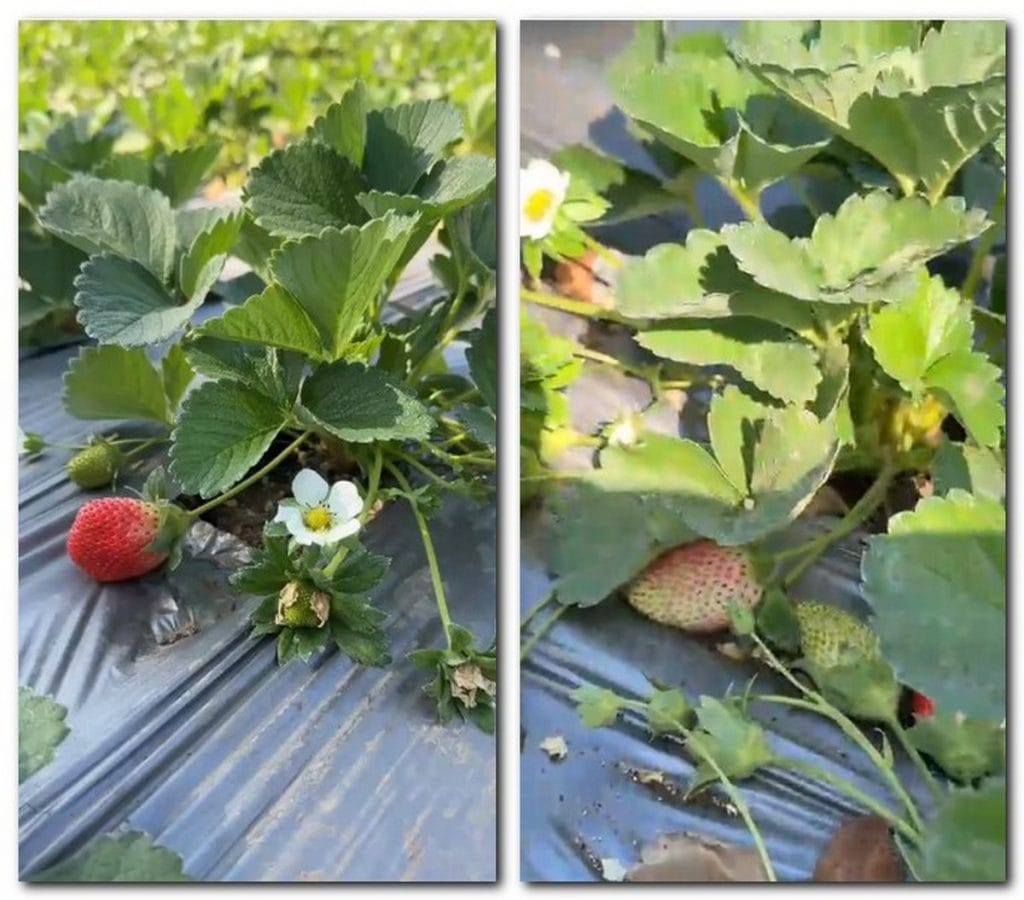
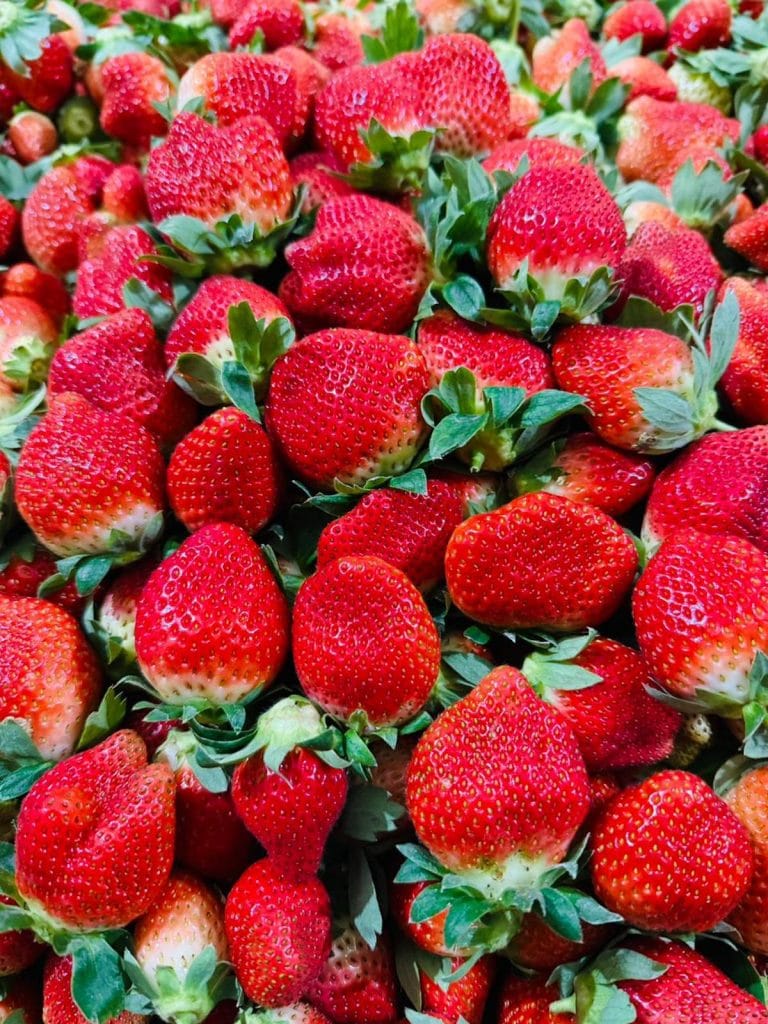
The farm’s star performer is Winter Dawn, the variety that cracked the climate. It is heavier and rounder than Sweet Charlie, the showier variety commonly grown around Mahabaleshwar, and Singh says it has a more complex taste profile.
“Ours are not just sweet — they carry a slightly tart edge too,” he said. “The smaller ones are purely sweet, but the bigger fruit gives you both the sweetness and the sourness together.”
For Singh, that flavour comes down to choosing a variety suited to the local weather.
“What we have planted for our climate turns out sweeter,” he added.
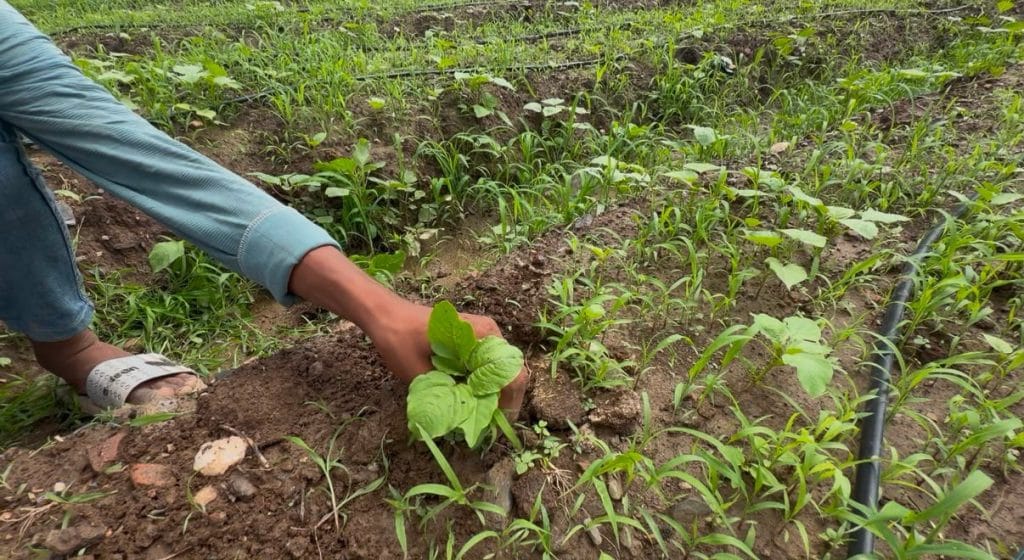
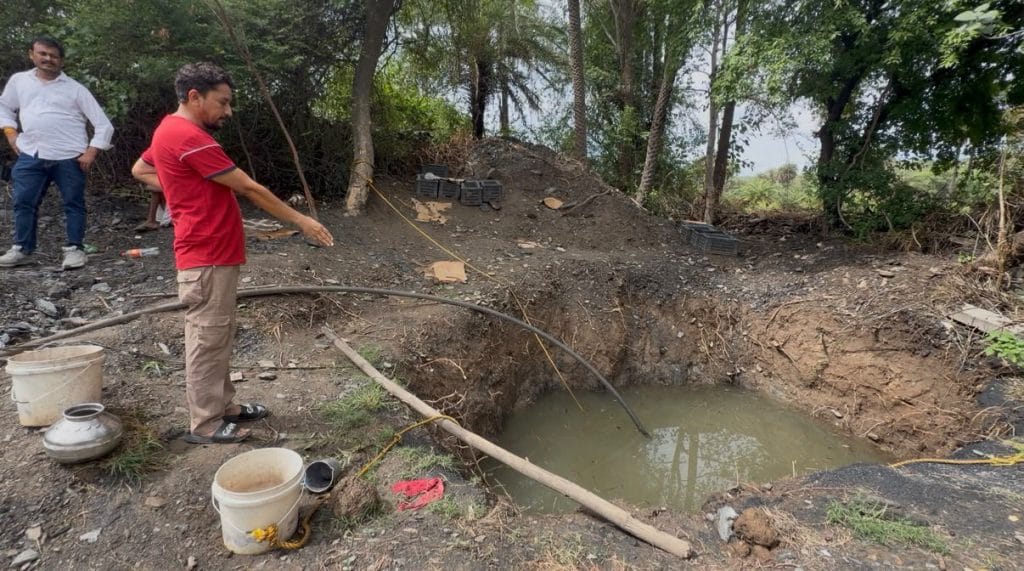
The agronomy leaves little room for error. Planting happens in a tight window between late September and mid-October, timed to the retreat of the monsoon, because the rains are also when fungal disease and weeds take hold fastest. For the first fortnight, the crop depends almost entirely on rainwater and river water. After that, an automated drip-irrigation system takes over, sounding an alarm on the farm whenever a top-up is due.
Three to four weeks in, workers cover the beds with a thin, 25-micron plastic mulch that keeps the ripening fruit off bare soil. No chemical pesticides go into the fields.
“For whatever disease shows up in the fruit, we treat it with cow urine, neem cake and vermicompost…and biofertiliser is used only if it’s really needed,” Singh said.
The first fruit typically appears by early December, with the harvest peaking around 20 December. Picking continues through January and February into March, tapering off once daytime temperatures rise past 27°C or 28°C.
Singh has looked for a way to grow strawberries year-round, but the fruit stops forming properly once temperatures rise after the first week of March.
Tours and tastings
When Singh first started selling locally, he personally visited residents of the tribal-dominated village to introduce them to the fruit.
“A lot of people here told me they were trying strawberries for the first time,” he said. “We went from house to house, doing our own marketing, and that’s how our client base grew.”
Singh’s produce is now sold in Delhi, Ahmedabad, Jaipur and Udaipur, but other spinoff revenue models are also growing at home beyond the sale of the fruit.
The farm has become something of an agri-tourism stop. Resorts in the area have begun marketing themselves around the strawberry season, and couples drive out on weekends to pick their own fruit among the mulched rows. Singh’s family walks visitors through how the crop is grown.
“The first thing that surprises them is that a state as hot as Rajasthan is growing strawberries at all,” said Singh, who charges Rs 2,000 for a 30-minute tour. “They’ve eaten it abroad, or in Mahabaleshwar, and never expected to find it here. Once they taste it, they eat it with real enthusiasm—it makes me really happy to host people here.”
While strawberry cultivation in Rajasthan is still niche, Singh is not the only farmer growing the fruit here. The state’s experiments with strawberries began nearly a decade ago. In Jhalawar, a belt better known for mandarin oranges, researchers at the College of Horticulture and Forestry began testing different varieties around 2015. After evaluating 16 varieties over three years, they found that only Winter Dawn, the variety Singh now grows, took to the local climate.
Another pioneer was farmer Jagdish Prajapat, who made headlines in 2017 for successfully growing strawberries in Chittorgarh district using plants brought from Himachal Pradesh and Maharashtra. More recently, former tailor Ramchandra Rathod has drawn attention from agriculturalists as far away as Australia for growing strawberries and broccoli in Luni tehsil of Jodhpur, a region better known for drought and migration.
Also Read: Ladakh’s yak churpi cheese has reached the world. A gold medal in Brazil is just the start
Dreaming of ‘mother plants’
Growing a strawberry farm in Rajasthan required a DIY toolkit. With local agriculture officers offering little guidance on the unconventional crop, Singh relied on trial and error and a mentor in Mahabaleshwar.
“The officers here don’t really understand strawberry farming,” he said. “Ask them about something and they’ll tell you to look it up online, because they don’t have the knowledge either. I’ve picked up a lot myself by now, but if I ever get stuck, I still call Ashish Bilare in Mahabaleshwar.”
Now, Singh is turning his farm into a learning hub for others.
Farmers from surrounding villages visit his fields to pick up the basics of planting and caring for strawberries. He wants the crop to spread across the region rather than remain a curiosity confined to one farm.
“I want the villages around us to start growing strawberries too, and to take it to a bigger scale,” Singh said. “I’ve taught people in this village how to do it — most of them now know how to plant it.”
His next goal is to remove the farm’s single biggest recurring cost: imported saplings. A mother plant that yields around 80 new saplings on a Maharashtra farm produces only three or four when raised on the Rajasthan farm. Singh is trying to close that gap through his own experiments, but he hasn’t cracked it yet.
“I’m hopeful that one day we’ll be able to raise mother plants right here on Rajasthan’s own soil,” he said.
(Edited by Asavari Singh)