




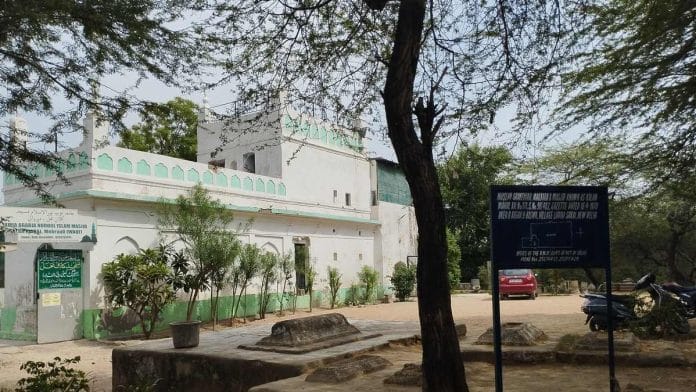

The Waqf (Amendment) Act, 2025 is one of the most hotly debated topics in recent years. Now, the Supreme Court’s refusal to stay the Kerala High Court’s restriction on the state Waqf board has brought the amended law back into public debate.
The Court has not yet decided whether the Board’s composition is legal. That question will be answered later. But its refusal to interfere with the Kerala High Court’s interim order has ensured that the debate over the implementation of the amended Waqf Act is far from over.
The dispute is about the new requirement of two non-Muslim members in a Waqf board. The Kerala High Court found the issue serious enough to stop the Board from taking major policy decisions until the final verdict. When the matter reached the Supreme Court, it left that part of the High Court’s order untouched. It removed only the requirement that the Board function under the supervision of a senior state government official, while allowing the other restrictions to continue.
The order has done little to settle the political debate. The BJP sees it as the judiciary’s support for the amended law, while the Opposition points out that the Supreme Court has not yet ruled on the constitutional validity of the Act.
The problem is that every attempt to reform the Waqf administration—a question of governance—quickly turns into a debate about identity. Muslim leadership, consisting of the Ashraf elite, portray any changes to Waqf laws as an attack on religious freedom or on the community itself. On the other hand, the BJP’s political messaging gives the impression that Waqf boards cannot be trusted to function on their own, requiring greater government oversight and the presence of non-Muslim members. I understand the need for government insight. It is necessary for every institution—checks and balances are always needed—but it’s less obvious how statutory inclusion of non-Muslim members can achieve the objective.
Neither approach really serves the interests of ordinary Muslims. Instead of asking whether Waqf institutions are transparent and accountable, the debate reduces the matter to politics and identity.
The need for transparency
Waqf is one of Islam’s oldest charitable traditions. Historically, Waqf endowments funded schools, hospitals, libraries, orphanages, water facilities, and relief for the poor. The idea was simple but noble—wealth dedicated permanently for public good.
But noble intentions are not enough. In the 21st century, charitable institutions must also demonstrate results.
Waqf properties are spread across every part of India and represent one of the country’s largest collections of charitable assets. It raises an obvious question. If Waqf institutions control India’s third largest land bank, why does a large section of the Muslim community continue to face poor educational, economic, and social outcomes?
While speaking on the Waqf (Amendment) Bill in the parliament, Union Minister of Parliamentary Affairs Kiren Rijiju mentioned that the largest waqf landholding in the world is in India. After Railway and Defence services, the Waqf board has the largest landbank. https://t.co/9WxXWvgSn1
— infoindata (@infoindata) April 2, 2025
Are Waqf properties being managed efficiently? Is there corruption or mismanagement? Are the assets generating the benefits they were intended to provide? These are questions that deserve honest answers, not an attack on Waqf as an institution. Charitable institutions must be judged by how well they serve the people they were created to help.
We need transparency and accountability from Waqf boards. If an institution manages vast charitable assets meant to serve a community, the community must be able to see how those assets are being managed.
Millions of ordinary Muslims have the right to ask some basic questions. What income do Waqf properties generate every year? How much of that funds scholarships, healthcare, widows, orphanages, and poor families? Which properties are under litigation? Which have been encroached upon? Which leases were awarded transparently, and which were not?
Also read: Students’ battle over paper leaks is becoming a caste war
Opening the space for a healthier debate
One of the changes introduced by the amended law is the proposal for a centralised digital system to record and track Waqf properties. If implemented properly, it could make records easier to verify, reduce the scope for tampering, and give the public a clearer picture of what Waqf institutions actually own. Such a method should not be dismissed outright as government interference. It can benefit ordinary Muslims by making charitable institutions accountable.
But digitising records will not solve the biggest problem, which is that 58 per cent of Waqf properties remain tied up in legal disputes or are affected by encroachment. If the institutions can’t use more than half of their assets, improving records will achieve only so much.
Resolving these disputes should be a priority. That is an area where the government has an important role to play. Faster dispute resolution, clearer land records, and effective enforcement would allow Waqf institutions to accurately assess resources and the income they can realistically generate. Only then can the public fairly judge whether Waqf Boards are managing assets well and fulfilling the charitable purpose for which they were created.
Transparency does not just benefit the public. It also protects the institution. When records are open and accurate, there is less room for rumour and speculation. It opens the space for a healthier debate. Genuine achievements become visible, and allegations of mismanagement can be judged based on facts rather than political leanings.
Many Muslims see the requirement of appointing two non-Muslim members on Waqf boards as part of the BJP’s broader politics. These concerns deserve to be heard. But the irony is that the government is not acting outside the constitutional framework. The same constitutional space that Muslim religious leadership and many community elites (Ashraf) have long relied on to argue for separate legal arrangements is now being used by the BJP to impose two non-community members on Muslim charitable institutions.
The bitter truth is that if Waqf institutions had consistently demonstrated transparency, accountability, and effective management, the government wouldn’t even need to step in.
The future of Waqf boards will depend not only on resisting changes imposed from the outside but also on showing that they can govern themselves in a way that earns the confidence of both the community and the wider public. Whether ordinary Muslims, especially the poor, are receiving the full benefit of these charitable assets is a real concern. To meet that goal, the Waqf must reform—or it may eventually perish.
Amana Begam Ansari is a columnist, writer, and TV news panellist. She runs a weekly YouTube show called ‘India This Week by Amana and Khalid’. She tweets @Amana_Ansari. Views are personal.
(Edited by Prasanna Bachchhav)
The same argument can now be made for the working and finances of the Ram mandir at Ayodhya.
Opposition to transparency and accountability measures can only mean that those opposing them have their dark secrets to conceal.
… Which is all the more reason to pursue these measures.