Amana Begam Ansari is a columnist, writer, and TV news panellist. She runs a weekly YouTube show called ‘India This Week by Amana and Khalid’. She tweets @Amana_Ansari.
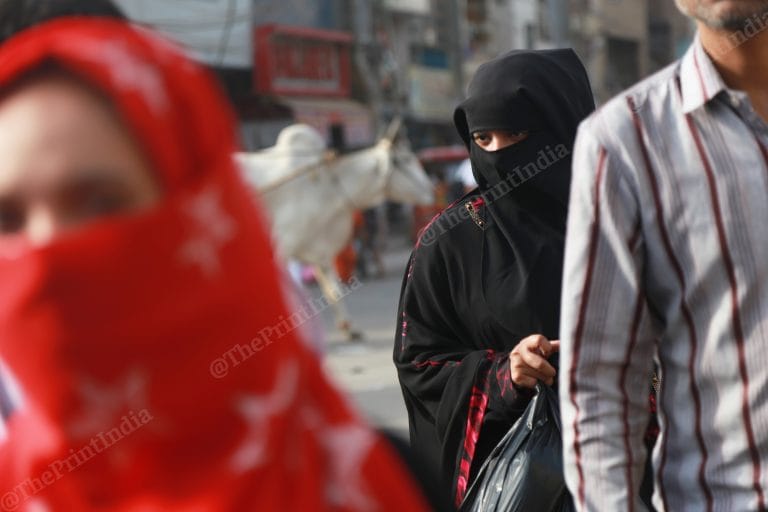
There is a fairly damning argument to be made about the architecture surrounding the hijab. First, what is now presented as an unambiguous religious obligation rests on a considerably more complicated textual and jurisprudential history: the Qur’anic verses do not straightforwardly prescribe head-covering, and classical jurists developed veiling rules within a social order that distinguished free from enslaved women. “Modesty” was therefore not simply a timeless, universally applied command; the obligation was constructed and hardened through jurisprudence over time.
Second, the veil became tied to chastity, honour and “protection” — but the protection argument shifts responsibility for male sexual behaviour onto the female body, making women’s dress a mechanism of surveillance and patriarchal control over women’s choices.
Third, the hijab is not merely an item of clothing: modern veiling (and what the literature terms reveiling) has also functioned as a marker of Muslim identity, Islamisation, resistance and political belonging. Its modern political history is closely associated with Islamist movements, including the Muslim Brotherhood, and particular forms of hijab have been heavily favoured as visible markers by Islamist supporters. That is why treating it as just an outfit can miss legitimate questions about ideology, political mobilisation and, in particular contexts, security and public-space concerns. None of this means that every woman who wears a hijab is making a political statement, but there is every reason to raise security concerns related to displays of the garment and its proliferation in society.
Interestingly, the logic extends to men through ghayrah and its opposite, dayyūth: male “honour” is constructed around guarding female sexual propriety, turning men into officially guardians and, unofficially, enforcers of women’s dress, behaviour and interactions. If they do not do so, they are unmanly, condemnable, and contemptible.
And once modesty becomes an honour system, disagreement comes at a price — from shaming and reputational punishment for being “immodest” to coercion and, at its most extreme, violence justified as honour. I don’t think I need to elaborate on this, most readers would know the most infamous examples: women being killed with the very hijab they refused to wear, or for behaviour as innocuous as laughing and clapping with members of the opposite sex. Enforcement is therefore not some accidental corruption of the system; it follows logically from attaching family and male honour to women’s conduct.
The deeper mechanism has a name: tabarruj, ostensibly a category of “immodest display”, but one that can become a vocabulary for policing female visibility itself — dress, adornment, movement, speech, scent, and even their very presence in public or before members of the opposite sex. The female body becomes the surface on which communal morality is enforced.
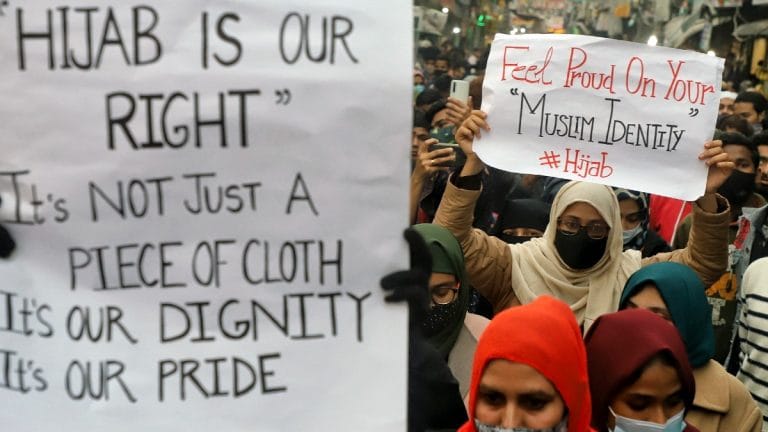
But what about the crowd of women defending their free choice to veil, including, if I may, another article here on the Print (Hijab is a choice…)?
Here, I’d draw attention to the most insidious mechanism of internalisation. We have reached a point where rejecting an entire range of ordinary freedoms and forms of self-expression can itself be valorised as an ideal of female virtue. Women are not merely passive victims of this architecture; they can be equally responsible for legitimising and reproducing it — including through religious discourse, socialisation and literature that romanticises submission (e.g. Urdu fiction is full of examples).
That does not mean every woman who wears the hijab is coerced, or that her sense of agency is unreal. For many, it genuinely is a free choice. But “free choice” is relative, and does not end the analysis when the surrounding culture has made one choice virtuous, dignified and safe, while constructing the alternatives as sinful, shameful, immodest or dangerous. In other words, the choice is free, but it is the only one that is valid.
The more interesting question is therefore not simply whether women choose the hijab, but how a society teaches women what they ought to choose — and then calls that internalised choice “freedom”.
[Disclaimer : AI used to summarise my much longer monograph. Proofread thoroughly for the accuracy of claims, tone, and voice.]
Any clothing or wearing prescribed by any religion is okay only as long as it doesn’t break any rules of the country. Wearing hijab or burqa can become a security threat. The government, the institutions must setup extra security measures like frisking to minimize security threat. And the cost of these security measures must be paid by the persons wearing hijab or burqa.
Nowadays, Wahhabism has become synonymous with Islam as a whole.
There is a fairly damning argument to be made about the architecture surrounding the hijab. First, what is now presented as an unambiguous religious obligation rests on a considerably more complicated textual and jurisprudential history: the Qur’anic verses do not straightforwardly prescribe head-covering, and classical jurists developed veiling rules within a social order that distinguished free from enslaved women. “Modesty” was therefore not simply a timeless, universally applied command; the obligation was constructed and hardened through jurisprudence over time.
Second, the veil became tied to chastity, honour and “protection” — but the protection argument shifts responsibility for male sexual behaviour onto the female body, making women’s dress a mechanism of surveillance and patriarchal control over women’s choices.
Third, the hijab is not merely an item of clothing: modern veiling (and what the literature terms reveiling) has also functioned as a marker of Muslim identity, Islamisation, resistance and political belonging. Its modern political history is closely associated with Islamist movements, including the Muslim Brotherhood, and particular forms of hijab have been heavily favoured as visible markers by Islamist supporters. That is why treating it as just an outfit can miss legitimate questions about ideology, political mobilisation and, in particular contexts, security and public-space concerns. None of this means that every woman who wears a hijab is making a political statement, but there is every reason to raise security concerns related to displays of the garment and its proliferation in society.
Interestingly, the logic extends to men through ghayrah and its opposite, dayyūth: male “honour” is constructed around guarding female sexual propriety, turning men into officially guardians and, unofficially, enforcers of women’s dress, behaviour and interactions. If they do not do so, they are unmanly, condemnable, and contemptible.
And once modesty becomes an honour system, disagreement comes at a price — from shaming and reputational punishment for being “immodest” to coercion and, at its most extreme, violence justified as honour. I don’t think I need to elaborate on this, most readers would know the most infamous examples: women being killed with the very hijab they refused to wear, or for behaviour as innocuous as laughing and clapping with members of the opposite sex. Enforcement is therefore not some accidental corruption of the system; it follows logically from attaching family and male honour to women’s conduct.
The deeper mechanism has a name: tabarruj, ostensibly a category of “immodest display”, but one that can become a vocabulary for policing female visibility itself — dress, adornment, movement, speech, scent, and even their very presence in public or before members of the opposite sex. The female body becomes the surface on which communal morality is enforced.
But what about the crowd of women defending their free choice to veil, including, if I may, another article here on the Print (Hijab is a choice…)?
Here, I’d draw attention to the most insidious mechanism of internalisation. We have reached a point where rejecting an entire range of ordinary freedoms and forms of self-expression can itself be valorised as an ideal of female virtue. Women are not merely passive victims of this architecture; they can be equally responsible for legitimising and reproducing it — including through religious discourse, socialisation and literature that romanticises submission (e.g. Urdu fiction is full of examples).
That does not mean every woman who wears the hijab is coerced, or that her sense of agency is unreal. For many, it genuinely is a free choice. But “free choice” is relative, and does not end the analysis when the surrounding culture has made one choice virtuous, dignified and safe, while constructing the alternatives as sinful, shameful, immodest or dangerous. In other words, the choice is free, but it is the only one that is valid.
The more interesting question is therefore not simply whether women choose the hijab, but how a society teaches women what they ought to choose — and then calls that internalised choice “freedom”.
[Disclaimer : AI used to summarise my much longer monograph. Proofread thoroughly for the accuracy of claims, tone, and voice.]
Any clothing or wearing prescribed by any religion is okay only as long as it doesn’t break any rules of the country. Wearing hijab or burqa can become a security threat. The government, the institutions must setup extra security measures like frisking to minimize security threat. And the cost of these security measures must be paid by the persons wearing hijab or burqa.