




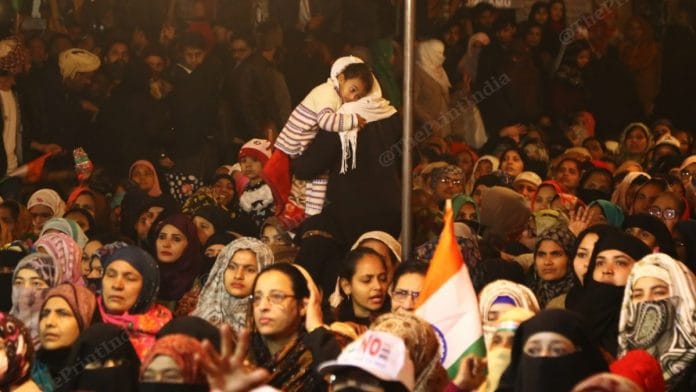

Six years after Muslims occupied the streets of Shaheen Bagh to protest against the Citizenship Amendment Act CAA, I came across news of a Delhi Police officer’s appeal at an Old Delhi mosque, asking people not to participate in a protest called by the Cockroach Janta Party.
The officer reportedly made the appeal over a microphone at Shahi Masjid near Chandni Chowk Town Hall. The imam also urged worshippers not to join the protest. It raised some uncomfortable questions for me. Why are Muslims still being addressed separately as a community, and why through mosques?
The scene reminded me of an older political practice: parties approaching mosques and imams, appealing to Muslims to vote for them. It reflects a persistent assumption that the opinions and actions of such a large and diverse community are shaped by religious leaders. Rather, they are shaped by different spaces, from schools and colleges to conversations with friends, political debates, and social media.
So I have always struggled with this idea. It reveals how limited, and sometimes hollow, our understanding of Muslim communities remains.
Yes, mosques can be effective in reaching many people. But assuming that Muslims will simply follow whatever an imam tells them is almost laughable. Even mosques can be divided along caste and community lines. Some Muslims have little connection with mosques or religious leaders at all.
So why do we continue to imagine Muslims as a single community that can be addressed, influenced or controlled through a handful of religious leaders?
From Shaheen Bagh to the police appeal
The police described the appeal at the Shahi masjid as a preventive measure to maintain law and order. Similar appeals were reportedly made through other community institutions and residential associations.
I would not immediately assume, therefore, that Muslims were singled out. But the image of a police officer standing inside a mosque and asking Muslim families to keep their children away from a political protest raises a larger question: what has changed between Shaheen Bagh, where Muslim families came out on the streets to defend their citizenship, and today, when families are being encouraged to keep their children away from protests?
Indian Muslims have not stopped protesting, nor does choosing not to participate in a protest mean they have become politically indifferent. But I do wonder whether the experience of the past six years has changed how ordinary Muslims think about the risks and consequences of political participation.
Also Read: CJP protest is a turning point for Indian Muslims. Speak as citizens, not as a religious bloc
The right to protest also means the right to choose
I want to be clear: I do not want Muslims to be discouraged from protesting or expressing their political opinions. They have the same rights as any other citizens. If they want to protest, they should be able to do so, with CJP or without it.
Every Muslim should feel free to speak, and nobody should face intimidation or unfair consequences simply for expressing a political view or participating in a peaceful protest.
At the same time, I would see it as a positive development if Muslims, as individuals, were thinking carefully about the risks, costs, and purpose of their political participation.
Why are we joining a particular protest? What exactly are we demanding? Is this a cause we believe in? What are the possible consequences? Does participating help advance our rights as citizens or build a fairer society?
Asking these questions does not mean becoming less political. If anything, it means becoming more conscious of our political choices. It helps us understand which causes are worth fighting for and how to avoid being used as pawns in someone else’s political battle.
Having the freedom to protest does not mean we have to join every demonstration. The right to raise our voices must also include the freedom to decide when, why, and for whom we want to raise them.
This is where the politics of not participating in protests gets interesting.
Why Muslim participation is treated differently
We often measure political participation by how many people take to the streets, how loudly they raise slogans, which flags they carry, and which political organisations they support. When people don’t show up, we quickly assume they are uninterested in politics or don’t care enough about the issue.
But a particular community’s absence from a protest does not necessarily tell us what its members think. Nor does participation always have to be organised along religious lines.
This is especially important when we compare Shaheen Bagh with the CJP protests. The two are not the same. During Shaheen Bagh, Muslims had direct concerns about their citizenship. They came out to question a law they believed threatened their rights. The CJP protests, by contrast, concern alleged electoral irregularities and accountability, issues that affect every Indian citizen.
There is no reason Muslims should not participate if they believe in the cause. But why do we keep asking whether Muslims are participating as a separate community?
A Muslim student might join through a student organisation. Another person might support electoral fairness without taking to the streets. We cannot measure political participation simply by looking for Muslim faces in a crowd or Muslim organisations among the organisers.
More importantly, why must Muslims participate as Muslims? A Muslim student should be able to join a movement simply as a student. They should be able to champion electoral fairness because they believe in democracy, rather than because they have calculated what the cause might mean for their community.
It is contradictory to argue that Muslims should be treated as equal citizens while continually analysing their political choices through the lens of a monolithic community expected to act in unison.
Beyond the idea of a monolithic community
This brings me back to the police appeal at the mosque. The fact that similar messages were delivered through other institutions matters. It is a reason not to jump to conclusions about Muslims being deliberately singled out.
Yet the appeal still raises questions about how we perceive Muslim citizens and how much influence we assume religious leaders have over them. The persistence of this assumption says something about the way Muslims are understood in public and political life.
For me, the lesson of Shaheen Bagh is not that Muslims must always come out on the streets. It is that they have the same right to protest as anyone else, along with the freedom to decide when not to.
If we want Muslims to be treated as equal citizens, shouldn’t we also stop treating every political decision they make as a decision of the entire Muslim community?
(Edited by Maryam Hassan)
Owaisi, Congress, and communists decide when Muslims can protest. Personally, I don’t like protests. One should go to the courts to make a point, not the streets. We must make use of our time and energy to advance mathematics, science, technology, defence, and nation building. Victory to Mother India. In return, we should have no expectations about what the country can do for us. But as an exception, I would like the country to take care of families of martyrs.
The government, and by that extension, the state, treats Indian Muslims as one monolithic community.
A Muslim can’t go as a student, he/she is just a Muslim in the eyes of the government and his/her criticism is treated with more suspicion.
If CJP’s leadership was Muslim, I bet it would have been banned by now under sedition and anti terrorism laws. That’s how the government thinks and talks about Muslims in India.
The main reason why the Modi government was so paralyzed and confused in July because this protest was lead mainly by middle class Non Muslims. Due to which their old template of communalism,fear mongering, Pakistan/ISI didn’t work and weren’t able to control the narrative in their favour.
As a Muslims, I think precaution is better than. cure.
I personally think that, since the regime (which includes state machinery in addition to politicians) is intensely hostile to Muslims in general, it’s better to stay a mile away from these protests.
A “Abhijeet” or “Neha” can lead a movement successfully, but a “Umar” would be slapped by UAPA.
So my advice would be just to stay away from these protests, both online and offline, if you’re a Muslim.