




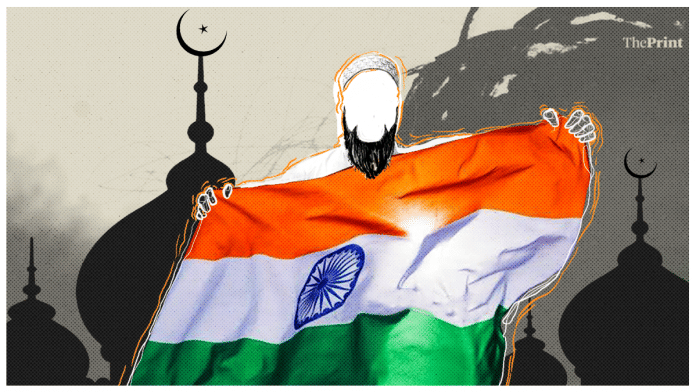

The cockroaches have crawled back to the crannies from which they emerged like a swarm. They left rejoicing after a protest that was a reel-fest and made the government acquiesce to their demands. But not everyone is happy. Those who dreamt of pulling off a Bangladesh and Nepal in India are despondent. They were delulu if they dreamt of flying back to power on the fragile wings of cockroaches. The ancien régime is gone for good. All the usual suspects — the dynastic opposition, along with their left-liberal loyalists, the left-anarchists and urban Naxals — who hoped for a revival of the pre-2014 era and openly asked for a return to the “Bure Din”, are disappointed even as they pretend to celebrate “our children’s” victory.
There is one group, however, that is covered in gloom at the withdrawal of the protests “without achieving the goal”. Long accustomed to revelling in sulk, they are doing what they do best. Across social media, they are displaying shock, hurt and consternation at the perfidious retreat just as the goal had come into sight. They didn’t participate in the protests — not directly, not as a group, and not with their pet slogans that reverberate like war cries. While some did join in as individuals, they took care not to brandish their identity markers.
You have guessed who I am talking about: the Muslim thought leaders, opinion makers, podcasters and social media warriors. Those who pontificate in Hinglish what ulema preach in Urdu. The wheelers and dealers of the Muslim vote, whose ideas are not a whit different from those of the Muslim League, even if their language is made up of Constitutional vocabulary.
As a group, they remained at a distance from the protests. Possibly a sign of evolving strategic prudence. Or perhaps the organisers kept them at arm’s length. However, teetering on the brink of jumping in, they couldn’t help hovering at the periphery — managing logistics and supplying endless packets of biryani.
It has been a rare anti-BJP movement that wasn’t about “communalism” or the marginalisation and political irrelevance of Muslims. If anything, it recognised, normalised and institutionalised all of this. Crucially, this was done with the tacit approval of Muslims themselves, who, in the interest of the “larger cause” of bringing Hindutva down, happily agreed to make themselves invisible and remain backstage.
A too-clever-by-half broker of votes remarked, “We have outsourced the fight.” Be that as it may, the moral of the story is that Muslims can’t be in fighting mode all the time. Though subconscious and unarticulated, a realisation has begun to dawn on Muslims that something has fundamentally shifted in the political tectonics of India.
It seems that Muslims, as a separate political bloc, no longer command the same heft as they did during the Secular Raj of the pre-2014 era. Their ideological concerns find no resonance with a non-ideological Gen Z. This process has been underway for quite some time. Even the political parties that survive on the Muslim vote bank have read the electorate’s fatigue with Muslim-centric non-issues and are increasingly shy of approaching voters in the name of “secularism”. Muslims are less and less bracketed with SCs, STs and OBCs. Interestingly, in the discourse of secular parties, the word Muslim has largely been replaced with the euphemism “minority”.
Also Read: SC alimony order settled a fundamental question—a Muslim woman is Indian first, Muslim later
The Cockroach inflection point for Muslims
Muslims themselves are, deep down, fed up with the stridency of the narratives that envelop their lives, from mosque and market to workplace and WhatsApp groups. They feel the need to break free, but for want of an alternative discourse, they are unable to. If only they had an intellectual class, or even a handful of so-so intellectuals, they wouldn’t remain so addicted to the gory narrative of victimhood and the psychosis it breeds.
But, unfortunately, they don’t have even a few genuine intellectuals who could analyse their situation, and suggest the way forward. One often hears the plaint about Muslims being leaderless. I wish they were. They have had far too many political leaders. All they did was keep the community on the warpath. As for their thought leaders — the ulema in pulpits, the poets at mushairas, the academics at seminars, the journalists in newspapers and sundry other experts on YouTube channels — they have been even worse. Instead of calling the community’s attention to what ailed it, they took to justifying the wrongs of its history, politics and society.
India’s Muslims need a new generation of thought leaders who help the reality sink in that their identity and destiny are Indian — not Arab, Persian or Turkish — and that they must embrace their Indianness beyond the demand for proportional representation in Parliament and the state Assemblies.
It is for this reason that the Cockroach agitation might become an inflection point for Muslims. Their distance from it — strategic or otherwise — could be the beginning of a much-needed climbdown from the hyper-politicisation that has reduced the community to a bundle of nerves — angry, volatile and inflammable. Depoliticisation of the Muslim mind is the prerequisite for de-communalisation. In this light, their quietude during the commotion was not passivity, but a pragmatic impulse that could serve as the framework for ending the politics of conflict so reminiscent of medieval India’s religious wars.
The Minority Dharma
Political quietude is the ethic that befits a minority. We may call it The Minority Dharma.
The first and foremost dharma of a minority is to be at peace with the majority. For, if a fight breaks out, the minority would lose all the rights and guarantees granted to it by the Constitution. The harsh reality that the nation is conceptualised, the state constituted, the Constitution promulgated and the government run by the majority would stare it in the face; the minority would lose the ground beneath its feet.
The concept of ‘minority’ is a by-product of the nation-state. Muslims are a minority in the Indian nation. Each one of them is constitutionally equal to each member of the majority. But the very concept of majority and minority entails that there is no parity between the two as collectives. Any denial of this reality would be a denial of the idea of the nation and the nation-state.
It’s hard for Muslims to accept minority status given the fact that they were rulers in the medieval period and, during British rule, became a nation unto themselves through the Two-Nation Theory. In independent India, they regularly invoke minority status when it serves their opportunistic agenda — as in the legal fight over the minority character of Aligarh Muslim University — but, overall, they behave as equals, antagonists and rivals to the majority.
In his classic Awaz-e-Dost, Mukhtar Masood recounts a poignant post-Partition anecdote. Welcoming Sarojini Naidu, then Governor of Uttar Pradesh, to Aligarh Muslim University, a student leader remarked: “Ya to hum aapke bade dushman hain, ya chhote bhai. Beech ki koi aur raah nazar nahin aati” (Either we are your mortal enemies or your younger brothers. There is no middle ground.) The choice is theirs. However, they cannot have their cake and eat it too.
It is a minority’s dharma to be friends with the majority, just as it is the majority’s dharma to be generous to the minority. And one can be sure that India’s majority cannot be faulted on the score of generosity.
But the indignation with which Muslim leaders react to any suggestion of earning the goodwill of Hindus lays bare the mentality of the class that ruled India for centuries. They consider it beneath their dignity to earn the goodwill of their former subjects. They invoke Constitutional equality to offhandedly reject any suggestion of friendliness. One could only wish they remembered Fraternity from the Preamble. They might, if they had made the Constitution.
It is also the dharma of a minority not to add fuel to the majority’s fire. India is a big country, and Hindus are a billion-plus people of infinite diversity, for whom dissent is the order of the day. A lot of churning goes on all the time. Inevitably, there are flare-ups too. Caste, gender, region and language can all become combustible. Eventually, every tumult settles, thanks to India’s civilisational genius for adjustment and accommodation. But when an issue burns, the minority should not meddle in the majority’s mess.
Also Read: The evolving role of Muslims in India
Disband the vote-bank army
During the 1990s, in the aftermath of the implementation of the Mandal Commission’s recommendations, caste came to define the political landscape, and caste-based parties dominated the scene in Uttar Pradesh, Bihar and elsewhere. Muslims sided with them, and the MY formula became the sacred electoral talisman that kept the Yadav parties in power in India’s most populous states. Muslims voted for them en bloc. They still do. Not because of their love for social justice, but because it is fun to see Hindu society divided and weakened.
If Muslims were actually for social justice, they would first recognise caste inequality among themselves and worry more about Ashrāfism than Brahminism. It’s not the minority’s dharma to indulge in divide and rule. If you cannot be the glue, do not be a wedge either.
When Muslims used their collective vote-bank power to support one party against another, they were actually playing one section of society against another. It is a secret ballot, and nobody knows who voted for whom. If Muslims voted according to their individual conscience, there would be no problem. But the vote bank is a sinister device by which the minority divides the majority, skews the electoral process and perverts democracy.
At long last, when the minority could no longer divide the majority, it cried foul and alleged majoritarianism. Once the Muslim vote bank lost its divisive potency, its leaders and their liberal patrons created the false discourse of fascism, totalitarianism and rampant genocide in India. One wonders what kind of fascism allows the leader to be mocked and abused, as seen during the Cockroach uprising. If this is fascism, wouldn’t they wish it on Muslim countries?
Muslims have an interesting formulation for putting the weight of the vote bank behind a political party. According to it, they vote for the lesser evil against the greater evil. Effectively, it means voting for a lesser Hindu against a greater Hindu. In their worldview, all that is not Muslim is evil — lesser or greater. It is not the Minority Dharma to treat the majority as evil. A minority that does so can neither be at peace with itself nor let others live in peace.
The paramount dharma of a religious minority is not to revile the majority’s religion, nor to attempt to convert the majority to its own. Proselytising is worse than war, for while war seeks political conquest, proselytisation seeks demographic and ideological displacement. Let Muslims observe the elementary ethic of a minority.
To observe the Minority Dharma, Muslims must depoliticise. It’s their primary takeaway from the Cockroach congregation. Depoliticisation does not mean removing their names from electoral rolls or abstaining from voting. It simply means voting as individual citizens rather than as a religious bloc. The vote bank is an army that needs to be disbanded.
Ibn Khaldun Bharati is a student of Islam, and looks at Islamic history from an Indian perspective. He tweets @IbnKhaldunIndic. He can be reached by email at ibn.khaldun.bharati@gmail.com. Views are personal.
Editor’s note: We know the writer well and only allow pseudonyms when we do so.
(Edited by Asavari Singh)
This author never fails to surprise with the kind of incisive analysis of every subject he touches.
An eye-opening analysis of the Muslim outlook in India. “India’s Muslims need a new generation of thought leaders who help the reality sink in,” captures the central challenge perfectly. Ibn Khaldun Bharati has the intellectual wherewithal to be such a thought leader. At his intellectual best, he is trying to free the Muslim mind from the mindset reflected in these immensely popular Urdu couplets:
हमारे सर की फटी टोपियों पे तंज़ न कर
हमारे ताज अजायबघरों में रखे हैं।
हमें तू ग़ज़नवी का हौसला दे
मुसलसल हार से तंग आ गए हैं।
Delegwtimize the student protest by using narratives the govt has destroyed through its actions–Check.
Bring muslim leaders as boogeyman to achieve further delegetimization-Chefk
Ignore that muslims did protest for themselves as citizens during the CAA NRC protests onlt to be labelled communal by like like Ibn Khaldun Bharti-Check.
Delegwtimize muslims voting as a bloc when all classes and castes of people also do the same-Check.
Ask muslims to stop thinking of thmselves as a minority when the entire statr and society reminds them of their subordinate position-Check.
We are reallt hitting all the bingo when it comes to pandering to a section of people that both are hostile to citizens protesting against the ruling party and muslims as well.
Amazing clarity and great advice to our Muslim brothers and sisters.
This should tell readers about the Islamophobic nature of The Print’s journalism. In some pieces one has to read between the lines unlike this one, which makes it very clear who is who. ibn Bharati ? Lazy
I would not fault Indian Muslims on any count. They have been extraordinarily patient. Whereas the Constitution does not expect them to act as if they are the children of a lesser god.
For decades, these liberal media pundits fed Muslims non-stop paranoia, telling them they’re under “existential threat” just to farm them for votes.
Now that their little trick isn’t working anymore, this blogger turns around like some holy saint and lectures them to “sit quiet and depoliticise.”
This armchair writer is having a meltdown. Lol.
Yawn… The Print is scraping the bottom of a barrel that’s already been drilled through.
Where do you even find these ‘gems’? One week CJP is the new messiah rewriting the laws of the universe, and the next week you’re writing grand philosophical essays pretending they discovered fire.
All CJP actually did was give a platform to clout-chasing Chapris, whitewash radical narratives, and give armchair columnists endless material to spin anti-Hindu doom-posting.
First you glorify the circus, then you write preachy lectures analyzing the cleanup… Peak bottom-tier journalism
Haha, the gloves are off, eh “Bharati”? You managed to pivot a genuine majority-led youth protest into the usual anti-Muslim tirade. At least you have shown your cards now, fully. Yeah, keep ranting about the minorties and those with less power. It’s the easiest thing to do, unlike what these young GenZ protesters had the nerves to do: speak up against power.