



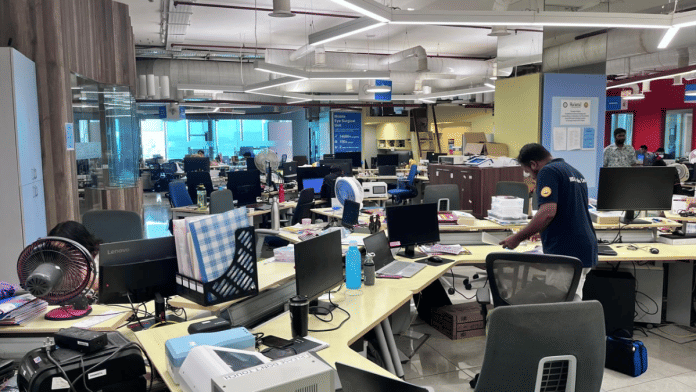
Chennai: A person can have normal blood pressure and still show early signs of changes in their arteries. Researchers at the Indian Institute of Technology (IIT) Madras are studying whether measuring stiffness of the arteries could help doctors spot cardiovascular risks earlier, before routine health checks raise an alarm.
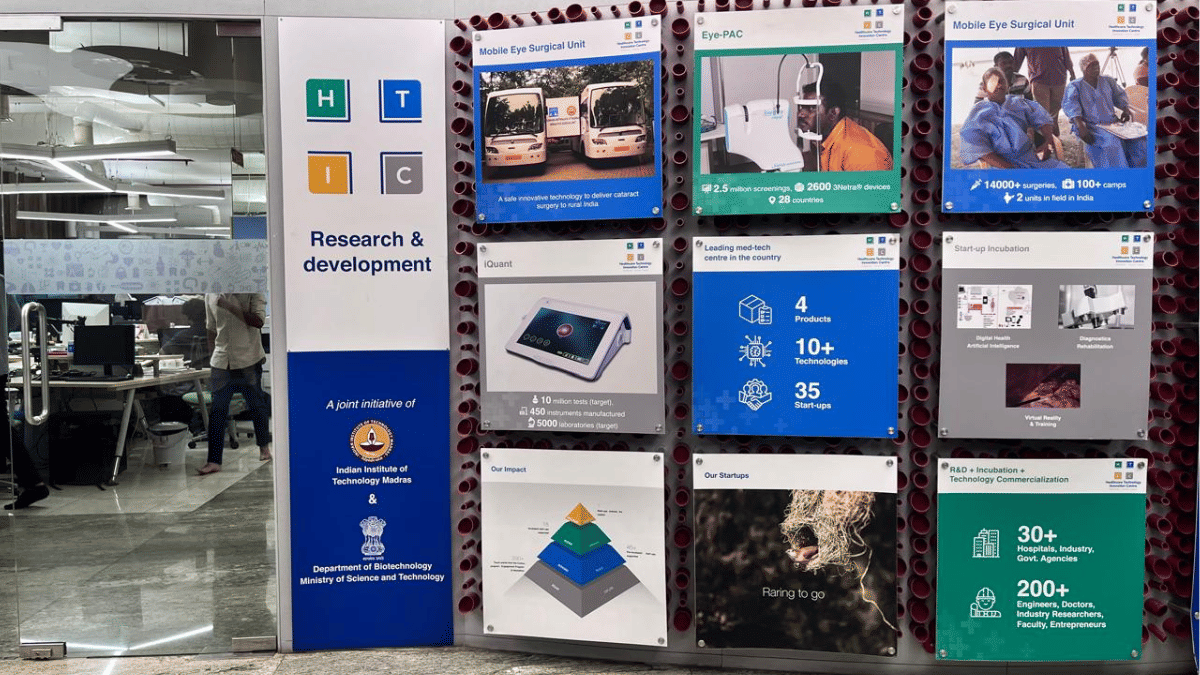
At the Healthcare Technology Innovation Centre (HTIC), a medical technology research centre at IIT Madras Research Park, researchers are developing tools to help doctors detect health risks earlier.
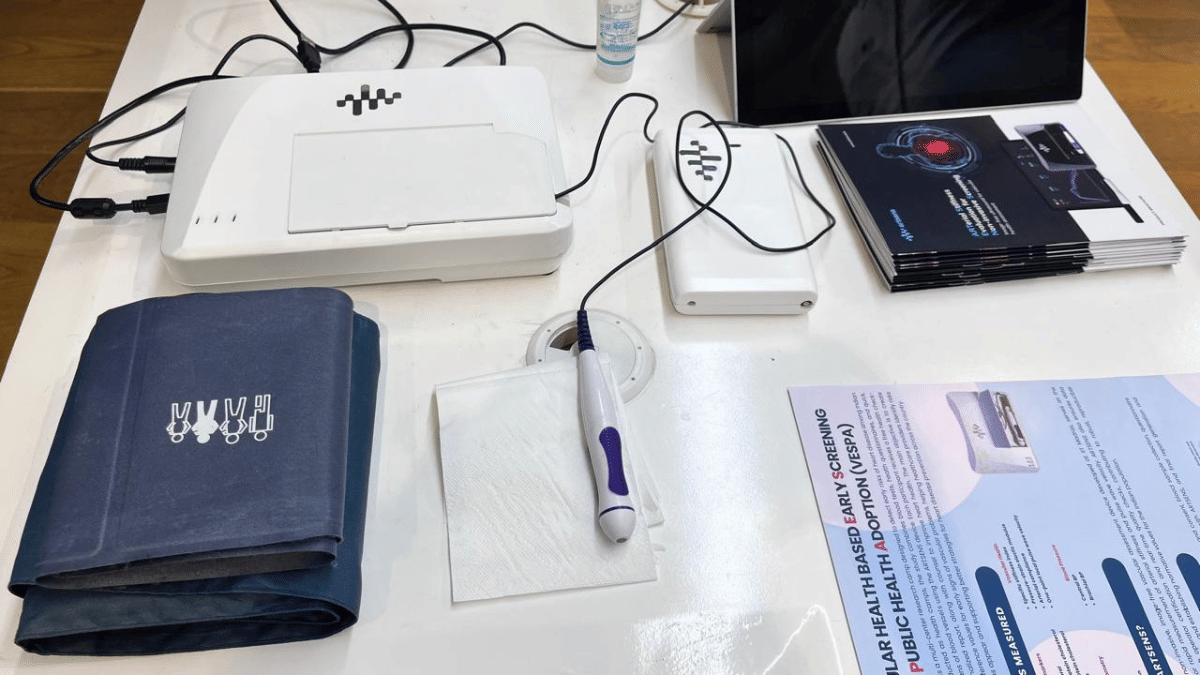
One of their most advanced projects is ARTSENS (ARTerial Stiffness Evaluation for Non-invasive Screening), a portable device that measures how stiff a person’s arteries are. The team is now using it in a nationwide study to understand what vascular ageing looks like in India.
Through the VESPA (Vascular Health Based Early Screening for Public Health Adoption) study, the team has enrolled more than 8,000 people and aims to screen one lakh by 2027-28.
“We want to establish reference values for arterial stiffness and other vascular parameters measured by ARTSENS, so that we can understand what is normal for different age groups in the Indian population,” Dr Ravishankar Ramanathan, chief executive officer of HTIC and the Wadhwani Innovation Centre for Medtech and HealthTech at IIT Madras Research Park, told ThePrint.
Nomograms are reference charts that show what is typical for people in different age groups. Researchers hope the data will help doctors better interpret vascular health measurements in Indian patients.
The researchers are now mapping vascular health across the country, with the aim of developing India’s first early-warning guidelines for vascular ageing-based cardiovascular risk screening.
By screening one lakh people, Dr Ramanathan said, the team hopes to establish reference values for different age groups and build a clearer picture of heart health across India. The findings will need to be analysed and validated before the guidelines can be used in routine clinical practice.
Why measuring the stiffness matters
Every time the heart beats, arteries expand to carry blood through the body and then recoil. As people age, or develop conditions such as high blood pressure and diabetes, their artery walls can become less flexible.
This makes it harder for the arteries to absorb the force of each heartbeat. Stiffer arteries have been linked to a higher risk of cardiovascular problems, including heart failure and damage to organs such as the brain and kidneys.
The problem is that these changes may begin before a person develops obvious symptoms or shows abnormal results in routine tests.
Dr Jayaraj Joseph, who leads the VESPA mission, said arterial changes may start in a person’s 20s or 30s. Measuring them could help researchers identify people whose arteries appear to be ageing faster than expected. “The idea here is to identify subjects whose arteries age faster than normal, who are at higher risk,” Dr Joseph told ThePrint.
This is where the idea of “vascular age” comes in. It refers to how old a person’s blood vessels appear to be compared with their actual age.
For example, a 40-year-old may have arteries that appear healthier than those of an average person of the same age. Another person of 40 may show signs of greater arterial stiffness. The researchers hope that measuring these differences could eventually help doctors assess cardiovascular risk more accurately.
How ARTSENS measures arterial stiffness
The device uses ultrasound to track movement in the carotid artery in the neck, which carries blood to the brain.
Demonstrating the device, Dr Ramanathan explained that the operator places a small probe against the neck. The device records how the artery moves with each heartbeat and analyses the signals using software. Unlike a conventional ultrasound scan, it does not produce images of the blood vessel.
ARTSENS measures three things: How stiff the carotid artery (located on each side of the neck) is, how quickly blood pressure waves travel through the arteries, and blood pressure in the aorta, the main artery that carries blood away from the heart.
Pressure waves travel faster through stiffer arteries. Measuring their speed can therefore help researchers assess arterial stiffness. Central blood pressure, meanwhile, measures blood pressure closer to the heart.
The full test takes about five minutes, according to the research team. The carotid artery measurement itself can be completed in around 30 seconds.
Dr Ramanathan said the technology aims to make a specialised measurement, usually associated with expensive equipment and limited availability, accessible at a much lower cost.
Why researchers need Indian data
Doctors currently rely largely on reference values developed using European and American populations to interpret arterial stiffness measurements. Dr Ramanathan said India does not yet have established population-wide reference ranges of its own.
A large Indian dataset could help researchers understand how these measurements vary with age and other characteristics. The VESPA study is collecting information on participants’ health, blood markers, body composition and lifestyle alongside their arterial measurements.
The study involves clinical collaborations with institutions including the All India Institute of Medical Sciences in Delhi and Patna, Jawaharlal Institute of Postgraduate Medical Education and Research in Puducherry, and Christian Medical College in Vellore.
Researchers are conducting screening camps and expanding recruitment through these collaborations. They hope the resulting data will provide a broader picture of heart and metabolic health across different parts of the country.
From the laboratory to patients
HTIC was established in 2012 as a joint initiative of IIT Madras and the Department of Biotechnology. Its role is to bridge the gap between research and products that can be used in healthcare.
Dr Ramanathan said academic research often establishes whether a technology works, but that is only one step towards making it available to patients. A device may still need clinical validation, regulatory approvals, manufacturing support and a company willing to produce and distribute it.
He said that HTIC works with hospitals and industry partners to help technologies move through these stages. Its earlier projects include engineering support for mobile eye-surgery units and technology used in ophthalmic care. It has also worked on medical devices and diagnostic systems.
Dr Ramanathan said the technology has undergone analytical and clinical validation, and an application has been filed through the US Food and Drug Administration’s 510(k) regulatory pathway.
“Routine clinical use will depend on manufacturing and distribution arrangements, as well as the progress of the ongoing study,” he said.
(Edited by Viny Mishra)
Also read: Why new guidelines in US recommend screening for ‘bad cholesterol’ as early as ages 9-11