





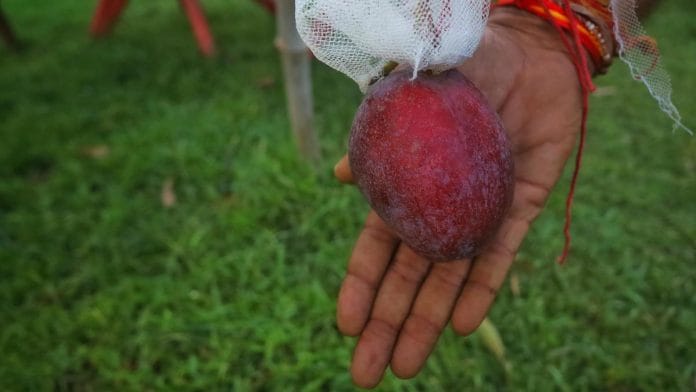


Jabalpur: Unlike the countless green mangoes that camouflage one another, the Miyazaki refuses to blend in. Japan’s most celebrated and sought-after mango preens among Dussehri, Safeda, Kesar, Mallika, and other varieties with its striking crimson-red skin. It turns heads in orchards and, every mango season, is splashed across social media as the “Rs 2.5 lakh per kg” fruit.
The craze born in Japan took off in Jabalpur, and is the new agricultural flex for mango growers. It isn’t everywhere in the mango mandis, but it has become the stuff of myth, legend, and viral reels — the latest being a farmer offering the “world’s costliest” mango as bhog to Ram Lalla in Ayodhya this week.
If Indian premium varieties such as Alphonso sell for Rs 200-500 a kg, Miyazaki is the designer mango. Demand is driven by rarity, branding, and gifting culture. In India, it occupies a position similar to that of a luxury watch or a limited-edition single malt whisky. Ironically, Japan has banned mangoes from India, but Indian growers are treating Japanese saplings like horticulture royalty.
The fascination began five years ago when Jabalpur farmer Sankalp Singh Parihar made headlines for his prized crop of the Japanese mango known as Taiyo no Tamago, or “Egg of the Sun”.
“People know Miyazaki because of the price it commands in the international market. But for me, its biggest strength is not the price but the taste. It is an exceptionally sweet and delicious mango. In fact, the fruit is so appealing that you feel like eating even the skin,” said Parihar, who grows several varieties of Indian and exotic mangoes in his 15-acre orchard near Chargawan town in Jabalpur district.
But though his five Miyazaki trees yield a lucrative harvest, he has never got Rs 2.5 lakh for a kg. He currently sells it domestically for a still-steep Rs 15,000 a kg.
With even more inflated price claims spreading in news and social platforms alike, everyone from wholesale traders at Delhi’s Azadpur Mandi to consumers of exotics like dragon fruit or persimmon is left asking what makes it so special. While many growers extol its out-of-the-world sweetness and texture, social media is full of comments from people who say they were underwhelmed by the flavour, especially compared to varieties such as Himsagar or even Chausa. But that is beside the point. It is purchased more to signal status and exclusivity than for taste. The mangoes are often sold in pairs, tucked into foam sleeves and tissue inside gift boxes.
People have become fascinated by colourful mangoes. Traditional Indian varieties like Dussehri and Chausa remain excellent, but the market is increasingly rewarding appearance.”
– S Insram Ali, president, Mango Grower Association of India
Some growers, though, are sceptical about both the mango and the market for it.
“When people are struggling to buy ordinary fruits, who is going to buy a mango worth lakhs?” asked S Insram Ali, president of the Mango Grower Association of India. “You won’t find this mango easily in the market. Many growers in India are planting Miyazaki out of curiosity and passion, not because there is a huge market. They just enjoy growing something unusual.”
Also Read: The great kiwi rush in Himachal Pradesh
An orchard’s Kohinoor
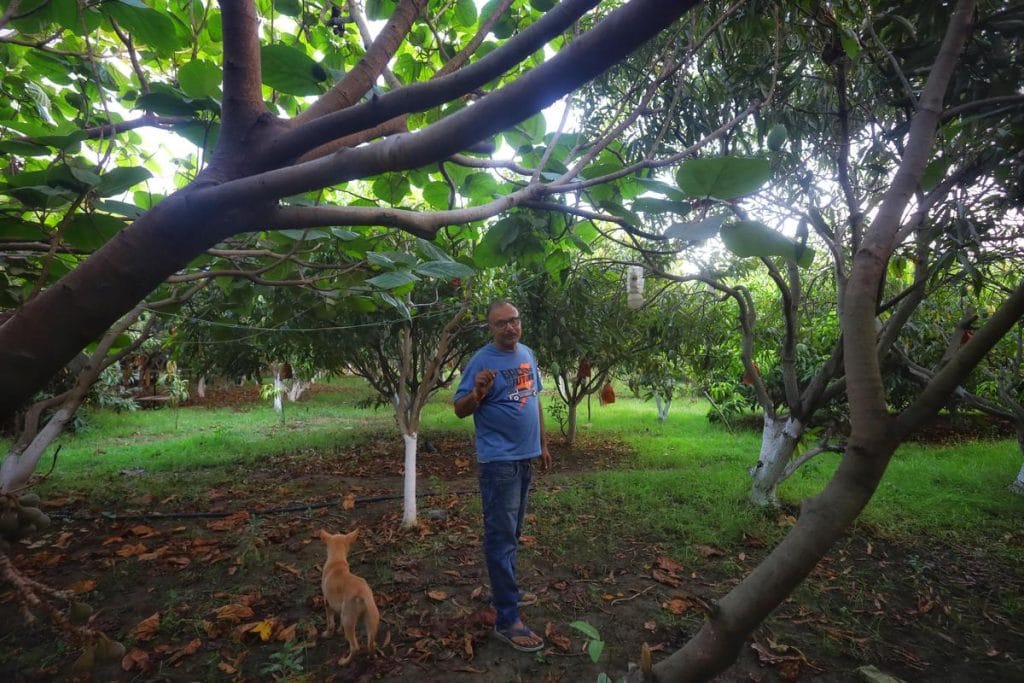
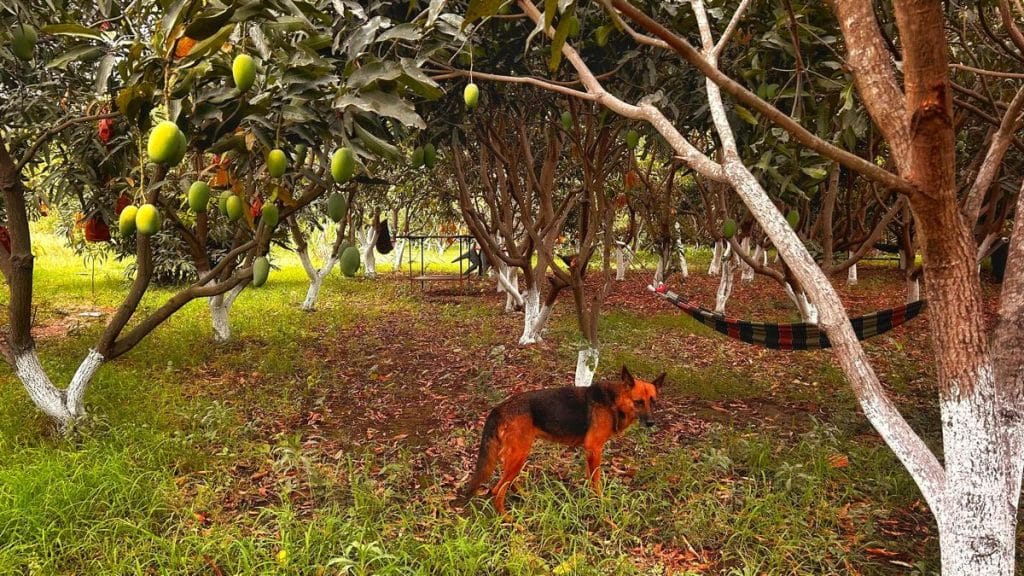
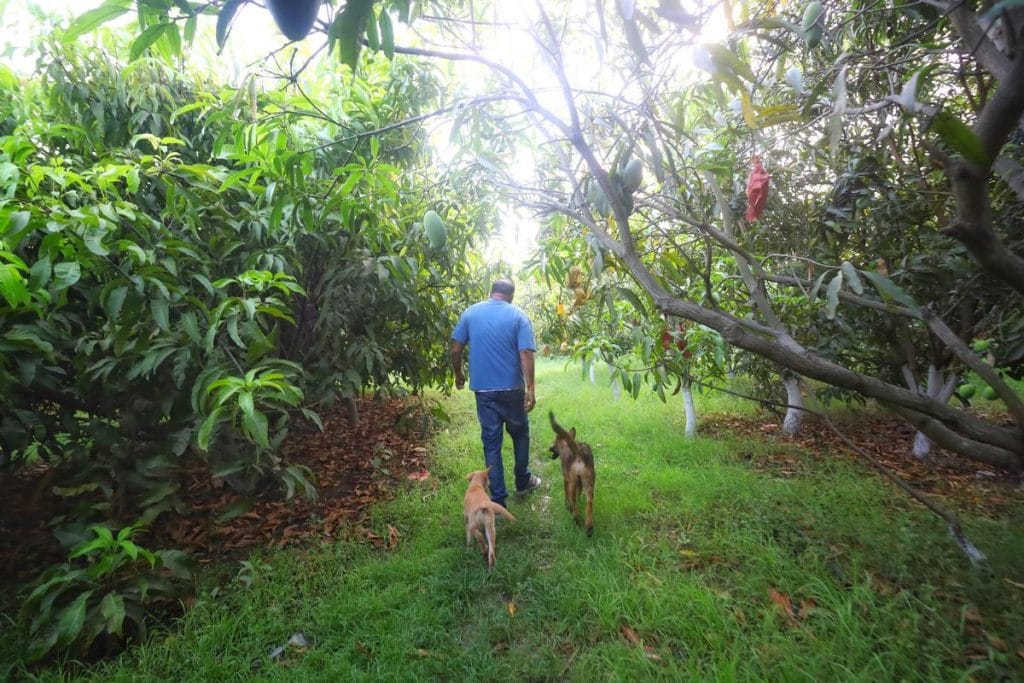
At Parihar’s orchard in Jabalpur’s Chargawan, Z-level security is reserved for the Japanese mangoes: 18 guard dogs and round-the-clock CCTV surveillance. When he began growing Miyazaki seven years ago, word about the fruit’s value got out fast.
“Sometimes people steal mangoes, hence security is required to keep an eye,” said Parihar, who comes from a landed farm-owning family.
He opened the farm— named Maha Kaal Baba Ki Bagiya—two decades ago as a standard commercial orchard with around 1,100 Indian mango trees.
“I was selling directly to the customer, no middleman,” he said. That began a decade ago after Parihar, struggling with poor sales at mandis, set up a counter outside his orchard. He sold 25 kg on the first day. Then customers began coming through word of mouth, and the family started home deliveries and a counter in Jabalpur city. The direct-to-consumer model eventually allowed his ‘brand’ to reach premium buyers in Delhi and Mumbai.
People buy them as gifts, just like the Japanese. These are rich people gifts.”
– Sankalp Singh Parihar, Jabalpur mango grower
Today, his operation has 3,600 trees, growing 24 international and domestic varieties. Supported by a crew of six to eight workers, his trees average 100 to 200 kg of fruit each. The annual harvest is about 400 tonnes of mangoes.
Last year, Parihar said he earned roughly Rs 10 lakh from the orchard. Of this, about Rs 1.5 lakh, or 15 per cent, came from international varieties, which account for just over 5 per cent of his mango trees.
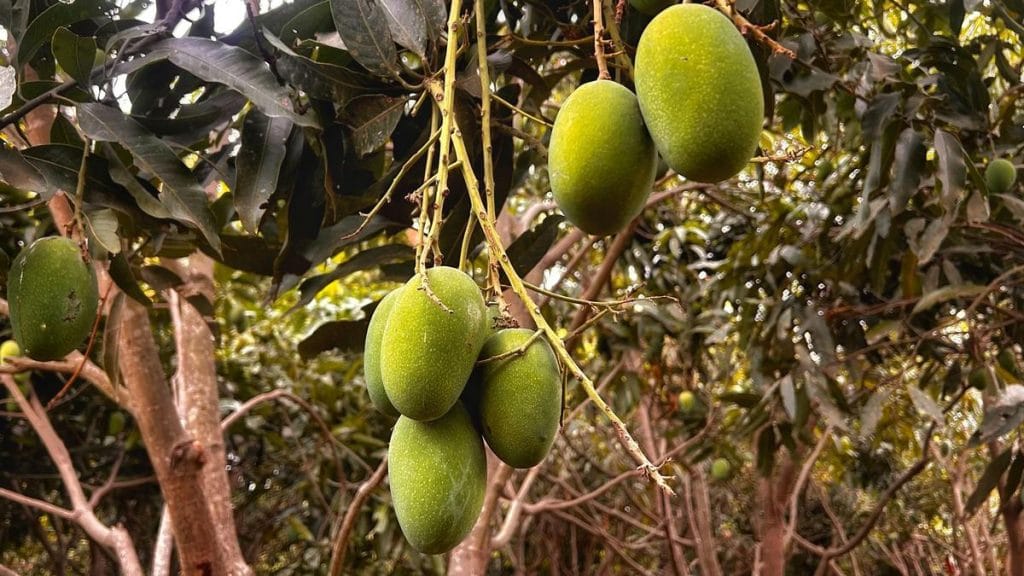
On the low hills of Jabalpur, the weather was being frivolous, scorching sun one hour, gusty winds and rain the next. Parihar, just back from the orchard, walked up to his two-storey house, complete with a swimming pool and large lawn, nearby. His face was slick with sweat but he was happy it hadn’t rained.
“The climate change is affecting mangoes this year. We had a low production,” he said, sipping aam panna made from windfalls picked off the ground.
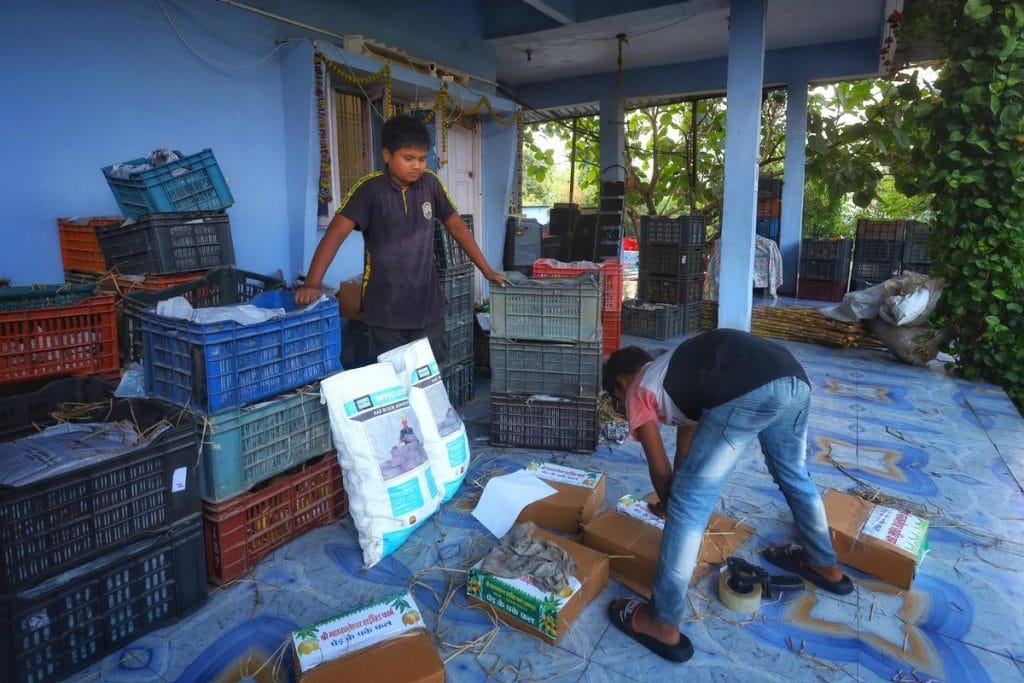
At the orchard, there are mangoes as far as the eye can see: in crates, scattered on the ground, hanging from trees. Such is the bounty that workers munch on mangoes as they pack orders. Standing over them is Parihar, issuing instructions on which variety should be put where.
“Dussehri semi-ripe usmein rakh do,” he told a worker, pointing to a tray.
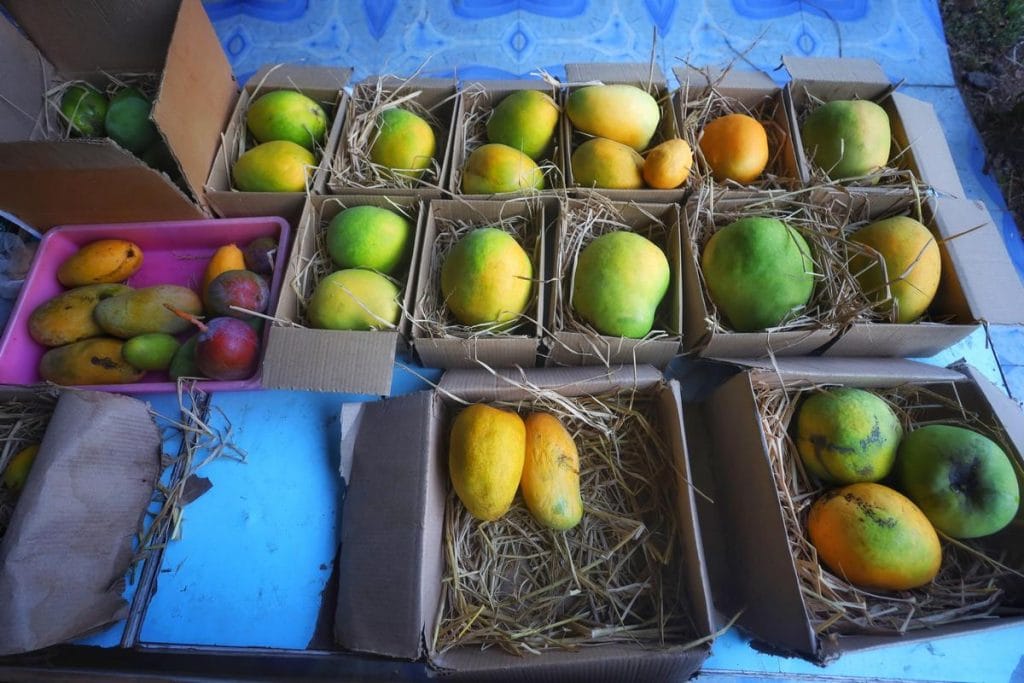
Amid the sea of green and yellow, two fruits immediately commanded attention: two ruby-like Miyazaki mangoes, kept in a separate pink tray.
“This is the first Miyazaki of the season. The strong winds brought it down,” he said. These mangoes are not to be eaten or sold and will soon be displayed at an exhibition in Bhopal.
How the Miyazaki romance began
Parihar’s encounter with the Miyazaki was nothing less than a Bollywood movie scene. While travelling by train to Chennai to buy coconut saplings, he met a stranger whose name he can no longer recall. The stranger introduced him to the legendary Japanese variety.
“We were told duniya ka sabse bada aam, sabse mehenga aam hai yeh,” said Parihar— the world’s biggest and most expensive mango.
A self-confessed mango enthusiast, Parihar was instantly hooked. He made a quick detour, though he says the exact location is now hazy, and bought ten Miyazaki saplings for Rs 2,500 each. Only three of them survived the initial planting, but he was more than pleased with the results.
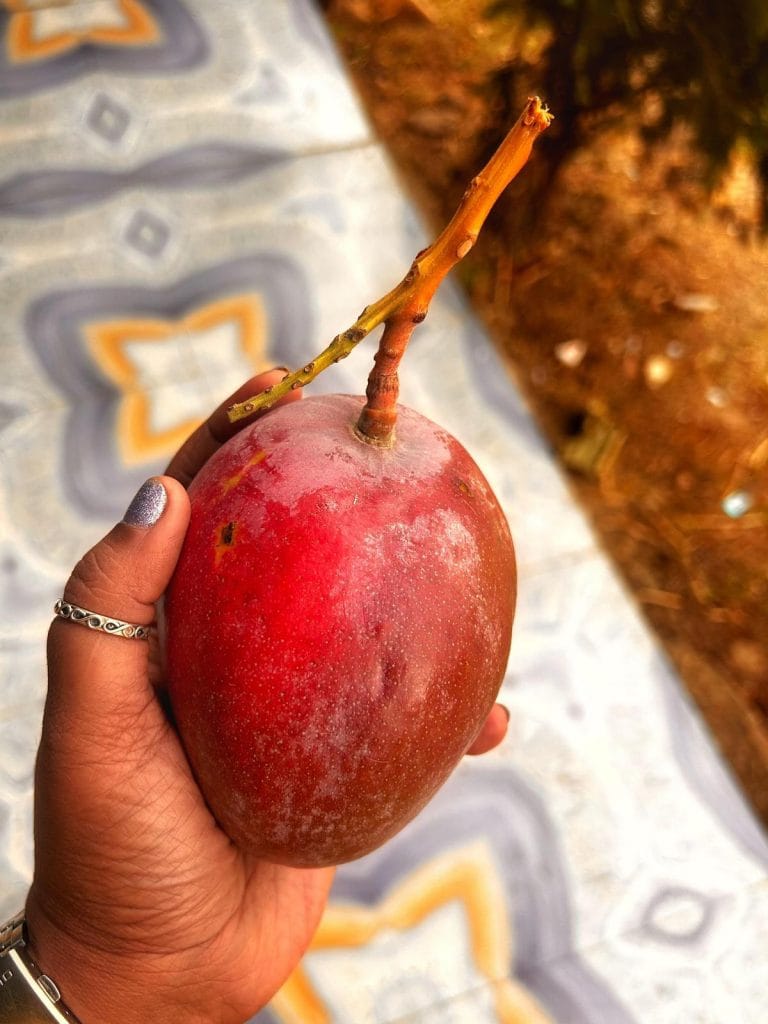
Ironically, the coconuts he brought back from Tamil Nadu failed completely in the Jabalpur soil, but the Japanese imports thrived, growing “sweeter every year”, according to Parihar. Today, he has five Miyazaki trees, each bearing 3-4 kg of fruit annually. Genuine Miyazaki saplings currently cost as much as Rs 11,000 each.
“There are many fake Miyazakis in the market,” Parihar warned. “It is very difficult to differentiate until the fruit is actually ready.”
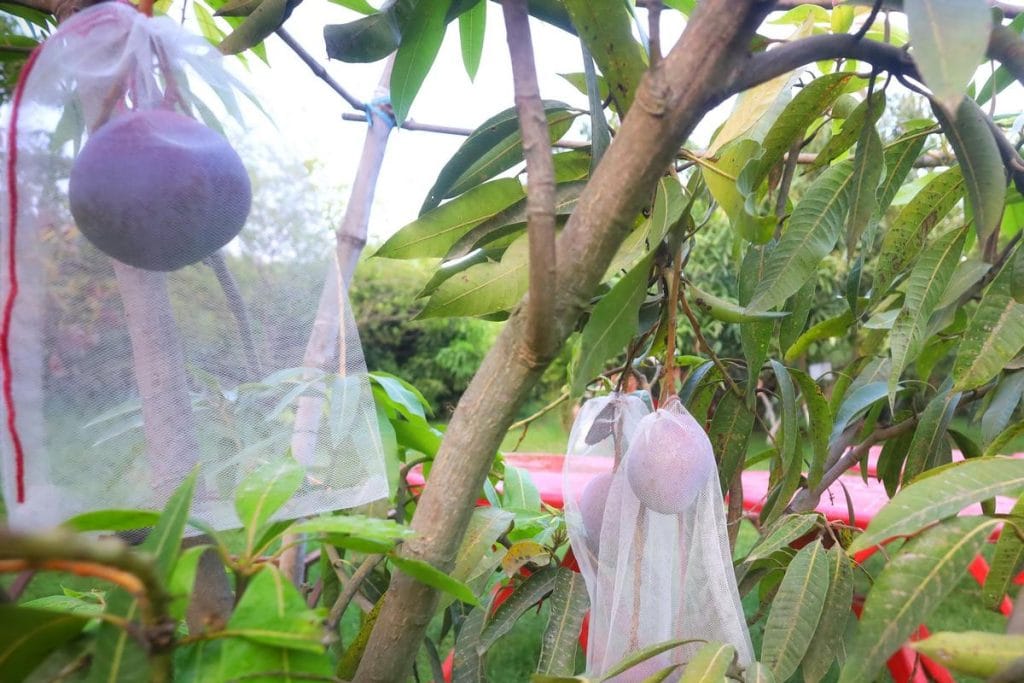
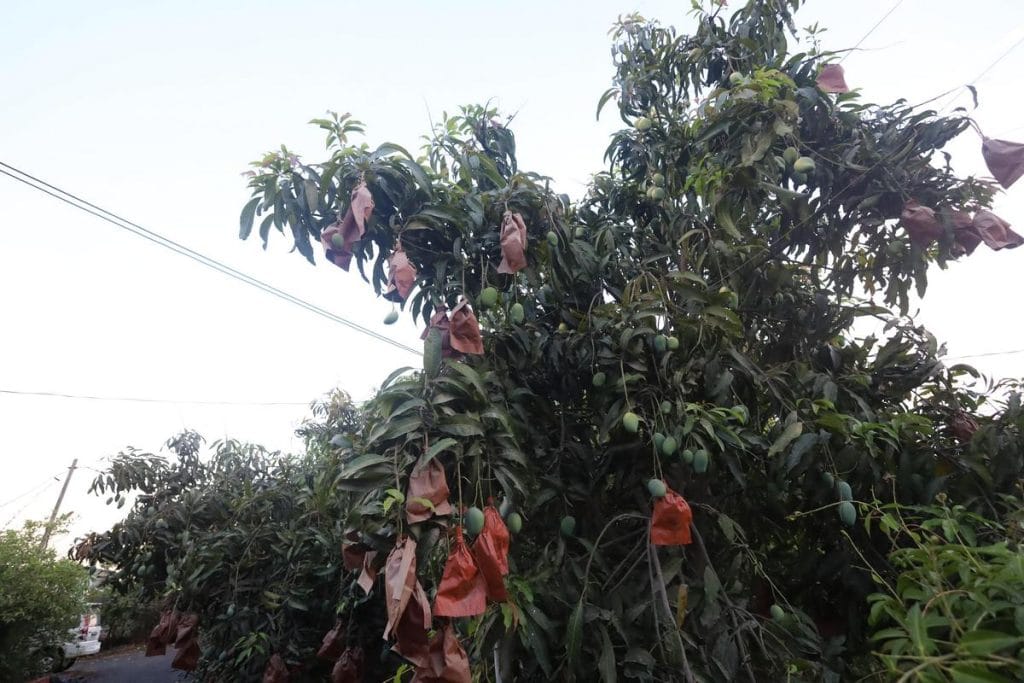
The Japanese mango grows much like any other fruit, but in the final stage, Parihar covers it with white mesh cloth. Miyazaki develops its crimson-red colour when exposed to sunlight, but Jabalpur’s harsher heat needs to be managed.
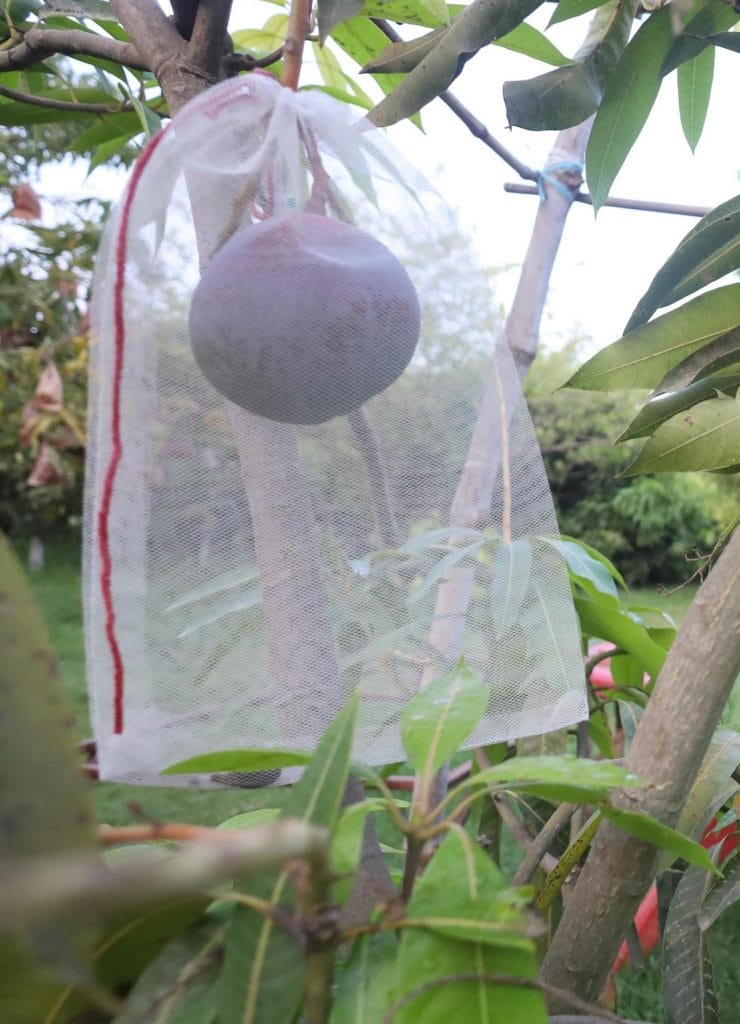
Slice open a Miyazaki, and the inside is deep yellow-orange, remarkably similar to an Alphonso. Whether it lives up to its reputation, however, depends on the eater’s palate. While Parihar waxes eloquent, others argue that several Indian varieties are just as good, if not superior.
For all of Miyazaki’s notoriety as “lakh ke aam”, Parihar says he does not treat it differently from the other exotic varieties in his orchard. For him, cultivating Miyazaki was an exercise in curiosity and passion, not fame. He planted it because he was fascinated by rare mangoes, never imagining the crimson fruit would one day make him a national talking point.
There is nothing magical about it. A lot of it is a perception that has been created.”
– Neha Patel, assistant director, horticulture department, Jabalpur
As the afternoon sun beats down on the orchard, Parihar wraps up lunch with a tall glass of thick mango shake. Over the past two decades, he has built a small ecosystem around the fruit. His wife runs a modest restaurant, while a nearby shop stocks mango-based products ranging from house-made pickles and aam papad to seasonal pulp.
The farm has become something of a local attraction, especially since the breathless coverage of the Miyazaki mango. On summer weekends, families visit to see the Japanese and American mango varieties growing in his orchard. There are no tasting events and Parihar does not charge for a tour, but visitors often stop at the eatery or buy items from the store.
‘Ordinary’ taste vs hype
After reports of mangoes selling for lakhs went viral, horticulture department officials visited Parihar’s farm in 2024.
Neha Patel, an assistant director in the department, said the team could not verify whether the fruit was genuinely Miyazaki.
While Parihar maintains he has been cultivating the variety for seven years, the team concluded he had only been growing them for two years at the time of inspection.
“We were told he got the variety from someone while travelling in a train, but we do not know the source of the sapling,” said Patel, adding that she was aware of at least one more farm in Jabalpur that grows Miyazaki mangoes.
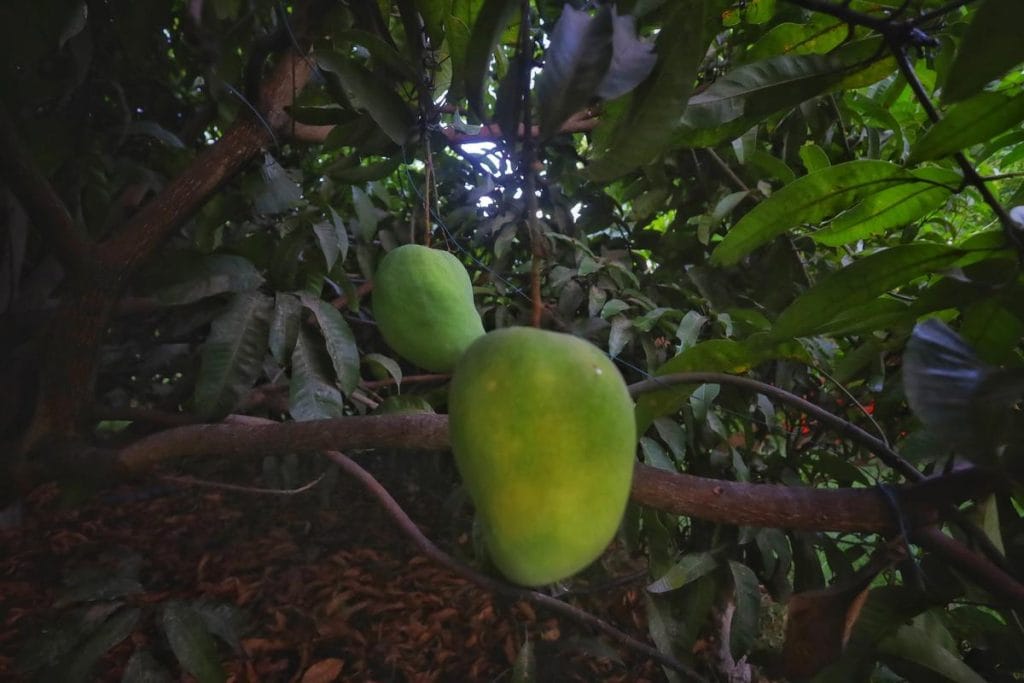
Much of the fascination is driven by reputation, according to Patel. She has tasted the mango from both farms and found it quite “ordinary”.
“There is nothing magical about it. A lot of it is a perception that has been created,” she said.
That perception eventually worked to Parihar’s advantage, but he said in the initial years, he would give away Miyazaki mangoes for free to family members and friends. But later, when he started displaying them at his counter, people would come in droves just for a glimpse of the crimson mangoes. Wealthy mango aficionados soon got wind.
One of the first serious enquiries came in 2022. Parihar said someone from Mumbai-based Rai Jewellers walked into his orchard asking for Miyazaki mangoes. The buyer asked him for a price.
“I did not know at what price I should sell them, and they were ready to pay whatever cost,” he said.
That year, he sold one kg of Miyazaki for Rs 50,000 for the first time. A one-kg package usually has three big mangoes or four small ones; at times, only two. But exorbitant as the cost is, it still doesn’t square with the reputed ‘lakhs’.
The Rs 2.5 lakh myth
The inflated price tag begins in Japan’s Miyazaki prefecture, where more than 1,000 tonnes of the mangoes are produced annually. They are raised with near-obsessive care. In climate-controlled glasshouses, each fruit is turned by hand as it matures so every side receives direct sunlight. Farmers let the mangoes ripen fully on the tree, with mesh nets placed below to catch them before they bruise.
This painstaking process qualifies the highest-grade fruits for exclusive auctions in Japan, where a pristine pair—equivalent to about a kg— can fetch $4,000-5,000. Premium Miyazakis in the country are given as gifts at weddings and other occasions.
In India, much was lost in translation, or rather, in currency conversion.
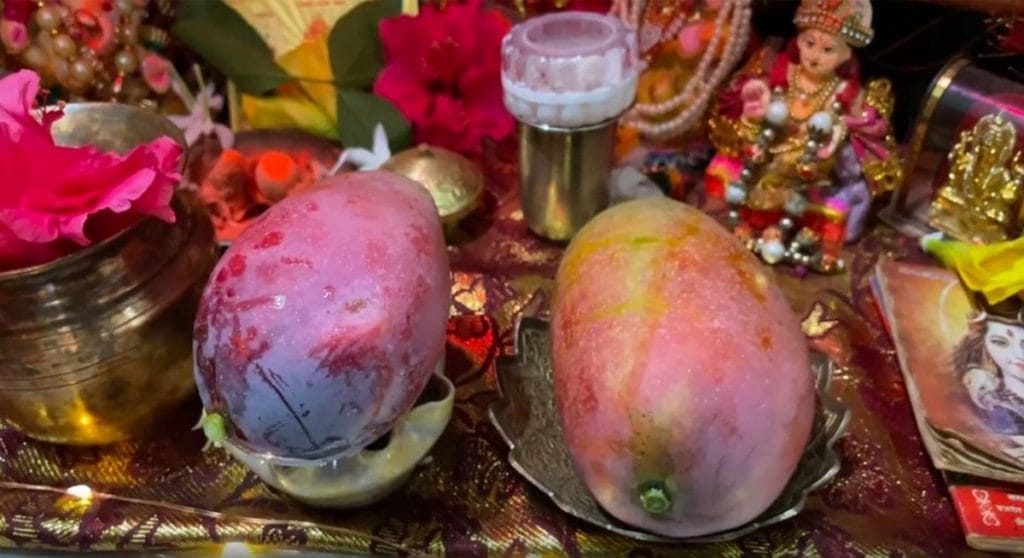
When news outlets began writing about the variety, the eye-popping prices fetched by premium Miyazakis in Japan were simply converted into rupees. A pair of mangoes that sold for around $5,000 translated to more than Rs 4 lakh. Before long, the impression took hold that “Rs 2.5 lakh” mangoes were growing in Indian orchards.
“Miyazaki gets famous every year because of the narrative that has been set by the media, but it is not that expensive in India,” said Sumit Samasudin Jhariya, owner of Anil Farms in Gir, Gujarat.
In their 12-acre exotic orchard, the family cultivates the Japanese variety primarily to satisfy niche local demands.
“Who in India is going to buy a mango at those [Japanese] prices? Our native varieties are much better in taste,” Jhariya added.
If we are able to sell Miyazaki for a few thousand rupees more than Kesar, Gujarat’s premium mango, the Japanese mango will be a hit in India.
— Sumit Samasudin Jhariya, Gujarat mango grower
Parihar, the poster child for Miyazaki mangoes in India, has also never sold his fruits for lakhs. After the initial hype, prices have fallen. In 2023, Parihar sold 1 kg of Miyazaki for Rs 30,000. He now sells it for Rs 15,000 a kg.
Even so, it’s much pricier than most Indian varieties and its USP is that it is almost never seen in a mandi.
“I get calls from Bollywood and rich businessmen placing orders for Miyazaki,” said Parihar. Another international variety, the corpulent ‘4 kg Mango’, sells for Rs 4,000 a kg.
Taking a cue from Japanese minimalism, some buyers prefer gifting just two or three perfect Miyazaki mangoes in a tasteful box—an alternative to traditional luxury Diwali hampers.
“People buy them as gifts, just like the Japanese,” said Parihar. “These are rich people gifts.”
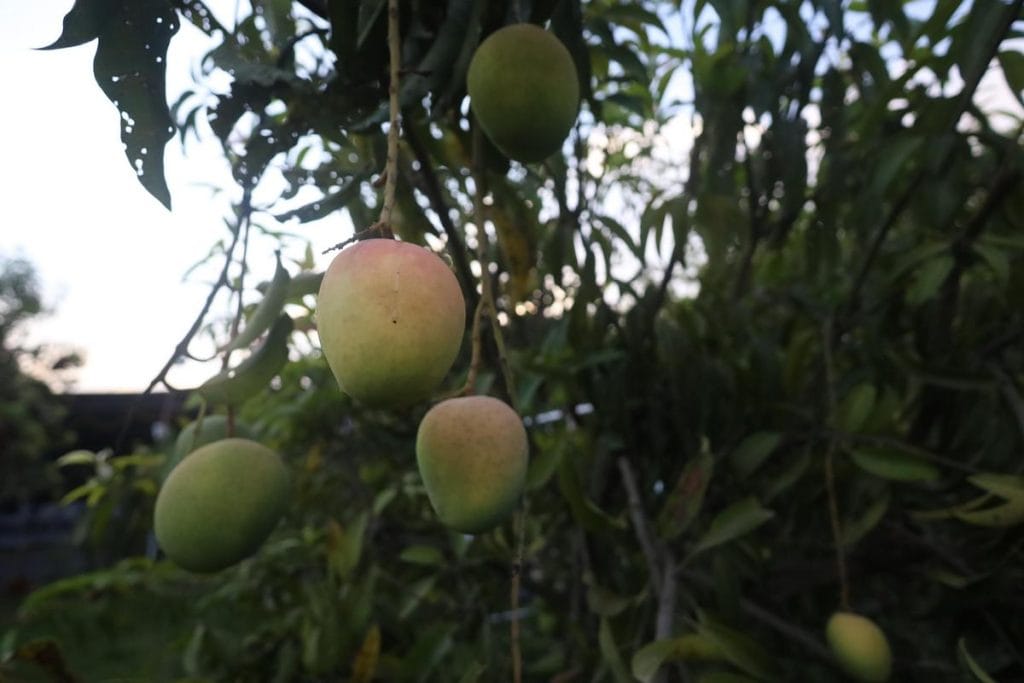
Also Read: Grown in Karnataka, sold as American — Inside India’s gherkin empire
Skin-deep mango love
In the past few years, a smattering of farmers across India have started growing Miyazaki, from Karnataka to Bihar to Odisha. At the Visakhapatnam Mango Mela in May, locally grafted Miyazaki mangoes sold for as little as Rs 999 a kg, while the price was Rs 2,000 apiece at the Mango and Jackfruit Mela in Bengaluru this month.
“Farmers see profit in this. If they can produce more, it will be beneficial for them because the mangoes sell at a premium price,” said Patel.
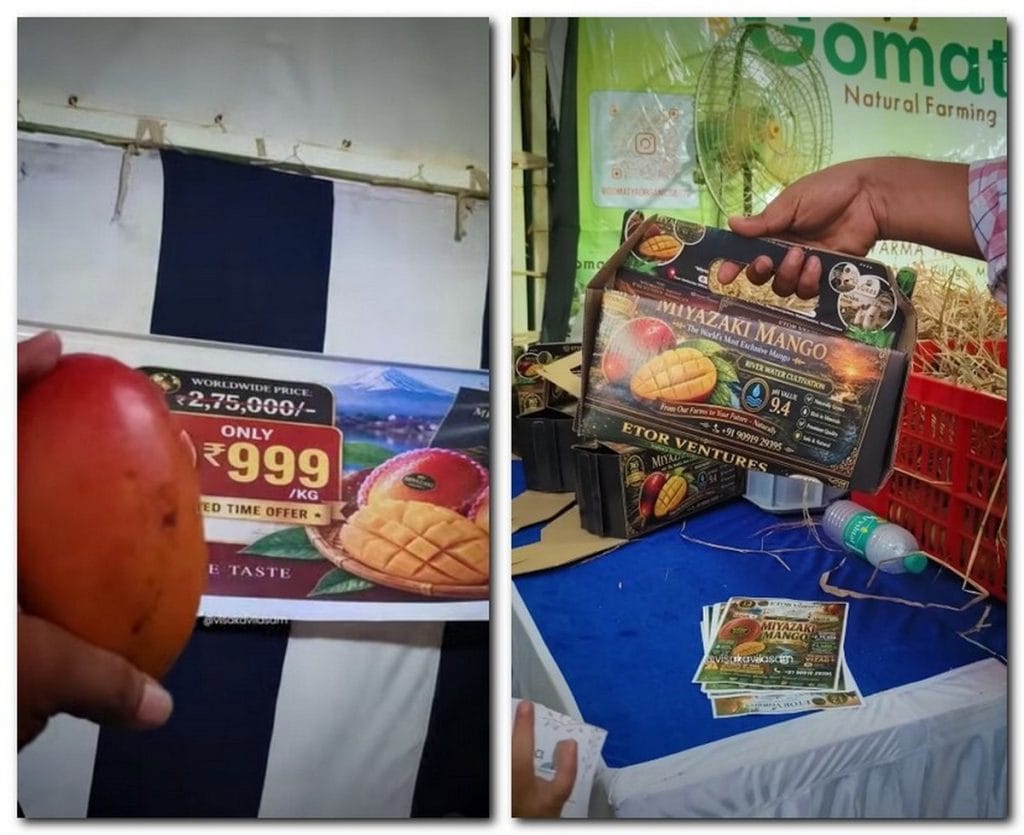
For Insram Ali, the Indian market is increasingly putting a premium on looks. Colourful varieties such as Husnara and Tommy Atkins, which are grown in India, are catching buyers’ attention.
“People have become fascinated by colourful mangoes. Traditional Indian varieties like Dussehri and Chausa remain excellent, but the market is increasingly rewarding appearance,” he said.
Jhariya, who has planted 100 Miyazaki trees on his farm and expects them to bear fruit in two years, indicated that production and demand could hit a sweet spot if the price is right.
“If we are able to sell Miyazaki for a few thousand rupees more than Kesar, Gujarat’s premium mango, the Japanese mango will be a hit in India,” he said.
Parihar said that as more farms grow Miyazaki mangoes, the exclusivity might fade but that this wasn’t necessarily a bad thing.
“Many farms are already growing it,” he said. “The prices of Miyazaki will fall, and it will be more accessible— the fruit for the rich will be in every Indian’s hand.”
(Edited by Asavari Singh)