



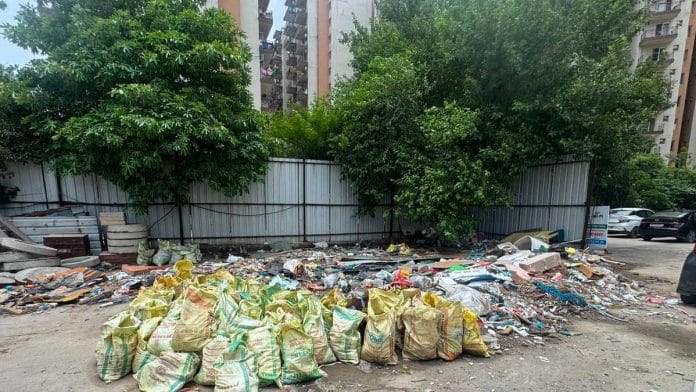

Gurugram: When 40-year-old corporate employee Subroto Biswas finally got the keys to his dream Gurugram home after a five-year wait, he found a sorry sight. What had been sold to him as a modern 3BHK apartment in Sector 102, complete with world-class amenities such as clubhouse, swimming pool, green spaces, dedicated parking, 24×7 security, and uninterrupted power and water supply, barely has the basics in place. The complex even lacks entry gates and functional lifts, forcing Biswas to continue living in a rented flat in Dwarka.
Biswas booked the apartment in 2019 and received possession in 2024. He briefly shifted there with his family, hoping to start a new chapter. But he quickly discovered that the two entry gates promised in the layout plan were nowhere to be found, while the clubhouse, drainage system, power backup, boundary walls and several common-area facilities are still unfinished.
“Everything looks perfect on paper and even in the Occupancy Certificate, but on the ground we struggle for basic facilities,” said Biswas.
At the heart of a shared anxiety among Gurugram residents these days is what is called the Occupancy Certificate (or Occupation Certificate, in Haryana’s official parlance). The two letters—OC—have become a subject of resident anger and official frustration. Buildings are being certified as ready to live in when they are actually unfinished. Many promised amenities—from lifts and green belts to sewage system and power backup—exist only on paper in the OC and Completion Certificate (CC).
“The OC and CC scam in Gurugram has become common. Projects get these certificates even when they are nowhere close to meeting the required standards. Nobody seems to verify the actual condition on the ground before issuing them,” Biswas alleged.
Now, the Haryana authorities are cracking down.
In April, the Chief Minister’s ‘Flying Squad’, a Haryana government law enforcement unit, and the Department of Town and Country Planning (DTCP) conducted surprise inspections of 22 residential buildings in Gurugram and found that 14 were still under construction despite having OCs. Some were reportedly little more than bare structures, without plaster, flooring, functional kitchens or bathrooms.
An OC should be issued only after every aspect of a project is fully completed, including the finishing work such as painting. However, during surprise inspections, authorities found that some architects had been issuing OCs for incomplete projects
–Praveen Chauhan, District Town Planner (Planning), Gurugram
Much of the blame has fallen on the Self-Occupancy Certificate system introduced by Haryana’s DTCP in November 2022. It allows the registered architect who prepared or supervised an eligible house on an individual plot in a licensed residential colony to act as the competent authority and issue the OC without a mandatory physical inspection by the department.
Following the Flying Squad’s findings, authorities began scrutinising OCs issued under the self-certification policy between 1 July 2025 and 15 March 2026. The investigation has so far revealed that around 2,000 OCs had been issued illegally, said Praveen Chauhan, District Town Planner (Planning), Gurugram.
“An OC should be issued only after every aspect of a project is fully completed, including the finishing work such as painting. However, during surprise inspections, authorities found that some architects had been issuing OCs for incomplete projects,” added Chauhan.
Last month, DTCP officials recommended that 15 architects be blacklisted for allegedly dispensing OCs for incomplete buildings under the self-certification policy. Common violations also include building beyond the approved Floor Area Ratio, adding unauthorised floors or dwelling units, and converting stilt or basement parking into residential or commercial space.
“The department is continuously conducting surprise site inspections and monitoring project developments to prevent any irregularities in the issuance of Occupation Certificates,” Chauhan added.
Also Read: Residents in Noida, Gurugram are taking RWAs to courts. A case for every dispute
‘OCs are given out like packed food’
Lawyer Sanjay Lal, a resident of Ambience Lagoon in Gurugram, cites his own housing society as a glaring example of lacunae in the OC process. It was handed its certificates even as the land under it was being fought over in court.
The project was originally granted a license in 1993 for an 18.98-acre residential development. But in 2001, 8 acres of land originally approved for the residential project were de-licensed by the Haryana government and allowed to be developed for commercial use —where the Ambience Mall now stands. A further 3.9 acres were similarly de-licensed in 2010. Over the years, a prolonged legal battle played out over the diversion of residential land.
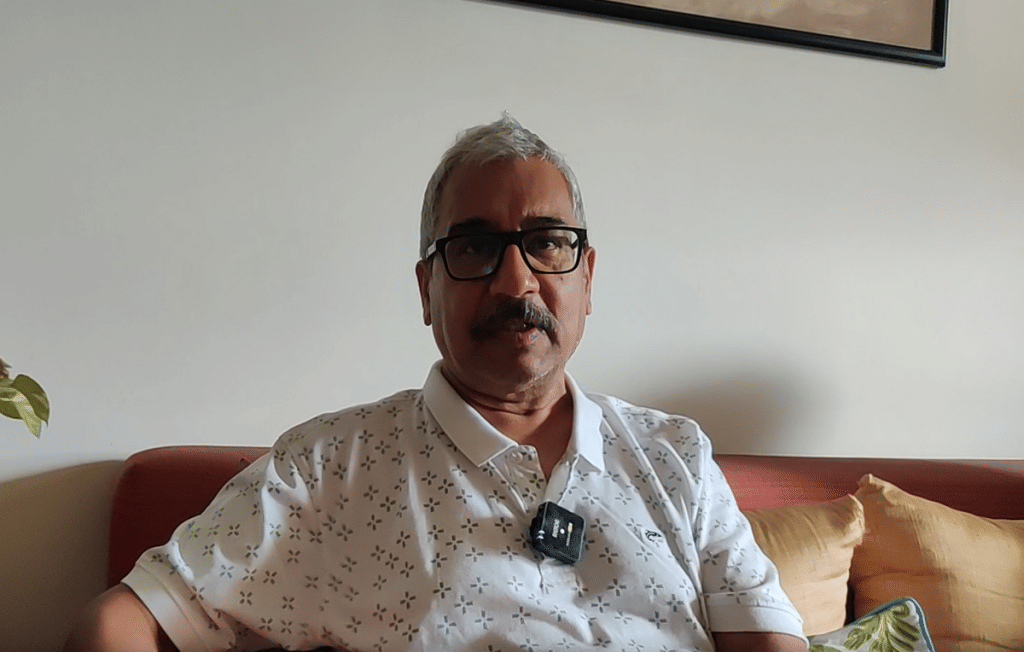
In 2020, the Punjab and Haryana High Court cancelled the de-licensing approvals and ordered a CBI probe. While that legal battle was underway, the project received its Occupancy and Completion Certificates, and families moved in.
“It was only after people started living here that they began facing the daily problems,” said Lal, adding that the project was first granted an Occupancy Certificate in 2001 for 12 residential towers and another in 2007 for two additional towers.
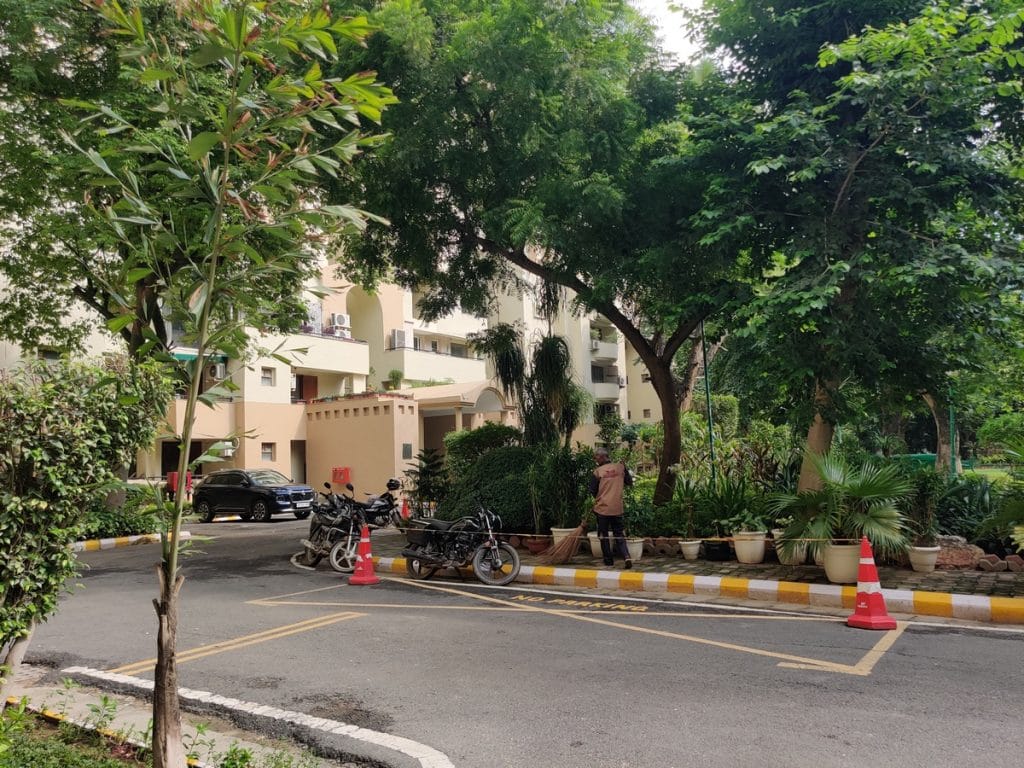
“A single housing society should not have two Occupancy Certificates, but who is there to verify these things before issuing them?” he asked.
In January 2026, the Supreme Court set aside the HC’s order, saying it was based on “unverified and inconclusive material” and that the direction for a CBI probe was unwarranted. It left individual homebuyers free to pursue separate legal remedies if they believed they had been misled.
Lal claims green areas originally earmarked in the project were later converted for commercial use. He also alleges that the sewage treatment plant (STP), initially planned to serve only the 12 residential towers, now handles the entire complex, including commercial establishments, straining the infrastructure.
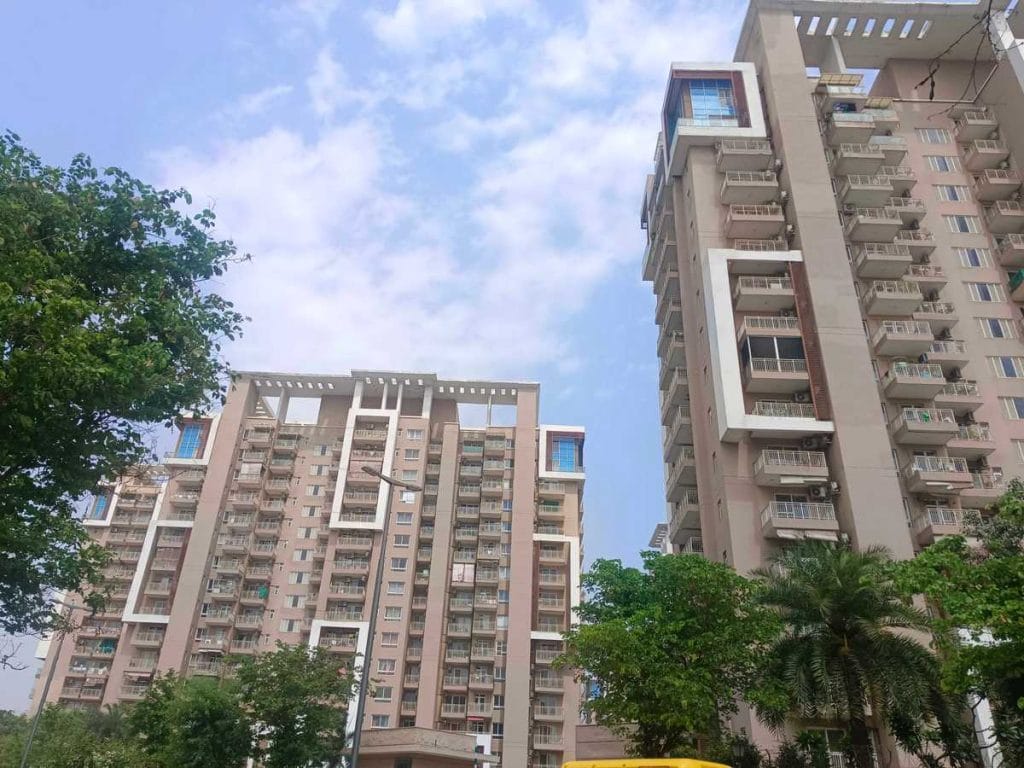
He added that the society’s basements do not comply with basic fire safety norms, such as adequate sprinkler systems and emergency exits, and were never thoroughly inspected before the certificates were issued.
“Authorities distribute Occupancy Certificates like packed food, without even conducting proper ground inspections,” Lal alleged.
“This is how residents get cheated. They don’t even have a platform where their complaints are heard. Whenever we approach the authorities, they simply say the project already has an OC and a CC. But the real question is—who issued those certificates without checking the conditions on the ground?” Lal added.
Suffering residents
At his rented home in Dwarka, Biswas has slowly become reconciled to the crushing disappointment that his new 12th-floor apartment in Gurugram turned out to be.
The power backup promised for the housing complex was supposed to be supported by a 66 KV load capacity, but the sanctioned load does not match the commitment made to residents. The sewage treatment plant cannot handle the society’s wastewater, so the water it treats comes out foul-smelling. The boundary wall is still unfinished and poses a security risk.
“We raise these complaints and highlight these irregularities before the authorities, but then the blame game begins,” said Biswas, who is employed with an MNC.
We buy homes to live peacefully and after carefully considering what is promised. But when basic infrastructure is missing on the ground and nobody listens to our complaints, it feels like both our money and peace of mind are stuck
-Subroto Biswas, Gurugram homebuyer
Each time he flags the STP or power backup, the authorities and the builder simply point fingers at each other, according to him. He said he has filed multiple complaints but has either received no response or been told the matter would be looked into.
With no satisfactory resolution from the developer or the society management committee, Biswas decided to move back to Dwarka, where he had previously lived, to avoid daily struggles related to lifts, water supply, and electricity.
“We buy homes to live peacefully and after carefully considering what is promised. But when basic infrastructure is missing on the ground and nobody listens to our complaints, it feels like both our money and peace of mind are stuck,” he added.
OCs before completion
Various procedural anomalies have surfaced in other Gurugram developments. In Sector 61, a housing project received an Occupancy Certificate in 2024 despite not having a Completion Certificate. The CC was issued by the District Town Planner only a year later, in 2025.
The sequence has raised questions about how occupancy was authorised before construction completion was formally certified. An OC is supposed to be issued only after construction is completed, the required completion documents have been submitted, and the competent authority has verified that the building complies with the sanctioned plan and applicable building bylaws.
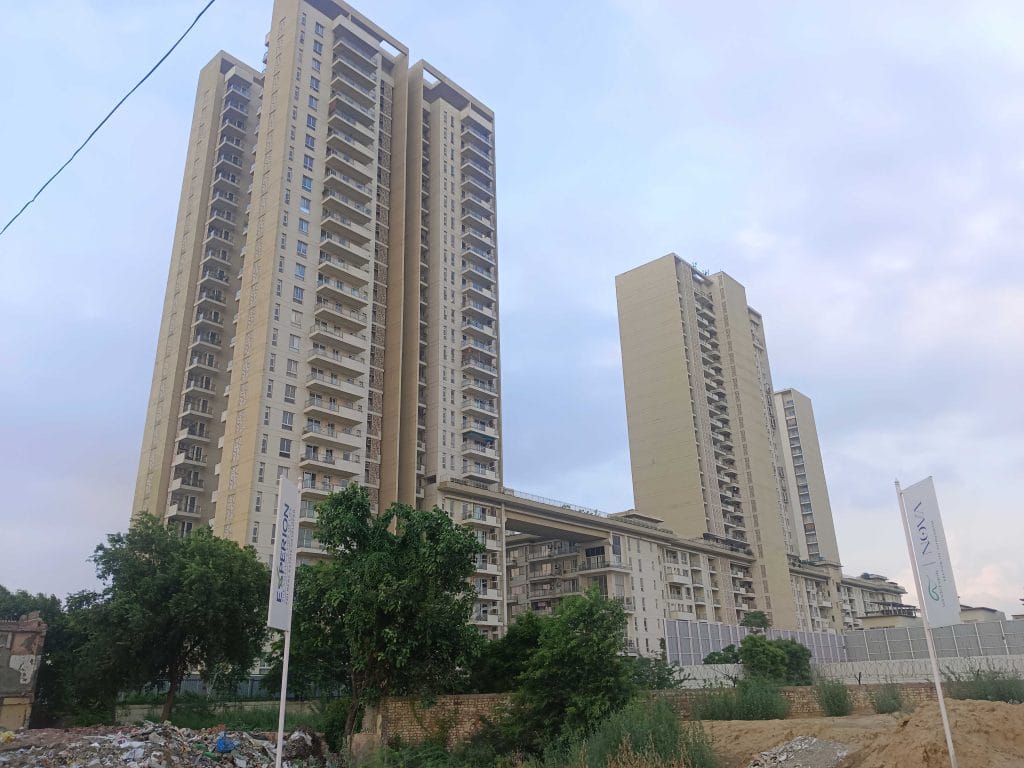
However, residents claim that builders often bypass the CC—since it would stop them from adding more floors or blocks to the project later—but still procure the OC so they can sell off apartments.
“We were living in the society without a Completion Certificate, which makes the occupancy questionable. Nobody cares about residents’ safety; the builder and the authorities work together,” alleged a Sector 61 resident who requested anonymity.
Some residents also point to a conflict of interest: the architect certifying compliance is often hired by the builder whose project is being assessed.
“The authority responsible for inspections often does not inspect the site. If that is the case, how can an architect, who is being paid by the builder or developer, be expected to independently verify the construction before issuing the certificate?” said Diwas, another resident of the Sector 61 project.
Also Read: Noida 6-year-old dies after falling in pit. No barricades, no warnings
Not only Gurugram
The OC bugbear is not confined to Gurugram. It has reared its head in different forms for residents in other cities as well.
In Bengaluru, an 18-storey building is slated for demolition after it started tilting, just three months after it was given an OC by the Greater Bengaluru Authority in April this year. The flats reportedly cost between Rs 1 crore and Rs 5 crore each but they are simply not safe enough to live in.
So there is no regulation of this? How come one gets the occupancy certificate. If something goes wrong, please think about the loss of life. Government should get in act together. @PMOIndia , Please take it up. pic.twitter.com/M00zFg9s83
— SWAMI.BLOG (@swami_blog) July 29, 2026
Meanwhile, residents of a housing society in Noida’s Sector 150 say they have been living under a deemed, or provisional, Occupancy Certificate for the past three years.
“Residents were given possession under a deemed OC and told that the issues would be resolved within a few weeks, but it has been three years now,” said Sumit, a resident of the society.
He added that several facilities, including the green area, clubhouse and some lifts, remain incomplete even three years after residents were given possession.
“Builders and authorities know that residents cannot fight for a long time. They believe they will eventually win and continue running the society the way they want,” he said. “Nobody is standing with the residents—not the government nor the authorities.”
(Edited by Asavari Singh)