





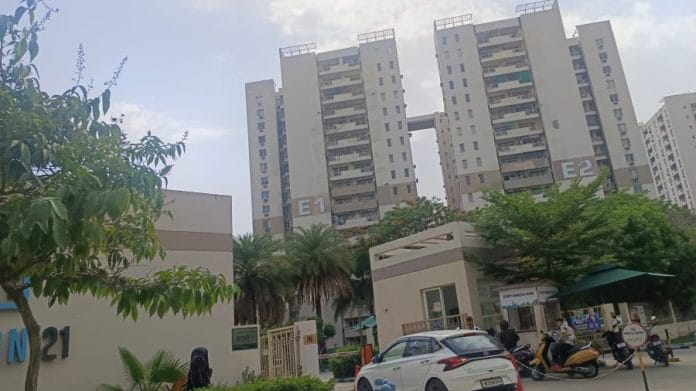

Noida: Nisha Rai, a resident of Prateek Wisteria in Noida’s Sector 77, expressed her interest to contest society elections in 2017 with a simple belief — she had every right to participate. That belief was quickly dismissed. The RWA rejected her candidacy, declaring her ineligible because she was listed as the second owner of the apartment, and not the primary one. Her husband was the primary apartment owner.
“An owner is an owner,” Rai said. “If one name is listed first, the other becomes second — how does that make the second owner any less of an owner or strip them of their rights?”
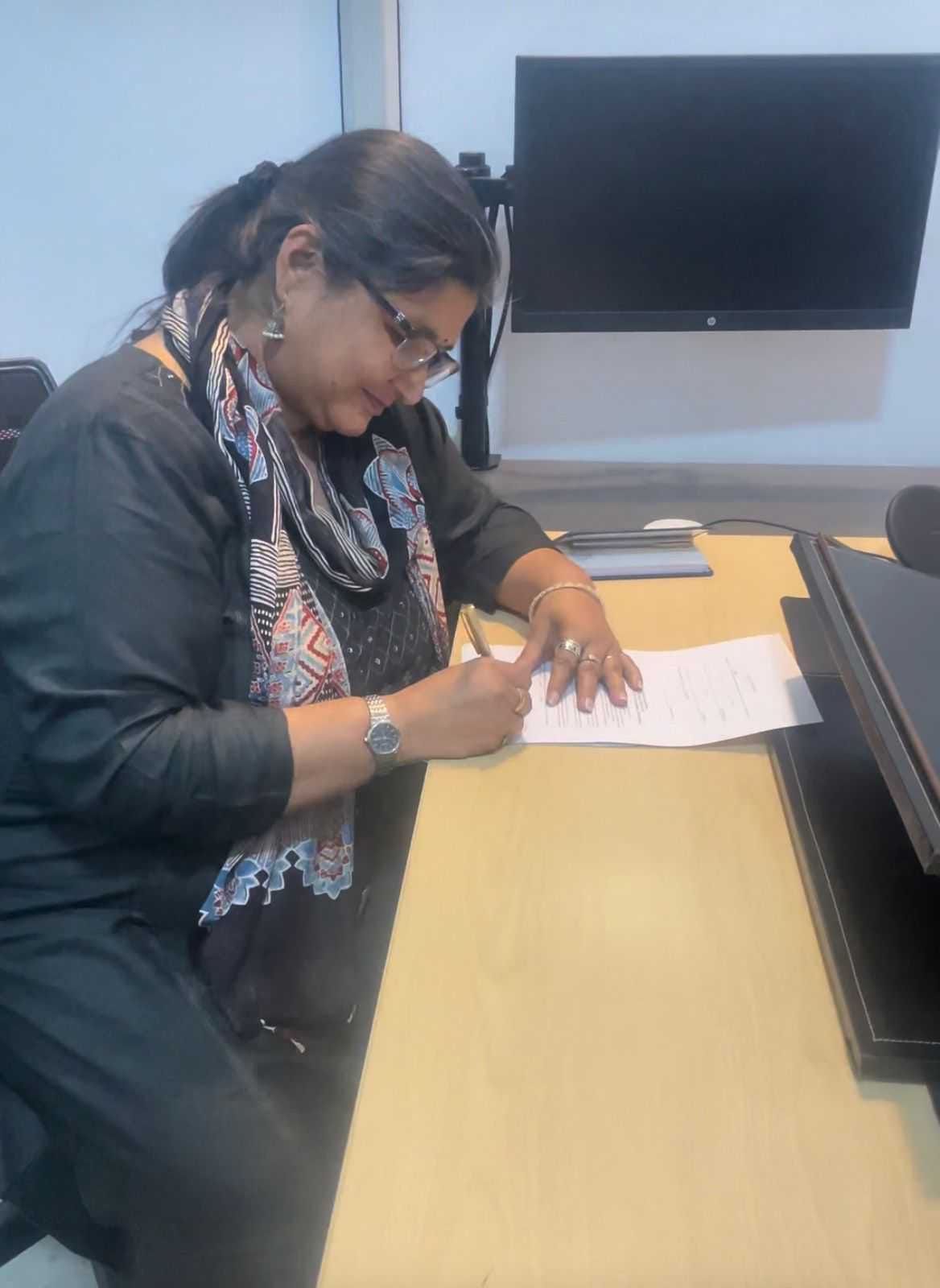
Refusing to back down, she sought clarification on the legal provisions. Soon, the issue escalated into a larger conflict and resonated with more people, dividing residents—some rallied behind Rai while others supported the RWA’s stance. Rai, associate advocate at Redlaw Legal Services, pleaded before the residents and the RWA president, citing Allahabad High court judgements.
According to the UP Apartment Act 2010 and its Model Bye-Laws 2011, all registered apartment owners have the right to vote and contest elections for the Board of Management.
Later, in the society’s general body meeting, members accepted her argument, and she even won the vote supporting her participation in the election process. She went on to win the election and served as the society’s secretary from 2017 to 2019.
However, it was not just Rai’s case anymore. Residents from other Noida societies also raised similar objections, and soon, people from seven different high rises filed a writ in the Allahabad High Court in 2021, where it remains pending.
It’s residents vs RWAs. And the courts are the new battleground.
Rai’s case reflects a broader shift in how housing society disputes are handled. Issues that were once settled informally—ranging from elections to maintenance funds to new infrastructure development, audit records and even cases of residents versus residents are increasingly making their way into legal forums. Across NCR, consumer courts and district and high courts are seeing a rise in cases involving RWA governance, builder violations, and the management of common areas. RWA disputes are the latest contributor to India’s rising case load.
“Earlier, residents rarely intervened in RWA matters because many were unaware of the bylaws and legal provisions. Now, people understand their rights and are less willing to tolerate arbitrary decisions,” said Advocate Satinder Duggal, who works on society registration and legal compliance in Haryana.
With the rapid rise of high-rise housing across Delhi-NCR in the last 10 years, RWAs have emerged as an influential group, backed by state apartment laws and society bylaws. But as dissatisfaction among residents increases, disputes are no longer confined to gated complexes or resolved within RWA offices.
“People are no longer asking RWAs for fairness—they are demanding it in court. That shift says everything about how seriously residents are taking their rights,” added Duggal.
Also read: Gurugram, Noida, Ghaziabad RWAs are fighting among themselves. Temples are the new flashpoint
‘From welfare to warfare’
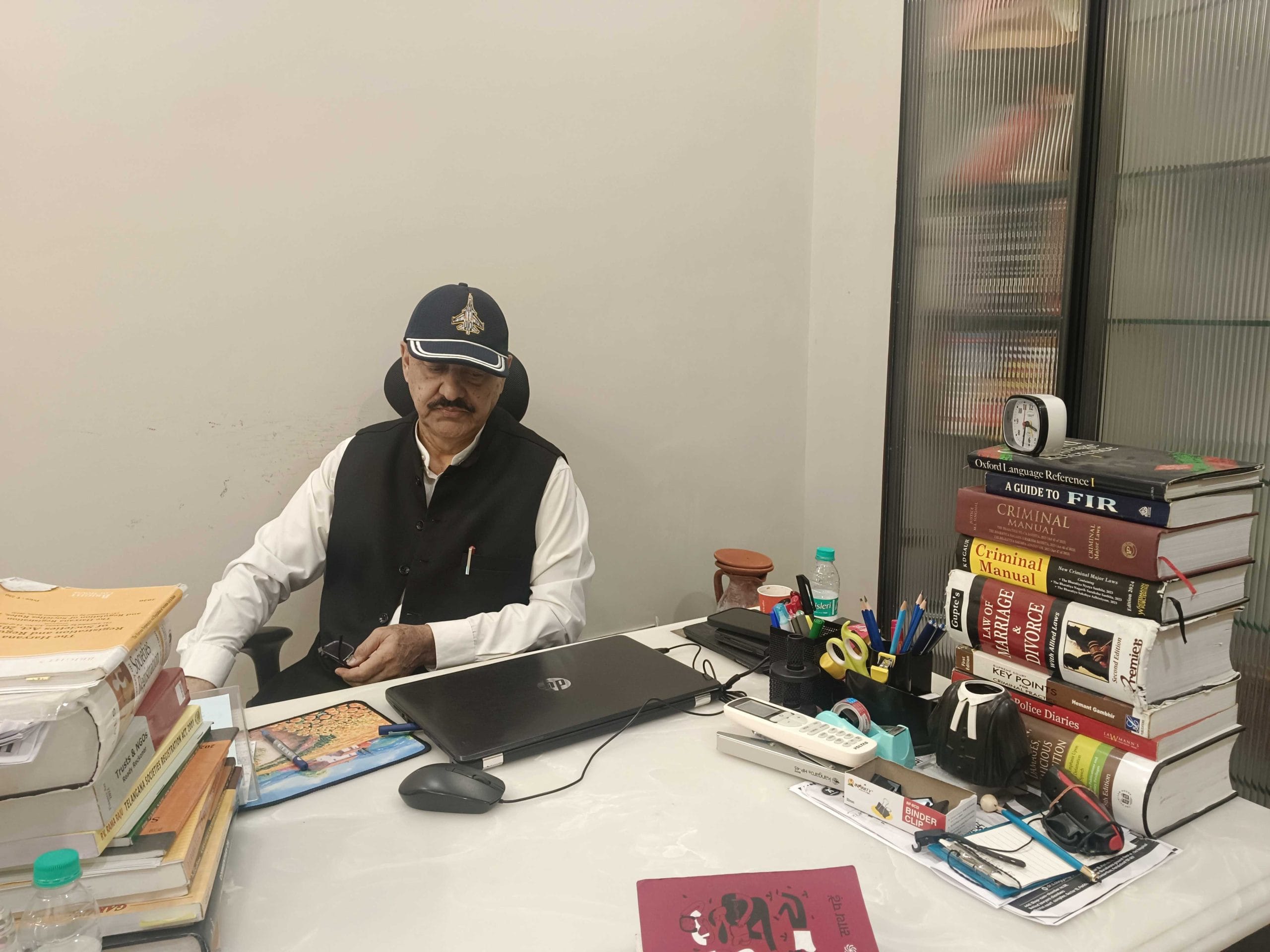
Advocate Satinder Duggal sits in his Faridabad office, attending a phone call. The caller asks him for advice on a parking dispute between residents and the RWA of their society. Duggal suggests the resident first have a proper meeting with the RWA before proceeding with legal action. As soon as he hangs up the phone, it rings again. Another RWA matter.
Surrounded by a table full of law books on the Societies Registration Act of different states, books on FIR filings and criminal manuals, Duggal sits with his phone constantly to his ear, listening one matter after another. Occasionally, he puts the phone on speaker to type something on his laptop and glances at the waiting area, where more people sit, waiting to speak with him and share their society-related problems or disputes with the RWA or builder.
“RWAs have forgotten their purpose and have shifted from welfare to warfare. Residents are fighting RWAs, sometimes even fighting among themselves, and the battle between builders and RWAs is the longest and biggest of them all,” said Duggal, pointing at a stack of papers, complaints and replies related to RWA cases he is working on.
A recent case that has come to Duggal involves 150 EWS residents of Faridabad sector 86, including an auto-rickshaw driver. They wanted to file a case against the society’s RWA, which allegedly does not allow EWS and lower-income residents to use parks, common facilities and has denied them the opportunity to participate in the society elections.
Under policies like the Master Plan Delhi (MPD-2021) and Haryana Town and Country Planning rules, it is mandatory for private group housing projects to reserve 15 per cent of the total units or FAR (Floor Area Ratio) for EWS and lower-income categories.
“We have been given a place to live, but we face discrimination there every day. Our children are not even allowed to go to the common park,” said the auto driver on condition of anonymity.
Now, a complaint has been filed with the Registrar General of Societies and the State Registrar of Societies, Haryana, citing the denial of voting rights to EWS residents.
“Statutory complaint seeking immediate intervention before 16.05.2026 against the illegal denial of voting rights to EWS flat owners (which include SC and OBC voters) under the Haryana Apartment Ownership Act, 2012, and a prayer for an immediate stay on the election schedule fixed for 17.05.2026,” states the appeal.
“They will burn my auto if they find out that I filed the complaint,” said the driver. Duggal on his part encouraged him and the other EWS residents to continue with their legal fight.
Duggal also gets calls from people seeking advice on resolving societies’ internal issues—from elections and electricity problems to disputes with builders.
“Now, people call lawyers even for parking disputes. This is where RWA matters stand today,” said Duggal, as he gets busy with another client who is involved in a parking dispute running since last year.
Highlighting the most common disputes in gated societies, Rajiva Singh, President of NOFAA (Noida Federation of Apartment Owners Associations), said that resident-versus-resident disputes usually involve parking conflicts, pet-related complaints, seepage issues, unauthorised balcony modifications, and arguments triggered on WhatsApp groups, which turned into legal fights. However, resident-versus-RWA/AOA cases are largely related to financial transparency issues, hidden maintenance hikes, misuse of sinking funds, redevelopment disputes, restrictions imposed on bachelors or pet owners, and concerns over non-compliance of Apartment Act.
“The legal disputes within the condominiums have unfortunately become a part of modern urban living. As more and more people move into these “vertical villages,” the friction between individual rights and collective governance has become a major legal frontline for the past few years,” said Singh.
Also read: Noida, Ghaziabad residents are angry about UP’s prepaid electricity meter system
Residents vs residents
Eighty-year-old Subhash Talwar, a resident of Gurugram, got into a parking dispute in 2019 with a woman resident of his society. The conflict escalated and eventually dragged in the builder and several other residents over the larger issue of designated parking spaces.
A few days later, Talwar received a notice and was shocked to know that an FIR for molestation had been filed against him by the same woman. She alleged that Talwar had behaved inappropriately with her.
“The ego of builders and residents has become so rigid that they even file molestation cases against their neighbours if someone raises their voice against wrongdoing,” said another resident who was present at the time of the incident. The resident added that such complaints have often been used to settle scores.
Advocate Rai agreed that resident-versus-resident cases have increased in gated societies, where individuals associated with the builder or RWA sometimes file cases against other residents to demonstrate their influence or power.
Talwar’s case continued for the next two years in the Chandigarh High Court. Later, due to a lack of evidence and witnesses, the case was dismissed and the FIR quashed.
“The builder, who held power over everything in the society, just wanted to show me their authority because they never liked me. This is how they came up with a false case,” said Talwar.
In 2021, a group of residents filed an FIR in Gurugram against former members of the society’s welfare body ALARWA (Ambience Lagoon Apartment Residents Welfare Association), alleging that between 2014 and 2017, they illegally took control of the management of Lagoon Apartments, Ambience Island, by using forged documents and a fake amended Deed of Declaration.
The complainants, who were part of the legally recognised association LRACA (Lagoon Residents Apartment Condominium Association), claimed that ALARWA misled residents, unlawfully collected maintenance charges, and misused society funds while operating without authority.
“It is just a fight for power. When new people want power, instead of fighting elections and attending meetings, they make false allegations,” said a member of ALARWA.
The dispute arose from a power struggle between the two groups over control of the society’s management and finances. The case is under investigation by Gurugram police.
Also read: Hung clothes on your balcony? That’ll be Rs 500—RWAs are fining everything now
Pending cases
Sanjay Gupta, Gurugram-based advocate and a resident of Mayfield Gardens, has always been vocal about society issues and the RWA’s functions. His inputs, allegations, and complaints are often read in WhatsApp RWA and apartment federation groups.
Gupta has been speaking about the alleged misuse of RWA funds for a long time, as well on issues of illegal encroachment within the societies.
In RWA WhatsApp groups, residents and office bearers also ask him for proof. Some others join him, sharing their own experiences.
On 10 October 2024, Gupta filed a complaint to the District Registrar, Firms & Societies, Gurugram regarding irregularities in his society N-Block RWA.
In his complaint, he raised issues about financial and administrative misconduct in the society, including allegations such as “Illegal Money taken from Kabadiwala & Illegal Security Body” and “MLA Road Funds Misuse & Illegal collections for roads & threats,” along with RWA governance-related concerns.
In November 2024, the District Registrar officially ordered an inquiry and appointed Mahadev Sharma (Retd. Asstt. Registrar, Co-operative Societies) as the Inquiry Officer. He was directed to “ascertain the facts claimed by the complainant” and submit a report within 45 days, following the rules of the HRRS Act 2012 and the society’s bylaws.
“It appears that there are lots of discrepancies in N-Block RWA, Mayfield Gardens, Sector-51, Gurugram and all allegations claimed by the complainant need to be inquired,” reads the Enquiry Order issued by the District Registrar. ThePrint has a copy of the order.
The matter is still under investigation.
It has been two years since Gupta filed the legal complaint with the district registrar office. Since then, he has been tracking the case and submitting follow-up complaints. However, the case continues to move between the district and state registrar offices.
Speaking about the growing number of prolonged legal disputes, Ritu Bhariok, advocate and legal advisor of Federation of Apartment Owners Association, said several matters in Gurugram pending since 2016 remain unresolved.
“These cases do not need to stretch for five years. However, after a case is filed in the district registrar’s office, it can take nearly two years to reach the state registrar’s office. In many instances, once the matter reaches the State Registrar’s office, it is remanded back, which again takes several more years. This is how cases get stuck in a loop and eventually return to square one,” said Bhariok.
Rai and her team at Redlaw Legal Services, which primarily deals with RWA and society-related cases, have seen a rise in lawyers specialising in such litigation.
“People spend lakhs to live in these societies, so they will not hesitate to spend thousands more to file a case against those who make their lives uncomfortable in any way,” Rai added.
(Edited by Anurag Chaubey)