


New Delhi: Uddhav Thackeray resigned as chief minister. Electoral bonds funded several election cycles. Sonam Wangchuk walked out of detention. In each case, the Supreme Court was left confronting a question that time had already partly answered, or made impossible to remedy.
A proceeding ordinarily becomes infructuous when the relief sought can no longer be effectively granted because of a subsequent change in circumstances. A question becomes academic when a court of law is no longer required to decide it for the effective resolution of the dispute before it.
The Supreme Court in the past year has disposed of a variety of cases before it as the issue at hand or the relief sought by the party before it became, infructuous or even academic, since legislative overhauls or the sheer passage of time overtook the original dispute.
ThePrint looks at such landmark cases.
Can states impose additional tax?
Last week, a seven-judge bench of the top court disposed of the 1994 Arjun Flour Mills case involving the historical question of state legislative competence under the pre-GST sales tax regime. This matter was referred to a seven-judge bench in 1999, arising from a challenge to provisions of the Orissa Sales Tax Act, 1947 and related appeals starting 1994.
The basic question in this matter was whether state governments can impose a surcharge, additional tax, levy or cess calculated on the basis of a validly levied sales or purchase tax.
Also, the court was to decide if a levy on a sale or purchase, calculated with regard to an existing sales or purchase tax, remained within the State’s legislative power under Entry 54 of the State List.
By the time the reference made in 1999 came to a final hearing, 27 years later, the court found that the reference was no longer needed as the central government had already brought in the GST reform in 2017, creating a unified national indirect tax system.
The seven-judge bench led by CJI Surya Kant disposed of the reference, confirming that the 1974 Constitution Bench ruling in S. Kodar v. State of Kerala—which upheld such levies—continues to hold the field.
It, therefore, upheld the legislative competence of states under the pre-GST framework.
Legislative privilege vs free speech
In October, a seven-judge Constitution Bench disposed of another 23-year-old legislative privilege versus free speech reference as infructuous, without answering the central constitutional question involved, since the underlying issue at hand had been resolved.
The proceedings started in 2003 when journalists from The Hindu approached the top court after the Tamil Nadu Legislative Assembly passed a breach of privilege resolution, and ordered their arrest for publishing editorials critical of the then chief minister J. Jayalalithaa. The Supreme Court had at the time stayed their arrests, but the case was referred to a larger bench. The court was asked to decide on the interpretation of the scope of legislative privileges of lawmakers and its effect on freedom of speech and expression.
In October this year, the top court disposed of the case, noting that the Tamil Nadu Assembly breach-of-privilege resolution was withdrawn in 2004. It, however, kept the larger constitutional question open for decision in an appropriate case.
What constitutes an ‘industry’
Another example of such a case is the long-running legal debate over what constitutes an “industry” under the Industrial Disputes Act, 1947.
It began with the Supreme Court’s landmark seven-judge bench ruling in Bangalore Water Supply & Sewerage Board v. A. Rajappa in 1978, which laid down an expansive “triple test”, bringing most organised activities—including hospitals, educational institutions, and government departments—under labour law protections.
Questioning the unintended consequences of the 1978 “triple test”, a three-judge bench in 2002 referred the issue in State of UP v. Jai Bir Singh to a larger bench, which was subsequently escalated by a five-judge bench in 2005, and finally placed before a nine-judge Constitution Bench by a seven-judge bench in 2017.
When the nine-judge bench led by CJI Surya Kant finally delivered its judgment in August 2026, more than two decades after the initial referral, legislative developments had already rendered the massive interpretive exercise largely academic.
Parliament had already enacted the Industrial Relations Code, 2020 (which came into force in November 2025) to replace the 1947 Act with a fresh statutory definition of “industry”.
While a narrow 5:4 majority declined to disturb the 1978 “triple test” for pending disputes under the repealed 1947 Act, the Supreme Court held that the Industrial Relations Code, 2020 would operate on a “clean slate”, unburdened by the 1978 precedent, effectively leaving the core controversy to be fought anew in future litigation.
Farm laws, Demonetisation, Electoral Bond scheme
In recent years, there have been multiple instances where time taken by the Supreme Court to decide a case exceeded the duration of a policy or government order.
First, is the controversial and much-protested farm laws. Multiple writ petitions challenged the constitutional validity of the three laws passed in 2020.
Together, they paved the way for farmers to sell produce outside state-regulated Agricultural Produce Market Committee (APMC) mandis without paying state taxes or fees. Further, they proposed the creation of a national framework for contract farming. Also, they proposed delisting certain foodstuffs as essential commodities to ease stockholding limits for private companies, except during extraordinary circumstances.
Following the enactment of the laws and outbreak of widespread protests by farmers, multiple writ petitions reached the top court. Petitioners argued that agriculture and markets fall under the State List of the Seventh Schedule of the Constitution, which they said meant Parliament lacked the legislative competence to pass the laws.
On 12 January, 2021, a bench led by then Chief Justice S.A. Bobde stayed implementation of all three laws until further orders and appointed a four-member committee to consult stakeholders. However, in November 2021, Prime Minister Modi withdrew the legislation, with Parliament subsequently passing the Farm Laws Repeal Bill, 2021 that same month.
This rendered the substantive challenges academic, leaving the core constitutional questions regarding Centre-State legislative powers over agriculture unanswered.
Earlier, on 8 November, 2016, Prime Minister Narendra Modi invalidated Rs 500 and Rs 1,000 banknotes, giving citizens a tight window to exchange or deposit them. More than 50 petitions challenging the legality and execution of the move were filed almost immediately.
The Supreme Court referred the matter to a Constitution Bench in December 2016, but the bench was not constituted to hear the case until late 2022.
By the time the five-judge bench delivered its 4:1 verdict upholding the policy in January 2023, six years later, the currency exchange had long concluded and the verdict striking down the notification was purely academic, as the clock could not be turned back.
Separately, the challenge to the electoral bond scheme faced a similar fate. Introduced via the Finance Act, 2017 and notified in January 2018, the Electoral Bond Scheme allowed anonymous, unlimited corporate and individual donations to political parties.
The Association for Democratic Reforms (ADR), among others, challenged the scheme in January 2018, repeatedly seeking an interim stay before major elections so anonymous money would not influence the polls. The Supreme Court declined to stay the scheme.
However, a five-judge bench unanimously struck down the scheme as unconstitutional in February 2024, after six years of multiple election cycles. While the court ordered the disclosure of past donor data, nearly Rs 16,500 crore had already been donated and spent across multiple election cycles before the constitutional validity of the scheme was decided.
Also Read: Bail jurisprudence in India slow, not short on principle. SC & its latest push for solving pendency
Detentions: Wangchuk, Omar, Mehbooba
In September 2025, when environmentalist Sonam Wangchuk was detained under the National Security Act (NSA) after protests demanding statehood in Ladakh, his wife Gitanjali Angmo immediately moved the Supreme Court challenging the detention as illegal. In her habeas corpus petition under Article 32 filed in October 2025, she alleged non-supply of detention grounds and suppression of Wangchuk’s appeals for peace. But no substantive hearings took place.
It was only in January 2026 when a bench of justices Aravind Kumar and P.B. Varale started hearing the matter actively. By 10 March, 2026, the court had reviewed speech transcripts, questioned the government on Wangchuk’s health, and reserved its judgment, having listed the matter for final orders on 17 March.
The National Security Act, 1980 allows preventive detention for a maximum of 12 months, and Wangchuk had already spent nearly half of that period in detention.

Incidentally, just three days before the scheduled 17 March hearing, the MHA revoked the NSA order under Section 14 of the Act, citing efforts to foster peace and dialogue in Ladakh. When the bench reconvened, senior advocate Kapil Sibal, appearing for Wangchuk, urged the court to still examine the procedural lapses and legality of the detention.
However, noting that Wangchuk had already been released, the bench closed the case, observing that there was “nothing left in the matter” to be adjudicated.
The 2020 habeas corpus petitions involving Omar Abdullah and Mehbooba Mufti followed the exact same pattern as the Wangchuk case. In both instances, the administration revoked their preventive detention orders under the Jammu and Kashmir Public Safety Act, 1978 (PSA) right after the Supreme Court signaled it would examine the merits, rendering both challenges infructuous without a formal ruling on the legality of their detentions.
National Conference (NC) leader Omar Abdullah was placed under preventive detention on 5 August, 2019, coinciding with the abrogation of Article 370. Just hours before his six-month preventive custody under Section 107 of the CrPC was set to expire on 5 February, 2020, authorities booked him under the stringent PSA.
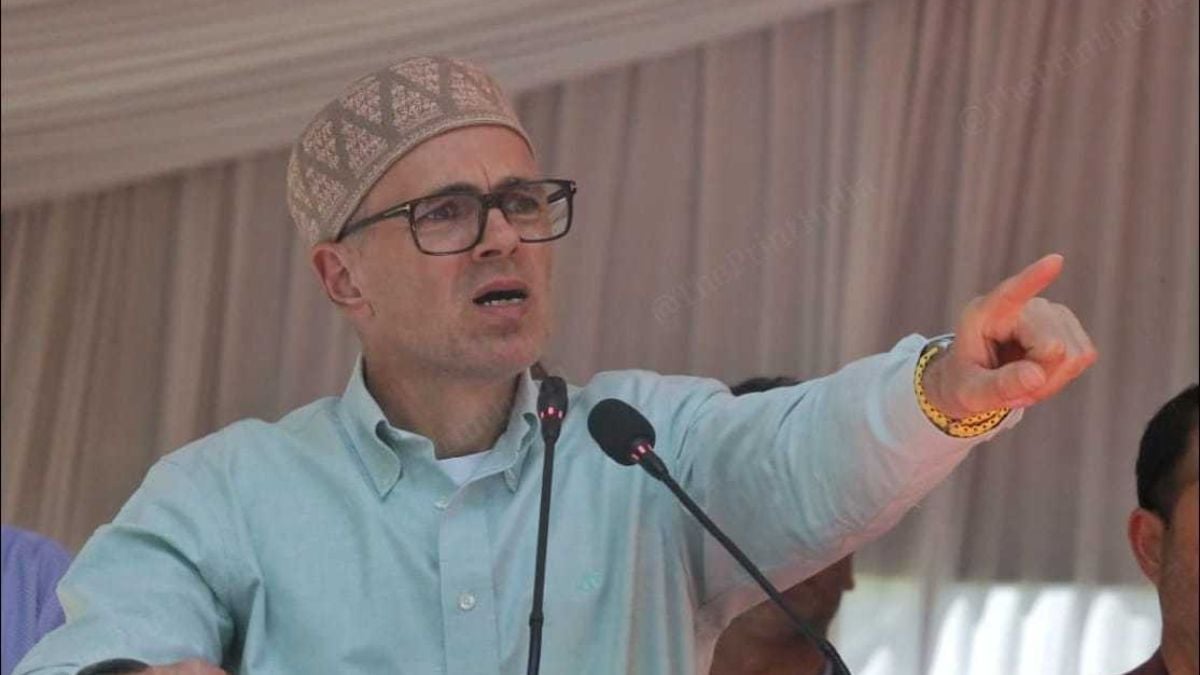
On 10 February, 2020, his sister, Sara Abdullah Pilot, filed a habeas corpus petition directly in the Supreme Court. She argued that the detention dossier relied on vague and false allegations, such as citing his ability to mobilise voters during elections as a threat to public order. On 18 March, 2020, a bench led by Justice Arun Mishra warned the central government and the J&K administration that if Abdullah was not released soon, the court would hear the petition on its merits. Six days later, on 24 March, the J&K administration revoked his PSA order, rendering the Supreme Court petition infructuous.
Also detained on 5 August, 2019, J&K Peoples Democratic Party (PDP) chief Mehbooba Mufti was booked under the PSA on 6 February, 2020, and kept at her residence-turned-subsidiary jail in Srinagar. Her detention was subsequently extended twice, keeping her in custody for over 14 months.
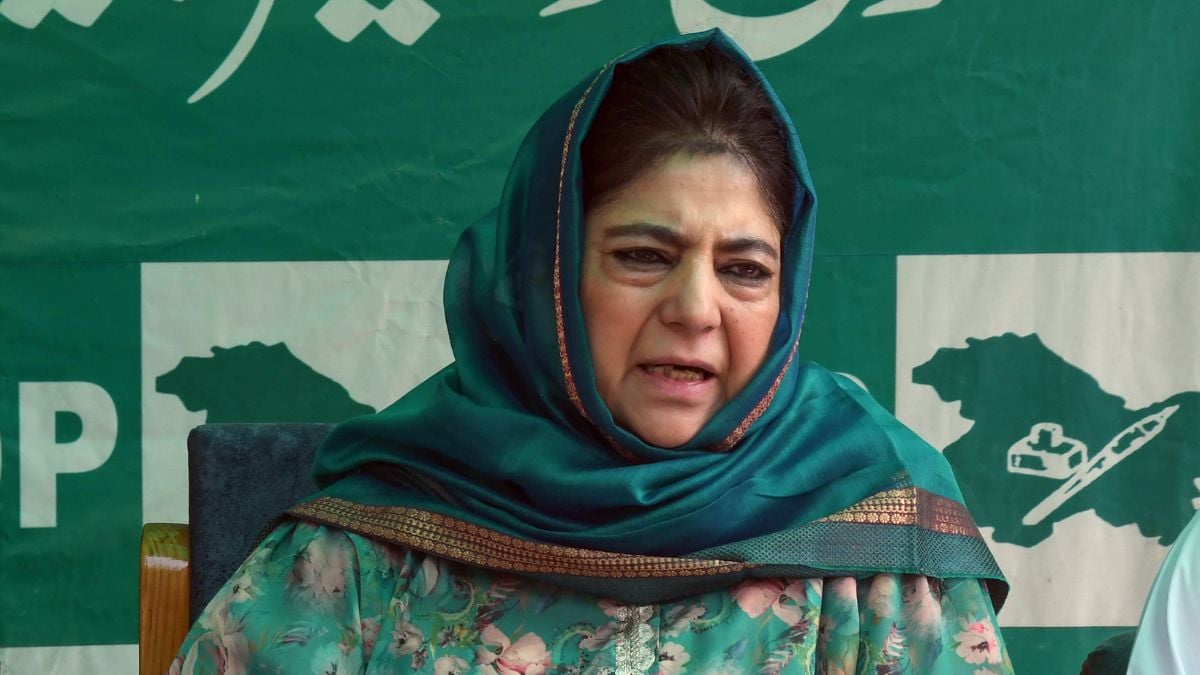
Her daughter, Iltija Mufti, filed a habeas corpus petition in the Supreme Court in February 2020 challenging the detention as a violation of free speech and personal liberty. Following repeated adjournments due to the COVID-19 lockdown, the top court in September 2020 questioned the administration on how long it intended to keep her detained without trial.
The top court scheduled the next hearing for 15 October, 2020, to examine the legality of the detention orders. Just two days before that crucial hearing, on 13 October, the J&K administration abruptly revoked Mehbooba’s PSA order and released her, once again leaving the constitutional validity of the detention unexamined.
The ‘real’ Shiv Sena
In June 2022, a majority of MLAs from the Shiv Sena led by then minister Eknath Shinde flew to Surat and later Guwahati, and challenged then chief minister Uddhav Thackeray’s leadership. Sena was a part of Maharashtra’s ruling alliance, the Maha Vikas Aghadi (MVA).
As the Thackeray camp initiated disqualification proceedings against the rebel MLAs under the Tenth Schedule, the Supreme Court temporarily paused the process, giving the rebel legislators more time to respond.
By then, the opposition BJP urged Governor Bhagat Singh Koshyari to call for a floor test, arguing that the MVA had lost its majority. After the Supreme Court refused to stay the Governor’s directive for a trust vote on 29 June, 2022, Thackeray resigned before facing the Assembly, paving the way for Shinde to be sworn in as Chief Minister with BJP support the very next day.
Following the change in government, newly elected Speaker Rahul Narwekar recognised Shinde as the Shiv Sena Legislature Party leader. The Thackeray faction challenged both the Governor’s floor test order and the Speaker’s actions before the Supreme Court, leading to the landmark Constitution Bench case Subhash Desai v. Principal Secretary, Governor of Maharashtra.
Meanwhile, in a parallel proceeding in February 2023, the Election Commission of India (ECI) officially recognised the Shinde faction as the real Shiv Sena and allotted it the party’s ‘Bow and Arrow’ symbol.
On 11 May, 2023, a five-judge Supreme Court bench ruled that both Governor Koshyari and Speaker Narwekar had acted illegally, holding that internal party dissent does not justify a floor test and that a Speaker must recognise the whip of the political party, not just the legislature party. But since Thackeray had voluntarily resigned prior to the floor test, the court held that restoring his government was legally impossible, rendering the primary political relief infructuous. The top court remanded the pending disqualification petitions back to Speaker Narwekar, who ultimately ruled in January 2024 that the Shinde faction was the real Shiv Sena and dismissed all disqualification pleas against both camps.
Appointments to poll panel
Separately, petitions seeking to stay the process of appointment of Election Commissioners under the 2023 Act or earlier regimes were also rendered academic when the officials in question retired or completed their tenures before final arguments concluded.
In challenges to The Chief Election Commissioner and Other Election Commissioners (Appointment, Conditions of Service and Term of Office) Act, 2023, the Supreme Court repeatedly declined to stay the operation of the law or freeze new appointments.
The bench held that primary legislation carries a presumption of validity and cannot be stayed through interim orders. Under the pre-2023 regime, EC Arun Goel’s November 2022 appointment was scrutinised by a Constitution Bench in Anoop Baranwal v. Union of India.
While the court criticised the 24-hour selection process in March 2023, it did not disturb his appointment. Goel later resigned in March 2024, rendering any specific challenge to his continuation in office moot.
On the separate challenge to the 2023 Act, because stays were denied in January, February, and March 2024, the appointees continued discharging their duties amid multiple adjournments.
In September 2026, a two-judge bench split on whether to refer the validity of the 2023 selection panel to a five-judge Constitution Bench, further extending the timeline beyond the immediate appointment cycles.
The CJI is yet to form a five-judge bench to hear the challenge to the 2023 Act.
‘A vicious cycle’
Reflecting on the Supreme Court’s functioning over the past four decades, senior advocate Dushyant Dave saw a recurring failure to uphold constitutional values and protect citizens’ fundamental rights. “Unfortunately, the Court has been extremely reluctant and slow in doing complete justice, substantial justice. As we jokingly say amongst lawyers, ‘operation successful, patient dead’,” remarked Dave, former three-time president of the Supreme Court Bar Association (SCBA).
Senior advocate Chander Uday Singh agreed with the assessment.
The top court, he said, increasingly deferred important constitutional questions or delivered preliminary judgments without deciding the consequential issues that would determine whether litigants received meaningful relief. Citing the Shiv Sena split, he saw a pattern in major constitutional cases. In the electoral bonds case, for instance, the top court delivered a landmark judgment striking down the scheme, but Singh argued that consequential questions concerning the bonds already purchased and the money collected had not been adequately addressed.
Singh also pointed to a recent split verdict by Justices Dipankar Datta and Satish Chandra Sharma on whether the challenge to the EC Act 2023 should be referred to a five-judge bench. He said it was troubling that it took the court years to decide such a preliminary question.
“If the reference to a five-judge Bench had to happen, it should have happened two or three years earlier. This is an unfortunate trend we are seeing again and again with many burning issues”, he told ThePrint.
Citing the ongoing challenge to the Special Intensive Revision (SIR) of electoral rolls, Dave said the Supreme Court’s delayed intervention had created a serious contradiction. By the time questions concerning the exclusion of voters from electoral rolls were being meaningfully addressed, elections in Bihar and West Bengal had already taken place.
“I have practised for 48 years, and I must confess that I have been foxed by the reluctance”, he told ThePrint, adding that such an approach is particularly troubling for a democracy that needs an effective and vibrant judiciary to maintain constitutional checks and balances.
Referring to the preventive detention of climate activist Sonam Wangchuk under the NSA, Dave said the executive had effectively gained an advantage because the top court did not decide the legality of the detention while it was in force. “The executive has an upper hand today. The way the executive succeeds is by dragging the cases, knowing full well that the judge will be party to that dragging,” he said, particularly critical of repeated adjournments, which he said reflected poorly on the judges hearing the matter.
Dave rejected the argument that the Supreme Court’s problem was simply an inability to prioritise cases. According to him, the existing system already allowed “rich and powerful” litigants to secure faster hearings.
He called for a comprehensive exercise involving all stakeholders in the justice delivery system, including judges, lawyers, litigants and court staff. According to him, institutions such as IITs and IIMs, along with the government, could assist the court in developing a more effective system of case management.
Dave said he had advocated such an exercise before successive Chief Justices, suggesting that a small but empowered committee could formulate practical solutions for prioritising and disposing of cases.
However, he did not place the entire responsibility for delays on judges, holding lawyers equally responsible for prolonging hearings through repetitive and poorly-structured arguments.
He cautioned against treating the criticism as a blanket assessment of every judge, but maintained that the larger institutional problem remained unresolved. “The whole thing becomes a vicious cycle, and I don’t know who can break this cycle. I don’t think the existing set of judges have the capability to break this cycle, and the Bar is certainly not helpful to the judges,” he said.
Singh, meanwhile, cautioned that hearings and decisions, which are academic in nature, are an instance of judicial failure.
“If a law has been repealed, it would be injudicious, or perhaps even foolhardy, for the Supreme Court to venture into rendering a decision on that. Once it is repealed, the Supreme Court is then delivering an essay, basically, an essay which means nothing and has no consequences,” he said.
Singh rejected the argument that the Supreme Court’s workload alone explained why important constitutional cases remained pending.
“There are issues which are completely academic or of no moment whatsoever. There are matters which have been referred to five-judge benches long ago. They are half-dead issues. They get taken up. The court finds time for those. The court finds time for all kinds of things,” he said.
Asked specifically about changes that could help the case management, he acknowledged that the Chief Justice could not personally hear every matter and that cases had to be assigned to different benches. But he said this was not a reason for urgent cases to remain unattended. Adding, “The party who benefits from delay in most such constitutional issues is the government. And if delay kills the issue, or renders the issue moot, then the Supreme Court, I believe, is failing in its duty.”
(Edited by Amrtansh Arora)
Also Read: 22 judges per million, 26 lakh cases pending: India’s judicial gap widens despite years of reform