





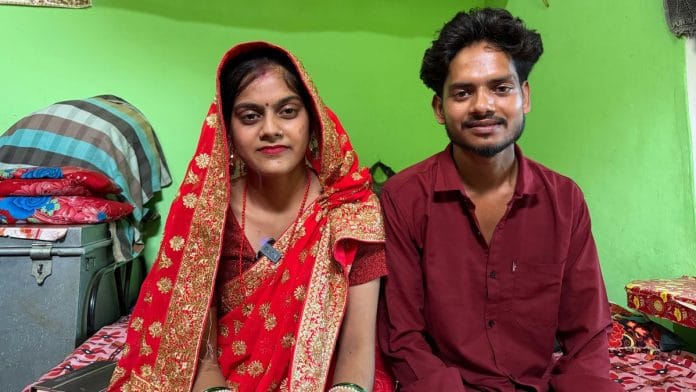

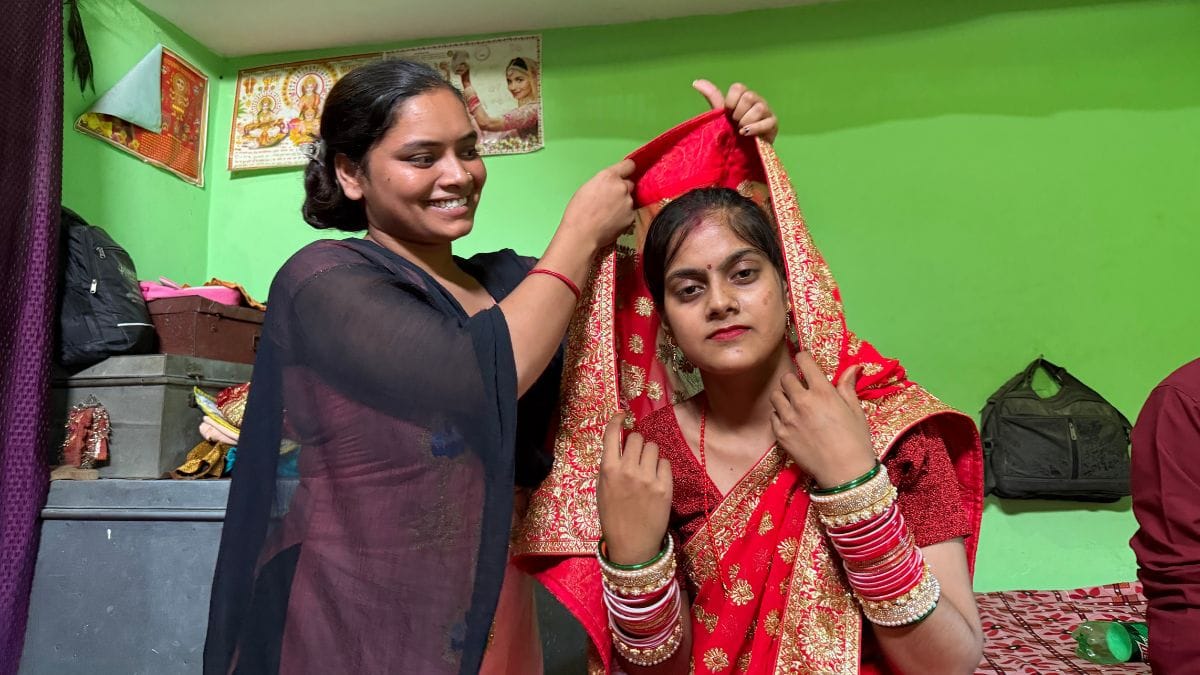
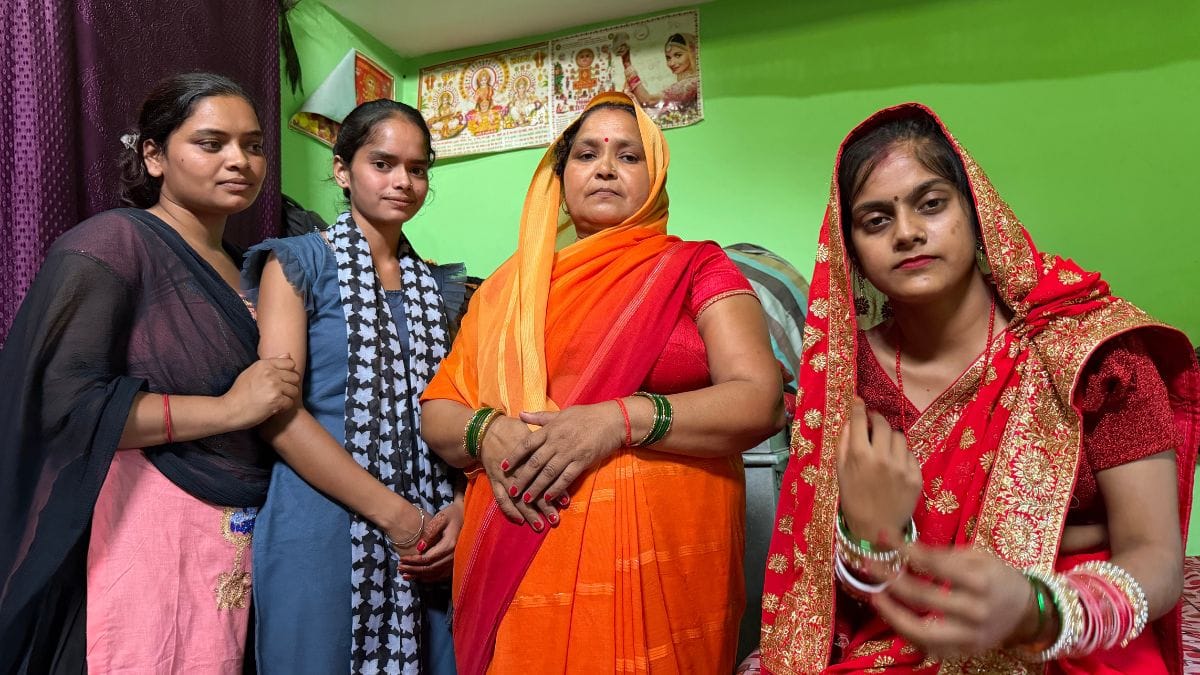
Budaun: Dressed in a red saree, wearing sindoor, red bangles and her head covered with a pallu, 19-year-old Himanshi Kumari looks every bit a newlywed Hindu bride. Just a few days ago, she was known as Hira Naz Bi, a young Muslim woman living with her family in Budaun, Uttar Pradesh.
Her marriage to 21-year-old Atul changed not just her marital status, but also her name, faith and identity. It became a cause for Hindutva groups to rally around and celebrate — following a crucial intervention by the police — in this small town otherwise famous for its zari-zardosi work. While the Hindus cheered it as ‘ghar wapsi’, a pall of shameful silence has fallen over the Muslim community in Jasma village three kilometres away. They now face a dilemma. If they express resentment, they are convinced they will face repercussions.
It wasn’t easy for Himanshi either. Her Muslim parents opposed bitterly when they found out she was in love with a young Hindu man.
“We were in love for almost three years. We had a secret marriage in January. After getting married in an Arya Samaj temple, we got our live-in certificate and I went back to stay with my parents. When my family found out about us, they beat me and locked me in a room,” Himanshi said.
That’s when the Budaun police got involved.
Himanshi dialled 100 and told the police her family was “threatening to kill” her.
She said when the police arrived, her family sent them away saying some kid might have dialled them by mistake. Himanshi then found a way to talk to Atul, prompting her parents to file a complaint against him alleging he had lured their minor daughter.
“After the police intervened, I was reunited with my love. It feels like I am living my dream,” Himanshi said, sitting on a bed with folded hands, dressed as a newlywed bride in Budaun’s Usawan town.
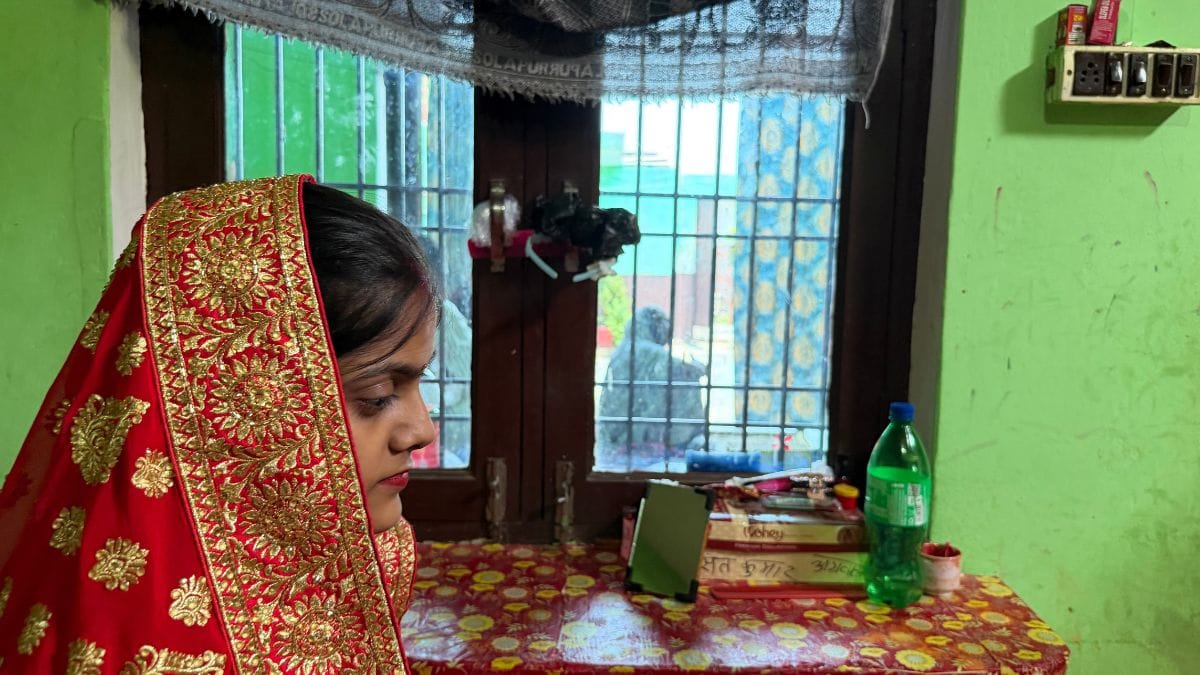
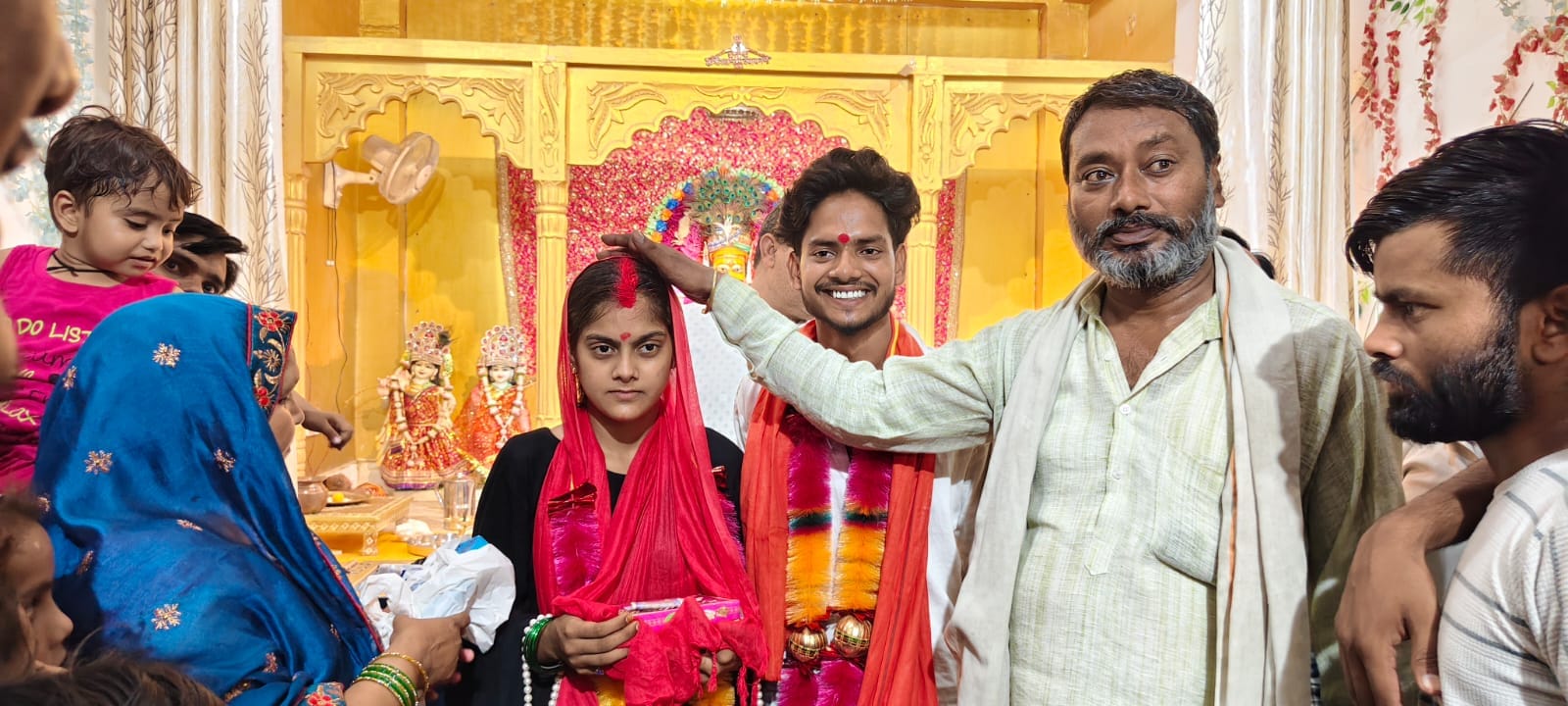
The marriage received widespread support from local residents, Bajrang Dal members and, to some extent, the police. There were no clashes, no political interference and no communal violence. The wedding was solemnised at a temple in the presence of Bajrang Dal members and Atul’s family and friends.
After the marriage, chants of “Jai Shri Ram” echoed through the temple, and the bride was welcomed with sweets and dancing. The neighbourhood was jubilant. Around 300 people came to see the newlywed bride. For the police, it was a sensitive case because it involved two different religions. However, since the girl was Muslim and the boy Hindu, the matter did not escalate.
“We received complaints from both sides. We called both parties to the police station and asked the girl where she wanted to go. She said she wanted to be with the boy, so we told her family that she is an adult and if she wishes to go with him, nobody can stop her. We then allowed them to leave together,” said Rajendra Singh, SHO of Usawan police station.
Some police officers, however, noted that the situation would not have been resolved so easily had the girl been Hindu and the boy Muslim. One senior police officer requesting anonymity said cases involving Muslim men and Hindu women quickly turn into a law-and-order issue, adding that the woman’s statement even in those cases remains the most important factor.
“Once an FIR is filed under Section 69 of the BNS, the girl has to be produced before a magistrate to record her statement. A statement given to the police does not carry much legal value. In most cases, if the girl says she went willingly and both sides agree, the matter is resolved,” the officer said.
“In this case, many people saw it as a case of ‘ghar wapsi’ and since the Muslim side did not file a complaint, it was settled easily. Had the situation been the other way around, it would not have been so easy. Hindu groups could have become aggressive and the case might have been projected as ‘love jihad’, creating a law-and-order issue.”
In Atul and Hira Naz’s case, no FIR was registered, and the woman did not change her statement despite pressure from the family.
From school love to court marriage
Hira Naz was in Class 10 when she first met Atul in 2023. They began talking during chance meetings in the neighbourhood and near their village. Their relationship deepened through secret conversations on her father’s phone. Then, a year ago, Atul gifted her a mobile phone.
Religion was always a source of fear for the couple, but it never stopped them from being together.
“We knew from the beginning that we belonged to different religions, but we were in love. For us, love became bigger than religion,” said Atul, looking at Himanshi.
It was in January that the couple decided to get married because they feared Hira’s family would arrange her marriage to someone else. They waited until she reached the legal age and then decided to formalise their relationship. They first approached a lawyer and completed the required paperwork.
“We followed the Arya Samaj marriage process and performed Hindu marriage rituals. Based on that, we got our marriage registered,” said Atul.
Both families remained unaware of the marriage until Hira’s brother found her mobile phone. He discovered her chats with Atul, setting off a chain of events.
The first person to approach Atul’s family was Hira’s father Mujahid.
“He came and asked for Atul’s photograph and signature on some documents. When he learned about the marriage, he asked the couple to get divorced. But I told him that we would do whatever the girl wanted. After that, he left and filed a complaint with the police,” said Dharmendra Kumar, Atul’s father.
Hira’s family accused Atul of luring her, intoxicating her and forcing her into marriage. The police took Atul into custody. In response, he filed a complaint alleging that his wife was being kept against her will by her parents. Following this, the police called both parties to the station.
“The girl’s family claimed she was a minor, but the boy produced documents proving her age,” said SHO Singh.
While the live-in certificate mentions Hira has converted, she said there has been no religious conversion yet and no registration under the Special Marriage Act. The notarised affidavit is the first in the three-step process of religious conversion.
“I did not get them married. I only helped prepare their live-in relationship certificate,” said Satender Pal, the lawyer whom Atul claims assisted them.
Hindu family, Bajrang Dal, ‘Ghar wapsi’
Dharmendra Kumar, 45, was initially unhappy about his son’s decision. But when the police and Hindu groups got involved, he came to terms with the fact that a Muslim girl would now live with his family. The marriage is being celebrated. Discussions about the new bride, Hindu rituals, and adjusting to the family were among the topics discussed in the courtyard.
“Amma, you should teach the new bride some Hindu wedding songs. She may not be aware of Hindu traditions,” one of Atul’s friends said sarcastically.
Atul’s grandmother laughed.
“Atul must have taught her well about our traditions,” she said.
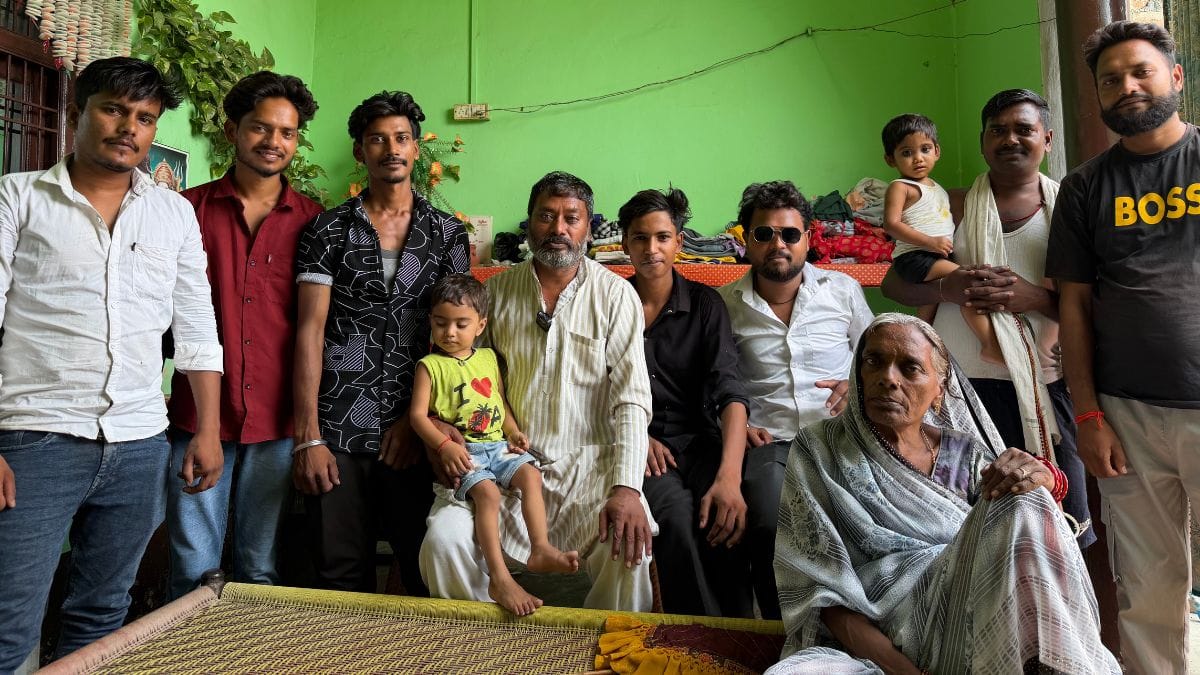
Atul’s family and neighbours are celebrating the marriage. But not all cases are the same. Around 40 days ago, Anisha, who changed her name to Neha Sharma, married her Hindu boyfriend with the help of Bajrang Dal and is now in hiding because the couple fear for their lives.
“They both wanted to get married. We helped them. As of now, none of the family members have accepted their marriage, but we are sure that the Hindu family will soon accept it. After all, the girl is embracing Hinduism and it’s a good thing,” said Arpit Bhamashah, Prant Mantri, Western Uttar Pradesh.
Bajrang Dal played a major role in resolving the matter in the police station. Just a few days before the police complaint, Atul contacted Atul Bajrangi, Vibhag Maha Mantri, Rashtriya Bajrang Dal, Budaun and Bareilly. He told Bajrangi that he had married a Muslim girl and the police were giving him a difficult time, after which Bajrang Dal came to help the couple.
“Initially, the police were working under pressure from the girl’s family, but when Bajrang Dal reached the police station and pressured the police to make a decision after the girl’s statement, we took them to Khatu Shyam temple and got them married under our protection,” said Bajrangi.
Bajrang Dal continues to provide support in such cases. For them, it’s “Ghar Wapasi”.
“Sanatan dharma is the greatest among all religions. Whoever joins Sanatan will achieve great heights and we are always available for that,” said Bajrangi.
For Himanshi, religion is overshadowed by love and the new beginning that has come with her new family. Here she has found acceptance, freedom and a sense of belonging. She has no wish to go back to her parents. She strongly believes that they will never accept her marriage to Atul.
“They kept telling me they would have agreed to the marriage had the boy’s religion been the same). No one understood me, not my brother, not even my sister,” Himanshi said.
Fear and shame in Muslim neighbourhood
Jasma village in Budaun has gone silent for the past four days. The Muslim families are “ashamed”. More than fear, there is disappointment and sadness. In Muslim neighbourhoods, people say the Hindu boy will eventually abandon the girl.
“It is a big shame for the community that the girl turned against her family and chose that Hindu boy. In no time she will be standing with a child in her arms and a complaint at the police station when he abandons her,” said one resident in his 30s.
None of the family members or residents of the village is speaking about this matter out of fear. No religious group came to support them.
“No one will speak because everyone is afraid that a bulldozer will be sent to bulldoze the house or that they may face an encounter. In this government, Muslims can’t speak up even for their reputation,” said another resident.
Both families used to do business together, buying and selling goats. For both families, business will be hampered, but Atul’s mother and sister are happy to have a new member in their family.
“Atul told me a very long time ago about Himanshi. I knew that religion would be a problem, but we love her so much. She has accepted our religion. She is one of us now,” said 22-year-old Neha, Atul’s sister.
For one side, it is a story of love triumphing over religion; for the other, it is a story of loss, shame and betrayal. Between the two stands a young couple whose decision has redrawn the boundaries of family, faith and belonging.
“For some people, this marriage is about religion. For some, it is about honour. For me, it was always about Atul. I know my family is hurt, but I chose my love. I am happy,” said Himanshi while looking at Atul.
(Edited by Prashant Dixit)
trapped by sanghi kaffir soon will be found dead like rest muslim girls..
Reverse love jihad! Permitted by Yogi!
Very progressive sanyasi!!